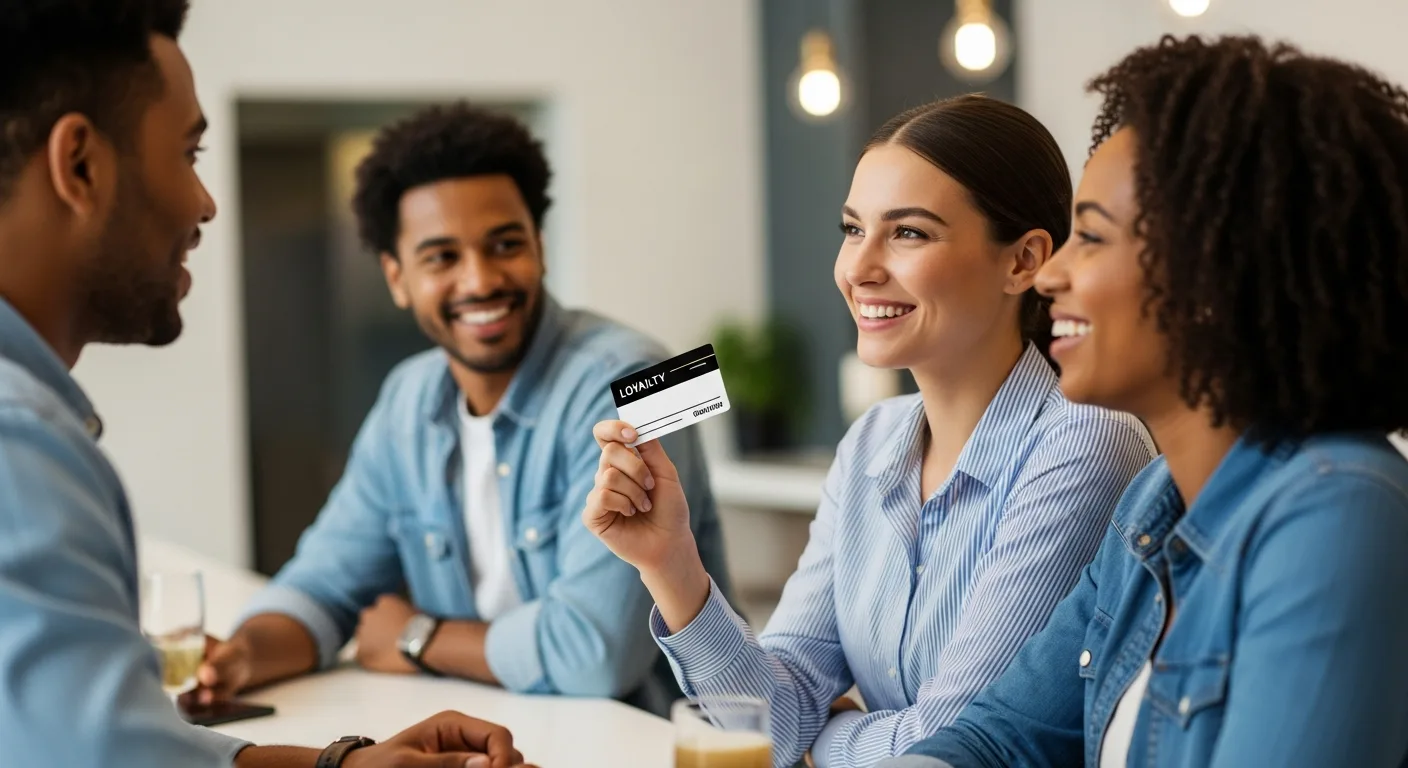
The bar industry runs on regulars. National Restaurant Association data shows that 60-70% of bar revenue comes from repeat customers who visit at least weekly. Lose ten regulars and you lose $45,000 in annual revenue — roughly the salary of one bartender. A loyalty program does not create regulars out of thin air, but it does something equally valuable: it makes your existing regulars resistant to switching. When someone has 400 points toward a free bottle service and their birthday reward loaded, the new cocktail bar on the corner has to work much harder to steal them.
But here’s what most bar owners miss. Bar loyalty is different from restaurant loyalty. Tabs complicate point tracking. Late-night environments make app usage low. Alcohol regulations affect what you can and cannot offer as rewards in some states. And the social dynamics of bar spending — rounds, splits, group tabs — mean that individual point tracking needs to handle multi-person transactions gracefully.
Why Bars Need Loyalty Programs More Than Restaurants Do
Restaurants compete on food quality, menu variety, and ambiance. Bars compete on vibes, convenience, and familiarity. The problem with competing on vibes is that vibes are subjective and change with the crowd. A loyalty program adds an objective, measurable reason to choose your bar over the competition.
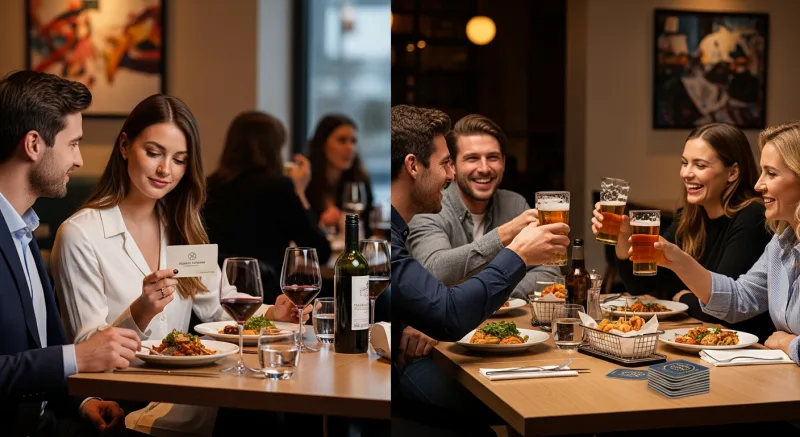
And the data backs this up. Bars with active loyalty programs see 35% more repeat visits from enrolled members compared to non-enrolled visitors. Gift card programs generate 20-40% overspend beyond the card value — and in a bar setting, that overspend is almost entirely high-margin alcohol purchases.
It gets even more compelling. The competitive landscape makes loyalty critical. The average American lives within 10 minutes of 12 different bars. Customer acquisition cost for a new bar patron is $15-25 through advertising. Customer retention cost through a loyalty program is under $2 per retained visit. (Calculate yours with our customer lifetime value calculator.) The math is overwhelming.
The 6 Loyalty Models That Work for Bars
1. Tab-Based Points Accumulation
The foundation of bar loyalty is points earned on every tab. The configuration that works: 10 points per dollar spent on the tab total (after tax, before tip). A customer who runs a $50 tab earns 500 points. Set redemption thresholds at:
- 1,000 points = free well drink or domestic beer ($6-8 value)
- 2,000 points = free craft cocktail or premium beer ($12-15 value)
- 5,000 points = free appetizer platter or bottle of wine ($25-30 value)
- 10,000 points = complimentary bottle service for 2 ($75-100 value)
At $50/visit and 10 points/dollar, a twice-weekly regular earns their first free drink after just one week. The free craft cocktail comes at 4 visits. The bottle service reward arrives after 20 visits — roughly 2.5 months for a committed regular. Each tier gives them something to anticipate.
2. VIP Tier System
Bars thrive on status. Use that psychology with a tiered membership:
- House (default): 10 points per dollar, birthday drink
- Regular ($2,000+/year): 15 points per dollar, priority seating on busy nights, 10% off food menu, monthly surprise drink on the house
- VIP ($5,000+/year): 20 points per dollar, reserved table on weekends (with 24h notice), complimentary birthday bottle service, exclusive event invitations, bring-a-friend welcome drink
The "reserved table on weekends" benefit alone is worth thousands in perceived value. For the bar, it costs nothing but a table card — but for a customer who has waited 45 minutes for a table on a Saturday, it is priceless.
3. Happy Hour Multiplier Events
Bars have a unique tool that restaurants lack: time-based pricing already exists in the form of happy hour. Layer loyalty multipliers on top: 3x points during happy hour, 2x points on industry nights (typically Monday or Tuesday), 5x points during launch events for new cocktail menus.
Here’s where it gets interesting. This drives traffic during slow periods. A regular who normally visits Friday-Saturday might add a Tuesday visit if they know triple points are available. That additional visit costs the bar nothing in labor (staff is already there) but generates $30-50 in incremental revenue.
4. Group Tab and Round Rewards
Bar spending is social. When one person buys a round for four, that $60 round should earn points for the person paying — and the loyalty system should handle group dynamics gracefully. Configure the system to award bonus points on tabs over $100 (25% bonus) and tabs over $200 (50% bonus). This rewards the person who organizes the group outing and picks your bar.
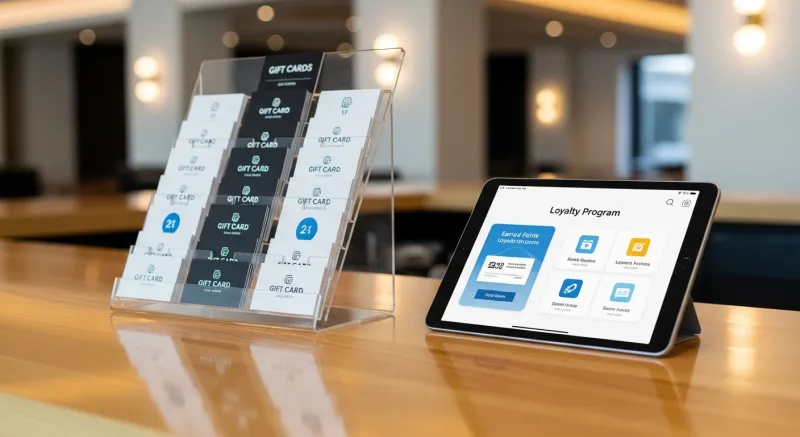
5. Gift Cards for Bar Settings
Bar gift cards are radically underused. They are perfect for: birthday presents (every 21st birthday party needs a bar gift card), corporate entertainment budgets, and "thank you" gifts. The overspend data is even higher in bars than restaurants — gift card holders spend 35-45% beyond the card value because alcohol prices encourage "just one more round."
Stock physical gift cards in $25, $50, and $100 denominations. Offer digital e-gift cards for last-minute purchases. During the holiday season (November-December), promote gift cards as stocking stuffers — bars typically see 20-30% of their annual gift card sales in that 8-week window — worth $3,000–$8,000 for a mid-size bar.
6. Event and Experience Rewards
The most sophisticated bar loyalty programs reward customers with experiences, not just free drinks. Whiskey tastings, cocktail-making classes, meet-the-brewer events, early access to new menu items. These cost $50–$150 per event to produce (you are using your own staff, space, and inventory) but create enormous perceived value and social media content.
Software Comparison for Bar Loyalty
| Platform | Loyalty Cost | Tab Integration | Gift Cards |
|---|---|---|---|
| Toast | $75/month | Yes | Extra fee |
| Square | $45/month | Limited | Included |
| Clover | $39-99/month | Third-party | $9.95/month |
| KwickOS | $0 (built-in) | Full native | Included |
Now let’s talk dollars and cents. For a bar paying $75/month for Toast loyalty, that is $900/year — roughly the profit from 60 cocktails. (Use our food cost calculator to see your exact margins.) KwickOS includes the full loyalty suite at zero additional cost, including tab-based points, tiered rewards, gift cards, and automated customer messaging.
Alcohol-Specific Loyalty Considerations
Regulatory awareness. At least 8 states — including Utah, Oklahoma, and parts of Pennsylvania — restrict loyalty programs that directly reward alcohol purchases. In those jurisdictions, structure rewards as food credits or merchandise rather than free drinks. KwickOS lets you configure category-specific rewards so you can comply with local regulations while still running an effective program.
Responsible service integration. Your loyalty system should never incentivize overconsumption. Set daily point caps or reward limits that prevent the program from encouraging excessive drinking. This is both an ethical obligation and a liability shield.
Age verification at enrollment. Ensure your enrollment flow captures age verification. All loyalty members at a bar should be verified 21+, which also makes your marketing communications legally cleaner.
Implementation for Bars: The 30-Day Plan
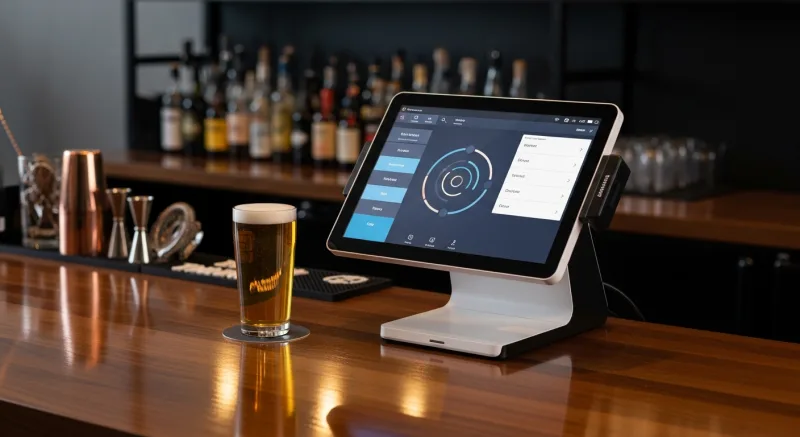
Days 1-7: Configure points structure, tiers, and redemption options in the POS. Train bartenders on the enrollment pitch: "Want to earn points on your tab tonight? Just need your phone number." Bar enrollment should happen when the tab is opened, not at close — customers are more receptive at the beginning of the evening.
Days 8-14: Soft launch with regulars. Ask your top 20 regulars by name to join. Their early enrollment creates social proof and gives you beta testers who will tell you what works.
Days 15-21: Full launch with table cards, bar rail signage, and social media announcement. Set a staff contest: the bartender who enrolls the most members this week gets a bonus. Competitive enrollment drives work exceptionally well in bar environments.
Days 22-30: Launch your first bonus point event (3x points on a slow weeknight). Activate birthday rewards. Review enrollment rates and adjust the pitch if needed.
By day 60, you should have 200-400 enrolled members (for a mid-size bar doing 100-150 covers/night). By day 90, you should see measurable increases in weeknight traffic from loyalty-driven visits.
ROI Calculation for Bar Loyalty
Here is the math for a bar with 100 covers per night, $35 average tab:
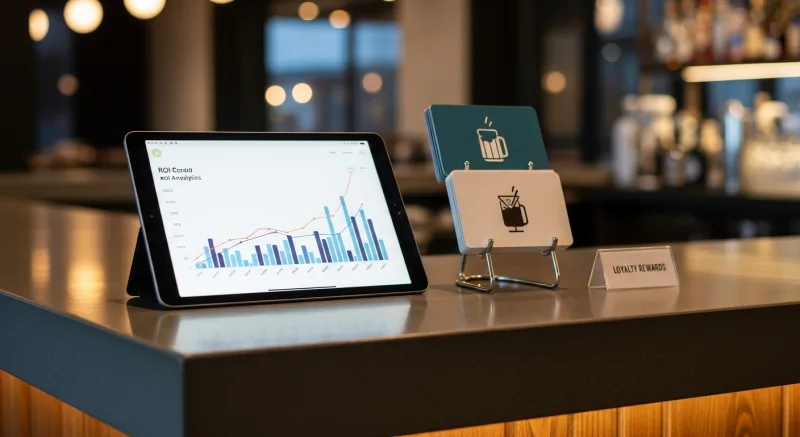
- Annual revenue without loyalty: $1,277,500
- Loyalty enrollment rate: 40% of customers = 40 enrollments per night
- Repeat visit increase for enrolled members: 35% = 0.8 additional visits per month per member
- Additional revenue from loyalty-driven visits: $336,000/year
- Cost of rewards redeemed: ~$42,000/year (at 8% of loyalty-driven revenue)
- Net incremental revenue: $294,000/year
Read that again. That is $294,000 in additional revenue for a program that costs $0/month with KwickOS — or $900/year with Toast. The ROI is not debatable.
Turn Your Regulars Into Loyal Revenue
KwickOS includes tab-based loyalty, VIP tiers, gift cards, and automated customer engagement — all built into the POS at no extra monthly cost.
Book Your Free Demo