Full-service restaurants have the most complex loyalty equation in the food industry. Unlike coffee shops (high frequency, low ticket) or QSRs (high volume, standardized), FSRs deal with variable party sizes, alcohol sales that can double the check, occasion-based dining (date nights, business meals, celebrations), and long gaps between visits. A guest who dines with you monthly is a regular. A guest who dines quarterly is casual. Both segments need different loyalty strategies, and most software treats them identically.
The brands that do FSR loyalty well — Darden's (Olive Garden, LongHorn Steakhouse), The Cheesecake Factory, Texas Roadhouse — see loyalty members spend 15-20% more per visit and visit 35% more frequently than non-members. Those numbers translate directly to whether a restaurant clears its break-even point or misses it.
The FSR Loyalty Equation: Higher Stakes, Bigger Rewards
Full-service loyalty differs from every other restaurant category in three critical ways:
Check size justifies generous rewards. At a $45 average check, giving away a $15 appetizer after 10 visits (4.4% reward rate) is easily absorbed by the 65% gross margin on food. In contrast, a QSR with a $12 average check giving away a $5 item after 10 visits is spending 4.2% — the same percentage but much tighter on absolute margin.
Alcohol creates a loyalty multiplier. FSR guests who order alcohol spend 40-60% more per visit. A loyalty program that rewards alcohol purchases (where legal) drives the highest-margin segment of the check. Wine clubs and cocktail memberships tap directly into this dynamic.
Occasion-based visits require occasion-based rewards. A birthday reward at an FSR is not a free cupcake — it is a complimentary dessert for the table, or a bottle of prosecco, or a waived corkage fee. The perceived value is $20-40, but the cost is $5-8. The birthday party spends $200+ on the meal. That is a 25:1 return on a single reward.
7 Loyalty Models for Full-Service Restaurants
1. Points-Per-Dollar on the Full Check
Award 10 points per dollar on the total check (pre-tip, post-tax). A $90 dinner for two earns 900 points. Redemption tiers scaled for FSR economics:
- 1,000 points = free appetizer ($12-15 value)
- 2,500 points = free entree (up to $25)
- 5,000 points = $50 dining credit
- 10,000 points = complimentary dinner for two ($100 value)
At $90/visit, a monthly guest accumulates 10,800 points per year — enough for two free entrees and a dining credit, or one complimentary dinner for two. The reward cost is approximately 5% of loyalty-driven revenue, well within FSR margins.
2. Tiered Dining Memberships
FSR guests respond strongly to status tiers because dining out is inherently social and status-conscious:
- Guest: 10 points/dollar, birthday dessert
- Preferred ($1,000+/year): 15 points/dollar, priority reservations, complimentary amuse-bouche on arrival, birthday bottle of house wine
- VIP ($3,000+/year): 20 points/dollar, guaranteed preferred seating, complimentary birthday dinner for two, chef's table access, 15% off private dining events, quarterly wine pairing dinner invitations
The "guaranteed preferred seating" benefit is transformative for VIP retention. At a restaurant where Saturday reservations book 2 weeks out, VIP members who always get their preferred table will never switch to a competitor. The cost to the restaurant: zero — you are reserving a table that would have been filled anyway, but now it is filled with your highest-spending guests.
3. Wine Club Membership
For FSRs with a serious wine program, a wine club is the ultimate loyalty vehicle. Monthly subscription of $49-99 that includes: a featured wine bottle (picked by the sommelier), 10% off all wine purchases at the restaurant, invitations to quarterly wine events, and early access to limited allocation bottles.
Wine club members visit 50% more frequently than non-members because they come specifically to try the monthly selection. They spend 35% more per visit because they are already wine enthusiasts. And the monthly subscription fee creates recurring revenue that smooths cash flow.
4. Birthday and Celebration Rewards
FSR birthday programs should be memorable, not merely transactional. Instead of a free dessert (which every restaurant offers), differentiate:
- Complimentary birthday dessert with a sparkler and personalized message on the plate
- Free bottle of house prosecco for parties of 4+
- Waived private dining room fee for birthday parties of 8+
Anniversary rewards extend the concept: "Celebrating your wedding anniversary? Complimentary champagne toast." The cost is $8 in champagne. The party spends $150+ and remembers your restaurant as "where we go for our anniversary" — a tradition that repeats for years.
5. Catering and Private Event Credits
FSR loyalty programs should bridge the gap between dine-in and catering. Loyalty members who earn points on dine-in visits can redeem them as credits toward private dining events, off-premise catering, or holiday party bookings. This turns casual diners into event customers — a dramatically higher revenue tier.
6. Gift Card Programs
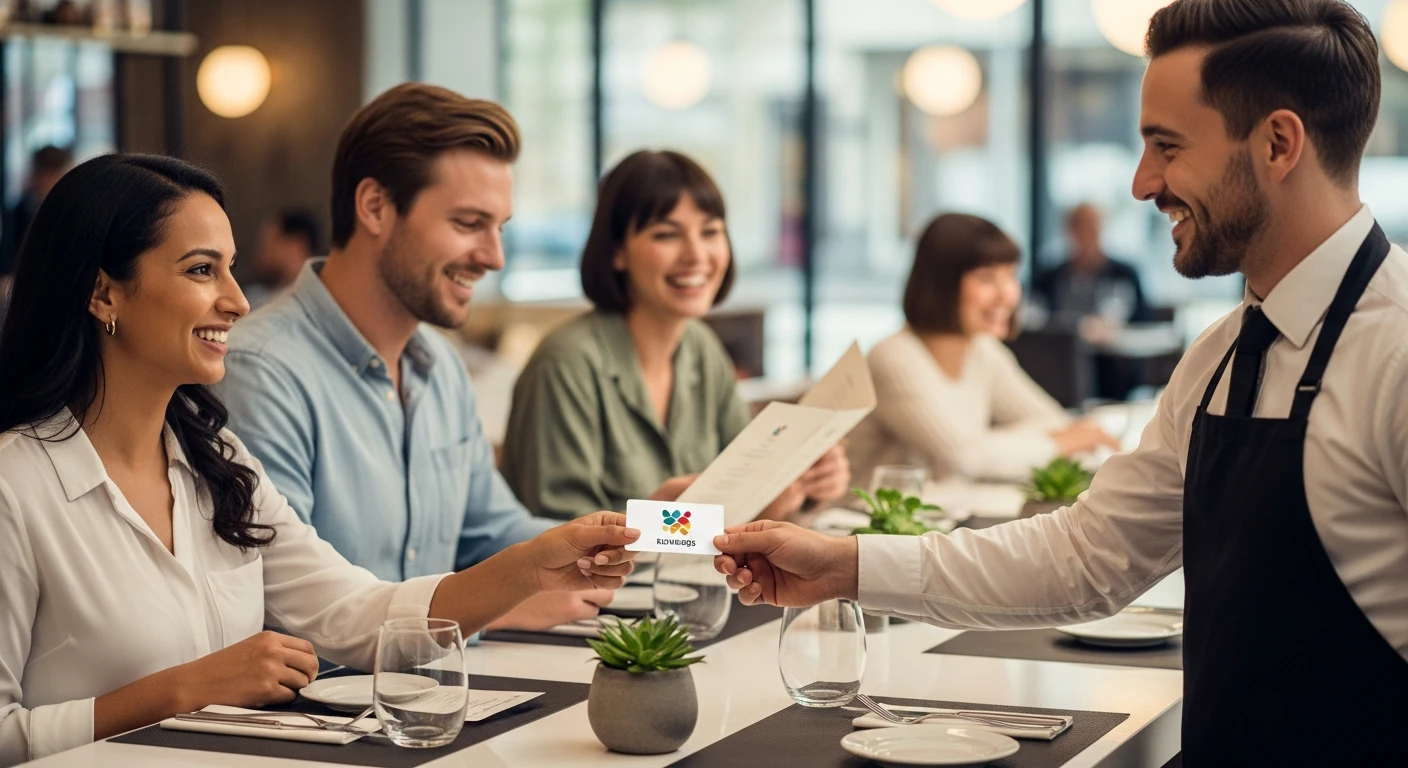
FSR gift cards generate the highest overspend rate in the industry: 30-45% beyond the card value. A $100 gift card to a full-service restaurant generates $130-145 in total spending. The reason: nobody orders "just $100 worth" at a sit-down restaurant. They order what they want, and the gift card covers part of it.
Seasonal gift card promotions drive enormous volume. "Buy a $100 gift card, get a $20 bonus card" during November-December generates upfront cash flow and creates two visits: one to give the gift card, one when the bonus card is redeemed in January (traditionally the slowest month for FSRs).
7. Feedback-Linked Loyalty
Tie loyalty points to post-dining feedback surveys. Award 200 bonus points for completing a 2-minute survey after each visit. This achieves two goals: you get actionable guest feedback (which most FSRs struggle to collect), and the survey itself reinforces the loyalty relationship by asking the guest to reflect on their positive experience.
Software Comparison for FSR Loyalty
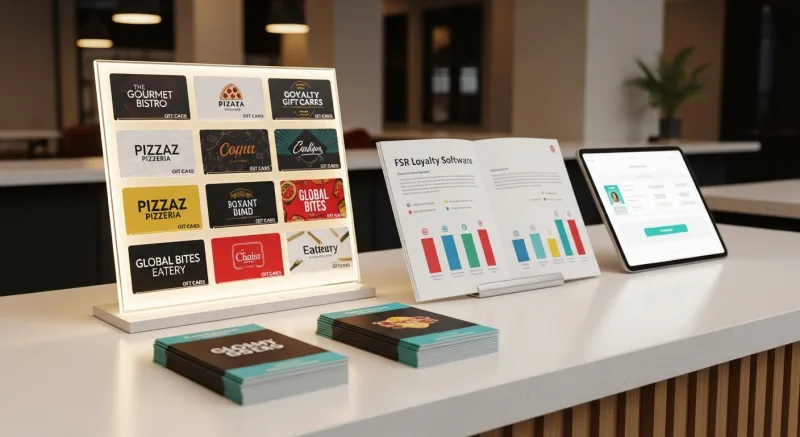
| Platform | Loyalty Cost | Reservation Integration | Gift Cards |
|---|---|---|---|
| Toast | $75/month | Third-party | Extra fee |
| Square | $45/month | Limited | Included |
| KwickOS | $0 (built-in) | KwickTable native | Included |
Crafty Crab Seafood, operating 19 locations with 152 terminals on KwickOS, uses the built-in loyalty system to manage rewards across all locations. A customer enrolled at one Crafty Crab location earns and redeems points at any of the 19 stores. Their one-click menu sync ensures loyalty promotions and point multipliers are consistent across every location without manual configuration at each store.
T. Jin China Diner, with 15 stores and 75 terminals, leverages the same multi-location loyalty capability. Their real-time remote monitoring means headquarters can see loyalty enrollment rates, redemption patterns, and customer frequency across all 15 locations in a single dashboard — identifying which stores are underperforming on loyalty metrics and adjusting strategies accordingly.
ROI Calculation for FSR Loyalty
For a full-service restaurant doing 200 covers/night at $45 average check:
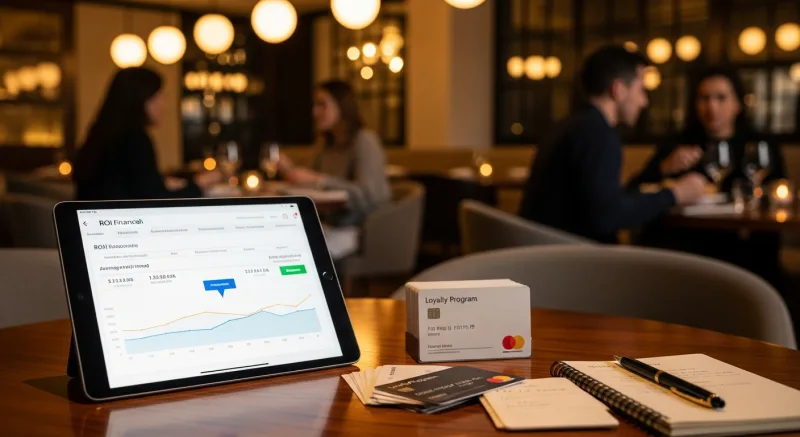
- Annual revenue without loyalty: $3,285,000
- Loyalty enrollment rate: 30% of guests = 60 enrollments per night
- Visit frequency increase for enrolled members: 35%
- Check size increase for enrolled members: 15%
- Additional annual revenue from loyalty: $512,000
- Reward cost (5% of incremental): $25,600
- Net incremental revenue: $486,400
Even with Toast's $75/month fee, loyalty is wildly profitable for FSRs. But $900/year saved on software — plus the processing savings from KwickOS's processor-agnostic model — adds $15,000-25,000/year back to the bottom line. For a business with 3-5% net margins, that processing savings alone can represent a 30-50% increase in net profit.
Implementation for Full-Service Restaurants
Week 1: Configure points, tiers, and redemption in the POS. Train servers on the enrollment approach — in FSR, it should happen naturally: "I see you're celebrating tonight — would you like to join our rewards program? I can get you started with your phone number and you'll earn points on tonight's dinner."
Week 2-3: Soft launch with regulars and VIPs. Personally invite your top 50 guests by having the manager or owner send a personal text. Their early enrollment creates a prestigious feeling around the program.
Week 4: Full launch. Table tents, check presenter inserts, and server mentions. Launch the birthday reward and gift card programs simultaneously.
Month 2: Launch the wine club (if applicable). Begin the "buy $100 gift card, get $20 bonus" promotion.
Month 3: Review data. Identify top loyalty members and invite them to a VIP tasting event. This cements the top tier and creates social media content that markets the program organically.
Stop Losing $127,000/Year to Silent Guest Defection
KwickOS includes loyalty, gift cards, tiered rewards, multi-location sync, and CRM — all built into the POS at zero extra cost. See how Crafty Crab manages loyalty across 19 locations.
Book Your Free Demo