 Ming Ye
Walk down any busy street in Austin, Brooklyn, or Portland and count the coffee shops. You'll pass three within two blocks, sometimes four. They all have exposed brick. They all have pour-over stations. They all have a barista in a beanie.
Now ask yourself: which one do you remember?
Here's the thing: the coffee might be equally good at all of them. The beans might come from the same roaster. The latte art might be identical. But one of those shops has a line out the door, and the others are struggling to fill seats at 9 AM on a Tuesday.
The difference is never the coffee. The difference is the brand.
According to restaurant industry data, the top 5% of independent coffee shops generate 3-4x more revenue per square foot than the median. They don't spend more on beans. They don't hire better baristas. They build a brand identity so distinct that customers choose them before they even think about what they want to drink.
This guide breaks down exactly how they do it — the visual identity, the interior design decisions, the packaging that becomes free advertising, the social media strategy that turns followers into regulars, and the community storytelling that makes a coffee shop feel like it belongs to the neighborhood.
And that's not all: we'll show you how your technology stack — especially your POS system, digital signage, gift cards, and loyalty program — either reinforces your brand at every customer touchpoint or quietly undermines it.
The Brand Identity Framework: More Than a Logo
Most coffee shop owners think branding means getting a nice logo designed on Fiverr for $200 and slapping it on a cup sleeve. That's not branding. That's decoration.
A brand is a promise delivered consistently across every single customer interaction. The logo matters, but it's maybe 10% of the equation. Here's the full framework:
Visual identity system: Your logo, color palette (2-3 primary colors maximum), typography (1-2 font families), photography style, and illustration approach. These need to be codified in a simple brand guide — even a two-page PDF — that every designer, printer, and sign maker references.
Voice and tone: How does your brand talk? Is it casual and playful ("Your morning upgrade is here") or refined and educational ("Single-origin Yirgacheffe, naturally processed, notes of blueberry and dark chocolate")? This voice should appear on your menu boards, social media, website, receipts, and even your hold music.
Brand story: Why does this shop exist? Not "because I love coffee" — every shop owner loves coffee. What's the specific story? Did you discover coffee culture while living in Melbourne? Did you quit finance to pursue a 10-year obsession with roasting? Were you the only coffee option in a neighborhood that deserved better? That story is your most powerful marketing asset.
But it gets worse: most coffee shop owners have a great story and never tell it. It lives in their head while their customers see nothing but a generic menu and a tip screen.
Interior Design as Brand Architecture
Your physical space is your brand's most expensive and most impactful expression. Every design choice communicates something to customers — whether you intend it or not.
The shops that nail interior branding follow a principle from retail design: the 5-second brand read. A customer walking through the door should understand your brand identity within 5 seconds, before they read a single word on the menu. Color palette, materials, lighting, and spatial layout do this work.
Color psychology in action: Warm earth tones (terracotta, sage, cream) signal craft and comfort. High-contrast black and white with a bold accent color (bright orange, electric blue) signals modern and energetic. Muted pastels signal approachable and Instagram-friendly. Pick a direction and commit.
Material choices that tell a story: Raw concrete and steel say industrial-modern. Light wood and plants say Scandinavian-warm. Tile mosaics and colorful grout say artisan-eclectic. The mistake is mixing all three because you saw each one on Pinterest. A strong brand picks one vocabulary and speaks it fluently.
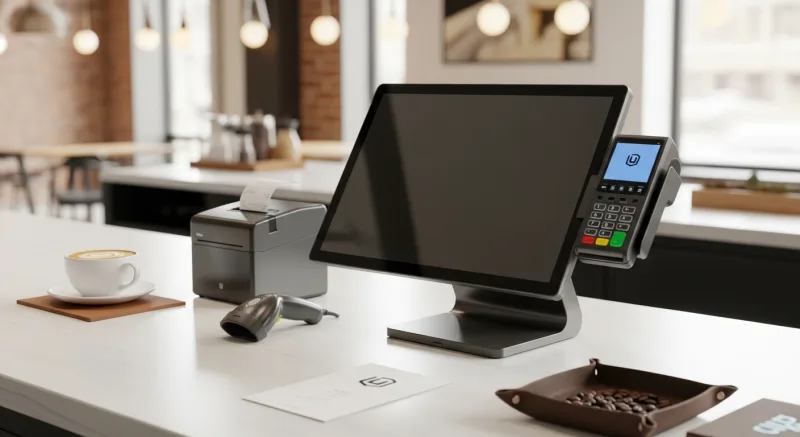
Here's the pattern interrupt you probably weren't expecting: your POS hardware is part of your interior design. A sleek, minimal terminal on a clean countertop reinforces a modern brand. A cluttered checkout area with a bulky register, a tip jar, a card reader on a swivel stand, a stack of loyalty punch cards, and a jar of mints sends the message that nobody thought about the customer experience.
The checkout counter is the one spot every single customer interacts with. Customer-facing displays can show branded visuals, upsell prompts in your brand font and colors, and loyalty enrollment screens that match your aesthetic — turning a transaction into a brand moment. Coffee-focused POS solutions let you customize these screens completely.
Packaging: Your $0 Billboard Strategy
Every cup that walks out your door is a mobile advertisement. Every bag of retail beans sitting on a customer's kitchen counter is a daily brand impression. Every pastry bag, every napkin, every sleeve.
Industry research suggests that a busy coffee shop sends out 400-600 branded cups per day. That's 400-600 walking billboards, each seen by an average of 3-5 people during its lifespan. You're paying for the cups anyway — the only question is whether they're working for you or not.
The elements that make packaging work as branding:
- Distinctive cup design — Not just your logo centered on a white cup. Think about the entire cup as a design canvas. Bold colors, patterns, illustrations, or a tagline that people remember. The goal: someone across the room at a meeting sees the cup and asks "Where's that from?"
- Consistent retail packaging — If you sell beans, merch, or bottled cold brew, the packaging should be immediately recognizable as yours from 10 feet away on a grocery shelf.
- Seasonal variations — Limited-edition cup designs for holidays and seasonal menus create urgency and social media moments. Customers photograph and share seasonal cups far more than standard ones.
- Sustainability messaging — If you use compostable cups or source ethically, say so on the packaging. This is a brand value worth communicating.
And that's not all: your packaging strategy connects directly to your e-gift card program. A beautifully branded e-gift card that matches your cup design and website aesthetic becomes a shareable brand asset. When someone sends a $25 gift card to a friend, that friend sees your brand identity before they ever walk through the door. The shops that treat gift card design as an afterthought are missing one of the cheapest customer acquisition channels available.
The Digital Menu Board Advantage
Chalkboard menus are charming. They're also illegible from 6 feet away, impossible to update quickly, and completely disconnected from your POS system.
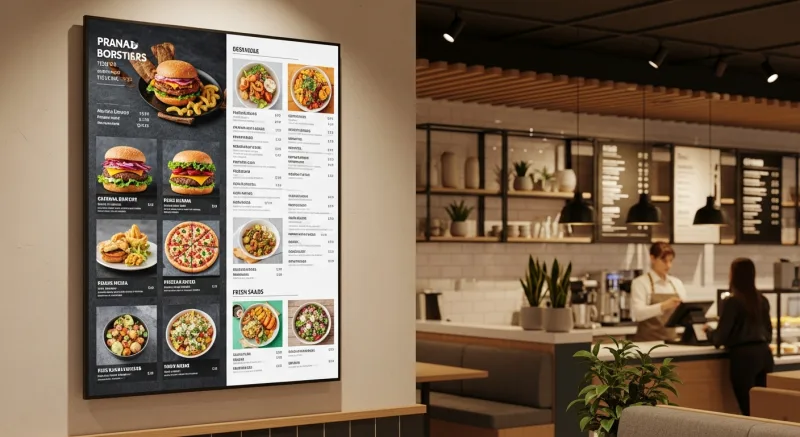
Digital menu boards are your brand on a screen, updating in real time. The best specialty coffee shops use them not just to list drinks and prices, but to tell a visual story: origin maps for featured beans, brewing method animations, seasonal drink reveals, and community event announcements.
Here's what separates branded digital signage from a glorified TV with a PDF on it:
- Your brand fonts and colors — not a generic template
- Professional food photography — shot specifically for your drinks, not stock images
- Dynamic pricing and availability — 86'd items disappear instantly, happy hour pricing activates automatically
- POS integration — when you add a new seasonal drink in your POS, it appears on the digital board within minutes, not after you spend 45 minutes with a chalk pen
Systems like KwickOS integrate digital signage (KwickSign) directly with the POS, so your menu board, online ordering page, and kiosk screen all pull from the same source of truth. One update, everywhere at once. Crafty Crab Seafood uses this across 19 locations — one menu change propagates to all stores instantly, maintaining brand consistency without 19 separate manual updates.
Social Media: Building a Visual Brand Identity Online
Coffee is one of the most photographed products on the planet. That's both an opportunity and a trap.
The opportunity: your customers will create content for you, for free, every single day. The trap: if your brand doesn't have a distinct visual identity, that content blends into the infinite scroll of latte art and pour-over videos that already exists.
The 70/20/10 content framework for coffee shop brands:
- 70% brand-consistent product and atmosphere content — Beautifully shot drinks, interior moments, seasonal menu reveals, barista craftsmanship. Every photo uses your color grading preset. Every caption uses your voice.
- 20% community and behind-the-scenes content — Staff introductions, sourcing trips, local collaborations, customer spotlights. This content builds emotional connection.
- 10% direct promotion — New menu launches, gift card promotions, loyalty program enrollment pushes, event announcements.
But it gets worse: most coffee shops post inconsistently because content creation takes time they don't have. The fix is batching. Dedicate 2 hours once a week to shoot 10-15 photos and write captions. Schedule them in advance. Consistency beats perfection.
Turn your loyalty program into social content. When a customer hits a milestone — 50th visit, 100th drink, Gold tier status — celebrate it publicly (with their permission). These moments are authentic, emotionally resonant, and impossible for competitors to fake. A gamified loyalty program with achievement tiers creates these shareable moments automatically.
Your POS data can even tell you who your top customers are. Imagine reaching out to your 10 most frequent visitors and asking if they'd be featured in an "Our Regulars" social series. That's content that writes itself — and it strengthens the community bond that keeps those regulars coming back.
Community Building: The Brand Moat No Chain Can Copy
Starbucks has $26 billion in annual revenue. They can outspend you on beans, equipment, real estate, and marketing. They cannot outspend you on being local.
This is the one advantage independent specialty coffee shops have that no chain, no franchise, and no well-funded startup can replicate: genuine community integration.
The tactics that build community-as-brand:
- Host events that fit your brand identity — Cupping sessions, latte art throwdowns, acoustic nights, local art exhibitions, book clubs, community board game nights. The event should feel like a natural extension of your brand, not a random add-on.
- Partner with neighboring businesses — A coffee shop that collaborates with the bookstore next door, the yoga studio down the street, or the local bakery across town becomes a node in the neighborhood's social fabric. Cross-promote, co-brand limited products, and refer customers to each other.
- Support local causes visibly — Donate a percentage of a specific drink's sales to a local nonprofit. Feature the organization on your digital signage. Let customers round up their purchase at checkout — your POS checkout flow can prompt for round-up donations automatically.
- Remember your customers — This is where technology becomes a brand asset. A POS-integrated CRM that stores customer preferences, visit history, and loyalty status lets every barista greet regulars by name and remember their usual order. That personalization is the brand experience.
Tiger Sugar built a cult following not just through distinctive drinks but through a consistent brand experience across every location. Their self-ordering kiosks maintain brand consistency — the same interface, the same customization flow, the same minimal steps — whether a customer is in store one or store two. That consistency is the brand promise.
Storytelling: The Narrative That Makes Customers Choose You
Every strong coffee brand tells a story. Not on an "About Us" page that nobody reads — in every customer interaction.
Here's the thing: storytelling in a coffee shop isn't about long paragraphs. It's about micro-narratives embedded in the experience:
- Origin cards on the counter — A 3x5 card next to the featured single-origin that tells the story of the farm, the producer, and why you chose this bean. Three sentences, max.
- The "why" on your packaging — "Roasted in small batches in our [neighborhood] roastery since 2019" on every bag. Simple, specific, authentic.
- Staff as storytellers — Train baristas to answer "What's good today?" not with "Everything" but with a 10-second story: "We just got this natural-processed Ethiopian in — it tastes like blueberry jam, seriously — want to try a sample?"
- Digital storytelling — Your digital menu boards can rotate origin stories between menu screens. Your loyalty program emails can feature a "Bean of the Month" story. Your e-gift card landing page can tell the recipient why this shop is special.
The coffee shops that tell the best stories don't just attract customers — they create advocates who retell those stories to friends, on social media, and in online reviews. That word-of-mouth is worth more than any paid advertising campaign you could run.
The Technology Stack That Reinforces (or Undermines) Your Brand
Here's where most branding guides stop — and where this one gets practical.
Your brand lives or dies at the point of transaction. If the checkout experience is clunky, slow, or generic, it erases the goodwill built by your beautiful interior and amazing coffee. Every technology touchpoint is a brand touchpoint.
The branded checkout experience:
- Customer-facing display — Shows your branded visuals, not a generic payment screen. Displays the customer's order, prompts for loyalty enrollment in your brand's voice, and shows upsell suggestions with your product photography.
- Digital receipts — Include your logo, social media handles, a review link, and a personal thank-you message. Paper receipts get thrown away; email receipts with your branding live in inboxes.
- Branded e-gift cards — Your logo, your colors, your photography. When someone sends a $25 gift card, the recipient's first impression of your brand comes through that digital card. Make it count.
- Loyalty program identity — Name your tiers, design your point structure, and brand your rewards in a way that's uniquely yours. "Gold Member" is generic. "Single-Origin Circle" is brand-specific.
The technical reality: achieving this level of brand consistency across POS, signage, online ordering, gift cards, and loyalty requires a unified platform. When these are separate systems from separate vendors, your brand fragments. The menu board shows one price, the online ordering page shows another, and the loyalty app looks like it belongs to a different business entirely.
KwickOS runs POS, digital signage (KwickSign), online ordering (KwickMenu), and CRM/loyalty from a single platform. One product database. One brand configuration. One update that propagates everywhere. For multi-location operators, this means brand consistency isn't maintained through manual effort — it's enforced by architecture. T. Jin China Diner manages brand consistency across 15 locations and 75 terminals from a single dashboard, with real-time remote monitoring.
And because KwickOS is processor-agnostic, you're not paying an extra $3,000-$8,000 per year in locked processing fees — money that could go directly into brand-building investments like packaging upgrades, interior refreshes, or professional photography.
The Branding ROI: Numbers That Matter
Branding feels abstract until you see the math.
Customer acquisition cost reduction: A strong brand generates word-of-mouth referrals. Industry research suggests that referred customers have a 37% higher retention rate and cost effectively $0 to acquire, compared to $8-$15 per customer through paid social ads.
Price premium: Strongly branded specialty coffee shops can charge 15-25% more than generically branded competitors for the same quality product. On a $5.50 latte, that's $0.80-$1.40 extra per cup. At 300 cups per day, that's $240-$420 per day in additional revenue — $87,600-$153,300 per year — from brand perception alone.
Loyalty program multiplier: Branded loyalty programs with custom tiers and themed rewards see 40-60% higher enrollment rates than generic point systems, according to restaurant industry data. Higher enrollment means more repeat visits, higher average tickets, and more gift card purchases.
Gift card revenue: Coffee shops with strong brand identity sell 2-3x more gift cards than weakly branded competitors. Gift cards are pure upfront cash flow, and industry data shows 10-15% of gift card value goes unredeemed — that's breakage revenue directly attributable to brand strength. Use our gift card revenue calculator to see what this means for your shop.
Here's the loss-aversion framing: every day you operate without a distinct brand identity, you're leaving $240+ in potential daily revenue on the table. That's $7,200/month. That's $87,600/year. Not because your coffee is bad — but because customers have no reason to choose you over the three other shops within walking distance.
Your 90-Day Brand Building Action Plan
Days 1-30: Foundation
- Define your brand story in 3 sentences
- Create a visual identity guide (colors, fonts, photo style)
- Audit every customer touchpoint for brand consistency
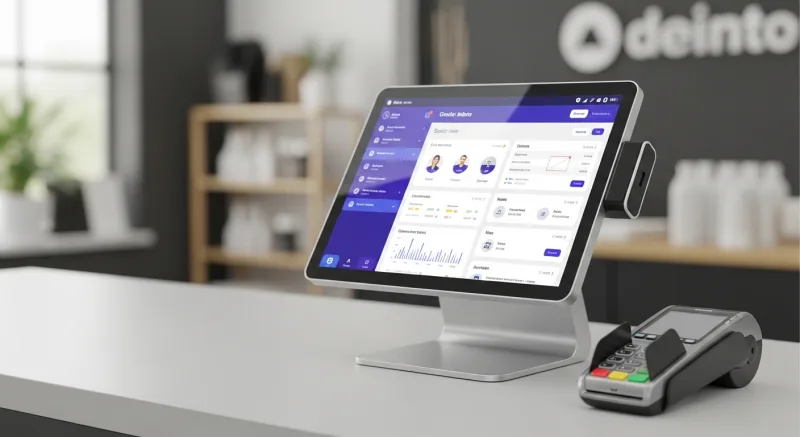
- Set up a POS system that supports branded checkout, loyalty, gift cards, and digital signage from a single platform
Days 31-60: Implementation
- Roll out branded packaging (cups, sleeves, bags, napkins)
- Launch or rebrand your loyalty program with custom tiers and rewards
- Design and launch branded e-gift cards (physical and digital)
- Install digital menu boards with your brand aesthetic
- Establish your social media content workflow and posting schedule
Days 61-90: Amplification
- Host your first brand-aligned community event
- Launch a local business partnership (cross-promotion, co-branded product)
- Run a gift card promotion campaign tied to your brand story
- Analyze loyalty program enrollment and adjust messaging
- Review POS data — track average ticket, visit frequency, and gift card sales as brand-building KPIs
Build a Coffee Brand That Customers Can't Forget
KwickOS unifies your POS, digital signage, online ordering, loyalty, and gift cards into one branded experience. See how 5,000+ businesses maintain brand consistency across every touchpoint.
Get a Free Demo