The Coffee Shop Tech Stack Audit: You're Paying for 6 Tools When You Need One
Published March 2026 · 11 min read
The best All-in-One POS for Coffee Shops handles everything from checkout to closing — without extra apps or workarounds. Pull up your last three months of bank statements and highlight every recurring charge related to running your coffee shop. Not rent, not supplies — just the software and service fees. The POS subscription. The payment processing percentage. The scheduling app. The delivery platform commissions. The loyalty program. The inventory tool. The music streaming for the shop. Maybe a separate online ordering fee.
Add them up. If you're like the 40+ coffee shop owners I've audited in the past two years, that number is somewhere between $900 and $1,800 per month. For a shop doing $35,000-50,000 in monthly revenue, that's 2-5% of gross revenue going to software and service fragmentation. You're essentially paying a technology tax that grows every time you add another tool to solve another problem.
This article is a structured audit. We'll go tool by tool, show what you're actually paying, and calculate what an integrated all-in-one platform saves. No hype — just arithmetic.
Tool #1: Your Point-of-Sale System
What most coffee shops pay: Square charges no monthly POS fee but takes 2.6% + $0.10 per transaction. Toast charges $69/month for their Starter plan (plus 2.99% + $0.15 per transaction if you use their payment processing). Clover charges $14.95-$84.95/month depending on the plan, plus processing fees.
What it actually costs at coffee shop volume: A coffee shop averaging 250 transactions/day at a $6.50 average ticket does about $48,750/month in card sales. On Square, processing fees alone are $1,288/month. On Toast at their processing rate, it's $1,496/month. On a negotiated rate through an independent processor (say 2.2% + $0.08/transaction), that same volume costs $1,073/month.
The processing difference between Toast's locked rate and a negotiated rate: $423/month, or $5,076/year.
This is the fundamental problem with closed-processing POS systems. They subsidize their software cost by overcharging on processing. The "free" POS isn't free — you're paying for it on every swipe, every tap, every chip insert, every day, forever.
KwickOS is processor-agnostic. You choose your processor, negotiate your rate, and switch whenever you want. The POS software works with any processor. That negotiating power alone typically saves coffee shops $4,000-6,000/year compared to locked systems.
Tool #2: Employee Scheduling
What most coffee shops pay: 7shifts costs $34.99/month for their Entree plan (up to 30 employees). Homebase is $24.95/month for the Essentials plan. When I Work is $2.50/employee/month.
The hidden cost: Beyond the subscription, there's the integration gap. Your scheduling tool doesn't talk to your POS, so you can't correlate staffing levels with sales data automatically. You're eyeballing the schedule based on gut feeling rather than actual transaction volume by hour. Overstaffing a slow Tuesday morning by one barista for a 6-hour shift at $16/hour costs you $96. Do that twice a week for a year: $9,984 in unnecessary labor.
KwickOS includes scheduling that's connected to your sales data. The system shows you last Tuesday's hourly revenue when you're building this Tuesday's schedule. You see that between 6-8 AM you averaged $340/hour (needs 3 staff) but 8-10 AM dropped to $180/hour (needs 2 staff). Data-driven scheduling replaces guesswork scheduling, and the labor savings dwarf the subscription cost of any standalone tool.
Tool #3: Online Ordering
What most coffee shops pay: DoorDash commission is 15-30% of order total. UberEats is similar. Even "lower cost" platforms like ChowNow charge $150-399/month. Square Online is technically included with Square POS but drives customers through Square's processing at their rate.
What it actually costs: A coffee shop doing $4,000/month through DoorDash at a 20% commission rate pays $800/month. Over a year, that's $9,600 going to a platform that also promotes your competitors' shops in the same search results.
KwickOS includes native online ordering — no commission, no third-party platform. Your customers order through your branded page, the order appears on your prep screen, and you keep 100% of the revenue minus only your payment processing cost. Switching from DoorDash to direct ordering on $4,000/month in delivery/pickup orders saves roughly $700-800/month after accounting for your own processing costs.
For delivery specifically, KwickDriver charges a flat $2 fee plus $6.99 per 5 miles — paid by the customer, not absorbed by the shop. Compare that to the 15-25% platform commission that comes out of your margin. A $25 delivery order that costs you $5-6.25 on DoorDash costs you $0 through KwickDriver (the customer pays the delivery fee). The math is not subtle.
Tool #4: Customer Loyalty
What most coffee shops pay: Stamp Me costs $49-199/month depending on features. Square Loyalty is $45/month add-on. Toast Loyalty starts at $75/month. Standalone apps like Joe Coffee cost a percentage of transaction volume.
The engagement problem: Most coffee shop loyalty programs have dismal engagement rates — 20-30% of customers enroll, and only 40-60% of enrollees actively use it. A $99/month loyalty app with 25% engagement means you're paying $99 to incentivize a fraction of your customer base while the majority ignores the program entirely. Cost per engaged customer can exceed $1/month, which often exceeds the value of the reward you're offering.
KwickOS loyalty is built into the POS at no extra charge. Because it's integrated into the transaction flow — the barista asks for a phone number at checkout, one step, done — enrollment friction drops to nearly zero. Shops using integrated loyalty see 50-70% enrollment rates versus 20-30% for standalone apps. Higher enrollment means more customers earning rewards, which means more customers coming back to redeem rewards, which means higher visit frequency. The loyalty program pays for itself through incremental visits, and the software cost is zero because it's part of the platform.
Tool #5: Inventory Management
What most coffee shops pay: MarketMan costs $239/month. BlueCart starts at $99/month. Many coffee shops don't use any inventory tool at all — they just count beans and cups manually.
What's actually at stake: Coffee shops that don't track inventory systematically waste 8-15% of perishable inventory (milk, pastries, seasonal syrups). For a shop spending $12,000/month on supplies, that's $960-1,800/month in waste. Even cutting waste by half through better inventory visibility saves $480-900/month — far more than any inventory software subscription.
KwickOS tracks inventory as drinks sell. Every oat milk latte deducts from your oat milk stock. Every bag of beans decrements when you log a batch brew. Par levels trigger reorder alerts. Waste gets logged at end of day. The data exists inside your POS — no separate system, no manual re-entry, no monthly reconciliation headache.
Tool #6: Digital Menu Boards
What most coffee shops pay: Raydiant costs $30-50/screen/month. ScreenCloud is $24/screen/month. Menuboard Manager is $15-30/screen/month.
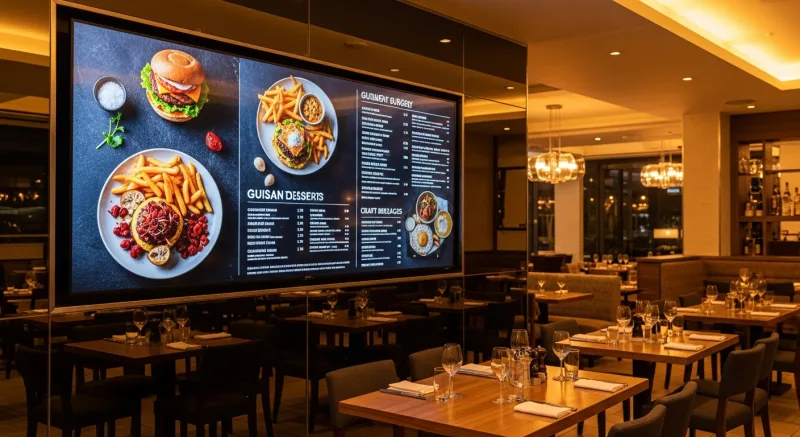
The sync problem: When you run seasonal specials — pumpkin spice season, holiday drinks, summer cold brew series — you update your POS menu, your printed menu, your digital menu board, your online ordering page, and your social media. Five updates for one menu change. Miss one and customers see conflicting prices.
KwickOS digital signage is part of the system. Add a new seasonal latte to your POS menu and it appears on your digital menu board automatically. Change a price once, it updates everywhere. Remove an item when you sell out, gone from every screen. One system, one source of truth, zero monthly screen fees.
The Full Audit: Adding It All Up
Here's the complete picture for a coffee shop doing $45,000/month in revenue with 250 daily transactions:
| Category | Separate Tools | KwickOS |
|---|---|---|
| POS software | $0-85/mo | Single monthly platform fee |
| Payment processing (on $45K) | $1,370 (Square) | |
| Scheduling | $35/mo | |
| Online ordering commissions | $800/mo | |
| Loyalty program | $75/mo | |
| Digital signage (3 screens) | $90/mo | |
| Processing (negotiated, 2.2%+$0.08) | — | $1,050/mo |
| Estimated Monthly Total | $2,370 | ~$1,050 + platform fee |
The delta is roughly $800-1,200/month depending on your specific volume and negotiated rates. Over a year, that's $9,600-14,400 saved. For a coffee shop operating at typical 10-15% net margins, that savings is equivalent to generating $64,000-144,000 in additional revenue. Except you don't have to serve a single extra latte to capture it.
The Operational Savings You Can't Put on a Spreadsheet
Beyond the direct cost reduction, consolidation saves time. Here's a conservative estimate of the weekly hours an owner or manager spends managing fragmented tools:
- Reconciling POS reports with processor statements: 1 hour
- Building schedules without sales data integration: 2 hours
- Managing online ordering platform disputes and commission reconciliation: 1 hour
- Updating menus across multiple systems: 1 hour
- Manual inventory counts (because the POS doesn't track it): 2 hours
- Exporting data from 4 systems for your accountant: 1 hour
That's 8 hours per week — an entire workday — spent on administrative overhead caused by tool fragmentation. At even a modest valuation of an owner's time at $40/hour, that's $320/week or $16,640/year in labor inefficiency.
With one integrated system, menu updates happen once. Scheduling references actual sales data on the same screen. Inventory decrements automatically. Reports export from one dashboard. The 8 hours drops to 2-3, freeing the rest for actually running your business — talking to customers, training baristas, developing new drinks, or going home before 9 PM.
What About the Barista Experience?
Your baristas interact with your POS hundreds of times per shift. If the interface is slow, confusing, or requires too many taps per drink, you're paying for that friction in slower service and higher training costs.
KwickOS processes transactions locally at 1ms speed. For a barista making drinks in a rhythm — ring up, make, ring up, make — even a half-second delay per transaction compounds into minutes of lost productivity over a shift. Local processing eliminates that cloud latency entirely.
The interface is designed for speed: quick-order buttons for your top 10 drinks (which likely account for 60-70% of your volume), modifier buttons that are large enough to hit without precision tapping, and a KDS screen at the espresso station that queues drinks in order with clear modification callouts.
Training time matters too. A new barista learning one system is productive in 1-2 hours. A new barista learning a POS, a separate scheduling app, a separate inventory counter, and a separate online order management system takes a full day or more. Turnover in coffee shops is high — the national average is 130-150% annually. Every hour you save on training a new hire is an hour you save six to eight times a year.
The Offline Question
Coffee shops in older buildings with unreliable internet. Coffee shops in suburban strip malls where the shared ISP goes down regularly. Coffee shops at events and pop-ups where WiFi is theoretical at best.
Cloud-only POS systems in these environments are a gamble. When the internet drops, Square shows you the dreaded offline screen with limited functionality. Toast's offline mode processes payments but can't access your full menu or loyalty system. You're essentially running on backup power that's missing half the features.
KwickOS doesn't have an "offline mode" because it doesn't need one. The full system runs locally. Internet is used for cloud sync and remote access, not for core operations. Your morning rush happens at full capability regardless of what your ISP is doing.
What Happens When You Want to Open a Second Location?
The tech stack problem compounds with multiple locations. Every separate tool now costs you double (or triple, or quadruple). Your scheduling tool charges per-location. Your loyalty program charges per-location. Your signage software charges per-screen.
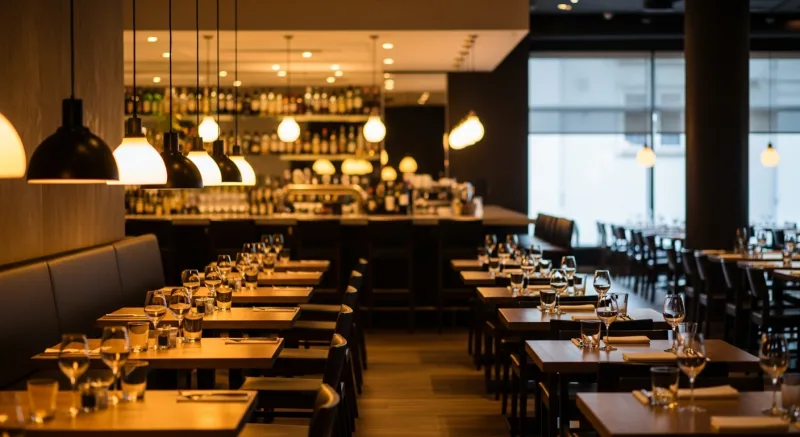
KwickOS scales differently. Your second location runs on the same platform. Reporting consolidates across both shops. Loyalty works at both locations — a customer earning points at your downtown shop can redeem at your suburban location. Menu management pushes changes to all locations simultaneously. You're not doubling your software costs; you're extending one system.
For coffee shop owners with growth ambitions, this scalability difference becomes the most important factor. The fragmented tool approach that seemed manageable at one location becomes an administrative nightmare at three.
The Bottom Line
You opened a coffee shop to make great coffee and build community. You did not open a coffee shop to spend $1,500-2,500/month on a patchwork of software tools that don't talk to each other, plus 8 hours a week managing the gaps between them.
The audit is straightforward: list your tools, add up the costs, count the hours. Then compare to a single platform that includes everything. The math does the persuading.
Run your own tech stack audit. Call (888) 355-6996 or visit kwickos.com and we'll help you compare.
The Revenue Features Most "All-in-One" Systems Charge Extra For
When POS companies say "all-in-one," they rarely mean gift cards and loyalty are included. Toast charges $75/month for their loyalty add-on. Square Loyalty starts at $45/month. Clover requires third-party apps. KwickOS includes all of these natively — zero extra cost.
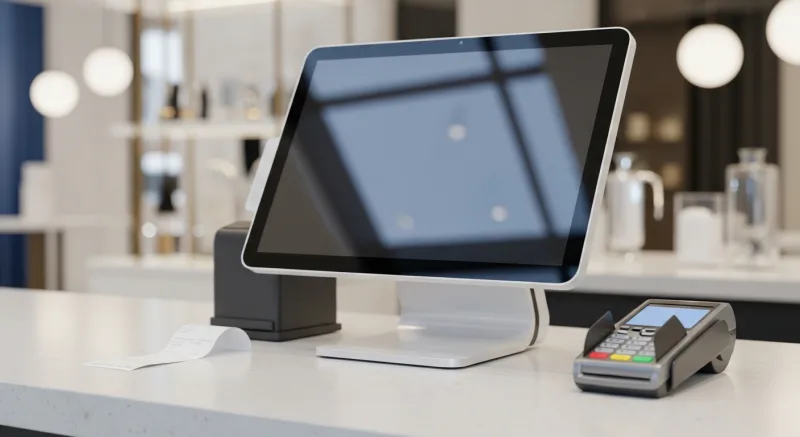
Physical & Electronic Gift Cards
Sell branded physical cards at the register. Send e-gift cards via text or email. Track balances across every location in real time. Gift card holders spend 20-40% more than face value — this is not a nice-to-have, it is a revenue multiplier.
Points-Based Loyalty System
Every transaction earns points. Customers see their balance on receipts and can redeem at checkout. Configurable earn ratios, tiered VIP levels, and automatic birthday rewards. No separate app required — it runs inside the POS your cashier already knows.
Membership & Subscription Management
Run coffee clubs, wine memberships, or VIP dining programs. Recurring billing, exclusive member pricing, and member-only items — managed from the same dashboard as your daily operations. Your customers feel special. Your revenue becomes predictable.
Real impact: businesses using KwickOS loyalty features see repeat visit rates increase by up to 35%. Gift card programs generate an average of 15% additional revenue during holiday seasons.

Tom Jin
Founder & CIO of KwickOS · 30 Years IT · 20 Years Restaurant Industry
Tom built KwickOS after decades running restaurants and IT companies. Today KwickOS serves 5,000+ businesses across 50 states.