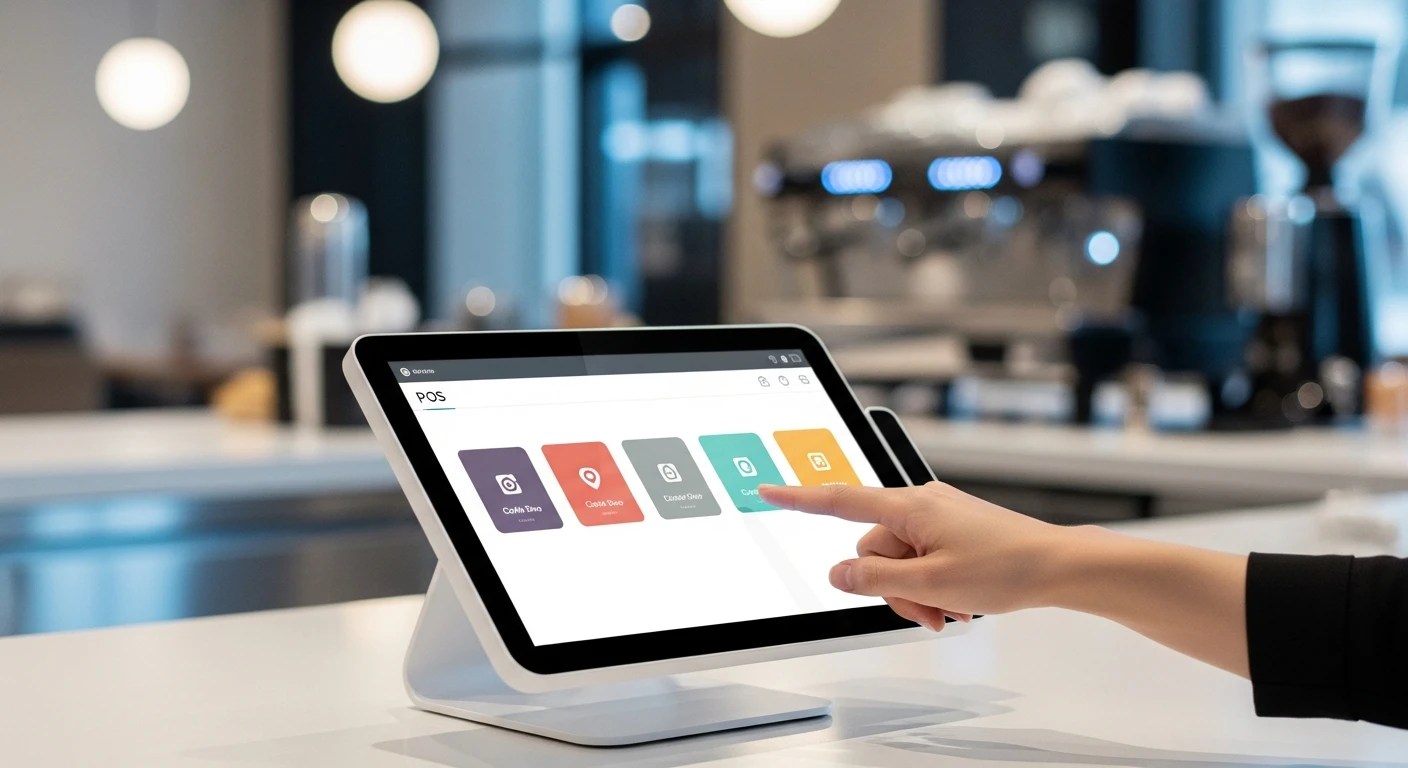
The morning routine of a multi-location coffee shop owner is a masterclass in inefficiency. Wake up at 4:30 AM. Drive to Location A to make sure the opener showed up. Check the pastry delivery. Taste the first batch of drip coffee. Drive to Location B. Repeat. Drive to Location C. Repeat. By the time you have confirmed all locations are open and operational, it is 8 AM, the morning rush is in full swing, and you are in your car between stores — unable to help at any of them.
This is the management tax of multi-location ownership on a fragmented POS system. You drive between stores because your technology does not give you visibility from anywhere else. You check pastry counts in person because your inventory system does not show them remotely. You taste the coffee because you do not have data confirming that the barista followed the calibration protocol.
The alternative is a system that puts every location on your phone. Not a simplified mobile report that shows yesterday's totals — a real-time operational dashboard that shows what is happening right now at every store, with the ability to act on what you see.
The 4:30 AM Problem: Opening Verification
The most anxiety-inducing moment for a multi-location coffee shop owner is 5:00 AM when stores are supposed to open. Did the opener show up? Did they unlock the door, turn on the machines, and start brewing? On a fragmented POS system, you find out by calling, texting, or driving there.
On KwickOS, you find out by opening the app. Fingerprint clock-in — KwickOS's 1:N fingerprint matching where the employee just touches the sensor without entering any ID — creates a timestamped record the moment your opener arrives. You see "Location A: Maria clocked in at 4:48 AM" from your bedroom. If 5:05 AM arrives and Location B shows no clock-in, you call. Targeted intervention instead of a blanket driving circuit.
This single feature — remote clock-in visibility — saves a 5-location coffee shop owner 45-60 minutes every morning. Over a year, that is 274-365 hours of time recaptured. At even a conservative $40/hour valuation, that is $10,960-$14,600/year in owner time returned to productive use.
Real-Time Sales: Catching the Slow Morning Before It Becomes a Slow Day
Coffee shop revenue is front-loaded. The morning rush (6-9 AM) typically represents 40-50% of daily sales. If something goes wrong during morning rush at one location — a machine is down, a barista called out, there is a water main break on the block — you need to know immediately, not at end-of-day reconciliation.
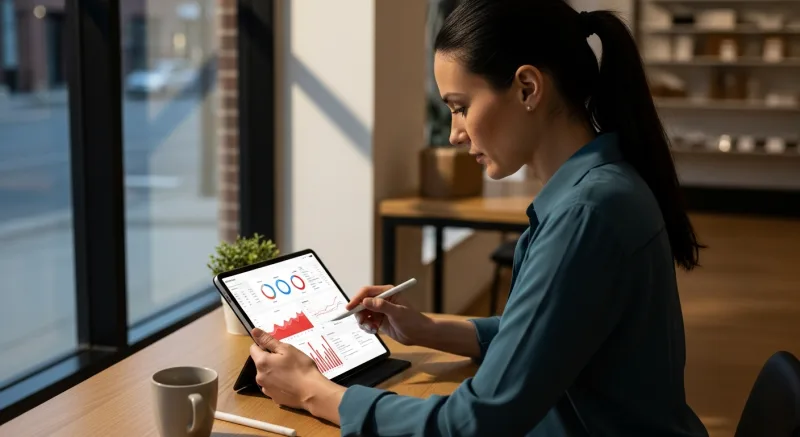
KwickOS's multi-location dashboard shows hourly sales at every location in real time. At 7:30 AM, you glance at your phone and see that Location A has done $480 in the first 90 minutes (normal), Location B has done $620 (above average — that new pastry display is working), and Location C has done $180 (far below the $400 average for that window).
Location C is underperforming by 55%. Something is wrong. You call. The espresso machine threw an error at 6:15 AM and the opener has been making pour-overs only, which takes 3x longer per drink. Half the line left when they saw the wait time. You dispatch a repair tech immediately instead of discovering the problem at 3 PM when you finally visit that store.
T. Jin China Diner uses this same real-time monitoring across 15 locations and 75 terminals. The owner sees every store's performance simultaneously. For coffee shops, where the revenue window is narrower and the morning rush is make-or-break, this real-time visibility is not a nice-to-have — it is the difference between a $1,200 day and an $800 day at a single location.
One Menu, Five Locations, Zero Discrepancies
Coffee shops change their menus seasonally — pumpkin spice in fall, peppermint mocha in winter, cold brew specials in summer. Each season brings new drinks, new modifiers, new pricing, and new promotional items. At a single location, a menu update takes 20 minutes. At five locations, it takes five separate 20-minute sessions — assuming you remember to update all five and assuming you enter every price identically at each store.
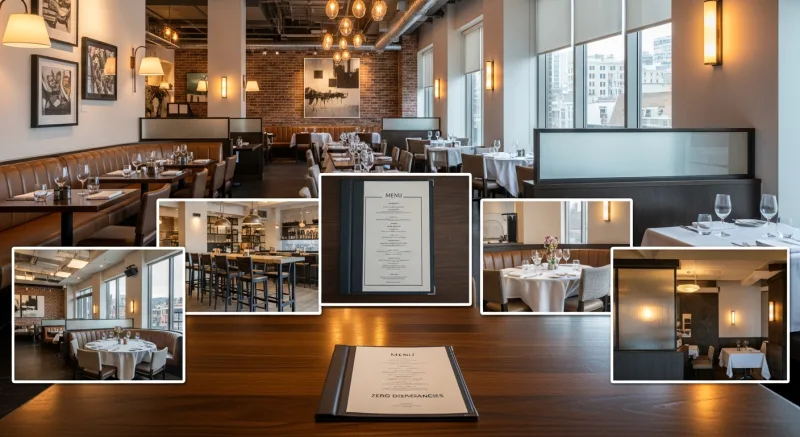
The drift problem is particularly acute for coffee shops because customers order the same drink every day. A regular who orders a large oat milk latte at $6.25 at Location A discovers it costs $6.50 at Location C because someone entered the oat milk upcharge incorrectly during the last menu update. The customer notices. They always notice. And the inconsistency erodes trust in your brand.
KwickOS one-click menu sync eliminates this entirely. Build the fall menu once. Add the pumpkin spice latte with its modifiers and pricing. Click sync. Every register, every kiosk, every digital menu board at all five locations updates simultaneously. Price consistency. Modifier consistency. Item availability consistency.
Crafty Crab Seafood pushes menu changes to 19 locations and 152 terminals with a single click. Their menu complexity — seafood boils with dozens of sauce and spice combinations — exceeds most coffee shop menus. If one-click sync handles Crafty Crab's complexity across 19 stores, it handles your coffee shop's seasonal rotation across 5 stores with ease.
Gift Cards: The Multi-Location Revenue Engine
Coffee shop gift cards are a volume business. Unlike restaurant gift cards ($50-100 average value), coffee gift cards run $15-25 and are purchased frequently — as stocking stuffers, teacher gifts, thank-you tokens, and impulse purchases at the register. A 5-location coffee chain might sell $80,000-120,000 in gift cards annually.
That revenue depends entirely on frictionless redemption. A customer receives a $20 gift card purchased at your downtown location. They work near your midtown location. If they walk into midtown and the card does not work, you have lost that customer's next 10-20 visits — along with the goodwill of whoever gave them the gift.
KwickOS gift cards work at every location from the moment of purchase. Physical cards, e-gift cards through your KwickMenu online ordering page, and app-based gift cards all share one centralized balance. A customer with a $20 card can use $5.50 at Location A, $6.25 at Location C, and $8.25 at Location E. The balance updates in real time across all locations.
The breakage revenue alone — industry data shows 10-15% of gift card balances go unredeemed — makes multi-location gift card programs a significant profit center. On $100,000 in gift card sales, that is $10,000-15,000 in pure margin from breakage. But only if the cards work everywhere, because customers who cannot redeem their balance at their preferred location will push harder to fully spend it or simply never come back.
Loyalty That Rewards Your Best Customers, Not Your Luckiest Ones
The best coffee shop loyalty programs are simple: buy 10, get one free. The psychology is powerful — visible progress toward a concrete reward drives repeat visits. But at multiple locations with fragmented loyalty, the "buy 10" program becomes "buy 4 at Location A and 6 at Location C and somehow keep track of both."
Your most valuable customers — the ones who visit your brand 5 times a week — are often the ones who visit multiple locations depending on their daily routine. They get coffee near home in the morning and near the office in the afternoon. On fragmented loyalty, their 5 weekly visits split into 2 at one location and 3 at another. Neither account reaches the reward threshold as quickly as it should. The customer feels like the program is slow. They stop caring about it.
KwickOS loyalty pools all visits and all spend into one account across all locations. Five visits this week — no matter which combination of locations — gets them halfway to their free drink. The progress is real, visible, and motivating. Unified loyalty increases reward redemption rates by 30-40% compared to fragmented per-location programs, because customers actually reach thresholds at the rate their total patronage deserves.
Membership tiers managed from headquarters let you recognize your top customers across your entire chain. A Gold member is a Gold member at every location. Their name pops up when they scan their loyalty card or give their phone number. The barista says "Good morning, Sarah — your usual oat milk latte?" at every store, not just the one where Sarah usually goes. That recognition is what turns customers into advocates.
Processor Freedom: The Multi-Location Savings Multiplier
Coffee shops process a high volume of small transactions. At 300 transactions/day averaging $6.50, a location processes $1,950/day or $58,500/month. Across 5 locations, that is $292,500/month. The per-transaction fee component of your processing rate matters enormously at this volume.
Toast charges 2.99% + $0.15 per transaction. On 300 daily transactions at $6.50 average, that is $1,795/month per location or $8,975/month across 5 locations ($107,700/year). A negotiated rate through an independent processor — say 2.2% + $0.08/transaction — costs $1,311/month per location or $6,555/month across 5 locations ($78,660/year).
The difference: $29,040/year in processing savings from processor freedom alone.
KwickOS is processor-agnostic. You choose your processor. You negotiate one rate based on your aggregate $292,500/month volume. You pay that rate at every location. If the processor tries to raise rates, you get one competing quote, make one phone call, and resolve it for all 5 locations at once.
On Toast, you pay their rate. Period. No negotiation, no alternatives, no recourse. On Square, the rate is flat (2.6% + $0.10) but non-negotiable. On Clover, each location may end up with a different processor entirely, fragmenting your volume and weakening your negotiating position.
Employee Management Across Locations
Coffee shop staff frequently work at multiple locations. A barista might cover Location A's morning shift Monday-Wednesday and Location B's morning shift Thursday-Friday. A shift supervisor might float between three locations depending on who called out sick. This cross-location staffing is operationally necessary but creates payroll chaos on fragmented POS systems.
On separate systems, cross-location employees have separate accounts at each store. Hours tracked in two systems need manual reconciliation for payroll. Tip allocations get confused. A barista who worked 20 hours at Location A and 15 hours at Location B appears as two part-time employees instead of one full-time employee, which can affect benefits eligibility and scheduling efficiency.
KwickOS fingerprint authentication works at every location. Maria touches the sensor at Location A on Monday morning. She touches the same sensor model at Location B on Thursday. One employee record, one timecard, one tip tracking history, one payroll export. The manager sees Maria's total hours across all locations on one screen and can schedule accordingly.
Digital Signage: Seasonal Drinks on Every Screen
Coffee shops rely on digital menu boards to promote seasonal specials, new items, and upsells. At 5 locations with 2-3 screens each, that is 10-15 digital displays that need to show the same seasonal promotion. On separate signage systems, updating 15 screens means 15 separate logins and uploads. Miss one, and Location D is still showing the winter menu when the other four locations have switched to spring.
KwickOS digital signage syncs with the menu system. When you add the spring cold brew to the menu and push it to all locations, the digital boards update automatically. Remove the winter peppermint mocha, and it disappears from every screen. One action, all locations, all screens.
The Compound Effect of Unification
Each of these capabilities saves money individually. Together, they create a compound effect that makes multi-location operation feel like single-location simplicity:
| Savings Category | Annual Savings (5 locations) |
|---|---|
| Processing savings (vs Toast) | $29,040 |
| Owner time recaptured (morning rounds) | $10,960-14,600 |
| Menu update labor savings | $3,600-6,000 |
| Gift card revenue (from cross-location redemption) | $4,000-8,000 |
| Loyalty-driven incremental visits | $6,000-12,000 |
| Total annual impact | $53,600-69,640 |
For a 5-location coffee chain doing $300,000/month in combined revenue, saving $53,000-70,000/year is equivalent to adding a 2-3% boost to net margin — without serving a single additional cup of coffee.
The Bottom Line
You do not need to drive between stores to know how they are running. You do not need to update five menus separately every time pumpkin spice season arrives. You do not need to explain to customers why their gift card does not work at your other location. You do not need to overpay on processing because your POS vendor locked you in.
You need one system that runs every location, visible from your phone, controllable from anywhere. That is what KwickOS was built to do.
Ready to Manage All Your Coffee Shops From One Screen?
Schedule a demo and we will show you the multi-location dashboard, one-click menu sync, cross-location gift cards and loyalty, and processor savings — calculated for your specific volume.
Get Your Free DemoOr call us directly: (888) 355-6996
Turn One-Time Diners into Regulars: Built-In Gift Cards & Loyalty
Most POS companies treat gift cards and loyalty as afterthoughts — expensive add-ons that cost $50-100/month extra. KwickOS includes them at no additional charge because we believe they are essential revenue tools, not luxury features.
Gift Cards That Actually Drive Revenue
Here is what most restaurant owners do not realize: gift card buyers spend an average of 20-40% more than the card's face value. A $50 gift card typically generates $60-70 in actual spending. KwickOS supports both physical gift cards and electronic gift cards that customers can purchase, send, and redeem through their phones.
- Physical gift cards — branded plastic cards that sit on your counter and sell themselves during holidays
- E-gift cards — customers buy and send digitally via text or email, perfect for last-minute gifts
- Balance tracking — real-time balance across all your locations, no manual reconciliation
- Reload capability — customers top up their balance, creating a built-in prepayment habit
Loyalty Points That Keep Them Coming Back
KwickOS loyalty is not a punch card from 2005. It is a digital points system that tracks every dollar spent and automatically rewards your best customers:
- Earn points on every purchase — configurable ratio (e.g., $1 = 1 point, or $1 = 10 points)
- Tiered rewards — silver, gold, platinum levels to incentivize higher spending
- Birthday rewards — automated birthday offers that bring customers back during their special month
- Points-for-payment — customers redeem points directly at checkout, seamless for your staff
Membership Programs
For restaurants running VIP programs or subscription models (like monthly coffee clubs), KwickOS membership management handles recurring billing, exclusive pricing tiers, and member-only menu items — all within the same system your cashier already uses.
The bottom line: Toast charges $75/month extra for loyalty. Square's loyalty starts at $45/month. KwickOS includes gift cards, e-gift cards, loyalty points, and membership management in every plan. That is $540-900/year you keep in your pocket.