Phoenix Adds 80,000 Residents a Year. AI Tells Restaurants Where They're Eating.
Updated March 2026 · 11 min read
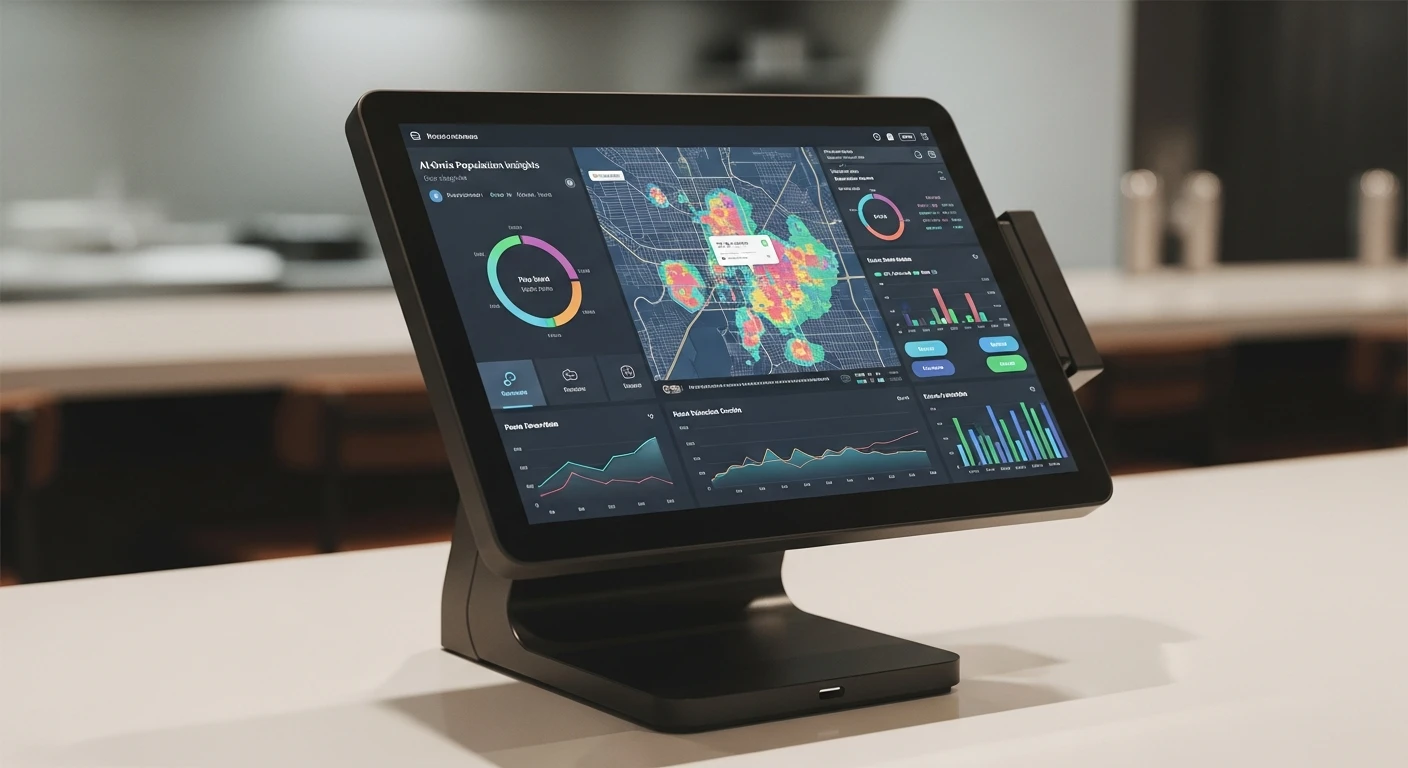
The Phoenix metropolitan area is the fastest-growing major metro in the United States, adding roughly 80,000 new residents annually. Scottsdale, Chandler, Gilbert, Surprise, and Goodyear are expanding so rapidly that a restaurant that opened in a new subdivision 18 months ago now sits in the center of a neighborhood with 3,000 more households. The growth creates enormous opportunity and enormous volatility: customer bases are forming in real time, competitor density is shifting monthly, and the demand patterns that worked six months ago may be obsolete today.
Layered on top of this growth is Phoenix's defining seasonal dynamic: the snowbird migration. From October through April, an estimated 300,000 seasonal residents inflate the metro's population, filling restaurants in Scottsdale, Sun City, and Mesa before disappearing in May. A restaurant that operates at full capacity during snowbird season and 60% capacity in summer is managing two fundamentally different businesses from the same kitchen.
AI-powered POS systems provide the adaptive intelligence that Phoenix's dual-reality market demands. The same system that optimizes for snowbird volume in February scales down for summer survival in July, using predictive models that no human manager can maintain manually across a market this dynamic.
Snowbird Season Modeling: The Six-Month Surge
A Scottsdale restaurant that averages 180 covers per day in March drops to 95 covers per day in July — a 47% decline that would trigger panic in any other market. In Phoenix, it is simply the annual cycle. The challenge is not surviving summer (every Phoenix operator expects the drop) but optimizing snowbird season to build the financial cushion that funds the slow months.
KwickOS AI models snowbird-driven demand with weekly granularity. The system identifies that snowbird traffic begins arriving the third week of October, reaches full density by mid-November, plateaus through March, and drops sharply after Easter. But within this arc, weekly patterns emerge: January is 8% stronger than December (post-holiday snowbirds arriving). February is the peak month (all seasonal residents present, spring training adding sports tourists). March begins strong but declines after the 15th as early snowbirds depart.
The AI translates these patterns into operational recommendations. November requires 20% more staff than October. January requires a menu refresh to maintain interest from snowbirds who have been eating at your restaurant for three months. March requires flexible scheduling that scales down as departure season begins, avoiding the trap of maintaining February staffing into a declining March.
The Summer Survival Strategy: AI for Phoenix's Brutal Off-Season
Phoenix summers, with temperatures exceeding 110°F for weeks at a time, suppress outdoor dining entirely and reduce overall restaurant traffic by 30-50%. Restaurants that do not adapt their operations for summer hemorrhage money from May through September. The ones that survive use AI to minimize costs during the trough while maintaining the infrastructure needed for the snowbird recovery.
KwickOS labor optimization is most valuable during summer. The system identifies exactly how few staff you need during a Tuesday lunch in August (when walk-in traffic might be single-digit covers per hour) without sacrificing service quality for the customers who do appear. It recommends reduced operating hours during the deadest periods — closing at 9 PM instead of 10 PM on weeknights when the last two hours generate less revenue than the labor and utility cost of staying open.
The AI also identifies summer opportunity pockets. It detects that delivery orders increase 25% during summer's worst heat weeks (nobody wants to leave air conditioning), suggesting a summer delivery promotion strategy. It identifies that corporate catering holds steady because offices are air-conditioned and employees still eat lunch, recommending a summer pivot toward catering revenue to offset dine-in declines.
Delivery in Desert Heat: AI for Temperature-Sensitive Operations
Phoenix delivery faces a challenge unique to desert cities: food quality degradation during transport in extreme heat. A hot dish cooling in a delivery bag in a 115°F car arrives lukewarm. A cold dish warming in the same environment arrives at an unappetizing temperature. Third-party delivery services using uninsulated personal vehicles exacerbate this problem.
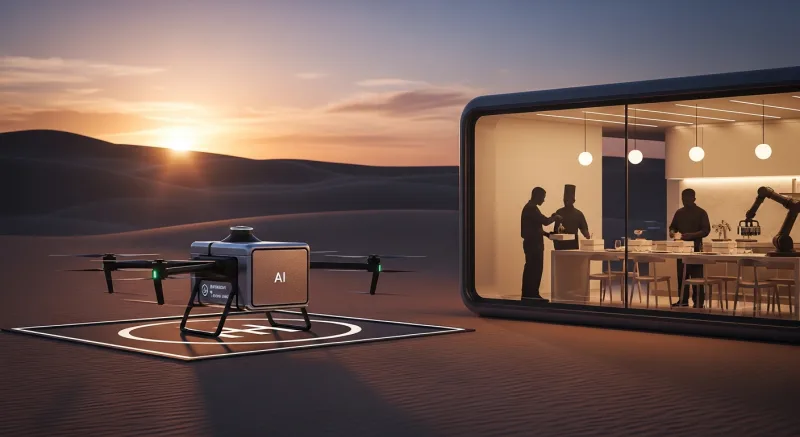
KwickOS with KwickDriver manages delivery timing to minimize heat exposure. The AI calculates optimal dispatch timing: a dish that will travel 8 minutes in summer heat should be dispatched slightly before the driver departs (food stays in the restaurant's climate-controlled environment longer) rather than sitting in a warming bag in a hot car. The system batches summer deliveries more tightly than winter deliveries because extended ride-along times degrade more food quality at 115°F than at 75°F.
The $2 flat fee per delivery through KwickDriver also addresses Phoenix's sprawling geography. A Chandler restaurant delivering 6 miles to a Gilbert neighborhood pays $2 + prorated distance through KwickDriver versus $5-8 through DoorDash. In a sprawling metro where delivery distances average 4-7 miles, the per-delivery savings compound into annual totals of $25,000-45,000 for a restaurant doing 50+ daily deliveries.
New Subdivision Intelligence: Adapting to Neighborhoods That Didn't Exist Last Year
Phoenix's growth means entire neighborhoods materialize within months. A restaurant that opened serving an established community suddenly finds 500 new homes within its delivery radius. These new households represent fresh demand — but with unknown preferences, unknown dining patterns, and unknown spending habits.
KwickOS AI detects changes in customer acquisition patterns. A sudden influx of first-time customers from a specific zip code signals new housing development in that area. The system identifies these new customers' ordering behaviors (are they ordering delivery or dining in? Are they price-sensitive or premium-seeking? Are they families or young professionals?) and adjusts marketing, menu promotion, and delivery zone prioritization accordingly.
The AI also identifies when competitor density increases. A new restaurant opening within your trade area triggers a detectable change in customer behavior: existing customers' visit frequency drops slightly, or certain menu categories lose share. The system quantifies the impact and recommends competitive responses before the loss becomes entrenched.
Loyalty for a Population That Reinvents Itself Annually
Phoenix's combination of rapid permanent growth and seasonal transience creates a loyalty challenge unlike any other market. Your customer base is partially permanent residents, partially new arrivals who are still exploring, and partially snowbirds who return annually but disappear for six months.
KwickOS AI segments loyalty by residency pattern. Permanent residents receive year-round loyalty programs that build habitual visits. New arrivals receive accelerated onboarding with rapid rewards that convert exploration into habit within the first month. Snowbirds receive seasonal re-engagement: a "welcome back" text in October with their favorite dish featured, and a "see you next season" message in April that includes a loyalty balance reminder.
The system tracks snowbird-specific patterns: which snowbirds return to your restaurant upon arrival (high loyalty), which wait until they have tried new options (moderate loyalty), and which did not return this season (churned). For churned snowbirds, the AI calculates whether a re-engagement offer is worth the cost. A snowbird who spent $2,500 over the previous season is worth a $25 win-back offer. A snowbird who visited three times is not.
Gift cards in Phoenix benefit from snowbird gifting patterns: snowbirds buying gift cards for permanent-resident friends ("try my favorite place"), and permanent residents giving gift cards to visiting snowbird friends. KwickOS identifies these cross-segment gift card flows and creates promotions that encourage both directions.
KwickPhone for Phoenix's Catering and Event Market
Phoenix's warm climate (October through April) makes it a premier outdoor event destination. Corporate retreats, golf outings, wedding season (October-November and March-April), and Super Bowl / spring training / Waste Management Phoenix Open create a year-round event catering market that restaurants can tap.
KwickPhone handles catering inquiries with the detail that event planners require: headcount, dietary restrictions, delivery logistics, setup requirements, and billing arrangements. For a restaurant that receives 10-15 catering calls per week during peak event season, KwickPhone ensures every inquiry is captured and processed, even during Saturday dinner service when the phone would normally go unanswered.
Processing Freedom in Arizona's Business-Friendly Market
Arizona's business-friendly regulatory environment extends to payment processing, where competition among processors keeps rates aggressive. Independent processors in Arizona offer rates of 1.9-2.3% to restaurants with volume above $50,000 monthly. Toast's locked 2.99% rate represents a 0.7-1.0% premium that costs $4,200-6,000 annually on $600,000 in card volume.
KwickOS's processor-agnostic architecture lets Phoenix restaurants shop Arizona's competitive processing market, negotiating rates that reflect their volume, transaction size, and business type. The AI provides transaction analytics that help restaurants identify the optimal processor for their specific profile.
Why Phoenix Restaurants Choose KwickOS Over Toast and Square
Toast's cloud-dependent architecture is a liability during Phoenix's summer monsoon season, when lightning storms and flash flooding can knock out internet infrastructure across wide areas. A restaurant running Toast during a monsoon evening risks losing POS functionality during the dinner service. KwickOS's local processing handles every transaction without internet connectivity.
Square cannot handle the operational complexity of Phoenix's seasonal market: dual-season demand modeling, snowbird loyalty segmentation, multi-location management across a metro that spans 50 miles, and the delivery logistics of a sprawling desert city. Square is a point-of-sale terminal. Phoenix restaurants need an operating system.
Phoenix metro restaurant owners: Call (888) 355-6996 or visit KwickOS.com for an AI-powered demo built for Phoenix's seasonal market dynamics.
AI + Loyalty: Smarter Customer Retention
KwickOS combines AI insights with built-in loyalty tools to do something no other POS can: predict which customers are about to stop coming in and automatically re-engage them.
The gift card and loyalty system is not just a punch card — it is connected to AI-powered analytics that identify spending patterns, predict churn risk, and suggest targeted promotions. A customer who used to visit weekly but has not been in for 3 weeks? The system flags them and can trigger an automatic points bonus or e-gift card offer via SMS.
- Smart gift cards — AI suggests optimal gift card denominations based on your average ticket size
- Predictive loyalty — identifies at-risk customers before they leave, triggers re-engagement
- Points optimization — automatically adjusts earn rates during slow periods to drive traffic
- Membership insights — shows which VIP tiers generate the most lifetime value
All included. No add-on fees. Toast charges $75/month for basic loyalty without any AI component.
AI + Loyalty: Smarter Customer Retention
KwickOS combines AI insights with built-in loyalty tools to do something no other POS can: predict which customers are about to stop coming in and automatically re-engage them.
The gift card and loyalty system is not just a punch card — it is connected to AI-powered analytics that identify spending patterns, predict churn risk, and suggest targeted promotions. A customer who used to visit weekly but has not been in for 3 weeks? The system flags them and can trigger an automatic points bonus or e-gift card offer via SMS.
- Smart gift cards — AI suggests optimal gift card denominations based on your average ticket size
- Predictive loyalty — identifies at-risk customers before they leave, triggers re-engagement
- Points optimization — automatically adjusts earn rates during slow periods to drive traffic
- Membership insights — shows which VIP tiers generate the most lifetime value
All included. No add-on fees. Toast charges $75/month for basic loyalty without any AI component.
AI + Loyalty: Smarter Customer Retention
KwickOS combines AI insights with built-in loyalty tools to do something no other POS can: predict which customers are about to stop coming in and automatically re-engage them.
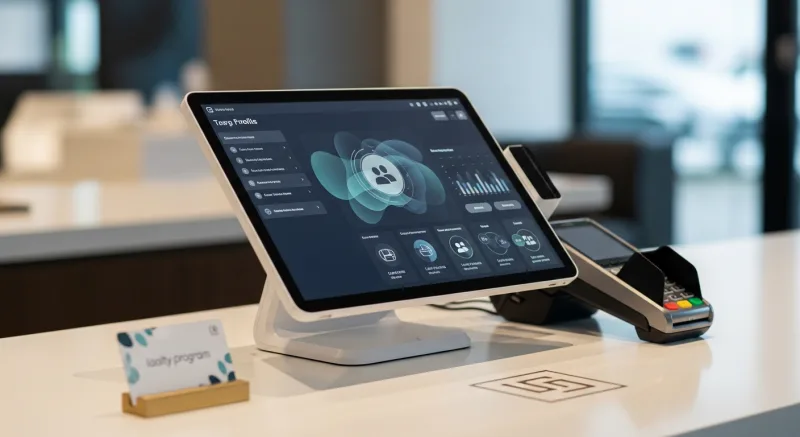
The gift card and loyalty system is not just a punch card — it is connected to AI-powered analytics that identify spending patterns, predict churn risk, and suggest targeted promotions. A customer who used to visit weekly but has not been in for 3 weeks? The system flags them and can trigger an automatic points bonus or e-gift card offer via SMS.
- Smart gift cards — AI suggests optimal gift card denominations based on your average ticket size
- Predictive loyalty — identifies at-risk customers before they leave, triggers re-engagement
- Points optimization — automatically adjusts earn rates during slow periods to drive traffic
- Membership insights — shows which VIP tiers generate the most lifetime value
All included. No add-on fees. Toast charges $75/month for basic loyalty without any AI component.

Founder & CIO of KwickOS · 30 Years IT · 20 Years Restaurant Industry
Tom built KwickOS after decades running restaurants and IT companies. Today KwickOS serves 5,000+ businesses across 50 states.