Dallas Is Opening 3 Restaurants a Day. AI Decides Which Ones Survive.
Updated March 2026 · 11 min read
Dallas's competitive landscape demands Dallas Is Opening 3 Restaurants a Day. AI Decides Which Ones Survive. that delivers from day one. The Dallas-Fort Worth metropolitan area added over 1,100 new restaurants in 2025, making it the fastest-growing restaurant market in the United States by volume. The DFW metro's population growth — 4.2 million new residents in the last decade — has created insatiable demand for dining options in every suburb from Plano to Mansfield to McKinney. For every new restaurant that opens, another closes. The first-year failure rate in DFW exceeds 55%, higher than the national average, because population growth attracts restaurants faster than the market can sustain them.
The restaurants that survive in Dallas share a common trait: operational precision. In a market where your nearest competitor opened last month with a fresher interior and a TikTok marketing budget, you cannot afford to waste ingredients, overstaff slow shifts, underprice your menu, or lose customers through inattention. Every inefficiency that was tolerable in a less competitive market becomes a survival risk in DFW's saturated landscape.
This is where AI-powered POS technology becomes a competitive weapon rather than a convenience tool. The intelligence to predict tomorrow's demand, optimize today's schedule, and retain this week's customers at scale is the advantage that separates the 45% that survive from the 55% that do not.
Suburban Multi-Location Management: The DFW Challenge
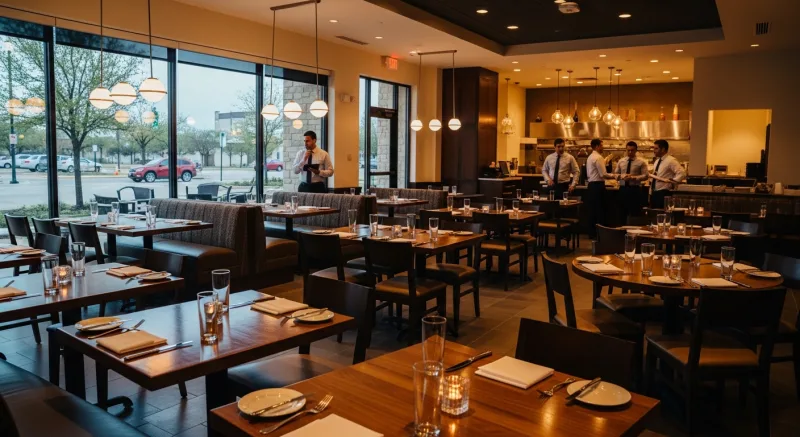
DFW's sprawling geography creates a unique multi-location challenge. A restaurant group with locations in Uptown Dallas, Richardson, and Southlake is managing three stores spread across 40+ miles of highway. The owner cannot visit all three in a single morning. The differences between locations are substantial: Uptown attracts young professionals who order cocktails and share plates. Richardson serves tech workers who want efficient lunch service. Southlake caters to affluent families with high check averages and weekend reservation demand.
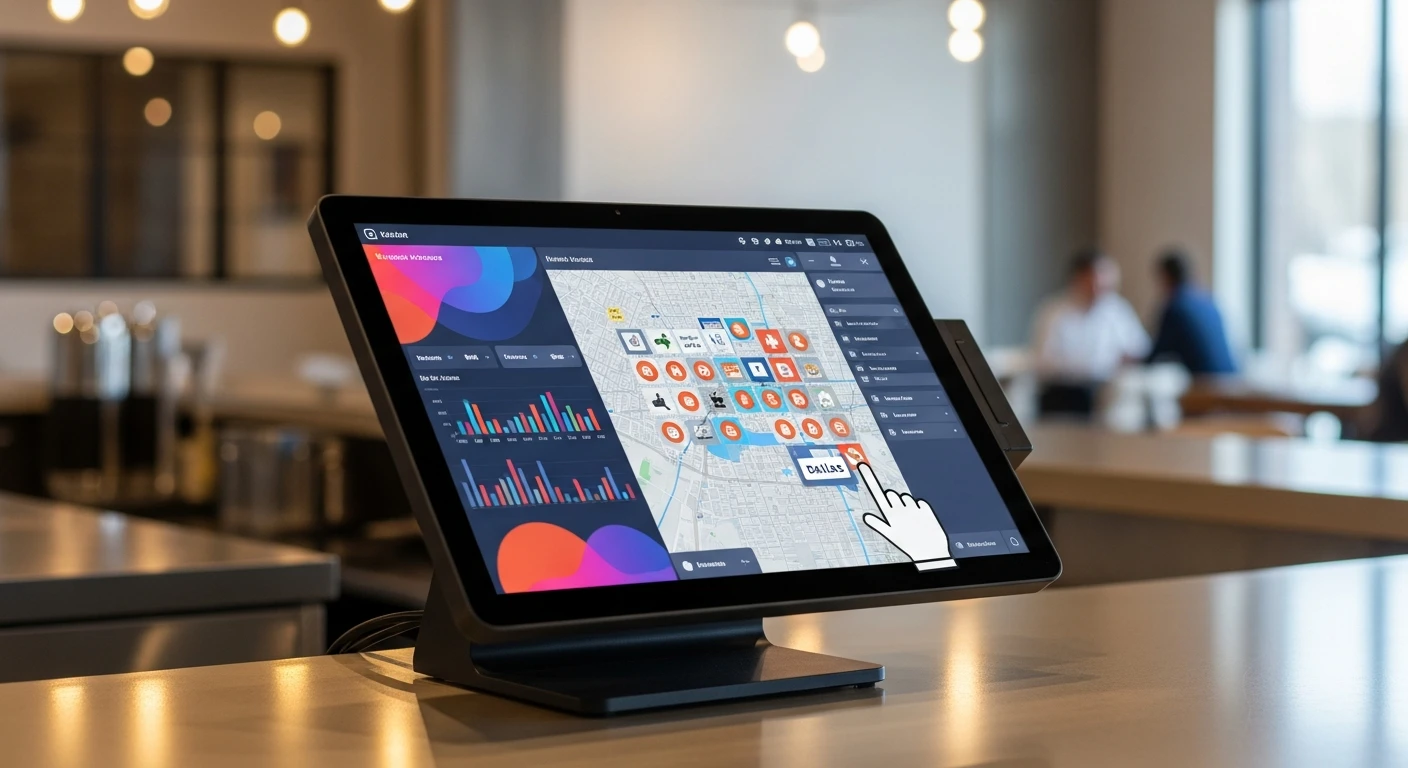
KwickOS AI provides centralized intelligence that makes 40 miles feel like 40 feet. Real-time dashboards show sales velocity, labor metrics, inventory levels, and customer satisfaction indicators for every location simultaneously. The AI identifies divergences: Richardson's lunch revenue dropped 12% this week while Uptown and Southlake held steady. The system cross-references the data: Richardson's average fulfillment time increased by 3 minutes, suggesting a kitchen bottleneck rather than a demand problem. A targeted investigation finds that a new prep cook is slowing the line — a coaching fix, not a strategic crisis.
T. Jin China Diner manages 15 stores with 75 terminals through this kind of centralized AI monitoring. For a DFW restaurant group scaling from 3 to 8 locations across the metroplex, the alternative to AI oversight is hiring regional managers at $55,000-75,000 each — a cost that AI-powered remote monitoring can reduce or defer entirely.
Tex-Mex Volume and the Shared Kitchen Challenge
Tex-Mex represents the largest single cuisine category in the DFW restaurant market. A typical Tex-Mex restaurant serves 300-500 covers on a busy weekend night, with many items sharing base ingredients: seasoned ground beef appears in tacos, burritos, nachos, and enchiladas. Pico de gallo accompanies 40% of entrees. Guacamole appears in 6 menu items and as a standalone appetizer. Rice and beans are universal sides.
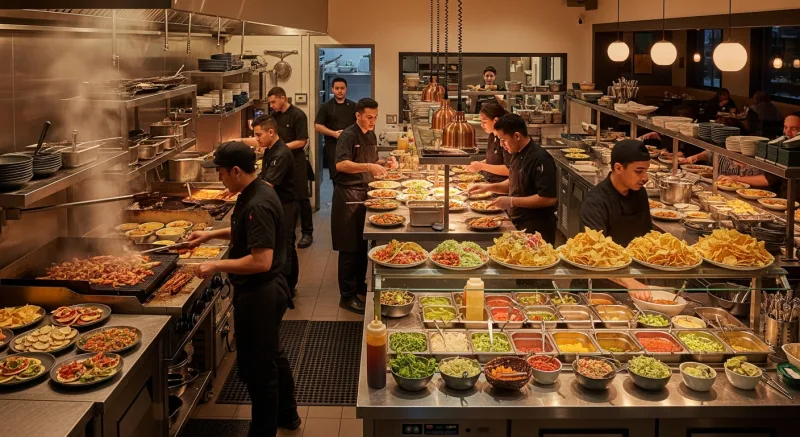
The shared-ingredient complexity makes inventory forecasting difficult. Running out of seasoned beef at 8 PM means 60% of your menu is unavailable. Making too much pico de gallo means throwing away $80 in produce at close. KwickOS AI forecasts demand at the ingredient level by tracing recipes to components. Friday's forecast of 420 covers translates into 65 pounds of seasoned beef (used across 8 menu items at varying portions), 30 pounds of pico (used across 12 items), and 18 batches of guacamole (6 items plus standalone).
The AI adjusts for DFW-specific patterns. It learns that weeknight Tex-Mex demand is 20% higher during Cowboys football season (gatherings and watch parties). It detects that queso consumption spikes 35% during March Madness. It identifies that weekend brunch items (breakfast tacos, huevos rancheros) are growing 8% month-over-month, suggesting a capacity investment in weekend morning kitchen staff.
The Football Season Revenue Engine
Dallas Cowboys games — 8 home games plus 9 away games that are watched at bars and restaurants — represent a predictable revenue engine for DFW food service. Home game days increase restaurant revenue within 5 miles of AT&T Stadium by 60-80%. Away game days increase bar and sports restaurant revenue across the metroplex by 25-35%. The effect cascades: Thursday night games boost Wednesday evening appetizer and catering pre-orders. Monday night games extend Sunday's already-strong weekend traffic.
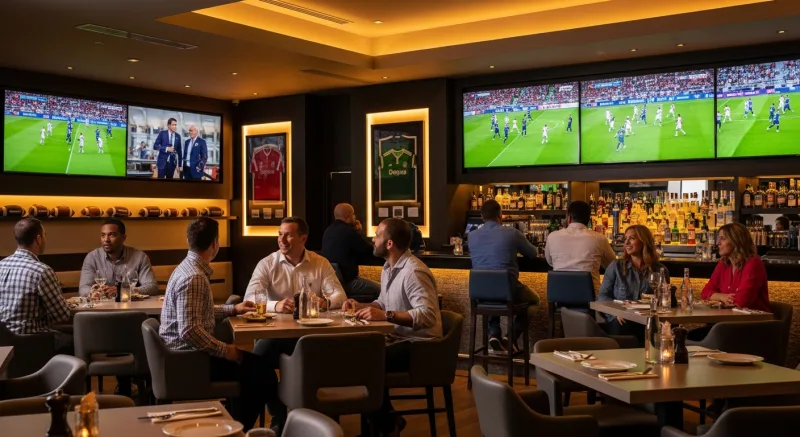
KwickOS AI integrates the Cowboys schedule (and Rangers, Mavericks, and Stars schedules) into demand forecasting automatically. The system does not just flag "game day" — it models the specific impact. A Sunday 3:25 PM Cowboys game increases late-afternoon appetizer sales by 45% and shifts the dinner peak 30 minutes later. A Thursday 7:20 PM game increases Wednesday catering orders by 30% (office watch parties pre-ordering). A Monday night game extends bar service revenue by 90 minutes compared to a normal Monday.
Labor scheduling adjusts automatically. Cowboys Sunday: add two kitchen staff from 2-8 PM and a bartender from 3-10 PM. Thursday night game: extend Wednesday's closing shift by one hour for catering prep. The AI calculates the expected revenue impact against the marginal labor cost, recommending additional staff only when the revenue projection justifies the expense.
KwickPhone for DFW's Catering-Heavy Market
DFW has more corporate office parks per capita than any other major metro, and those offices order catering. Lunch catering is a $2.8 billion market in DFW, driven by corporate meetings, training events, office celebrations, and the Texas tradition of feeding people at every business gathering.
KwickPhone handles catering phone orders with the detail that corporate clients require: "I need lunch for 35 people next Tuesday at noon. Mixed fajita platter, rice and beans, chips and queso, three dozen tamales. I need vegetarian options for 8 people. Delivery to 2400 Commerce Street, Suite 1200. Invoice to the company, not a personal card."
The AI captures every detail: headcount, dietary restrictions, delivery logistics, billing instructions, and repeat-order preferences. For a regular corporate client, the system recalls their previous orders: "Your last order was similar. Would you like to repeat it or make changes?" This reduces the ordering friction that causes corporate clients to default to whatever caterer is easiest to order from.
For DFW restaurants that generate 15-25% of revenue from catering, KwickPhone's ability to handle catering calls during peak dine-in service — when every staff member is occupied — captures revenue that would otherwise go to competitors who answered the phone.
Loyalty and Gift Cards in a Transient Market
DFW's rapid population growth means a constant influx of new residents who have no established restaurant loyalty. These new arrivals are the most valuable acquisition targets in the market — they are actively seeking "their" restaurants and will become loyal regulars if the first experience is positive. They are also the most volatile: if the first visit is mediocre, they move on immediately because they have no switching cost.
KwickOS AI identifies new customers (first-time loyalty enrollment) and triggers an accelerated onboarding sequence: a welcome reward redeemable within 14 days that incentivizes a second visit. The system knows that customers who visit twice within two weeks have a 65% chance of becoming monthly regulars, versus 20% for customers who wait more than a month between their first and second visit. The accelerated reward targets that critical second-visit window.
For existing customers, the AI manages retention across DFW's competitive landscape. When a loyal customer's visit frequency declines, the system identifies whether the decline correlates with a new restaurant opening nearby (competitive threat requiring a win-back offer) or with a broader slowdown (seasonal pattern requiring patience, not intervention). This precision prevents the common mistake of over-discounting to customers who were coming back anyway.
Gift cards in DFW benefit from the Texas gifting culture: barbecue restaurant gift cards for Father's Day, Tex-Mex gift cards for Cinco de Mayo, steakhouse gift cards for client appreciation. KwickOS triggers promotional pushes timed to these cultural moments, with messaging calibrated to DFW's specific occasions rather than generic national holidays.
Heat, Power, and Offline Resilience
Texas summers consistently produce 100+ degree days from June through September, driving HVAC systems to maximum capacity and straining the electrical grid. The February 2021 winter storm that collapsed the Texas power grid for days remains a vivid memory for every business owner in DFW. In both scenarios, internet infrastructure fails before or alongside electrical infrastructure.
KwickOS's hybrid local+cloud architecture processes transactions locally regardless of internet status. During a grid strain event where your ISP drops but your building's power holds (via generator or partial grid), your POS keeps running. During an extended outage where you are operating on generator power, every watt matters — KwickOS's Linux-based system consumes less power than Windows-based competitors, extending your generator's runtime.
For DFW restaurants that experienced the 2021 crisis, offline capability is not a theoretical feature. It is an insurance policy against the next grid event that every Texas business owner knows is statistically inevitable.
Menu Pricing Intelligence for a Price-Conscious Market
DFW diners are simultaneously affluent and price-conscious. The metro's median household income exceeds $75,000, but the Texas value-expectation means customers resist feeling overcharged. A $22 lunch entree that feels reasonable in Manhattan triggers price resistance in Dallas. The optimal price point for DFW restaurants is a narrow band that maximizes margin without triggering the "that is expensive for Dallas" reaction.
KwickOS AI identifies this band through demand elasticity analysis. It detects that your $16.99 chicken entree sells 45 units per week and your $18.99 chicken entree sells 42 units — the $2 increase lost only 3 units but added $48 in weekly revenue. Conversely, it detects that your $13.99 appetizer sampler dropped from 30 to 18 units when you raised it from $11.99 — the price increase reduced total revenue by $30 per week. The AI recommends reverting the appetizer price and maintaining the chicken increase.
For DFW's competitive landscape, the system also monitors whether price changes affect customer retention. A 10% price increase that does not reduce visit volume is sustainable. A 10% increase that correlates with a 5% decline in returning customer frequency is generating short-term revenue at the expense of long-term customer value — a trade-off the AI quantifies so the owner can make an informed decision.
Why DFW Restaurants Are Choosing KwickOS Over Toast and Square
Toast's processing lock-in is particularly painful in Texas, where business-friendly competition means independent processors offer rates 0.5-1.0% below Toast's 2.99%. On DFW's high transaction volumes (many restaurants process $100,000+ monthly), the annual savings from processor freedom exceed $10,000. KwickOS lets DFW restaurants work with any processor, including the Texas-based processors who offer the most competitive rates.
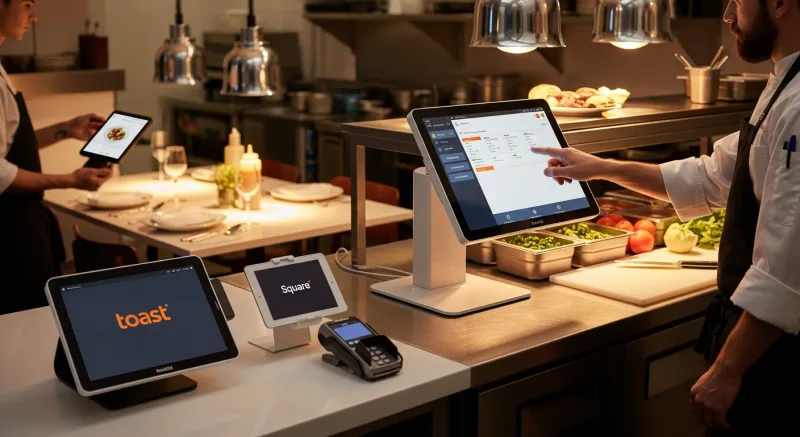
Square's simplicity serves small cafes but collapses under the operational complexity of DFW's multi-location groups, high-volume Tex-Mex operations, and catering-heavy businesses. Square has no catering order management, no multi-location centralized AI analytics, and no delivery management for the sprawling DFW delivery zones where KwickDriver's flat-rate model saves thousands monthly.
For a metro adding 1,100 restaurants per year, the POS choice is a survival decision. The operators who invest in AI intelligence are building competitive moats that the next new restaurant down the street cannot easily replicate.
DFW restaurant owners: Call (888) 355-6996 or visit KwickOS.com for an AI-powered POS demo designed for Dallas-Fort Worth operations.
AI + Loyalty: Smarter Customer Retention
KwickOS combines AI insights with built-in loyalty tools to do something no other POS can: predict which customers are about to stop coming in and automatically re-engage them.
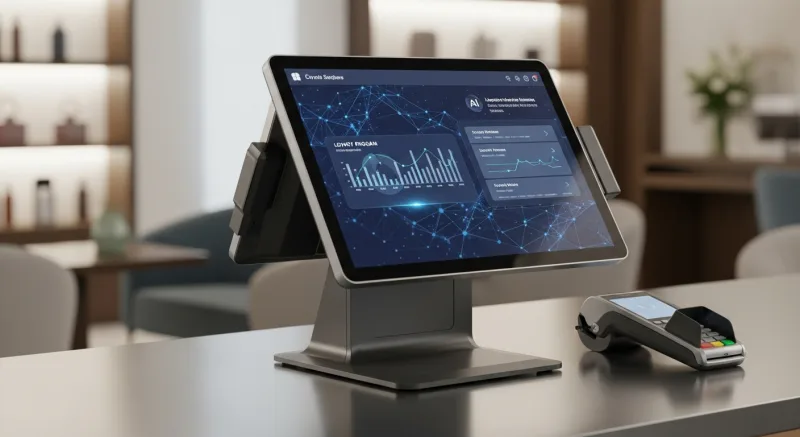
The gift card and loyalty system is not just a punch card — it is connected to AI-powered analytics that identify spending patterns, predict churn risk, and suggest targeted promotions. A customer who used to visit weekly but has not been in for 3 weeks? The system flags them and can trigger an automatic points bonus or e-gift card offer via SMS.
- Smart gift cards — AI suggests optimal gift card denominations based on your average ticket size
- Predictive loyalty — identifies at-risk customers before they leave, triggers re-engagement
- Points optimization — automatically adjusts earn rates during slow periods to drive traffic
- Membership insights — shows which VIP tiers generate the most lifetime value
All included. No add-on fees. Toast charges $75/month for basic loyalty without any AI component.

Founder & CIO of KwickOS · 30 Years IT · 20 Years Restaurant Industry
Tom built KwickOS after decades running restaurants and IT companies. Today KwickOS serves 5,000+ businesses across 50 states.