Houston's 10,000 Restaurants and the AI Arms Race for Customers
Updated March 2026 · 12 min read
Houston is the most culinarily diverse city in America. Not the most famous for food — that honor goes to New York. Not the trendiest — that is Los Angeles or Portland. But no other city has a Vietnamese-Cajun crawfish boil restaurant next to an Ethiopian injera house next to a Korean BBQ joint next to a Salvadoran pupuseria, all within a single strip mall on Bellaire Boulevard. Houston has over 10,000 restaurants serving cuisines from 70+ countries, and the diversity is not concentrated in a foodie neighborhood — it is spread across 670 square miles of sprawling metropolitan area.
This diversity creates operational challenges that no other city experiences at the same scale. Multilingual kitchens where a single restaurant might employ speakers of three languages. Ingredient supply chains that source from specialty importers across the country. Customer bases that span every demographic and income level within a 5-mile radius. And underneath it all, the ever-present threat of hurricanes that can shut down the entire metro for days.
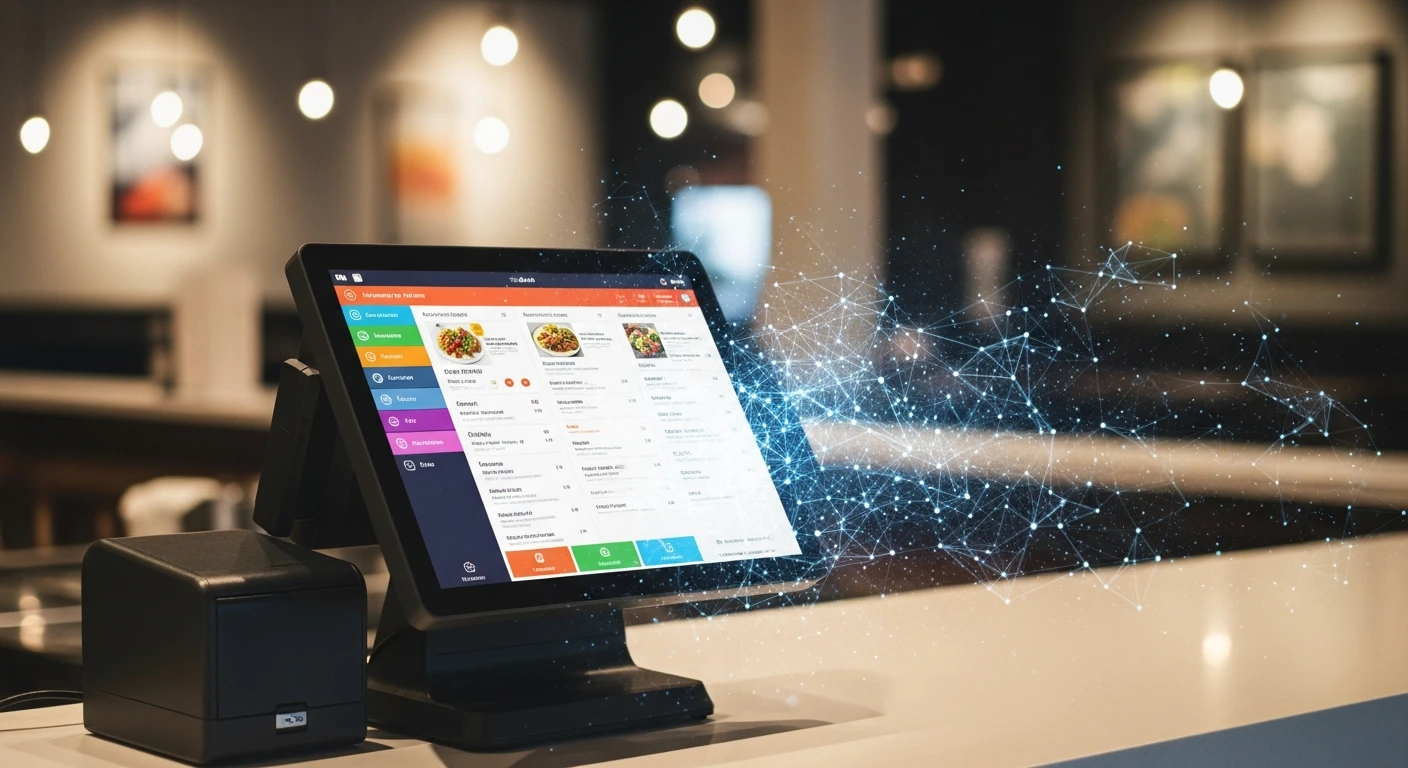
For Houston's restaurant operators, AI-powered POS technology is not a luxury upgrade. It is the management layer that makes diversity manageable, complexity navigable, and risk survivable.
The Multilingual Kitchen Intelligence Layer
Houston's restaurant kitchens are the most linguistically diverse in the country. A single Vietnamese-Cajun restaurant might have a chef who speaks Vietnamese, line cooks who speak Spanish, and a front-of-house team that speaks English. A Chinese-operated sushi restaurant has ownership communicating in Mandarin, a sushi chef working in Japanese, and servers speaking English. The language barrier between front-of-house and back-of-house creates order errors, miscommunications about modifications, and frustration that drives turnover.
KwickOS displays each terminal and KDS station in its own language. The server enters an order in English: "Pad Thai, no peanuts, extra spicy." The kitchen KDS displays the same order in Chinese characters or Spanish, depending on the station's configuration. Modifications like allergen flags display prominently in the kitchen's working language, reducing the errors that occur when a Spanish-speaking cook reads an English modifier note on a paper ticket.
KwickPhone extends this to phone ordering, processing calls in English, Mandarin, and Spanish. For Houston restaurants that serve multilingual neighborhoods — a Vietnamese pho shop in Midtown where 40% of phone orders arrive in Vietnamese-accented English with specific pronunciation challenges — the AI's language processing handles accent variations that confuse human order-takers who are not native speakers of the caller's language.
Hurricane Season: When Offline Mode Becomes Survival Mode
Houston has experienced three major hurricane events in the last decade: Harvey (2017), Imelda (2019), and direct hits from tropical systems that flood major roads and knock out power and internet across wide areas. During Harvey, some neighborhoods lost internet for 2-3 weeks. Restaurants that reopened on generator power within days became community lifelines — but only if their POS systems functioned without internet.
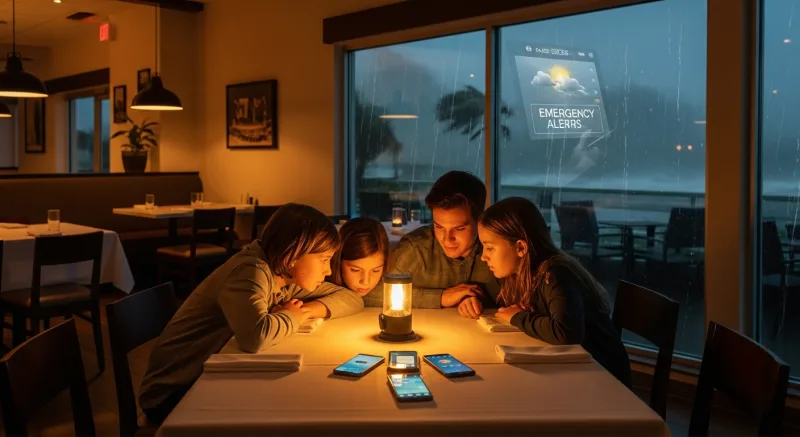
KwickOS's hybrid local+cloud architecture is not a convenience feature in Houston. It is hurricane preparedness. When the internet drops — whether from a tropical storm, a summer thunderstorm that takes out a substation, or the chronic flooding that plagues low-lying areas like Meyerland and Brays Oaks — every transaction processes locally. Register, KDS, printers, and fingerprint authentication all function on the local network without cloud connectivity.
The AI forecasting layer also contributes to hurricane preparedness. When a named storm enters the Gulf of Mexico (typically 3-5 days before potential landfall), the system recognizes the historical pattern: immediate spike in takeout orders (people stocking up), followed by a dead period during the storm, followed by a surge in dine-in and delivery as neighborhoods reopen. The AI recommends increased prep for the pre-storm rush and adjusted staffing for the post-storm recovery period.
Delivery Logistics Across 670 Square Miles
Houston's geographic sprawl creates delivery challenges that dense cities never face. A delivery zone that extends 5 miles from the restaurant covers 78 square miles — enough area that a single delivery can take 25-35 minutes round-trip in Houston traffic. Third-party delivery services charge the same 20-30% commission whether the delivery is 1 mile or 5 miles, but the economic pain of a $7.50 commission on a $25 order is acute when the delivery takes 30 minutes and ties up a driver for the entire period.
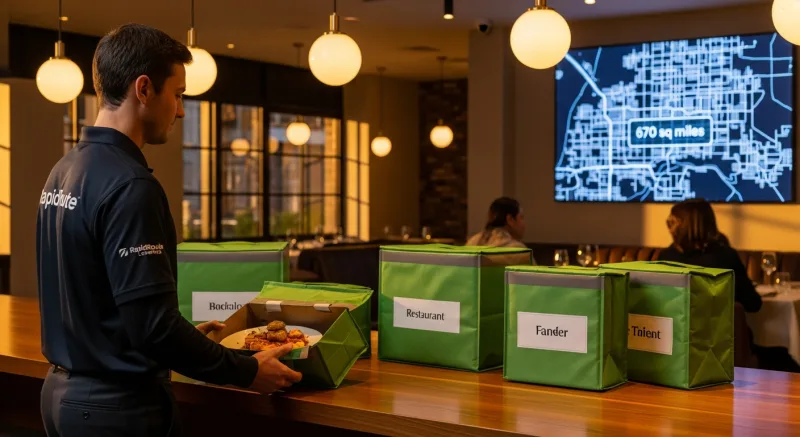
KwickOS with KwickDriver charges $2 flat plus $6.99 per 5 miles. For a 3-mile delivery, the total cost is $2 plus a prorated distance fee — dramatically less than the $5-7.50 that DoorDash extracts. But cost per delivery is only part of the optimization. The AI batches deliveries geographically, holding a second order for 4 minutes if it is going to an address within half a mile of a pending delivery. In Houston, where many orders cluster around apartment complexes and office parks, batching reduces per-delivery cost by an additional 15-20%.
The system also manages delivery zone profitability. It identifies that deliveries beyond 4 miles from your restaurant lose money because the driver time exceeds the revenue generated. The AI recommends either tightening the delivery radius or adding a distance surcharge that makes distant deliveries economically viable without losing the nearby orders that are highly profitable.
Cuisine-Specific AI for Houston's Specialty Restaurants
Houston's diverse restaurant market includes thousands of specialty cuisines with unique operational requirements. A Vietnamese pho restaurant brews stock for 12-18 hours — meaning tomorrow's pho was decided yesterday. A Korean BBQ restaurant manages individual table grills with different cook times. A dim sum restaurant serves 80+ items from rolling carts with complex ticket management. An Indian buffet rotates 25 dishes across lunch and dinner with different popularity profiles.
KwickOS AI adapts to each operational model. For the pho restaurant, predictive analytics forecast daily pho consumption to determine stock pot quantities 24 hours in advance. For Korean BBQ, the KDS tracks each table's grill status and suggests when to check meat temperatures. For dim sum, the system tracks cart-level sales and identifies which items sell out first (requiring earlier re-stocking) and which sit unsold (requiring production reduction).
This cuisine adaptability is critical in Houston because many restaurant owners operate cuisines that mainstream POS systems (designed for American casual dining) do not understand. A dim sum cart workflow, a hot pot ingredient station, or a Vietnamese banh mi assembly line each have operational patterns that generic POS systems force into ill-fitting templates. KwickOS, with its background in Asian cuisine operations (Haidilao Hot Pot with 600+ locations is a reference customer), understands these workflows natively.
The Bellaire Boulevard Economy: AI for Houston's International District
Houston's International District along Bellaire Boulevard and the Beltway 8 corridor is a 12-mile stretch that contains more culinary diversity per square mile than any comparable area in the United States. Chinese, Vietnamese, Korean, Indian, Pakistani, Nigerian, and Latin American restaurants cluster in strip malls where rent is $15-22 per square foot — a fraction of inner-loop neighborhoods.
Restaurants in this corridor share common challenges: thin margins from price-competitive markets, multilingual staff and customer bases, supplier relationships with specialty importers, and a customer demographic that includes both nostalgic immigrant communities seeking authentic cuisine and adventurous foodies exploring unfamiliar flavors.
KwickOS AI helps these restaurants maximize thin margins through precise inventory management (specialty ingredients from importers have longer lead times and higher minimum orders), labor optimization (family-run operations need to know exactly when to bring in outside staff versus handling volume with family members), and menu pricing that balances the price expectations of regular community members with the willingness of foodie visitors to pay premium prices for authentic preparation.
The AI also identifies cross-cultural trends. It detects that your Chinese hot pot restaurant is seeing increased orders for malatang (spicy soup) variations from non-Chinese customers, suggesting an opportunity to create an English-language menu section that explains these items. This kind of customer behavior insight turns data into revenue-generating menu decisions.
Loyalty Programs for Houston's Neighborhood Diversity
Houston's neighborhoods have distinct economic and demographic profiles that require different loyalty strategies. The Heights attracts brunch-focused millennials who respond to Instagram-friendly promotions. Katy's suburban families want value bundles and kid-friendly rewards. River Oaks' affluent clientele expects recognition and exclusivity. The Energy Corridor's corporate workers need lunch efficiency and catering capabilities.
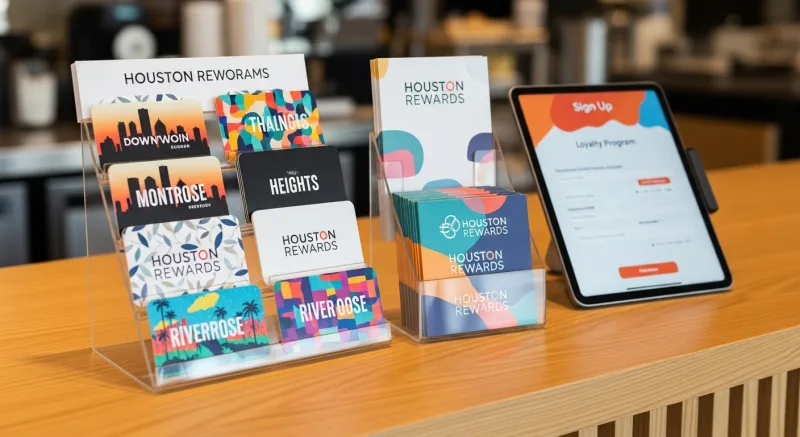
KwickOS AI segments loyalty customers by behavior, not demographics. It identifies that a Heights customer who visits twice a month for weekend brunch responds to "bring a friend" offers (social dining behavior). A Katy customer who orders family-sized portions weekly responds to "family night" bundles (value-seeking behavior). A River Oaks customer who orders premium items responds to VIP recognition (status-seeking behavior). The segmentation is behavioral, which is more accurate than demographic assumptions.
Gift cards in Houston benefit from the city's strong corporate entertaining culture. Energy industry business development drives substantial restaurant gift card purchases for client entertainment. KwickOS identifies corporate gift card buyers (multiple high-value cards purchased simultaneously) and creates a corporate account program: bulk discounts on gift card purchases, branded card options, and invoicing capabilities that simplify corporate procurement.
Labor Optimization in a Tight Market
Houston's unemployment rate has hovered below 4% for years, making restaurant labor recruitment intensely competitive. The AI-powered labor optimization in KwickOS does not solve the recruitment problem, but it maximizes the output of every employee you have. A restaurant that needs 8 staff on Friday night might function with 7 if the 7 are scheduled at the right times, assigned to the right stations, and supported by AI-powered order routing that eliminates wasted motion.
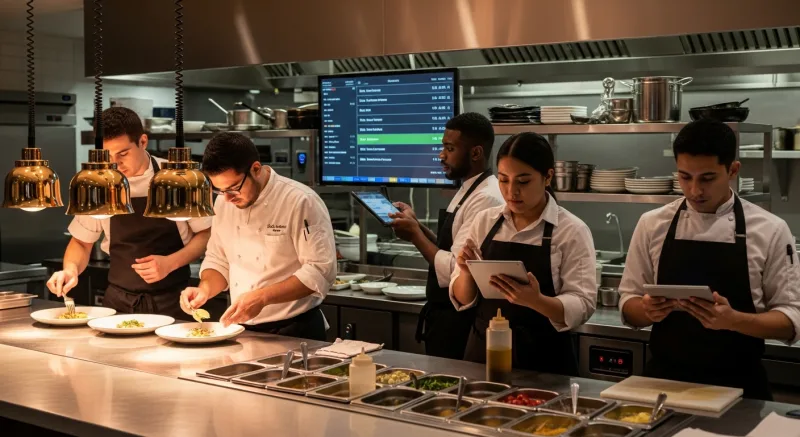
The system tracks individual employee productivity and identifies strength-based scheduling opportunities. A prep cook who is 25% faster than average on seafood prep but average on everything else should be assigned seafood prep during high-volume periods. A server who generates 18% higher average checks through upselling should be assigned the premium sections during Saturday dinner service. These data-driven assignments generate measurably more revenue than the seniority-based or rotation-based scheduling most restaurants use.
Why Houston Restaurants Need Processor Freedom More Than Any Other City
Houston's restaurant transaction volumes are among the highest in the country, driven by the city's large population, dining-out culture, and high average check sizes in certain neighborhoods. A mid-volume Houston restaurant processes $90,000-120,000 monthly in card transactions. At Toast's 2.99% + $0.15 rate versus an independent processor at 2.1% + $0.08, the annual savings from processor freedom range from $8,000-14,000.
For Houston restaurant groups with 3-5 locations, the savings multiply: $30,000-70,000 annually in processor cost reduction. KwickOS's processor-agnostic architecture lets these groups negotiate volume-based rates that multi-location operations can leverage, while Toast locks each location into the same non-negotiable rate regardless of volume.
Houston restaurant owners: Call (888) 355-6996 or visit KwickOS.com for a demo tailored to Houston's unique culinary diversity.
AI + Loyalty: Smarter Customer Retention
KwickOS combines AI insights with built-in loyalty tools to do something no other POS can: predict which customers are about to stop coming in and automatically re-engage them.
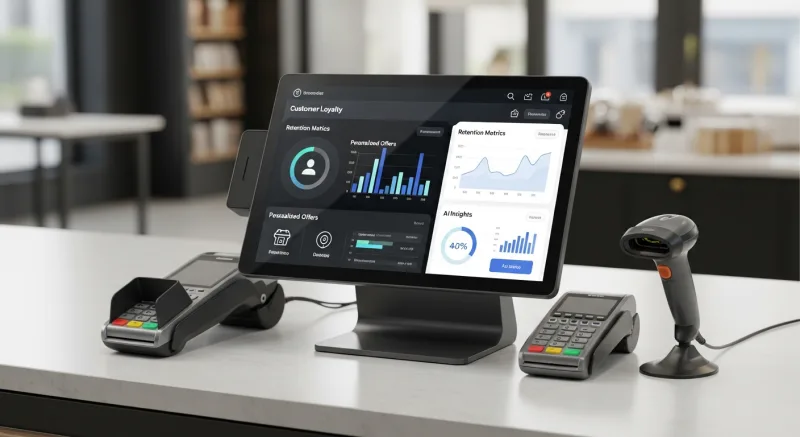
The gift card and loyalty system is not just a punch card — it is connected to AI-powered analytics that identify spending patterns, predict churn risk, and suggest targeted promotions. A customer who used to visit weekly but has not been in for 3 weeks? The system flags them and can trigger an automatic points bonus or e-gift card offer via SMS.
- Smart gift cards — AI suggests optimal gift card denominations based on your average ticket size
- Predictive loyalty — identifies at-risk customers before they leave, triggers re-engagement
- Points optimization — automatically adjusts earn rates during slow periods to drive traffic
- Membership insights — shows which VIP tiers generate the most lifetime value
All included. No add-on fees. Toast charges $75/month for basic loyalty without any AI component.
AI + Loyalty: Smarter Customer Retention
KwickOS combines AI insights with built-in loyalty tools to do something no other POS can: predict which customers are about to stop coming in and automatically re-engage them.
The gift card and loyalty system is not just a punch card — it is connected to AI-powered analytics that identify spending patterns, predict churn risk, and suggest targeted promotions. A customer who used to visit weekly but has not been in for 3 weeks? The system flags them and can trigger an automatic points bonus or e-gift card offer via SMS.
- Smart gift cards — AI suggests optimal gift card denominations based on your average ticket size
- Predictive loyalty — identifies at-risk customers before they leave, triggers re-engagement
- Points optimization — automatically adjusts earn rates during slow periods to drive traffic
- Membership insights — shows which VIP tiers generate the most lifetime value
All included. No add-on fees. Toast charges $75/month for basic loyalty without any AI component.
AI + Loyalty: Smarter Customer Retention
KwickOS combines AI insights with built-in loyalty tools to do something no other POS can: predict which customers are about to stop coming in and automatically re-engage them.
The gift card and loyalty system is not just a punch card — it is connected to AI-powered analytics that identify spending patterns, predict churn risk, and suggest targeted promotions. A customer who used to visit weekly but has not been in for 3 weeks? The system flags them and can trigger an automatic points bonus or e-gift card offer via SMS.
- Smart gift cards — AI suggests optimal gift card denominations based on your average ticket size
- Predictive loyalty — identifies at-risk customers before they leave, triggers re-engagement
- Points optimization — automatically adjusts earn rates during slow periods to drive traffic
- Membership insights — shows which VIP tiers generate the most lifetime value
All included. No add-on fees. Toast charges $75/month for basic loyalty without any AI component.
Founder & CIO of KwickOS · 30 Years IT · 20 Years Restaurant Industry
Tom built KwickOS after decades running restaurants and IT companies. Today KwickOS serves 5,000+ businesses across 50 states.