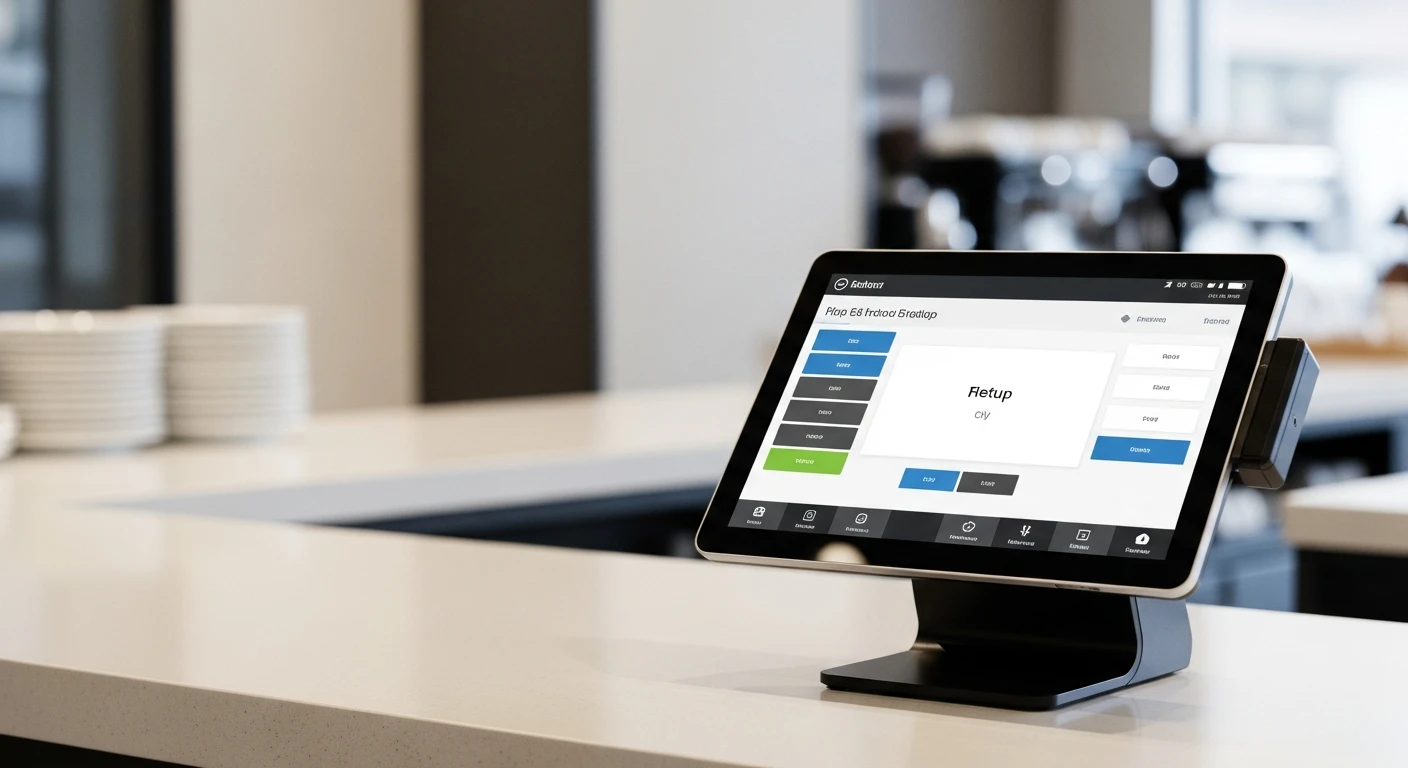
There are 1.1 million restaurants in the United States. Add retail stores, nail salons, coffee shops, and bars, and you are looking at over 5 million small businesses that need a point-of-sale system to operate.
Right now, most of them are locked into POS contracts they did not fully understand when they signed. They are overpaying for payment processing by $3,000 to $8,000 per year. They are stuck with hardware they cannot move to another provider. And they are frustrated.
That frustration is your $108,000/year opportunity.
Here's the thing: the POS reseller business is not about selling boxes. It is about building a portfolio of merchants who pay you recurring residual income every single month — from payment processing, software subscriptions, and service agreements. Sign 30 merchants in your first year, and you are looking at $9,000/month in residuals before you sign merchant number 31.
This guide covers everything you need to know to start, from choosing the right vendor to developing your territory. No theory. Just the math, the process, and the mistakes to avoid.
The POS Reseller Business Model: Why the Math Works
Before we get into tactics, you need to understand why POS reselling is fundamentally different from most sales jobs. And that's not all — the difference explains why top resellers build wealth instead of just earning income.
In a typical sales role, you close a deal, earn a commission, and start from zero next month. In POS reselling, every merchant you install generates recurring revenue across multiple streams:
| Revenue Stream | Per Merchant/Month | 30 Merchants/Month | Annual Total |
|---|---|---|---|
| Processing residuals | $200-$400 | $6,000-$12,000 | $72,000-$144,000 |
| Software subscription share | $30-$75 | $900-$2,250 | $10,800-$27,000 |
| Hardware margin (one-time) | $500-$2,000 | — | $15,000-$60,000 |
| Total (conservative) | $9,000 | $108,000+ |
The key number is $300/month average residual per merchant. That is the blended average across processing and software for a typical restaurant doing $40,000-$60,000/month in card volume. Some merchants will generate $150. Multi-location groups will generate $1,000+.
But it gets worse — for your competitors, that is. Because residuals compound. In month one, you sign 3 merchants and earn $900. In month six, you have 18 merchants earning $5,400. By month twelve, 36 merchants are paying you $10,800 per month. You did not work harder in month twelve than in month one. You just kept going.
This is the same model that made payment processing ISOs wealthy. The difference is that as a POS reseller, you control the entire technology relationship — not just the payment terminal — which means higher residuals, stickier merchants, and more upsell opportunities.
Step 1: Choose the Right POS Vendor (This Decision Makes or Breaks You)
The vendor you choose to resell determines your earning potential, your close rate, and your merchant retention. Get this wrong, and you will spend two years building a portfolio on a platform that limits your income.
Here is what separates a good vendor from a bad one:
Processor-Agnostic Architecture (Non-Negotiable)
This is the single most important factor. A processor-agnostic POS lets the merchant choose any payment processor. That means:
- You earn higher residuals. When you control the processor relationship, you keep 50-70% of the processing markup instead of the 10-20% that locked platforms share.
- Merchants save $3,000-$8,000/year. They can negotiate interchange-plus pricing instead of being forced into flat-rate plans at 2.99% + $0.15.
- Your close rate goes up. "I can save you $4,000/year on processing alone" is the most powerful sentence in POS sales.
- Merchant retention improves. Merchants who chose their own processor feel empowered, not trapped. They stay longer.
Vendors like Toast and Square lock merchants into proprietary processing. That is great for Toast's revenue, but terrible for yours. You cannot offer competitive processing rates, and your residual share is a fraction of what you would earn on a processor-agnostic platform.
Want to see the full financial comparison? Check our payment processing residual income guide for detailed breakdowns.
Complete All-in-One Platform
The days of selling standalone POS terminals are over. Today's merchants expect a complete technology stack:
- POS and checkout
- Kitchen display system (KDS)
- Online ordering
- Self-ordering kiosks
- Digital signage and menu boards
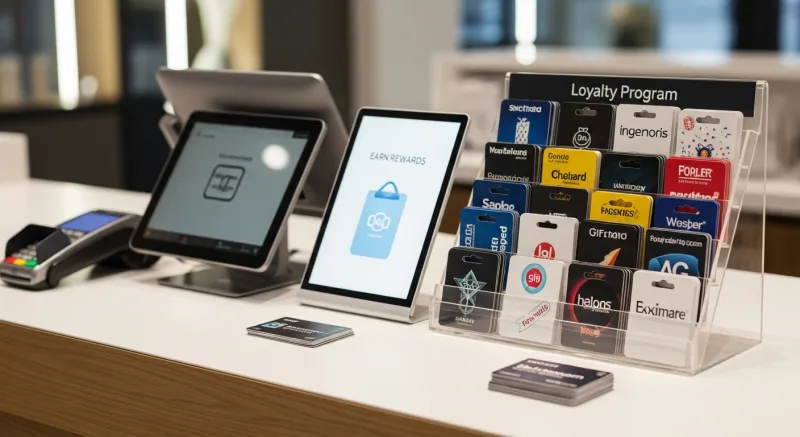
- Loyalty and CRM
- Delivery management
- Employee scheduling and time tracking
- Inventory management
Every module you can offer is another revenue stream and another reason the merchant stays with your platform. When Crafty Crab Seafood rolled out 152 terminals across 19 locations, they needed one-click menu sync, customized KDS displays for each station, and centralized reporting. That is not a POS sale — it is an operating system sale.
Multi-Location Support
Multi-location merchants are the most profitable accounts in your portfolio. A single 5-location restaurant group can generate the same residual as 15 single-location merchants — with one relationship to manage.
Your vendor needs real multi-location infrastructure: centralized menu management, consolidated reporting, role-based access across stores, and remote monitoring. T. Jin China Diner manages 15 stores and 75 terminals from a single dashboard — real-time sales, inventory, and staff data across every location. That is the capability your vendor needs to deliver.
What to Avoid
- Vendors that compete with their own resellers. If the vendor sells direct at prices you cannot match, your territory is compromised before you start.
- Platforms with limited industry coverage. The best resellers sell across restaurants, retail, nail salons, and coffee shops. A POS that only works for full-service restaurants limits your addressable market.
- Vendors without training and marketing support. You should receive sales collateral, demo environments, installation training, and co-marketing resources. If the vendor expects you to figure it out alone, keep looking.
Ready to compare vendor programs? See our POS comparison pages for side-by-side breakdowns.
Step 2: Understand Your Revenue Streams (The Full Picture)
Most aspiring resellers focus on hardware sales because the margins are visible and immediate. But hardware is the smallest part of the business. Here's the thing: the real money is invisible on day one and overwhelming by year three.
Processing Residuals (Your Primary Income)
Every time a customer swipes, taps, or inserts their card at a terminal you placed, you earn a fraction of the processing fee. On a processor-agnostic platform, that fraction is substantial:
- Average merchant processes $45,000/month in cards
- Your residual share: 0.05% to 0.15% of volume (depending on processor and negotiation)
- Monthly residual per merchant: $22 to $67 from volume alone
- Plus per-transaction residuals: $0.01 to $0.03 per swipe
- Blended monthly residual: $200-$400 per merchant
This is money you earn every month, whether you are working or on vacation. It does not require follow-up calls, invoicing, or renewal negotiation. It just shows up.
Software Subscription Revenue
Most POS platforms charge monthly software fees of $69 to $299 per terminal. As a reseller, you typically earn 15-30% of the subscription revenue for the life of the account. On a 3-terminal restaurant paying $199/month, that is $30 to $60/month to you — on top of processing residuals.
Hardware Sales
Hardware margins range from $300 to $1,500 per installation depending on the configuration. A basic single-terminal setup might net you $500, while a multi-terminal installation with kiosks, KDS screens, and printers can net $3,000 or more.
Tiger Sugar installed 2 self-ordering kiosks across 2 locations. Rockin' Rolls deployed 49 iPad self-ordering stations across 3 stores. Baked Cravings put a self-serve kiosk at Lego Land. Each of these installations represents significant hardware revenue for the reseller who closed the deal.
Service and Support Contracts
Many resellers offer premium support packages — 24/7 phone support, next-day hardware replacement, quarterly business reviews — for $50 to $150/month per location. This adds another recurring revenue stream while deepening your relationship with the merchant.
Step 3: Build Your Sales Process (What Actually Closes Deals)
Selling POS systems is not cold-calling from a script. It is consultative selling, and the best resellers follow a specific process that leverages the one thing every business owner cares about: their money.
The Processing Fee Audit (Your Secret Weapon)
Every sales conversation should start with one question: "Can I see your last processing statement?"
Most business owners have never analyzed their processing costs. When you show them they are paying an effective rate of 3.1% when they could be paying 2.3%, you are not selling a POS system — you are handing them $4,000/year in savings. The POS is just the vehicle.
But it gets worse for the incumbent vendor: once the merchant sees the math, they cannot unsee it. Every statement they receive from their current processor becomes a reminder of how much they are overpaying. You have created urgency without any pressure tactics.
Use our free processing fee calculator during your demos. Let the merchant enter their own numbers. When they see the savings calculated on screen in real time, the deal closes itself.
The Demo That Sells
Do not demo features. Demo outcomes.
- Instead of: "Our KDS shows orders on a screen." Say: "Shogun Japanese Hibachi customized their station displays so each hibachi grill sees only their orders. New staff learned the system in 5 minutes. How long does training take on your current setup?"
- Instead of: "We support multiple languages." Say: "Your kitchen staff speaks Mandarin? The KDS displays in Chinese. Your front-of-house staff sees English. Your menu is in English and Spanish for customers. One system, three languages, zero confusion."
- Instead of: "We have fingerprint login." Say: "Your bartender cannot clock in for a buddy, void a check on someone else's code, or access a discount they are not authorized for. Fingerprint 1:N matching means one touch, verified identity, no PIN sharing."
Handling the "I Have a Contract" Objection
This is the most common objection, and it is the easiest to overcome:
- Calculate the overpayment. If they are paying $4,000/year more than they should on processing, and their contract has 18 months left, they are about to waste $6,000.
- Calculate the early termination fee. Most POS contracts have ETFs of $500 to $2,000.
- Show the math. "You can pay $1,500 to exit now and save $4,000/year starting next month, or you can stay and overpay $6,000 over the next 18 months. Which costs more?"
The numbers always win.
Step 4: Develop Your Territory (Where the Big Money Is)
Territory development is what separates resellers who earn $50,000/year from those who earn $300,000. It is not about working harder — it is about working smarter in a defined geography.
Pick Your Niche First
The fastest path to credibility is specialization. When you sell POS systems to Chinese restaurants and can reference T. Jin China Diner (15 stores, 75 terminals), you are not a random salesperson — you are an industry expert.
High-value niches for POS reselling:
- Asian restaurants — Chinese, Japanese, Korean, Thai, Vietnamese. Multi-language support and customized KDS are huge selling points. Many are cash-heavy, creating processing growth opportunity.
- Nail salons and beauty/spa — Automated commission tracking is the killer feature. Diva Nail Beauty increased efficiency by 90% across 4 locations by eliminating manual commission calculations.
- Multi-location restaurant groups — Highest value accounts. Centralized management, menu syncing, and consolidated reporting are must-haves.
- Quick-service and bubble tea — High transaction volume, kiosk-friendly, and self-ordering stations like Tiger Sugar's minimal-step personalization flow.
Build Referral Networks
Your best leads will come from people who already serve your target merchants:
- Restaurant equipment dealers — They sell kitchen equipment to the same merchants who need POS systems. Offer a referral fee.
- Accountants and bookkeepers — They see the processing statements and know which clients are overpaying. Offer a revenue share.
- Commercial real estate agents — They know about new restaurant openings 3-6 months before they happen. That is your window to get in before the merchant signs with a competitor.
- Existing merchants — Your best sales tool is a happy customer. Offer $250-$500 referral bonuses for introductions that close.
Own Your Local Market
The most successful resellers dominate a 30-mile radius rather than spreading thin across a state. When every Chinese restaurant in your metro area runs on your platform, you become the default recommendation. New owners opening in your territory hear your name from their suppliers, their accountant, and the restaurant down the street.
That compounding reputation effect is worth more than any marketing budget.
Step 5: Retention Is Revenue (Keep What You Build)
Every merchant who leaves your portfolio is $300/month in residuals gone — not just this month, but every month for the next 5-10 years. A single lost merchant over a decade costs you $36,000 in residuals. Lose five per year, and you are burning $180,000 in future income.
And that's not all: acquiring a new merchant costs 5-7x more in time and effort than retaining an existing one. The math is brutal and obvious — retention is your highest-ROI activity.
Quarterly Business Reviews
Meet with your top 20% of merchants every quarter. Review their processing costs, show them features they are not using, and ask what is not working. This 30-minute conversation prevents the competitor who just walked in the door from getting a second meeting.
Be the First Call
When a printer stops working at 7 PM on a Friday, who does the merchant call? If the answer is "the vendor's 800 number," you are replaceable. If the answer is "my POS guy," you are irreplaceable.
You do not need to fix the printer yourself. You just need to answer the phone, diagnose the problem, and coordinate the fix. That responsiveness is what builds the loyalty that protects your residuals.
The Mistakes That Kill Reseller Businesses
After watching hundreds of resellers succeed and fail, the pattern is clear. The failures are almost always caused by the same handful of mistakes:
- Choosing a locked-processing vendor. You sacrifice 60-80% of your potential residuals for the convenience of a known brand. Over five years, this decision costs you $200,000 or more.
- Chasing volume over value. Signing 50 small merchants at $100/month each is more work and less stable than signing 15 mid-size merchants at $400/month each. Quality accounts generate quality income.
- Ignoring existing merchants. The reseller who signs 5 merchants per month but loses 2 per month from poor service has a portfolio growth rate of 3, not 5. Retention is growth.
- Selling hardware instead of outcomes. "We have a 15-inch touchscreen" means nothing. "Your servers will turn tables 20% faster because orders hit the kitchen instantly" means everything.
- No niche. "I sell to everyone" means you are an expert at nothing. The reseller who specializes in nail salons and can reference Diva Nail Beauty's 90% efficiency improvement will beat the generalist every time.
Your First 90 Days: The Action Plan
Here is exactly what your first three months should look like:
Days 1-30: Foundation
- Choose your POS vendor (processor-agnostic, all-in-one, strong reseller program)
- Complete vendor training and get certified
- Set up a demo environment you can bring to merchant meetings
- Choose your niche and geographic territory
- Build a list of 100 target merchants
- Establish your business entity and processing agent agreement
Days 31-60: First Deals
- Start with processing fee audits — offer free statement analysis to 20 merchants
- Close your first 2-3 installations
- Document your first case study (photos, quotes, results)
- Begin building referral relationships with accountants and equipment dealers
- Learn the installation process cold — you should be able to install a 3-terminal system in under 3 hours
Days 61-90: Scale
- Target 3-5 new merchants per month
- Launch a referral program for existing merchants ($250-$500 per closed referral)
- Identify your first multi-location prospect
- Review your first full month of residuals and adjust your processor partnerships if needed
- Attend one local restaurant association meeting or trade show
Is POS Reselling Right for You?
This business model rewards patience, relationship-building, and consistency. It is not a get-rich-quick scheme. Your first three months will feel slow. Your first year will feel like you are building something invisible. But by month 18, when you are earning $12,000-$15,000/month in residuals while other salespeople are starting each month at zero, the compounding effect becomes undeniable.
The best resellers share three traits: they genuinely care about helping small business owners save money, they understand that service after the sale is more important than the sale itself, and they think in years, not quarters.
If that sounds like you, the math is on your side.
Build Your POS Reseller Business with KwickOS
KwickOS offers the most reseller-friendly program in the industry: processor-agnostic architecture, all-in-one platform across 23 industries, and the highest residual splits available. See why top resellers are switching.
Explore the Partner Program