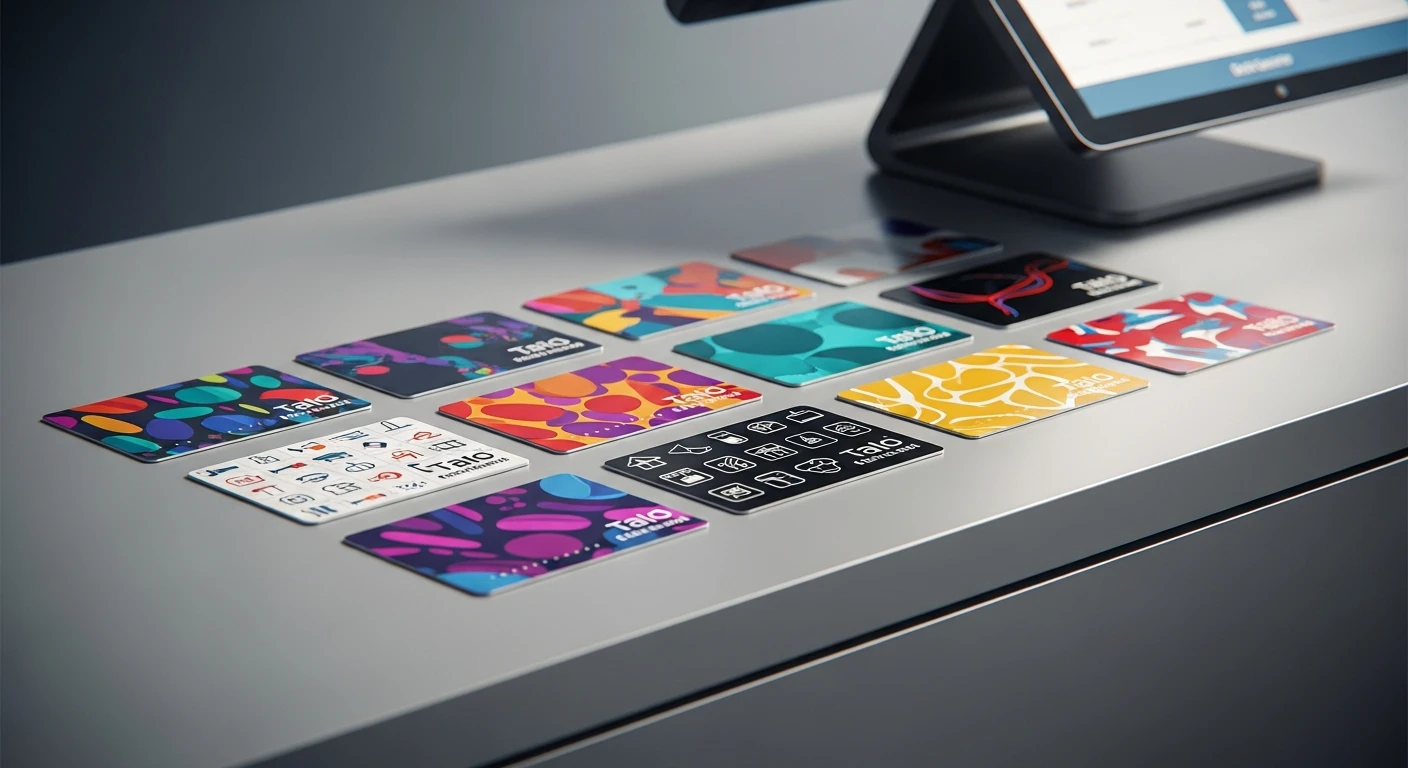
There is a moment in every POS demo when the merchant tilts their head and says, "What about gift cards?" Sometimes it is phrased as "Do you have a loyalty program?" or "Can I do rewards points?" or simply "What does that cost?" It is one of the five questions every merchant asks, and how you answer it will either advance the deal or stall it.
Most resellers answer with features. "Yes, we have gift cards. Yes, we have a loyalty program. It integrates with the POS." The merchant nods, checks a mental box, and moves on to the next question. The feature has been confirmed but no value has been established. The merchant is no closer to signing.
Top-performing resellers do something different. They answer the gift card question with math. Specifically, they calculate the total cost of gift cards, loyalty, and the hidden add-on fees that competitors charge — and they present a dollar figure so large that the merchant cannot ignore it. The gift card question becomes the moment the deal pivots from "comparing features" to "calculating savings."
This article is a field guide for POS resellers. It provides the exact competitive intelligence, pricing data, scripts, and objection handling you need to turn the gift card and loyalty question into the most powerful closing tool in your arsenal.
The Hidden Cost Structure: What Toast, Square, and Clover Actually Charge
Before you can sell against competitors, you need to know exactly what they charge for features that KwickOS includes at no additional cost. Here is the current pricing as of March 2026, sourced from each company's published pricing pages and merchant contracts.
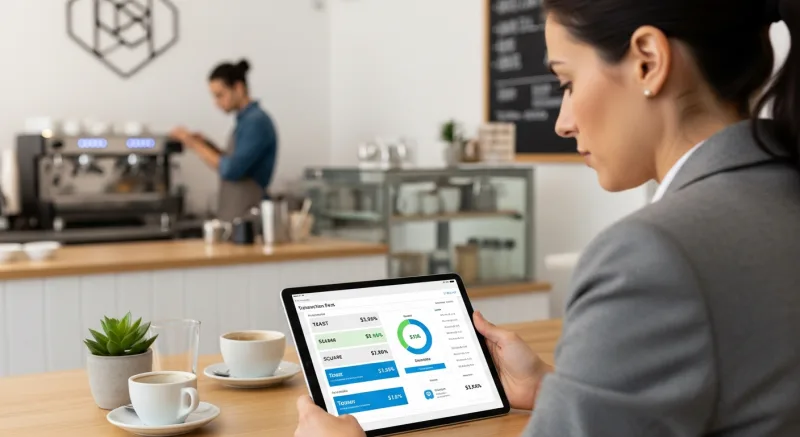
Toast Pricing for Add-On Features
| Feature | Toast Monthly Cost | Annual Cost | 3-Year Cost |
|---|---|---|---|
| Toast Loyalty (Customer Rewards) | $75/mo | $900 | $2,700 |
| Toast Online Ordering (Commission Model) | Variable (per-order fees) | $1,200-$3,600+ | $3,600-$10,800+ |
| Toast Marketing (Email/SMS) | $75/mo | $900 | $2,700 |
| Toast Gift Cards (Physical) | $50/mo + per-card fees | $600+ | $1,800+ |
| Toast Payroll | $40/mo + $6/employee | $1,920+ (20 employees) | $5,760+ |
| Toast Team Management | $75/mo | $900 | $2,700 |
| Total Add-On Costs | $315+/mo | $6,420+ | $19,260+ |
Square Pricing for Add-On Features
| Feature | Square Monthly Cost | Annual Cost | 3-Year Cost |
|---|---|---|---|
| Square Loyalty | $45/mo | $540 | $1,620 |
| Square Online (Plus tier) | $29/mo | $348 | $1,044 |
| Square Marketing | $15/mo+ | $180+ | $540+ |
| Square Gift Cards | Included (basic) / fees for physical | $200+ (physical cards) | $600+ |
| Square Payroll | $35/mo + $6/employee | $1,860+ (20 employees) | $5,580+ |
| Square Team Plus | $35/mo | $420 | $1,260 |
| Total Add-On Costs | $159+/mo | $3,548+ | $10,644+ |
KwickOS Pricing for the Same Features
| Feature | KwickOS Monthly Cost | Annual Cost | 3-Year Cost |
|---|---|---|---|
| Loyalty & Rewards | Included | $0 | $0 |
| Online Ordering | Included | $0 | $0 |
| Marketing Tools | Included | $0 | $0 |
| Gift Cards | Included | $0 | $0 |
| Employee Management | Included | $0 | $0 |
| KDS, Kiosks, Digital Signage | Included | $0 | $0 |
| Total Add-On Costs | $0 | $0 | $0 |
Toast's modular pricing means merchants pay $315+/month for loyalty, online ordering, marketing, gift cards, and team management. KwickOS includes all of these in the base platform. Over 3 years, that is $19,260 the merchant saves before you even discuss processing fees.
The Savings Stack: How $25K Materializes
The gift card and loyalty question is your entry point to a much larger savings conversation. You start with add-on fees, then layer on processing savings, then add the hidden costs. Here is how the full savings stack builds:
Layer 1: Add-On Feature Savings
KwickOS includes loyalty, gift cards, online ordering, KDS, kiosks, digital signage, CRM, delivery integration, and marketing tools at no additional per-feature cost. For a restaurant currently on Toast using loyalty + online ordering + marketing, the savings are $2,700/year on loyalty + $1,200-$3,600/year on online ordering + $900/year on marketing = $4,800 to $7,200/year in add-on savings alone.
Layer 2: Processing Savings
This is where the big money lives. Toast charges 2.49% + $0.15 per in-store transaction and 3.09% + $0.15 per online order. A restaurant doing $40,000/month in card volume (approximately 1,600 in-store transactions) pays Toast approximately $1,011/month in processing fees.
With KwickOS, the merchant chooses their own processor. On interchange-plus pricing through a competitive processor, the same $40,000/month typically costs $680-$760/month in total processing (assuming average interchange of 1.65% + 0.10% markup + per-transaction fees). The savings: $250-$330/month, or $3,000-$3,960/year.
For higher-volume restaurants ($80K-$100K/month in card volume), the processing savings scale proportionally: $6,000-$8,000/year.
Layer 3: Hidden Costs
Toast charges a "Toast Capital" origination fee on merchant cash advances. Toast charges per-order commissions on Toast Marketplace orders. Toast takes a percentage of online order tips in some configurations. These costs are difficult to quantify in advance because they vary by merchant behavior, but they add $1,000-$3,000/year for active merchants.
The Full Stack
| Savings Category | Annual Savings vs. Toast | 3-Year Savings vs. Toast |
|---|---|---|
| Add-On Features (loyalty, ordering, marketing, gift cards) | $4,800 - $7,200 | $14,400 - $21,600 |
| Processing Fees ($40K/mo volume) | $3,000 - $3,960 | $9,000 - $11,880 |
| Hidden Costs (marketplace, capital, etc.) | $1,000 - $3,000 | $3,000 - $9,000 |
| Total Savings | $8,800 - $14,160 | $26,400 - $42,480 |
When the merchant asks "What about gift cards?", the answer is not "Yes, we have gift cards." The answer is: "Gift cards are included — and so is everything else. Let me show you what that inclusion saves you over three years." Then you present the $26,000-$42,000 savings stack. The conversation is no longer about features. It is about money.
The Sales Scripts: Word-for-Word Frameworks
Here are field-tested scripts for the most common scenarios you will encounter. These are not theoretical — they are frameworks that successful KwickOS resellers use in live demos.
Script 1: The Gift Card Pivot
Merchant: "Does your system do gift cards?"
You: "Yes, gift cards are built into the platform — physical and digital, no per-card fees, no monthly add-on. But let me ask you something: do you know what you're currently paying for gift cards and loyalty on your existing system?"
Merchant: [Usually does not know the exact number]
You: "Most restaurant owners don't, because it's buried in the bill. On Toast, loyalty alone is $75 a month. Gift cards are another $50 plus per-card fees. Marketing emails are another $75. That's $200 a month — $2,400 a year — just for features that should be part of your POS. On KwickOS, all of that is included. Zero add-on fees. Over three years, that's $7,200 you keep in your pocket. And that's before we talk about processing fees, where the savings are even bigger."
Script 2: The "What Does That Cost?" Redirect
Merchant: "How much does your loyalty program cost?"
You: "Zero. It's included. And I know that sounds like a sales line, so let me be specific about what 'included' means. On KwickOS, you get loyalty with points and rewards, digital and physical gift cards, online ordering with no per-order commission, a kitchen display system, self-ordering kiosks, digital signage, CRM with customer history, delivery integration, and marketing tools — all included in the base platform. There is no add-on menu. There is no 'that costs extra.' Everything is one price."
Merchant: "That seems too good to be true."
You: "I understand the skepticism. Here's why it works: KwickOS is a complete operating system, not a collection of modules. They built everything together from the start instead of acquiring features and charging separately for each one. The business model earns revenue from the platform subscription — not from nickeling and diming you on features that should be standard. That's also why the platform runs 5,000+ businesses across all 50 states, including chains with hundreds of locations."
Script 3: The Processing Savings Layup
Merchant: "I'm looking at Toast."
You: "Toast is a good system. But I want to make sure you understand the total cost, because most people only look at the software fee. Toast requires you to use Toast Payments — you can't choose your own processor. Their standard rate is 2.49% plus 15 cents per transaction. On your card volume..."
[Pull up a calculator or use the KwickOS ROI calculator at kwickos.com/tools/reseller-earnings-calculator.html]
"You're doing about $40,000 a month in cards, right? On Toast, your processing runs about $1,011 a month. On KwickOS, you choose your processor — and on interchange-plus pricing, the same volume typically runs $700 to $760. That's a $250 to $310 difference per month. Over a year, that's $3,000 to $3,700 in processing savings alone. Over three years, you're saving $9,000 to $11,000 just on processing."
"And that's on top of the $7,200 you save on add-on features. Total savings over three years: somewhere between $16,000 and $18,000. Would you like me to put the exact numbers together for your specific volume?"
Script 4: The Competitive Takeaway for Toast Merchants
Merchant: "I'm already on Toast. Why would I switch?"
You: "Are you happy with the processing rate? What are you paying?"
Merchant: "I don't know exactly... 2.49% I think?"
You: "That's their standard rate. Here's what that means in dollars: on $40,000 in monthly card volume, you're paying Toast about $1,000 a month in processing fees. That's $12,000 a year. On an interchange-plus plan — which you'd have access to on KwickOS because you choose your own processor — the same volume costs about $8,400. That's $3,600 a year in savings, or $300 a month."
"On top of that, you're paying Toast $75 a month for loyalty, probably $75 for marketing... how many add-ons are on your bill?"
[The merchant often pulls up their invoice at this point, which is exactly where you want them]
Objection Handling: The Six Objections You Will Hear
Objection 1: "If everything is included, the base price must be higher."
Response: "Compare total cost, not base price. Add up your current POS software fee plus every add-on plus your processing cost. Then compare that total to KwickOS's all-in price plus competitive processing. In every scenario we've run, the total cost on KwickOS is lower — usually by $6,000 to $14,000 per year. I'm happy to do the math with your actual numbers right now."
Objection 2: "I've never heard of KwickOS."
Response: "You may know us as KwickPOS — we've been in the market for years with 5,000+ merchants across all 50 states. KwickOS is the expanded platform that includes everything from POS to online ordering to digital signage. We run Haidilao Hot Pot — over 600 locations worldwide. We run Crafty Crab with 19 stores and 152 terminals. We're not a startup. We're just not spending $500 million on TV ads like Toast."
Objection 3: "Toast has better online ordering."
Response: "Toast's online ordering charges per-order fees or commissions. And it only works within the Toast ecosystem. KwickOS includes KwickMenu for online ordering — and KwickMenu processes 500,000 clicks per month across our merchant base. It integrates directly with your POS and KDS, supports delivery through KwickDriver at $2 flat + $6.99 per 5 miles instead of the 15-25% commission DoorDash charges, and it's included in the platform. No per-order fees. No commissions."
Objection 4: "What if my internet goes down? Toast is cloud."
Response: "That's actually one of the biggest differences. Toast IS cloud — which means when your internet goes down, your POS goes down. KwickOS runs on a local server in your restaurant with cloud sync. Transaction processing happens locally at 1 millisecond latency. If your internet drops, you keep taking orders, keep printing to the kitchen, keep processing — everything continues. When the internet comes back, it syncs. You never lose a minute of service."
Objection 5: "I don't want to switch processors."
Response: "You don't have to. KwickOS integrates with virtually every major processor — First Data, TSYS, Global, Worldpay, Elavon, Heartland, and more. If you're happy with your current processor, keep them. We just connect to their gateway. The difference is you HAVE the choice. On Toast, you don't."
Objection 6: "Gift cards and loyalty aren't that important to me."
Response: "They may not be the reason you switch, but they should be part of the calculation. The National Restaurant Association reports that 72% of consumers say a loyalty program influences where they eat. Gift card programs generate an average 20% in excess spend above the card value. Even if you're not running these programs today, having them available — at no cost — means you can launch them anytime without a new monthly bill. And the real savings are in processing and add-on features, which add up to $8,000 to $14,000 a year regardless of whether you use gift cards."
The Competitive Comparison Sheet: Print This and Bring It to Demos
Here is a one-page comparison formatted for use in merchant presentations. The most effective resellers print this and leave it with the merchant after the demo.
| Feature / Cost | Toast | Square | Clover | KwickOS |
|---|---|---|---|---|
| Loyalty Program | $75/mo | $45/mo | $50/mo (3rd party) | Included |
| Gift Cards | $50/mo + fees | Fees for physical | $30/mo + fees | Included |
| Online Ordering | Commission-based | $29/mo+ | 3rd party integration | Included |
| Kitchen Display | $25/mo per screen | Included (basic) | $25/mo per screen | Included |
| Self-Ordering Kiosk | $90/mo per kiosk | Not available | Limited | Included |
| Digital Signage | Not available | Not available | Not available | Included |
| Marketing (Email/SMS) | $75/mo | $15/mo+ | 3rd party | Included |
| Delivery Integration | DoorDash (15-25%) | 3rd party only | 3rd party only | KwickDriver ($2 flat) |
| Choose Your Processor | No (Toast only) | No (Square only) | Fiserv only | Yes (any processor) |
| Fingerprint Auth | No | No | No | Yes (1:N and 1:1) |
| Offline Mode | Limited | Limited | Limited | Full operation |
| Multi-Language | English only | English only | English only | EN / CN / ES |
Advanced Technique: The Three-Year TCO Worksheet
The most sophisticated closing technique in POS sales is the Total Cost of Ownership (TCO) worksheet. Instead of comparing monthly software fees, you compare the total cost of everything over three years. This changes the conversation from a small monthly number to a large aggregate number — and humans respond to large numbers.
Here is how to build it in a live demo:
- Ask for the merchant's monthly card volume. Most merchants know this number. If they do not, estimate based on their average check and cover count. A 60-seat restaurant doing 2 turns at lunch and 2 at dinner with a $22 average check does roughly $5,280/day or $158,400/month. Adjust for cash vs. card split (typically 70-80% card).
- Calculate their current processing cost. If they are on Toast: volume × 2.49% + $0.15/transaction. If they are on Square: volume × 2.6% + $0.10/transaction. If they are on flat-rate, it is easy math.
- Calculate interchange-plus processing cost. Use a conservative estimate of 1.65% average interchange + 0.15% markup + $0.08/transaction. This is achievable through any competitive ISO.
- Calculate the processing delta. Multiply by 36 months.
- Add up their current add-on fees. Ask them to pull up their last POS invoice. Most merchants are paying $100-$300/month in add-ons they have forgotten about.
- Multiply add-on fees by 36 months.
- Present the total. Processing savings + add-on savings = total 3-year savings.
When the merchant sees a number between $20,000 and $42,000 written on paper in front of them, the conversation shifts. They are no longer comparing POS systems. They are deciding whether to keep paying $20,000+ more than they need to. The decision framework has changed from "which features do I prefer" to "can I afford NOT to switch."
Selling to Different Merchant Types
Full-Service Restaurants
Lead with processing savings (highest volume = biggest dollar impact), then layer loyalty and online ordering. These merchants care about table management, KDS integration, and tip handling. Emphasize offline mode — full-service restaurants cannot afford a dead terminal during Saturday dinner.
Quick-Service and Fast Casual
Lead with kiosk capability (self-ordering kiosks increase ticket sizes 20-30%) and online ordering (no commission). These merchants have high transaction counts, so processing savings are significant. Reference Rockin' Rolls' 49 iPad self-ordering stations as a case study.
Asian Restaurant Concepts
Lead with Chinese language support and multi-location management. This is a segment where KwickOS dominates because no major competitor offers native Chinese language POS. Reference T. Jin China Diner (15 stores), Crafty Crab Seafood (19 stores), and Tiger Sugar (2 stores with kiosks). The cultural and language fit closes deals that other platforms cannot win.
Beauty and Spa
Lead with automated commission tracking. Diva Nail Beauty uses KwickOS across 4 stores and reported a 90% increase in operational efficiency from automated commission calculations. Gift cards are a particularly strong selling point for beauty/spa — they are the most common gift category in the industry.
Retail
Lead with inventory management and processor freedom. Retail merchants tend to be more price-sensitive on processing and more aware of their rates. The ability to keep their current processor (or switch to a better one) without changing POS is a strong differentiator.
The Close: Turning the Savings Into a Decision
After presenting the savings stack, you need a closing framework. Here is the most effective one for POS sales:
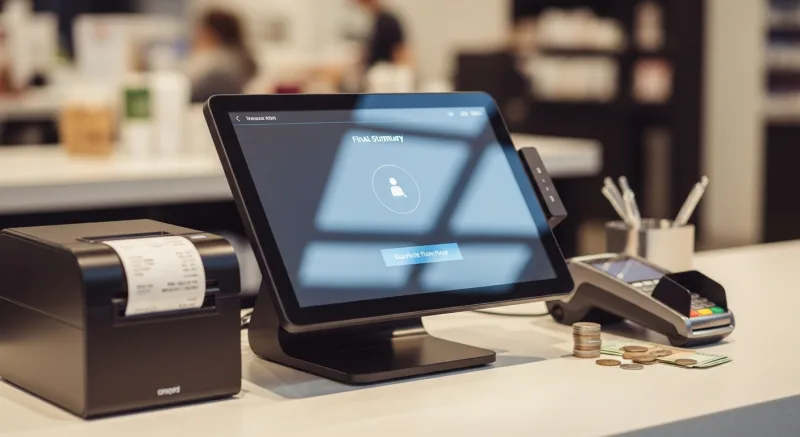
"Based on the numbers we just went through, switching to KwickOS saves you between $[X] and $[Y] over the next three years. The installation takes 7-10 days, the training takes 1-2 hours, and your staff can usually use the system on their own within the first day. Your processing rate either stays the same or goes down, and every feature that you're currently paying extra for — loyalty, gift cards, online ordering — is included from day one. What questions do you still have before we get started?"
Notice: this close does not ask "Would you like to move forward?" It assumes the decision is made — because if the math is correct, it should be. A merchant who is paying $8,000-$14,000/year more than they need to has already decided. Your job is to make the transition feel easy and low-risk, which is what the 7-10 day installation timeline and 1-2 hour training accomplish.
If you are a reseller who wants to sharpen your competitive selling skills and access the full KwickOS demo toolkit, contact the partner team at kwickos.com/contact or call (888) 355-6996.
Turn One-Time Diners into Regulars: Built-In Gift Cards & Loyalty
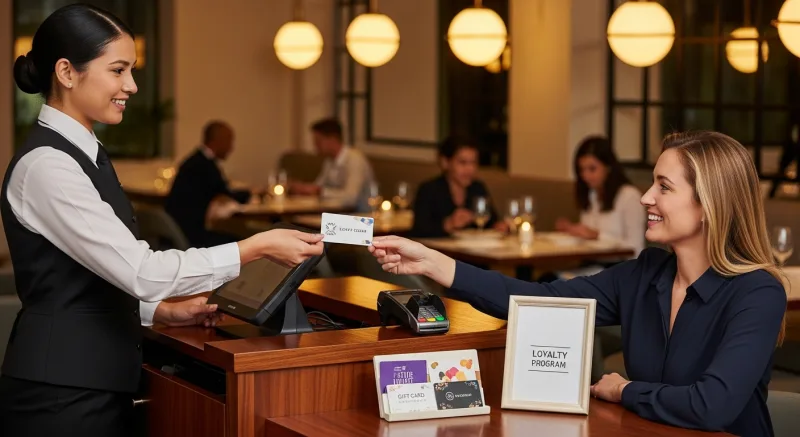
Most POS companies treat gift cards and loyalty as afterthoughts — expensive add-ons that cost $50-100/month extra. KwickOS includes them at no additional charge because we believe they are essential revenue tools, not luxury features.
Gift Cards That Actually Drive Revenue
Here is what most restaurant owners do not realize: gift card buyers spend an average of 20-40% more than the card's face value. A $50 gift card typically generates $60-70 in actual spending. KwickOS supports both physical gift cards and electronic gift cards that customers can purchase, send, and redeem through their phones.
- Physical gift cards — branded plastic cards that sit on your counter and sell themselves during holidays
- E-gift cards — customers buy and send digitally via text or email, perfect for last-minute gifts
- Balance tracking — real-time balance across all your locations, no manual reconciliation
- Reload capability — customers top up their balance, creating a built-in prepayment habit
Loyalty Points That Keep Them Coming Back
KwickOS loyalty is not a punch card from 2005. It is a digital points system that tracks every dollar spent and automatically rewards your best customers:
- Earn points on every purchase — configurable ratio (e.g., $1 = 1 point, or $1 = 10 points)
- Tiered rewards — silver, gold, platinum levels to incentivize higher spending
- Birthday rewards — automated birthday offers that bring customers back during their special month
- Points-for-payment — customers redeem points directly at checkout, seamless for your staff
Membership Programs
For restaurants running VIP programs or subscription models (like monthly coffee clubs), KwickOS membership management handles recurring billing, exclusive pricing tiers, and member-only menu items — all within the same system your cashier already uses.
The bottom line: Toast charges $75/month extra for loyalty. Square's loyalty starts at $45/month. KwickOS includes gift cards, e-gift cards, loyalty points, and membership management in every plan. That is $540-900/year you keep in your pocket.