Power Lunches, Embassy Row, and Little Ethiopia: The POS Technology Powering Washington DC’s Restaurants
Updated March 2026 · By Tom Jin
Choosing the right Power Lunches, Embassy Row, and Little Ethiopia can make or break your daily operations. Washington DC is a company town, and the company is the United States government. This singular economic reality shapes every aspect of the city’s restaurant economy in ways that no other American market replicates. The power lunch is not a cliche in DC — it is the foundational transaction of the restaurant industry, where lobbyists, congressional staff, think-tank analysts, and foreign diplomats conduct business over $45 entrees expensed to organizations that demand itemized receipts. The city’s 4,200 restaurants serve 700,000 residents, 25 million annual tourists, and the daily influx of 400,000 commuters from Virginia and Maryland who eat lunch in the District and dinner in the suburbs.
DC’s dining scene has transformed from a steakhouse-and-white-tablecloth town into one of the most diverse restaurant markets in America. The Ethiopian corridor along U Street and 9th Street NW is the largest concentration of Ethiopian restaurants outside Addis Ababa. Chinatown maintains a presence despite development pressure. The 14th Street corridor, Shaw, and Navy Yard have emerged as nationally recognized dining destinations. And the entire economy operates within a regulatory environment that includes DC-specific liquor laws, a $17.50 minimum wage with no tip credit, and health inspection standards that reflect the city’s obsession with institutional accountability.
The K Street Power Lunch and Expense-Account Processing
K Street, downtown DC, and Georgetown host the power lunch economy that drives weekday revenue for DC’s finest restaurants. Average lunch tickets of $55-$85 per person, virtually all paid on corporate cards, create processing volumes where rate differences translate to tens of thousands of dollars annually. A K Street restaurant processing $180,000 monthly in lunch transactions alone pays Toast $5,547 monthly in processing — $66,564 annually on lunch service before accounting for dinner, events, and private dining.
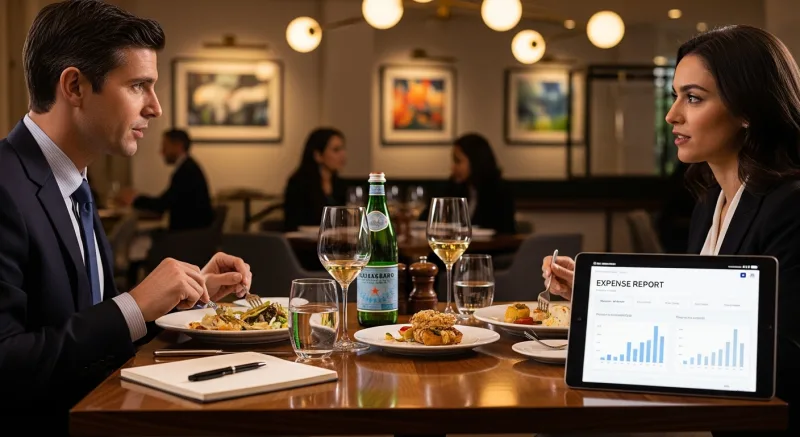
KwickOS with a negotiated processor at 2.05% plus $0.10 on the same $180,000 costs $3,790 monthly — $45,480 annually. The $21,084 annual savings on lunch alone funds a full-time host or two months of the restaurant’s linen service. When dinner, events, and private dining are included, the annual processing savings for a DC power-lunch restaurant through KwickOS can exceed $40,000.
Expense-account dining demands specific receipt capabilities: itemized digital receipts with restaurant name, address, tax breakout, and individual item listing. KwickOS generates these receipts automatically via email or text, formatted for the corporate expense reporting systems that DC’s government-adjacent clientele use. A minor detail that matters enormously when your best customers submit every lunch to a compliance department.
Little Ethiopia: DC’s Most Distinctive Food Corridor
The Ethiopian restaurant corridor along U Street and 9th Street NW in Shaw represents the largest concentration of Ethiopian dining outside of Ethiopia. Over 30 Ethiopian restaurants serve the District’s Ethiopian-American community and a growing audience of DC residents who have embraced injera and wot as part of the city’s culinary identity. These restaurants operate with specific POS requirements that no other American cuisine creates.
Ethiopian dining is communal: large platters of injera topped with multiple wot preparations are shared by the table. The ordering model involves selecting multiple wot varieties from a menu of 15-20 options, each placed on a shared platter. This is not an entree-per-person model. It is a modular build where the table collectively chooses 4-8 items that arrive on a single platter. KwickOS modifier architecture handles this communal ordering with a platter-build interface: the server selects each wot component, and the KDS displays the complete platter build for the kitchen to assemble.
For Ethiopian restaurants where the kitchen operates in Amharic and the front of house serves in English, KwickOS’s terminal-independent language configuration allows each station to run in the language that serves the person using it. The KDS displays orders in whatever format the kitchen needs while the server enters them in English.
Chinatown Under Pressure
DC’s Chinatown has shrunk dramatically as development has replaced Chinese businesses with national chains. The remaining authentic Chinese restaurants operate with a determination to preserve the culinary identity that gives the neighborhood its name. KwickOS Chinese-language KDS support serves these remaining restaurants with native character rendering — kitchen displays in the language of the cuisine that Chinatown is fighting to preserve.
For dim sum operations in DC’s Chinatown, the open-check cart-tracking workflow through KwickOS maintains the traditional dim sum service model where items are added from circulating carts. Each stamp to the check records in both Chinese and English, producing a final bill that the kitchen staff verified in Chinese and the customer verifies in English.
The Inaugural Surge and Political Event Calendar
Every four years, the Presidential Inauguration brings over 1 million visitors to DC. Midterm elections, State of the Union addresses, major Supreme Court decisions, and protest events create unpredictable volume surges that affect restaurants near the National Mall, Capitol Hill, and the downtown corridor. These are not scheduled events with weeks of preparation time. A Supreme Court decision drops on a Tuesday morning, and by Tuesday lunch, restaurants near the Court are overflowing.
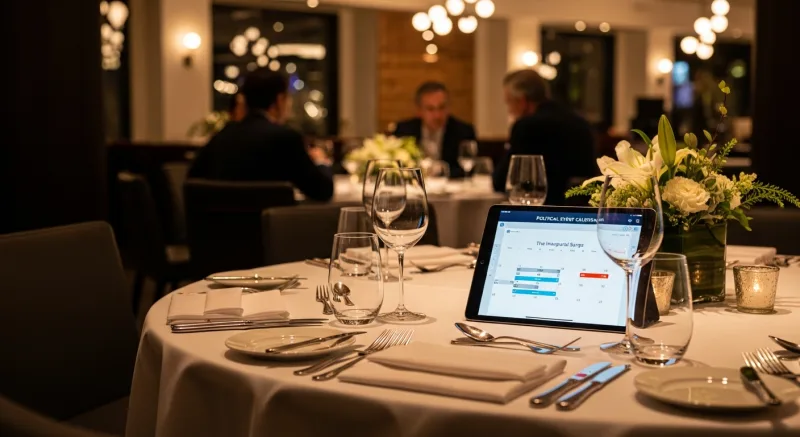
KwickOS local processing handles these spontaneous surges because the system does not depend on cloud infrastructure that may be affected by the same surge in cellular traffic. When a million people on the National Mall are streaming the inauguration, cloud-dependent POS systems compete for bandwidth. KwickOS processes on the device at 1-millisecond speed regardless of what the cellular network is doing.
Self-ordering kiosks provide additional capacity during political event surges without the impossible task of staffing up for an event that was announced 24 hours ago. A Capitol Hill restaurant that adds two kiosks permanently has surge capacity ready for every unexpected volume spike that DC’s political calendar produces.
14th Street and the New DC Dining
The 14th Street corridor from U Street to Logan Circle has become DC’s hottest restaurant row. Chef-driven restaurants, craft cocktail bars, and fast-casual concepts compete for a clientele that is young, diverse, and demanding. The restaurants here are independently owned, creatively ambitious, and operating on margins that DC’s $17.50 minimum wage (no tip credit) compresses.
KwickOS processor independence saves 14th Street restaurants the margin that makes independent operation viable. A restaurant doing $90,000 monthly saves $9,360 annually versus Toast’s locked rate. That is a chef-owner’s quarterly bonus or three months of their student loan payments. The financial impact is personal because the business is personal.
Loyalty programs through KwickOS build the regular customer base that 14th Street restaurants need. The corridor’s walkability means customers can and do try a different restaurant every week. Points, memberships, and personalized recognition through the POS create the switching costs that keep customers returning to your establishment rather than perpetually exploring.
Georgetown: Historic Kitchens and Modern POS
Georgetown’s Federal-era buildings house restaurants in spaces with thick brick walls, limited electrical infrastructure, and Wi-Fi environments that challenge modern technology. KwickOS local processing eliminates the Wi-Fi dependency that thick historic walls create. Compact tablets fit the narrow counter spaces and cramped kitchens of converted townhouses. The technology adapts to Georgetown’s 18th-century architecture rather than demanding 21st-century infrastructure.
The Metro Commuter Delivery Economy
DC’s 400,000 daily commuters from Virginia and Maryland create a unique delivery dynamic: workers order delivery to their DC office for lunch and dinner during late work sessions, then commute home without visiting a restaurant in person. KwickDriver at $2 per delivery makes this office-delivery market profitable for DC restaurants. KwickMenu online ordering captures the commuter who searches Google for “lunch delivery near [office building]” and converts them into a direct customer rather than routing them through DoorDash.
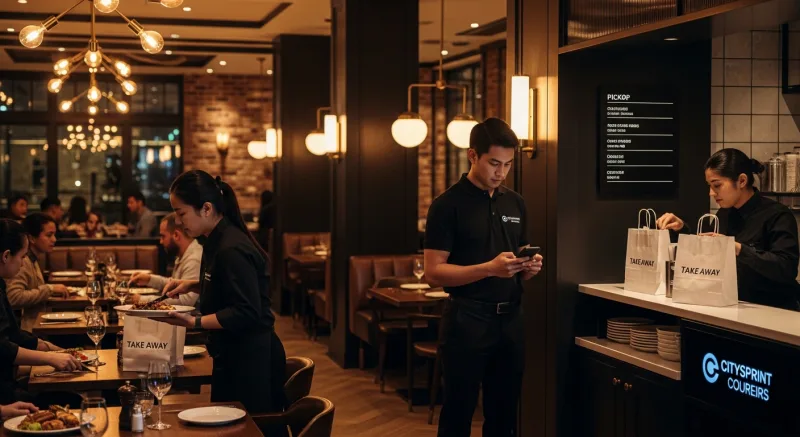
For the Navy Yard neighborhood serving the growing population of workers at the Department of Transportation, the Department of Homeland Security, and the residential buildings along the Anacostia waterfront, KwickMenu pre-ordering with timed pickup serves the compressed lunch economy where government workers have strictly enforced break schedules.
Fingerprint Security in Government-Adjacent Dining
DC restaurants frequently host sensitive conversations. The security consciousness of the city extends to restaurant operations, where employers want precise accountability for who accessed what system, when, and what transactions they processed. KwickOS fingerprint 1:N identification provides biometric-level accountability that satisfies the heightened security awareness of a government town. Every void, every discount, every cash-drawer open traces to a specific, biometrically verified individual.
Washington DC POS Requirements
- Processor independence — Power-lunch volumes save $20-40K annually with negotiated rates
- Itemized expense receipts — Government and corporate clients need compliance-ready digital receipts
- Ethiopian communal ordering — Platter-build modifiers for Little Ethiopia’s shared-dining model
- Chinese language KDS — Chinatown’s remaining restaurants need native character preservation
- Political surge processing — Inaugurations and Court decisions create instant volume spikes
- Historic building compatibility — Georgetown brick walls need local processing, not Wi-Fi dependency
- Loyalty for 14th Street — Walkable corridors demand systematic retention against constant competition
- Office delivery with flat fees — 400,000 daily commuters order delivery to DC offices
Washington DC runs on power. Its restaurants should run on technology that empowers them rather than extracting from them.
Washington DC restaurant owners: Call (888) 355-6996 or visit KwickOS.com to see what POS freedom looks like in the nation’s capital.
Turn One-Time Diners into Regulars: Built-In Gift Cards & Loyalty
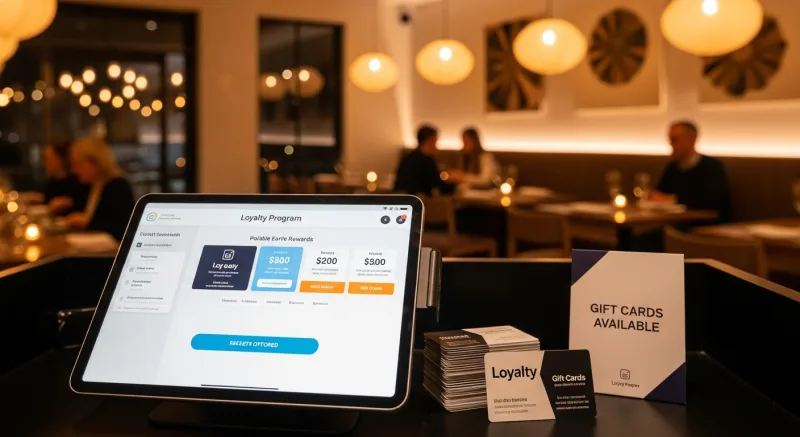
Most POS companies treat gift cards and loyalty as afterthoughts — expensive add-ons that cost $50-100/month extra. KwickOS includes them at no additional charge because we believe they are essential revenue tools, not luxury features.
Gift Cards That Actually Drive Revenue
Here is what most restaurant owners do not realize: gift card buyers spend an average of 20-40% more than the card's face value. A $50 gift card typically generates $60-70 in actual spending. KwickOS supports both physical gift cards and electronic gift cards that customers can purchase, send, and redeem through their phones.
- Physical gift cards — branded plastic cards that sit on your counter and sell themselves during holidays
- E-gift cards — customers buy and send digitally via text or email, perfect for last-minute gifts
- Balance tracking — real-time balance across all your locations, no manual reconciliation
- Reload capability — customers top up their balance, creating a built-in prepayment habit
Loyalty Points That Keep Them Coming Back
KwickOS loyalty is not a punch card from 2005. It is a digital points system that tracks every dollar spent and automatically rewards your best customers:
- Earn points on every purchase — configurable ratio (e.g., $1 = 1 point, or $1 = 10 points)
- Tiered rewards — silver, gold, platinum levels to incentivize higher spending
- Birthday rewards — automated birthday offers that bring customers back during their special month
- Points-for-payment — customers redeem points directly at checkout, seamless for your staff
Membership Programs
For restaurants running VIP programs or subscription models (like monthly coffee clubs), KwickOS membership management handles recurring billing, exclusive pricing tiers, and member-only menu items — all within the same system your cashier already uses.
The bottom line: Toast charges $75/month extra for loyalty. Square's loyalty starts at $45/month. KwickOS includes gift cards, e-gift cards, loyalty points, and membership management in every plan. That is $540-900/year you keep in your pocket.

Founder & CIO of KwickOS · 30 Years IT · 20 Years Restaurant Industry
Tom built KwickOS after running restaurants and IT companies for decades. He relocated the company to a 10,000 sq ft office in 2023 and now serves 5,000+ businesses across all 50 states, processing over $2M in daily sales.