Cheesesteaks, BYO, and the Italian Market: Philadelphia Restaurants Deserve Philly-Tough POS Technology
Updated March 2026 · By Tom Jin
Philadelphia has always been the underappreciated sibling in the Northeast restaurant family. New York gets the attention. Boston gets the prestige. And Philly quietly operates one of the most distinctive restaurant cultures in America — a culture shaped by the BYO tradition that exists nowhere else at this scale, an Italian Market that predates most American food institutions, a cheesesteak economy that processes thousands of transactions per hour across hundreds of locations, and a dining public that is simultaneously loyal, opinionated, and willing to wait in line for 45 minutes for a $12 sandwich.
Philadelphia supports over 4,000 restaurants serving a metro area of 6.2 million people. The restaurant economy generates over $12 billion annually and employs more Philadelphians than any sector except healthcare. The technology running these restaurants matters not because restaurateurs care about technology for its own sake — they do not — but because the wrong technology costs money that Philly restaurants operating on 4-6% margins cannot afford to lose.
The BYO Economy and Its POS Implications
Philadelphia operates more BYO (bring your own bottle) restaurants than any city in America. The tradition exists because Pennsylvania’s liquor license system makes licenses expensive and difficult to obtain. Rather than fight the system, Philadelphia restaurants embraced it — creating a dining culture where guests bring their own wine to restaurants that serve exceptional food without the markup and regulatory burden of a liquor program.
BYO restaurants have specific POS requirements that alcohol-serving restaurants do not. Average ticket sizes are lower because there is no beverage revenue. Corkage fees (typically $5-$15 per bottle) need to be tracked separately. And the financial model depends entirely on food margin, making processing costs proportionally more significant. When there is no $80 wine bottle on the check to absorb processing overhead, every basis point matters.
KwickOS processor independence lets BYO restaurants negotiate rates that reflect their food-only revenue model. Toast’s 2.99% on a $35 BYO dinner check takes $1.20. KwickOS with a competitive processor at 2.1% takes $0.89. The $0.31 difference per transaction, across 150 dinner covers, is $46.50 nightly — $16,972 annually. For a BYO restaurant where the absence of alcohol revenue already compresses margins, this processing savings is the financial oxygen that keeps the model viable.
Cheesesteak Economics: Speed, Volume, Repetition
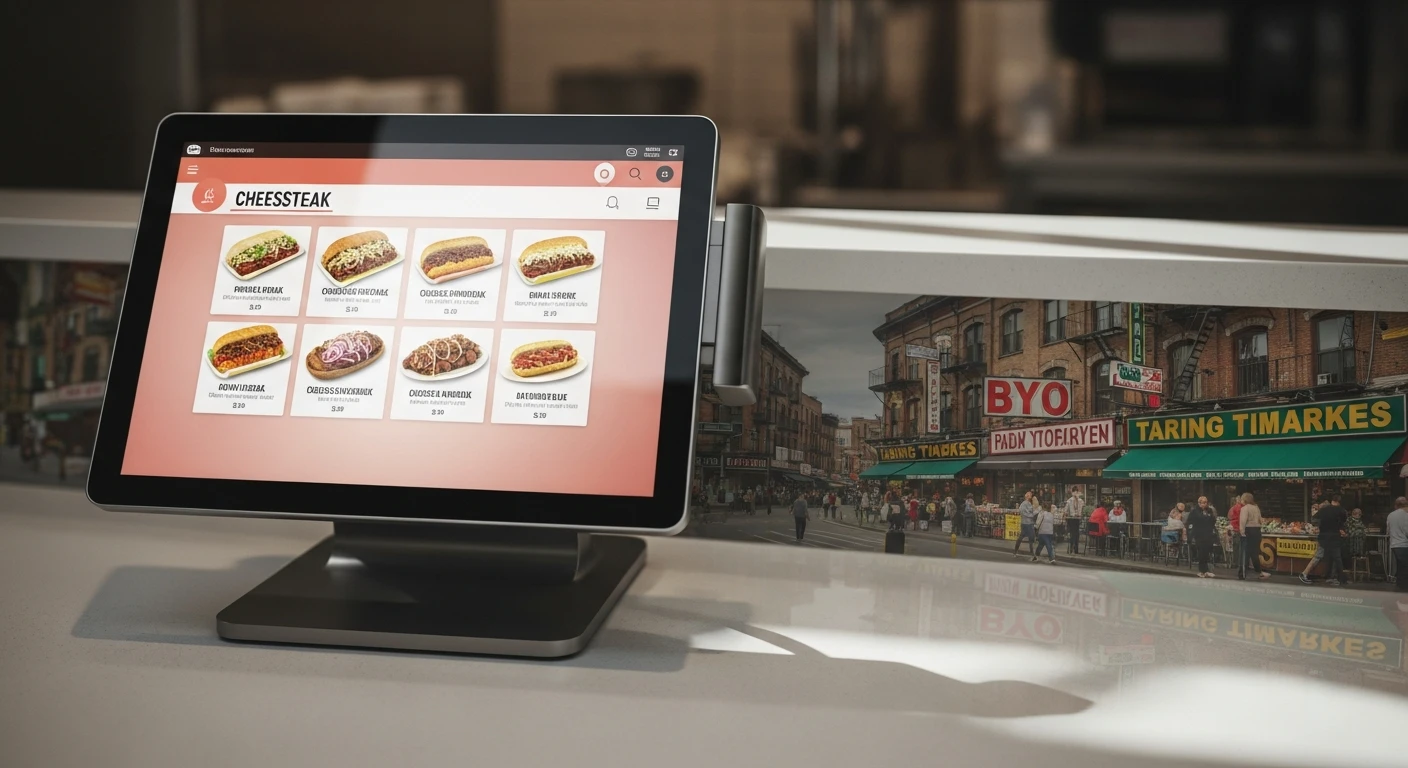
Philadelphia’s cheesesteak shops process more transactions per hour than almost any other restaurant format in America. A busy cheesesteak window handles 200-300 orders per hour during the lunch rush. Transactions average $10-$14. The operational model is pure speed: order, grill, wrap, pay, next. Any POS system that adds even five seconds to this cycle costs the restaurant 20-25 orders per hour in lost throughput.
KwickOS processes at 1-millisecond speed on local hardware. No cloud round-trip. No server queue. The cashier taps the order, the grill sees it on the KDS instantly, and the payment processes before the customer has their wallet back in their pocket. At cheesesteak speed, this local processing advantage translates directly to throughput: more orders per hour means more revenue per hour from a counter that has no more chairs to add and no more grill space to expand.
Self-ordering kiosks in high-volume cheesesteak shops process orders while the counter staff handles the line. Tourists who need time to decode the ordering ritual (Whiz wit? Provolone without?) can browse a visual kiosk menu without holding up the line of regulars who order in three words. This parallel processing doubles peak throughput without doubling staff.
The Italian Market: America’s Oldest Open-Air Market
The 9th Street Italian Market has operated continuously since 1884, and the food vendors, butchers, cheese shops, and prepared food stalls along its blocks represent a living connection to Philadelphia’s immigrant food history. Operating POS technology in this environment means adapting to outdoor conditions, limited electrical infrastructure, and a transaction volume that peaks during weekend market hours.
KwickOS runs on battery-powered tablets that operate for 8-10 hours without charging — covering a full market day without requiring a power connection. For vendors in the Italian Market who operate from stalls with minimal or no permanent electrical service, this battery independence is a functional requirement. The transaction processes locally on the tablet regardless of Wi-Fi conditions, which in an open-air market surrounded by century-old buildings and hundreds of connected devices are unpredictable at best.
Chinatown: Protecting Community Through Technology
Philadelphia’s Chinatown is one of the oldest in the Eastern United States and faces development pressure from the nearby convention center and arena district. The restaurant community in Chinatown operates with a determination to preserve cultural identity through cuisine, and the POS technology serving these restaurants should support rather than hinder that mission.
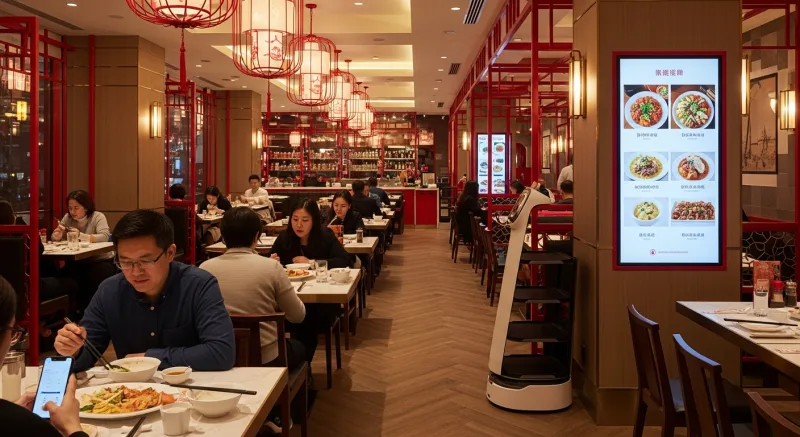
KwickOS Chinese-language KDS support means Philadelphia Chinatown kitchens see orders in the characters they read. Dim sum carts, hand-pulled noodle operations, and Cantonese seafood restaurants process through a system that respects the language of the cuisine. For a community fighting to maintain its culinary identity, having technology that operates in Chinese rather than forcing English on a Chinese-language kitchen is a form of cultural respect that English-only POS companies do not provide.
The Eagles Effect and South Philly Surge Pricing
When the Eagles play at Lincoln Financial Field, the restaurants of South Philly and Passyunk Avenue experience volume spikes of 150-250%. A bar on East Passyunk that normally serves 200 beers on Sunday serves 500 on Eagles Sunday. The pregame economy starts at 10 AM for a 1 PM kickoff, and the postgame celebration or consolation extends past midnight.
KwickOS handles this sustained surge through local processing that does not degrade under load and fingerprint security that manages the temporary staff hired for game days. Every extra bartender and server registers a fingerprint. Every transaction traces to a specific person. When the season ends and the game-day temps scatter, there are no active credentials left behind. The security model is self-cleaning.
Reading Terminal Market and the Food Hall Model
Reading Terminal Market is the nation’s oldest continuously operating farmers market, and its vendors operate with the technology constraints of a shared indoor market: limited counter space, high foot traffic, quick-turn transactions, and the visual competition of adjacent vendors. KwickSign digital signage gives Reading Terminal vendors dynamic menu displays that stand out in the visual noise of a bustling market. KwickOS on compact tablets fits the narrow counter spaces that market stalls provide.
Fishtown and the Neighborhood Dining Boom
Fishtown’s transformation from a working-class neighborhood to Philadelphia’s hottest restaurant corridor mirrors national gentrification patterns but with Philly-specific characteristics. The restaurants here are aggressively independent, often chef-owned, and operate in converted row houses and industrial spaces where technology must adapt to physical constraints.
KwickOS loyalty programs help Fishtown restaurants build the neighborhood-regular customer base that drives consistent revenue. A first-time visitor who earns loyalty points has a reason to return next week instead of exploring the dozen other options on Frankford Avenue. Membership tiers create VIP experiences — priority seating, exclusive tasting events — that convert casual diners into committed regulars. Built into KwickOS at no additional fee, because customer retention is core functionality, not a premium add-on.
University City and the Penn/Drexel Lunch Economy
University City serves the combined student and employee population of the University of Pennsylvania, Drexel University, and the Hospital of the University of Pennsylvania — over 100,000 people concentrated in a compact area. KwickMenu online pre-ordering serves the time-pressed medical professionals and students who need food ready on arrival. KwickDriver’s $2 delivery fee makes student delivery viable on $12-$15 tickets where DoorDash’s commission would eliminate profit entirely.
Philadelphia POS Priorities
- Processor independence for BYO — Food-only revenue models need the lowest possible processing rates
- Cheesesteak-speed processing — 1ms local processing maintains 200+ orders per hour throughput
- Battery-powered market operation — Italian Market vendors need all-day tablet operation without power
- Chinese language KDS — Chinatown kitchens need native character display
- Game-day fingerprint security — Eagles Sunday temp staff needs biometric accountability
- Self-ordering kiosks — Tourist cheesesteak shops and Reading Terminal need automated throughput
- Loyalty for neighborhood restaurants — Fishtown walkability demands systematic retention
- Flat-rate campus delivery — University City student orders need $2 delivery, not 25% commissions
Philly does not do pretentious. It does excellent, affordable, and unpretentious. The POS system should match that energy — powerful, practical, and priced for reality.
Philadelphia restaurant owners: Call (888) 355-6996 or visit KwickOS.com to see technology as tough as the city it serves.
Turn One-Time Diners into Regulars: Built-In Gift Cards & Loyalty
Most POS companies treat gift cards and loyalty as afterthoughts — expensive add-ons that cost $50-100/month extra. KwickOS includes them at no additional charge because we believe they are essential revenue tools, not luxury features.
Gift Cards That Actually Drive Revenue
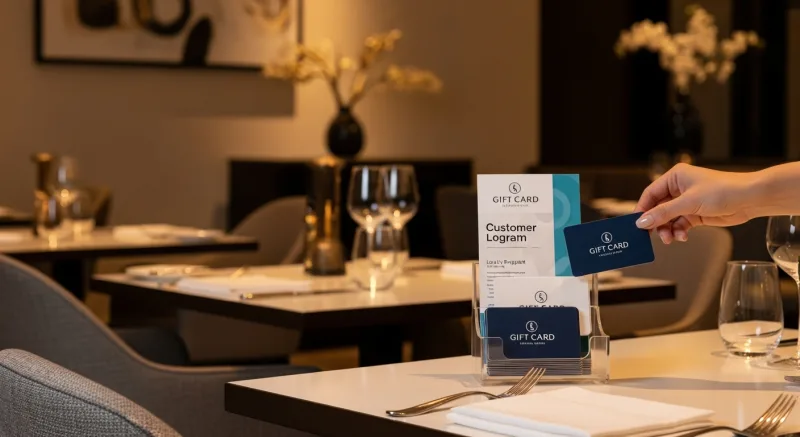
Here is what most restaurant owners do not realize: gift card buyers spend an average of 20-40% more than the card's face value. A $50 gift card typically generates $60-70 in actual spending. KwickOS supports both physical gift cards and electronic gift cards that customers can purchase, send, and redeem through their phones.
- Physical gift cards — branded plastic cards that sit on your counter and sell themselves during holidays
- E-gift cards — customers buy and send digitally via text or email, perfect for last-minute gifts
- Balance tracking — real-time balance across all your locations, no manual reconciliation
- Reload capability — customers top up their balance, creating a built-in prepayment habit
Loyalty Points That Keep Them Coming Back
KwickOS loyalty is not a punch card from 2005. It is a digital points system that tracks every dollar spent and automatically rewards your best customers:
- Earn points on every purchase — configurable ratio (e.g., $1 = 1 point, or $1 = 10 points)
- Tiered rewards — silver, gold, platinum levels to incentivize higher spending
- Birthday rewards — automated birthday offers that bring customers back during their special month
- Points-for-payment — customers redeem points directly at checkout, seamless for your staff
Membership Programs
For restaurants running VIP programs or subscription models (like monthly coffee clubs), KwickOS membership management handles recurring billing, exclusive pricing tiers, and member-only menu items — all within the same system your cashier already uses.
The bottom line: Toast charges $75/month extra for loyalty. Square's loyalty starts at $45/month. KwickOS includes gift cards, e-gift cards, loyalty points, and membership management in every plan. That is $540-900/year you keep in your pocket.
Founder & CIO of KwickOS · 30 Years IT · 20 Years Restaurant Industry
Tom built KwickOS after running restaurants and IT companies for decades. He relocated the company to a 10,000 sq ft office in 2023 and now serves 5,000+ businesses across all 50 states, processing over $2M in daily sales.