March 13, 2026 · 14 min read
Retail Stores: You Negotiate With Every Vendor Except the One Taking 3% of Every Sale
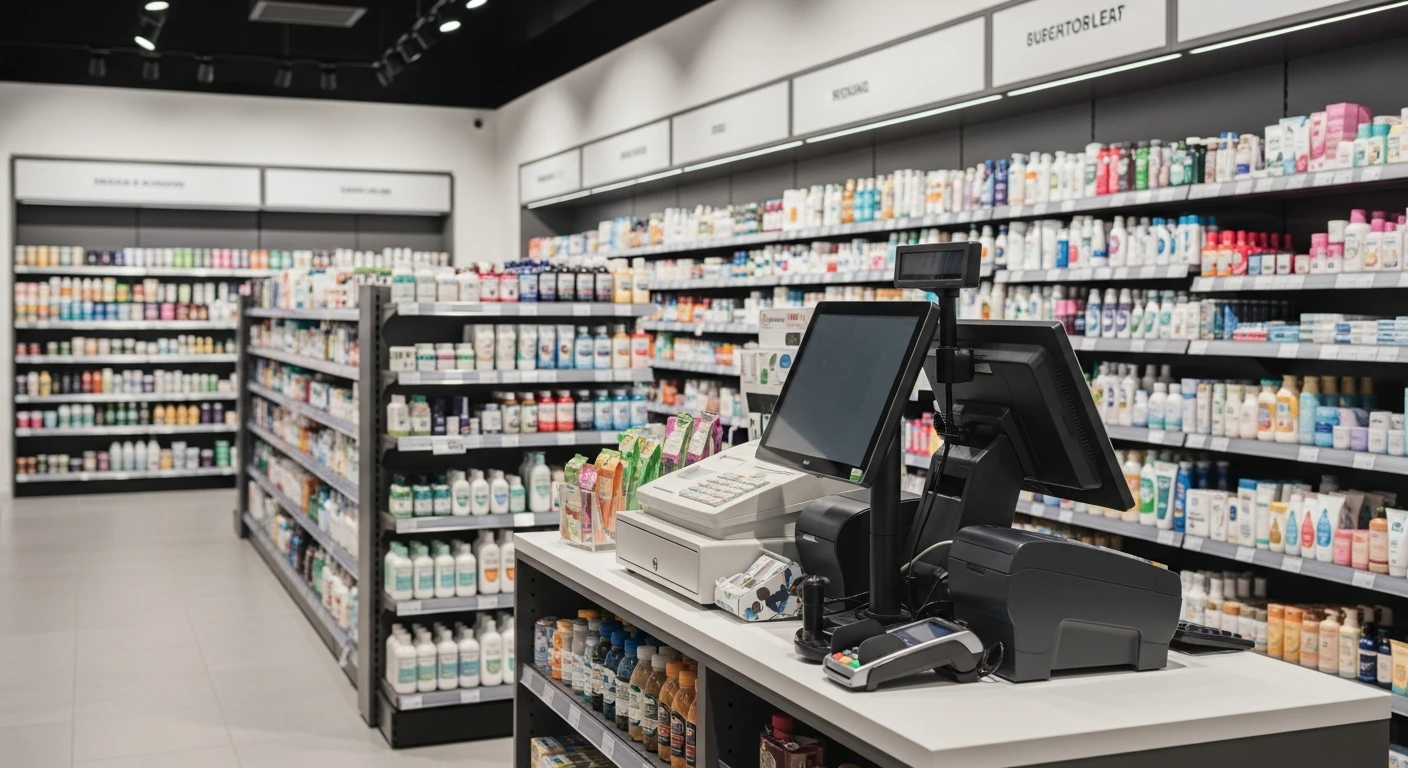
You haggle with wholesale suppliers over $0.50 per unit. You negotiate lease terms down to the square foot. You comparison-shop shipping carriers for $0.10 differences per package. But the company taking 2.99% of every single sale you make? You accepted their rate without question because your POS vendor told you it was the only option.
The retail math: A retail store doing $800,000/year in card sales pays 0.40-0.50% more than necessary through a locked POS processor. That is $3,200-4,000/year. Over three years: $9,600-12,000. Enough to fund an entire new product line or a complete store refresh.
Retail Margins Are Already Under Siege
Independent retail stores operate on 2-4% net margins after accounting for COGS, rent, labor, utilities, insurance, and shrinkage. A store with $1M in revenue keeps $20,000-40,000 at the end of the year. In that context, a $4,000 annual processing overpayment represents 10-20% of net profit. Not 10% of revenue — 10-20% of what you actually take home.
Every other cost in your business is subject to negotiation and competition. You get quotes from multiple suppliers. You compare lease terms from multiple landlords. You interview multiple insurance brokers. But your payment processing — which ranks among your top five expenses — is dictated by whichever POS system you happened to choose, with no ability to shop, compare, or negotiate.
This is not accidental. It is the business model. Square, Clover, and Shopify POS make their real money on payment processing, not software. The POS is the hook. Processing is the revenue. Your locked-in rate is their profit margin.
The Return and Exchange Processing Penalty
Retail stores face a processing cost that restaurants almost never encounter: returns. The average retail return rate is 16-20% of sales. On $800,000 in annual card sales, that is $128,000-160,000 in returns processed back to customers' cards.
Here is what most retail owners do not know: when you process a refund, most processors do not refund their processing fee. You paid 2.99% + $0.15 on the original sale. When you refund the customer, you pay another processing fee on the return transaction. The original $0.15 flat fee and the percentage fee on the original sale are gone. You lost the processing cost twice — once on the sale that was returned, and once on the refund transaction.
On $140,000 in annual returns, the double-processing cost is approximately $4,186 through a locked processor at 2.99%. With a processor that refunds the original fee on returns (some do), that cost drops to $2,100. The ability to choose a return-friendly processor saves $2,086/year — a benefit only available through processor-agnostic POS systems like KwickOS.
Inventory Turnover and Processing: The Cash Flow Connection
Retail profitability depends on inventory turnover: how quickly you sell what you buy. High-turnover items (fast fashion, trending products, seasonal goods) generate many small transactions. Low-turnover items (furniture, electronics, specialty goods) generate fewer, larger transactions.
The per-transaction flat fee punishes high-turnover retailers disproportionately. A gift shop selling 200 items/day at $15 average pays $30/day in flat fees ($0.15 × 200) plus percentage fees. A furniture store selling 5 items/day at $600 average pays $0.75/day in flat fees. Same daily revenue, vastly different flat fee burden.
With processor choice, high-turnover retailers can negotiate lower per-transaction fees in exchange for volume commitments. Low-turnover retailers can negotiate lower percentage rates since their transaction counts are modest. The optimal processing structure depends entirely on your inventory model — and a locked processor does not care about your inventory model.
Gift Cards: Retail's Year-Round Revenue Engine
Retail gift cards serve a fundamentally different purpose than restaurant gift cards. A restaurant gift card says "go eat somewhere nice." A retail gift card says "buy yourself something you actually want." The psychology drives higher redemption rates (92-95% for retail versus 85-90% for food) and higher overspend (35-50% above face value).
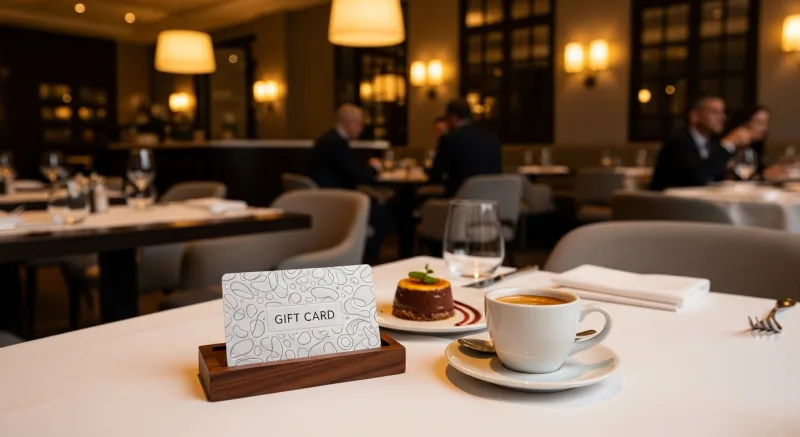
A retail store selling $60,000/year in gift cards generates immediate cash flow plus $21,000-30,000 in overspend revenue when cards are redeemed. Gift cards also drive new customer acquisition: 61% of gift card recipients visit a store they would not have otherwise entered.
Square's gift card system works only with Square processing. Shopify's works only within the Shopify ecosystem. If you outgrow either platform or find a better POS option, your outstanding gift card liabilities create a migration barrier. Customers holding $25,000 in unredeemed gift cards expect those cards to work — forever, in most states, per consumer protection laws.
KwickOS gift cards are processor-independent. They work with Heartland today and TSYS tomorrow. Your gift card program survives any business evolution without customer disruption.
The Loyalty Program That Drives Repeat Visits
Retail loyalty programs are more complex than food service programs because they must account for product categories, seasonal preferences, and purchase history. A clothing store's loyalty program might offer 10% off on your birthday month, double points on new arrivals, and early access to sales for platinum members.
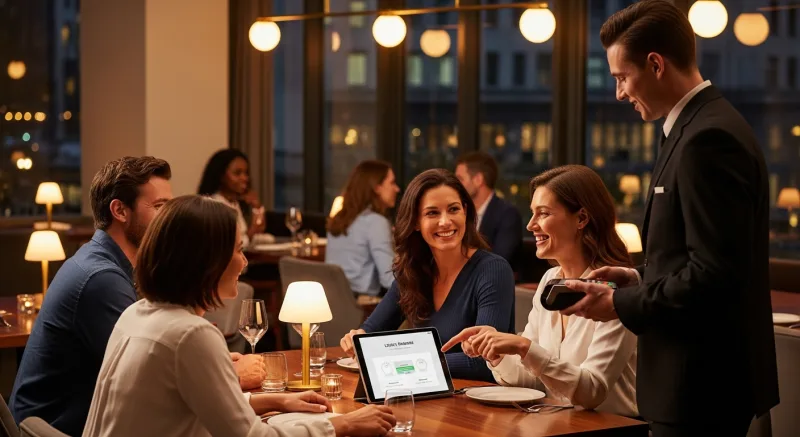
These programs require rich customer data: purchase history, product preferences, visit frequency, average spend. When that data lives inside a locked POS ecosystem, it becomes your most valuable hostage. Leave the POS, and your customer profiles, purchase histories, and loyalty balances evaporate.
KwickOS stores loyalty data independently of payment processing. Your customer database, their purchase histories, their earned points and tier status — all of it belongs to your business and survives any processor change. The data portability alone is worth the switch for retailers with established loyalty programs.
E-Commerce Integration: The Omnichannel Processing Problem
Modern retail operates across channels: physical store, online shop, social media sales, marketplace listings. Each channel can use a different payment processor — or they should. Your in-store transactions might get the best rates from one processor, while your online transactions get better rates from another.
Locked POS systems force all channels through a single processor. Shopify POS uses Shopify Payments. Square POS uses Square's processor. Neither allows channel-specific processor optimization. You accept the same rate whether the customer taps their card in-store (low-risk, low-fee transaction) or enters their card number online (higher-risk, higher-fee transaction).
KwickOS allows per-channel processor selection. Route in-store transactions through the processor with the best card-present rates. Route online transactions through a processor with competitive card-not-present rates. This channel-specific optimization can save an omnichannel retailer 0.10-0.25% across their blended rate.
Seasonal Revenue Spikes and Processing Costs
Retail is seasonal. The National Retail Federation estimates that 20-30% of annual retail revenue occurs between November and January. A store doing $800,000/year might process $200,000-240,000 in November-December alone.
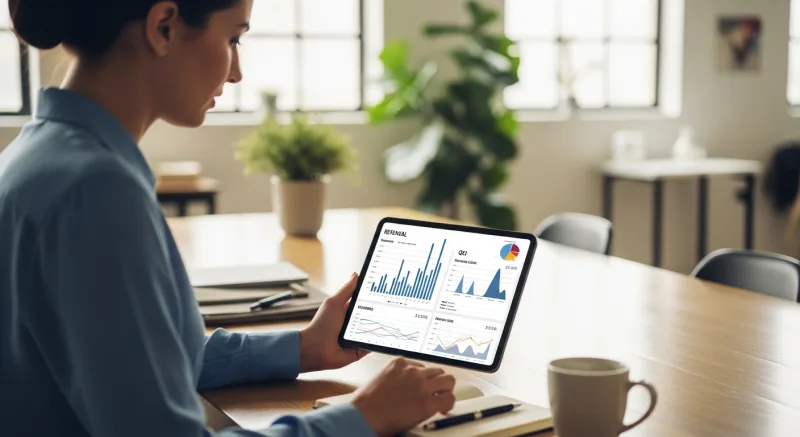
During holiday season, you need maximum processing reliability and competitive rates on your highest-volume months. A locked processor at 2.99% on a $200,000 holiday month costs $5,980 in fees. A negotiated processor at 2.49% costs $4,980. The $1,000 holiday-season savings alone justifies the switch.
Some processors offer seasonal rate adjustments for retail clients, recognizing that holiday volume deserves volume pricing. You cannot access these structures through a locked POS.
The Brick-and-Mortar Advantage: Tap-to-Pay Savings
Physical retail stores have a processing advantage that most owners underappreciate: card-present transactions are cheaper to process than card-not-present. The fraud risk is lower, so interchange rates are lower. The difference is typically 0.30-0.50% per transaction.
But locked processors often do not pass these card-present savings through to merchants. They charge a flat rate regardless of transaction type. With a processor-agnostic POS, you can choose an interchange-plus processor that passes the card-present discount directly to you. On $800,000 in card-present sales, that card-present advantage is worth $2,400-4,000/year — but only if your processor passes it through.
Employee Theft Prevention: Beyond PIN Codes
Retail employee theft costs the industry $46 billion/year according to the National Retail Federation. The most common methods: voiding sales after the customer leaves and pocketing cash, applying unauthorized employee discounts, and processing fake returns to a personal card.
KwickOS uses 1:N fingerprint authentication for every void, return, discount, and cash drawer open. There are no shareable PINs. No manager codes written on receipts. Every financial action is biometrically logged.
Square and Clover rely on PIN codes that employees share within days of onboarding. In a retail environment where seasonal staff turnover reaches 60-80%, PIN-based security is meaningless. The PIN from the employee who quit in October is still active in December unless someone remembers to deactivate it.
The Three-Year Cost for a Single-Location Retailer
Retail store: $800K/year in card sales:
Locked processor (2.99% + $0.15): ~$26,320/year
Negotiated interchange-plus via KwickOS: ~$22,320/year
Annual savings: $4,000
Three-year savings: $12,000
$12,000 over three years. Add the return processing savings ($6,258 over three years) and the card-present pass-through advantage ($7,200-12,000), and the total benefit of processor freedom for a single retail location can exceed $25,000 over three years.
You negotiate with every vendor in your supply chain. It is time to negotiate with the one taking 3% of every transaction.
Ready to negotiate your processing rate? Call (888) 355-6996 or visit kwickos.com for a retail POS demo.
KwickOS · 6405 Cypresswood Dr #250, Spring TX 77379
Turn One-Time Diners into Regulars: Built-In Gift Cards & Loyalty
Most POS companies treat gift cards and loyalty as afterthoughts — expensive add-ons that cost $50-100/month extra. KwickOS includes them at no additional charge because we believe they are essential revenue tools, not luxury features.
Gift Cards That Actually Drive Revenue
Here is what most restaurant owners do not realize: gift card buyers spend an average of 20-40% more than the card's face value. A $50 gift card typically generates $60-70 in actual spending. KwickOS supports both physical gift cards and electronic gift cards that customers can purchase, send, and redeem through their phones.
- Physical gift cards — branded plastic cards that sit on your counter and sell themselves during holidays
- E-gift cards — customers buy and send digitally via text or email, perfect for last-minute gifts
- Balance tracking — real-time balance across all your locations, no manual reconciliation
- Reload capability — customers top up their balance, creating a built-in prepayment habit
Loyalty Points That Keep Them Coming Back
KwickOS loyalty is not a punch card from 2005. It is a digital points system that tracks every dollar spent and automatically rewards your best customers:
- Earn points on every purchase — configurable ratio (e.g., $1 = 1 point, or $1 = 10 points)
- Tiered rewards — silver, gold, platinum levels to incentivize higher spending
- Birthday rewards — automated birthday offers that bring customers back during their special month
- Points-for-payment — customers redeem points directly at checkout, seamless for your staff
Membership Programs
For restaurants running VIP programs or subscription models (like monthly coffee clubs), KwickOS membership management handles recurring billing, exclusive pricing tiers, and member-only menu items — all within the same system your cashier already uses.
The bottom line: Toast charges $75/month extra for loyalty. Square's loyalty starts at $45/month. KwickOS includes gift cards, e-gift cards, loyalty points, and membership management in every plan. That is $540-900/year you keep in your pocket.

Tom Jin
Founder & CIO of KwickOS · 30 Years IT · 20 Years Restaurant Industry
Tom built KwickOS for restaurants, retail, and beauty businesses. With Baked Cravings running a 24-hour self-serve kiosk at Lego Land, the platform proves itself in the most demanding retail environments.
Related Articles
Payment Lock-In: The $6,000/Year Tax Nobody Talks About
The definitive 2026 guide to processor-agnostic POS across all industries.
Nail Salons: Processing Fees on Tips and Products
Beauty retail and service processing in one analysis.
Credit Card Processing Fees Explained
Interchange, assessment, and markup fees decoded for retail operators.