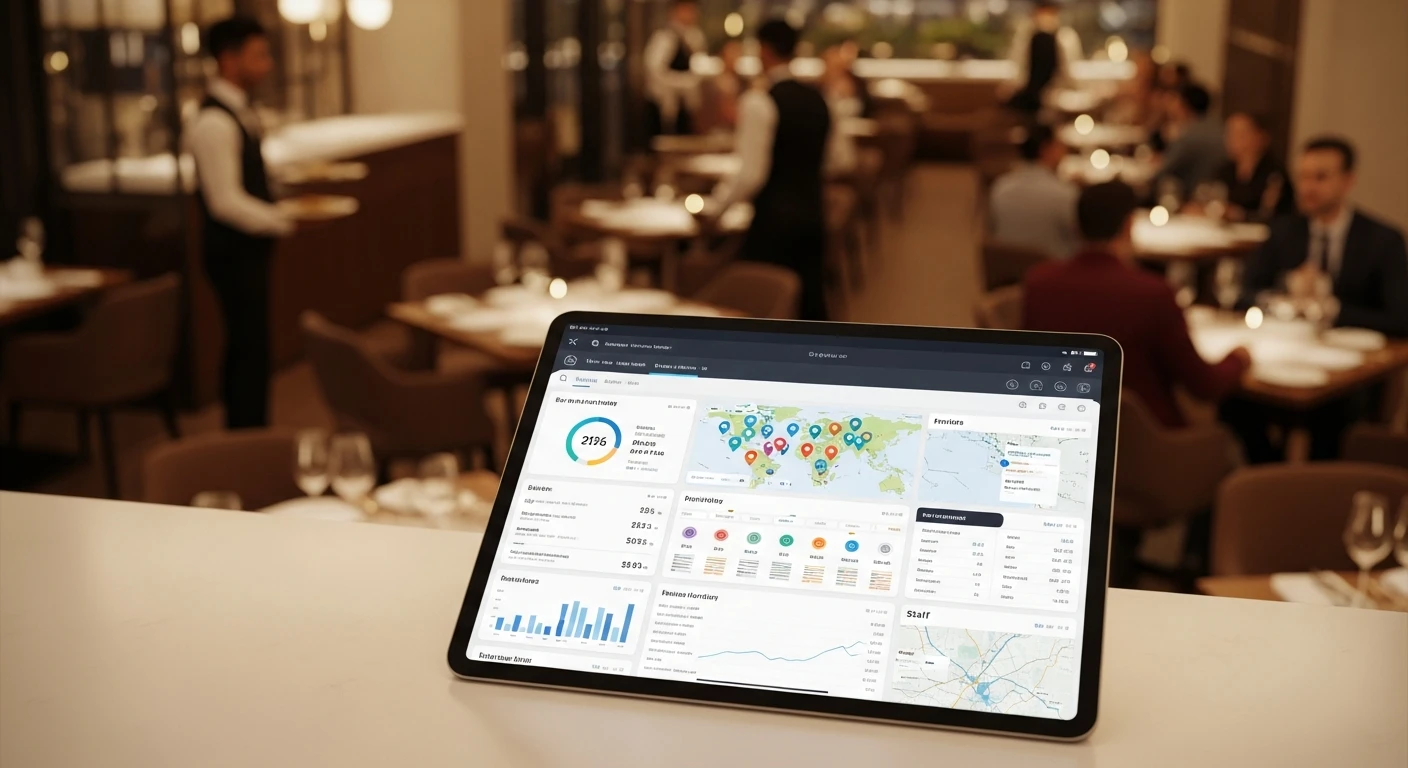
We are living through a restructuring of how restaurant groups operate. The old model — independent POS installations at each location, manually combined spreadsheets, per-location gift cards and loyalty programs — was always inefficient. But in 2026, with rising labor costs, tighter margins, and increasingly tech-savvy customers who expect seamless experiences across your brand, the old model is not just inefficient. It is competitively disqualifying.
I have deployed POS systems for restaurant groups ranging from 3 locations to 600+. The technology capabilities that were enterprise-only features five years ago — real-time multi-location dashboards, one-click menu sync, unified loyalty programs, cross-location gift card systems — are now accessible to restaurant groups of any size. The question in 2026 is not "can I afford this?" but "can I afford not to have this?"
The 2026 Multi-Location Technology Baseline
In 2026, a multi-location restaurant group operating without these five capabilities is at a measurable competitive disadvantage:
1. Real-time unified dashboard. Checking individual location reports by logging into separate back offices is a 2018 workflow. In 2026, every restaurant group with 3+ locations should see all locations on one screen, in real time, from any device. Not yesterday's numbers — right now. T. Jin China Diner monitors 15 locations and 75 terminals through a single dashboard. Crafty Crab Seafood sees all 19 locations simultaneously. Haidilao manages 600+ locations through centralized visibility. The technology exists at every scale.
2. One-click menu sync. Manually updating menus at each location is a labor cost that scales linearly with location count. At 5 locations, it wastes 10-20 hours per month. At 10 locations, it wastes 20-40 hours. In 2026, a menu change made at headquarters should reach every terminal at every location in seconds — not hours, not days, certainly not the "call each manager and hope they update it correctly" approach that many groups still use.
3. Cross-location gift cards. A gift card that only works at one location is a 2015 limitation masquerading as acceptable. In 2026, customers expect a gift card purchased at any location to work at any other location instantly. The technology for real-time cross-location balance sync has existed for years. If your POS does not support it, you are choosing to frustrate customers.
4. Unified loyalty. Customer data fragmented across multiple systems is unusable data. In 2026, a customer who visits three of your locations should have one profile, one point balance, one membership tier, and one relationship with your brand. Anything less means your marketing is based on incomplete information and your best customers — the multi-location visitors — are the least recognized.
5. Processor freedom. Payment processing lock-in was always a bad deal. In 2026, with restaurant margins at historic lows, paying 2.99% because your POS vendor forces it when you could negotiate 2.15% is not just wasteful — it is negligent financial management. At multi-location scale, the difference is six figures annually.
What Changed in 2025-2026
Several developments have made multi-location technology both more necessary and more accessible:
Labor costs continued rising. Minimum wage increases across multiple states mean that every hour of manager time spent on manual data aggregation, menu updates, and commission reconciliation is more expensive than it was two years ago. Automation is no longer a luxury — it is a labor cost management strategy.
Customer expectations escalated. Customers now expect the same seamless experience across locations that they get from national chains. A local restaurant group with 5 locations is compared against the Chili's or Cheesecake Factory down the street, where gift cards work everywhere and loyalty points accumulate across any visit. Meeting this expectation requires unified technology.
Processing rate competition intensified. Payment processors are more aggressive in 2026, offering competitive rates to win multi-location accounts. Restaurant groups on processor-agnostic POS systems can leverage this competition. Groups locked into Toast's or Square's processing cannot negotiate at all — they watch the market improve while their rates stay fixed.
Hybrid architecture matured. The local+cloud architecture that KwickOS pioneered — 1ms local processing with cloud sync for management — is now proven across 5,000+ active businesses. The reliability and speed advantages over cloud-only systems are no longer theoretical; they are demonstrated across millions of daily transactions.
The 2026 Cost of Fragmentation
Let us quantify what a 5-location restaurant group loses annually from operating on fragmented POS systems in 2026:
| Cost Category | Annual Cost |
|---|---|
| Processing overpayment (locked vs negotiated rate on $600K/mo) | $50,400 |
| Manager time on manual reporting (8 hrs/week at $30/hr) | $12,480 |
| Menu update labor and error costs | $4,800 |
| Gift card friction (lost sales from cross-location failures) | $6,000-12,000 |
| Loyalty fragmentation (lost customer lifetime value) | $9,000-18,000 |
| Per-location POS fees (Toast: $69-165/mo x 5) | $4,140-9,900 |
| Total annual cost of fragmentation | $86,820-107,580 |
For a 5-location restaurant group doing $7.2 million in annual revenue, $87,000-108,000 in fragmentation costs represents 1.2-1.5% of revenue. At typical restaurant margins of 5-8%, that fragmentation cost consumes 15-30% of your profit. In 2026, this is not acceptable.
Case Study: Crafty Crab's 19-Location Transformation
Crafty Crab Seafood operates 19 locations with 152 terminals on KwickOS. Their menu includes seafood boils with complex modifier trees — sauce types, spice levels, protein add-ons, and side selections that create thousands of possible order combinations.
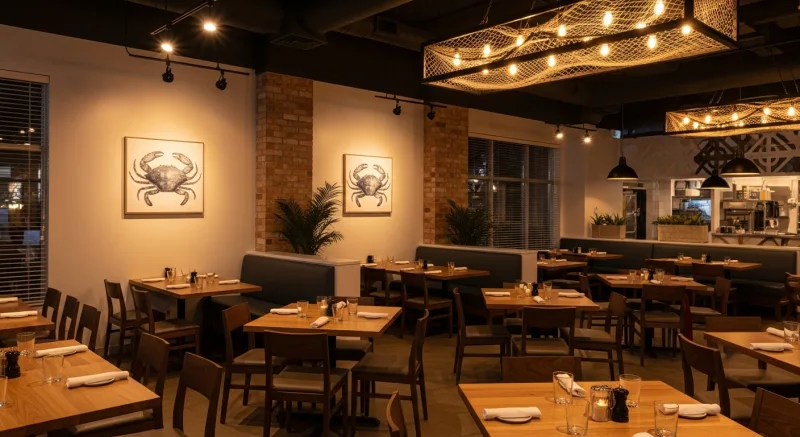
Before KwickOS, menu updates required coordination with 19 location managers. A new sauce meant 19 separate updates, days of coordination, and inevitable inconsistencies. Gift cards only worked at the location of purchase. Loyalty data was fragmented across 19 separate databases. Processing rates varied by location because each opened with a different processor relationship.
After deploying KwickOS: one-click menu sync pushes changes to all 152 terminals simultaneously. Gift cards purchased at any location work at every other location in real time. Loyalty pools points across all 19 stores. Processing is unified through one processor at one negotiated rate based on aggregate volume. The owner monitors all 19 locations from a single dashboard.
Case Study: T. Jin's 15-Location Monitoring System
T. Jin China Diner operates 15 locations with 75 terminals. The operational challenge is maintaining consistency and quality across 15 geographically dispersed stores while the owner cannot physically visit more than 2-3 locations per day.
KwickOS's real-time dashboard solved this by putting every store's performance on one screen. Sales data, labor costs, inventory alerts, void/discount patterns, and employee clock-in times are all visible centrally. The owner catches a slow lunch at Location 8 while it is happening (not the next morning), sees an unusual void pattern at Location 12 before it becomes a loss trend, and monitors that new Location 15 is ramping up to target volume as projected.
The time savings translate directly to operational quality. Instead of spending 3-4 hours per day visiting stores and checking numbers manually, the owner spends 30 minutes reviewing the dashboard and then visits the 1-2 locations that actually need attention.
Case Study: Haidilao's Global Template
Haidilao operates 600+ locations worldwide. At that scale, centralized management is not optional — it is the only way to maintain brand consistency, service standards, and operational efficiency. Their VIP recognition system works across every location globally: a customer who earns VIP status at one restaurant receives VIP treatment at any Haidilao worldwide.
The lesson for smaller restaurant groups is that the principles Haidilao applies at 600 locations apply at 5. Centralized menu management. Unified customer data. Consistent service standards enforced through technology. The scale is different; the architecture is the same. KwickOS provides that architecture at every scale.
The 2026 Technology Stack for Multi-Location Restaurants
Here is what a properly equipped multi-location restaurant group runs in 2026:
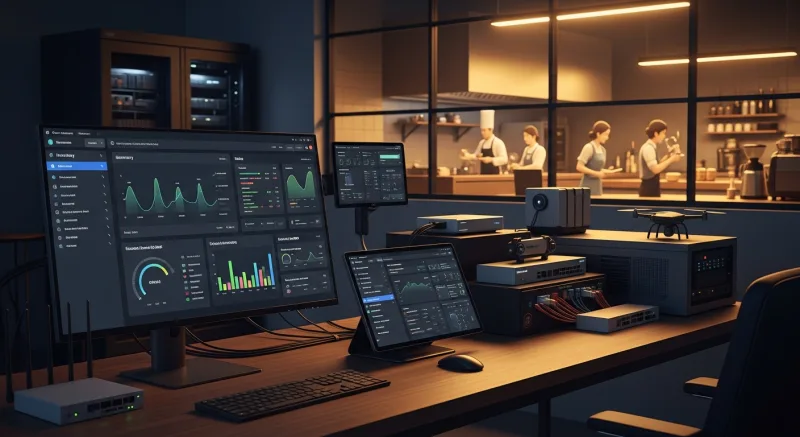
- POS with local processing: 1ms transaction speed at every register, full offline capability. No dependency on internet for core operations.
- Centralized dashboard: All locations, real-time, accessible from phone/tablet/desktop. Sales, labor, inventory, and exceptions in one view.
- One-click menu sync: Changes made at headquarters push to every terminal at every location in seconds.
- KDS integration: Kitchen displays configured centrally with per-location overrides. Routing updates automatically when the menu syncs.
- Cross-location gift cards: Physical and digital, real-time balance sync, zero per-location restrictions.
- Unified loyalty: One customer profile, one point balance, one membership tier across all locations and channels.
- Online ordering: Branded ordering page (not DoorDash) with intelligent routing to the optimal fulfillment location.
- Delivery: KwickDriver at $2 flat + $6.99/5mi (customer-paid) vs. 15-25% platform commissions.
- Fingerprint authentication: 1:N biometric login for employees who work at multiple locations.
- Digital signage: Menu boards that sync with POS menu changes automatically.
- Processor-agnostic payments: Choose your processor, negotiate aggregate rates, switch without changing POS.
KwickOS provides every item on this list as an integrated platform, not a collection of third-party add-ons. The platform serves 5,000+ active businesses across 50 states, processing $2 million+ in daily sales.
The Decision Framework for 2026
If you are operating 3+ restaurant locations in 2026, here is the framework for evaluating your technology:
- Calculate your fragmentation cost. Add up per-location POS fees, processing overpayment (compare your rate to a negotiated rate at your aggregate volume), manager time on manual reporting, and estimated losses from gift card and loyalty fragmentation.
- Assess your growth timeline. If you plan to open additional locations in the next 24 months, the technology decision you make today determines whether that expansion is operationally feasible or an administrative nightmare.
- Compare total cost of ownership. Not just the monthly POS fee — include processing costs, per-location fees, add-on subscriptions (loyalty, online ordering, signage, scheduling), and the labor cost of managing fragmented systems.
- Test the multi-location features. Ask your current POS vendor to demonstrate real-time cross-location gift card sync, one-click menu sync, and unified loyalty. If they cannot demonstrate these features live, they do not exist in the way you need them.
The restaurant groups that thrive in 2026 and beyond are the ones that treat technology as a strategic investment, not a cost center. The right multi-location platform does not just save money — it enables the operational consistency, customer experience, and management visibility that drive sustainable growth.
Ready for 2026 Multi-Location Technology?
Schedule a demo and we will show you the unified dashboard, one-click menu sync, cross-location gift cards, unified loyalty, and processor savings — calculated for your specific restaurant group.
Get Your Free DemoOr call us directly: (888) 355-6996
Turn One-Time Diners into Regulars: Built-In Gift Cards & Loyalty
Most POS companies treat gift cards and loyalty as afterthoughts — expensive add-ons that cost $50-100/month extra. KwickOS includes them at no additional charge because we believe they are essential revenue tools, not luxury features.
Gift Cards That Actually Drive Revenue
Here is what most restaurant owners do not realize: gift card buyers spend an average of 20-40% more than the card's face value. A $50 gift card typically generates $60-70 in actual spending. KwickOS supports both physical gift cards and electronic gift cards that customers can purchase, send, and redeem through their phones.
- Physical gift cards — branded plastic cards that sit on your counter and sell themselves during holidays
- E-gift cards — customers buy and send digitally via text or email, perfect for last-minute gifts
- Balance tracking — real-time balance across all your locations, no manual reconciliation
- Reload capability — customers top up their balance, creating a built-in prepayment habit
Loyalty Points That Keep Them Coming Back
KwickOS loyalty is not a punch card from 2005. It is a digital points system that tracks every dollar spent and automatically rewards your best customers:
- Earn points on every purchase — configurable ratio (e.g., $1 = 1 point, or $1 = 10 points)
- Tiered rewards — silver, gold, platinum levels to incentivize higher spending
- Birthday rewards — automated birthday offers that bring customers back during their special month
- Points-for-payment — customers redeem points directly at checkout, seamless for your staff
Membership Programs
For restaurants running VIP programs or subscription models (like monthly coffee clubs), KwickOS membership management handles recurring billing, exclusive pricing tiers, and member-only menu items — all within the same system your cashier already uses.
The bottom line: Toast charges $75/month extra for loyalty. Square's loyalty starts at $45/month. KwickOS includes gift cards, e-gift cards, loyalty points, and membership management in every plan. That is $540-900/year you keep in your pocket.