The Crossroads of America Deserve a POS System Built for Every Direction
Updated March 2026 · By Tom Jin
Indianapolis sits at the intersection of four major interstate highways, earning Indiana its motto: “Crossroads of America.” This geographic centrality shapes everything about the city’s restaurant economy. Convention traffic flows through the Indiana Convention Center year-round. Over 300,000 visitors descend on the city for the Indy 500 every May. And the steady growth of neighborhoods like Fountain Square, Broad Ripple, and Mass Ave has created a restaurant scene that no longer apologizes for being in the Midwest.
Indianapolis has roughly 3,500 restaurants serving a metro area of 2.1 million people. The market is growing — particularly in the urban core, where vacant storefronts have become chef-driven restaurants at an accelerating pace since 2020. But growth in Indianapolis comes with Midwest financial discipline. The operators opening restaurants here are not burning venture capital. They are investing personal savings and SBA loans, and every dollar of technology cost is a dollar they feel directly.
The Indy 500: 300,000 Visitors in a Single Weekend
The Indianapolis 500 is the largest single-day sporting event in the world by attendance. The race and its surrounding events bring over 300,000 visitors to the metro area over a week-long period, creating a restaurant demand spike that affects every dining establishment within a 15-mile radius of the Indianapolis Motor Speedway. A restaurant in Speedway that does $4,000 on a normal Saturday might do $15,000 during race weekend.
This 275% volume increase requires POS technology that scales without advance preparation. You cannot reconfigure your system the week before the race. The system must handle normal Tuesday volume and race-week Saturday volume with identical performance. Cloud-based systems that manage normal loads adequately create queuing delays when every terminal in the restaurant processes simultaneously during peak race-weekend hours.
KwickOS local processing handles this seamlessly. Each terminal processes at 1-millisecond speed regardless of total system load because the processing happens on the local device, not on a remote server managing transaction traffic from thousands of restaurants simultaneously. During race weekend, when every restaurant in the metro area is hitting peak volume at the same time, KwickOS performance is unaffected by what other restaurants’ systems are doing.
Self-ordering kiosks are particularly valuable during event surges. A restaurant near the Speedway deploying two kiosks during race week can process 80-100 additional orders per hour without adding front-of-house staff. This automated throughput captures revenue from the line of hungry race fans that a staffed counter simply cannot move fast enough.
Convention Center Economics
The Indiana Convention Center, connected to Lucas Oil Stadium by a covered walkway, hosts over 500 events annually. This constant convention traffic creates a predictable dining demand pattern that downtown Indianapolis restaurants can build their revenue models around — if their POS systems provide the data to do so.
KwickOS analytics correlate sales data with event calendars, allowing downtown restaurants to forecast staffing, inventory, and production based on convention size and type. A medical convention of 15,000 attendees produces different dining patterns than a consumer electronics show of 40,000 — different peak meal times, different average tickets, different alcohol-to-food ratios. Historical data through KwickOS lets operators prepare for each event type rather than treating every convention as a generic volume increase.
Convention attendees are also prolific gift card purchasers — buying them as mementos of a positive dining experience or as gifts for colleagues who did not attend. KwickOS integrates gift cards directly into the POS transaction. The server mentions them while presenting the check, the attendee buys one on the same terminal, and the restaurant acquires a guaranteed future visit or a word-of-mouth marketing channel. No separate system, no additional fees.
Mass Ave: Indianapolis’s Restaurant Row
Massachusetts Avenue is Indianapolis’s most concentrated restaurant and entertainment corridor. The diagonal street cutting through the downtown grid creates a walkable restaurant district where cocktail bars, farm-to-table restaurants, and ethnic eateries compete for a clientele that is younger, more food-curious, and more demanding than the traditional Indianapolis diner. Mass Ave restaurants set the tone for the city’s culinary identity.
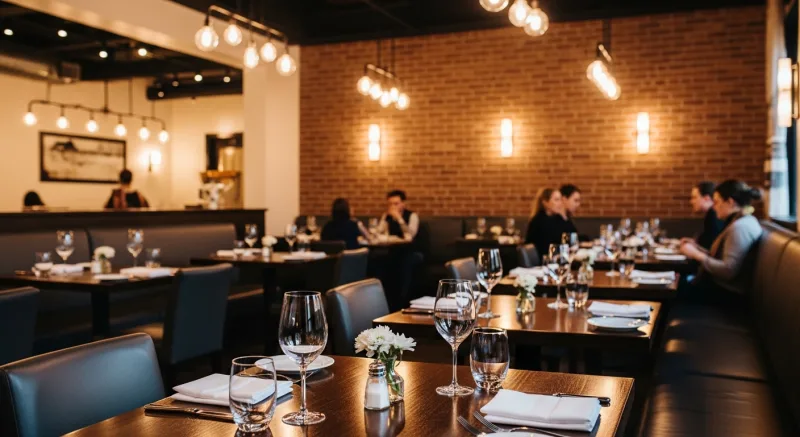
For these establishments, customer retention is the central challenge. The walkable format means customers can and do explore new options weekly. A restaurant without a loyalty program relies entirely on food quality to drive repeat visits — necessary but insufficient when a dozen alternatives are literally steps away.
KwickOS loyalty points accumulate automatically with every transaction. Membership tiers create escalating benefits that reward frequency. A customer who has earned 500 points at your Mass Ave restaurant thinks twice before spending their next dinner at the competitor across the street. This behavioral anchoring happens passively through the POS transaction flow — no app download, no separate enrollment, no friction that gives the customer a reason to skip it.
Fountain Square: The Arts District Kitchen
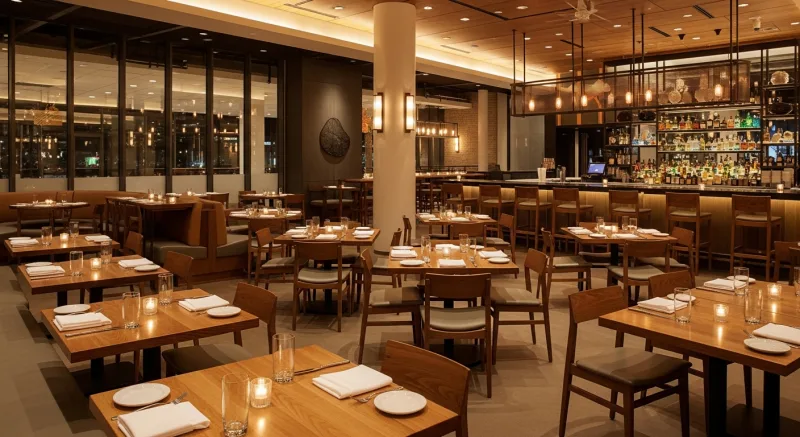
Fountain Square has emerged as Indianapolis’s creative neighborhood, where artists, musicians, and independent restaurant operators have revitalized a corridor of historic buildings into a dining destination. The buildings — many over a century old — present the same technology challenges that historic districts face in every city: limited electrical infrastructure, thick walls that block wireless signals, and physical spaces that were designed for retail, not restaurants.
KwickOS runs on tablets that consume minimal power and process transactions locally without Wi-Fi dependency. A Fountain Square restaurant in a 1920s building with plaster-and-lath walls that attenuate Wi-Fi signals operates KwickOS on local processing with cloud sync during periods of strong connectivity. The inconsistent wireless environment does not affect transaction speed because the transaction never depends on wireless connectivity.
The compact hardware footprint matters in Fountain Square’s adapted spaces. A converted retail storefront with a narrow kitchen does not have room for a bulky countertop POS terminal and a ticket printer. KwickOS on a wall-mounted tablet plus a wall-mounted KDS screen occupies zero counter space while providing more functionality than the traditional hardware stack.
The Broad Ripple Late-Night Economy
Broad Ripple is Indianapolis’s primary late-night entertainment district, where restaurants transition into bars after 10 PM and the dining economy extends past midnight. This dual-identity operation — restaurant by evening, bar by late night — requires a POS system that handles both modes within a single operational framework.
KwickOS configures different operational modes within the same system. Dinner service runs with table assignments, coursed firing, and server-assigned sections. Late-night bar mode runs with rapid-tab management, quick-pour ordering, and a streamlined interface that prioritizes speed over the organizational structure that dinner service requires. The transition between modes happens with a configuration switch, not a system restart or a separate application.
Fingerprint identification is critical in Broad Ripple’s bar environment. Late-night alcohol service creates theft opportunities — free pours for friends, unrecorded drinks, and cash-register manipulation. KwickOS biometric authentication ensures that every drink poured is associated with a specific bartender. Inventory variance reports that show a particular bartender’s pour-to-sale ratio exceeding the norm identify shrinkage patterns before they become significant losses.
The Midwest Value Proposition
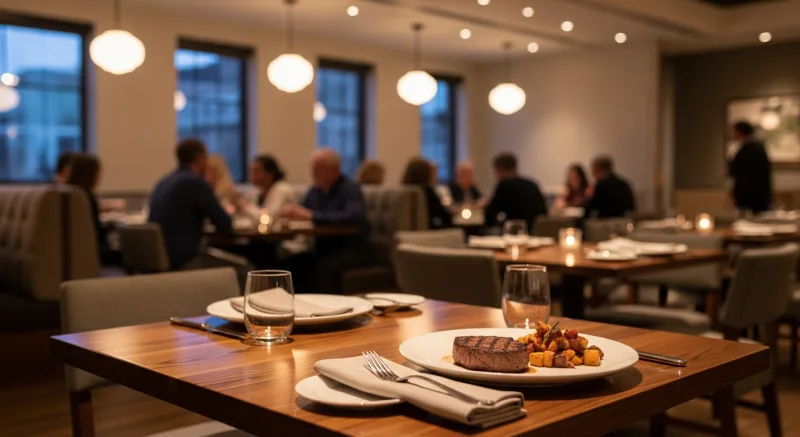
Indianapolis diners expect value. Not cheapness — value. The average dinner ticket in Indianapolis is $24-$32, lower than coastal cities but representing a customer base that is intensely quality-conscious relative to what they spend. Restaurants that over-charge relative to perceived value lose customers faster in Indianapolis than in markets where high prices are an accepted norm.
This value orientation means that technology costs borne by the restaurant — which ultimately flow through to menu pricing — must be controlled ruthlessly. Toast’s 2.99% processing rate on an Indianapolis restaurant doing $70,000 monthly costs $2,243 per month. KwickOS with a competitive processor at 2.15% plus $0.08 costs $1,585. The $658 monthly savings — $7,896 annually — represents the pricing flexibility that keeps an Indianapolis restaurant competitive with the Midwest value expectation while maintaining margins.
KwickOS includes loyalty, gift cards, online ordering, and digital signage without premium add-on fees. For Indianapolis operators who calculate the total cost of ownership rather than just the monthly subscription price, the elimination of these add-on fees compounds the processing savings into a total technology cost reduction that makes the business model work in a value-driven market.
The Burmese Corridor and Refugee Restaurant Culture
Indianapolis has one of the largest Burmese populations in the United States, concentrated primarily on the south side along South Meridian Street and the Lafayette Road corridor. Burmese restaurants have become a distinctive feature of Indianapolis dining, serving dishes that most Americans have never encountered. These restaurants are often family-operated by first-generation immigrants navigating American business systems for the first time.
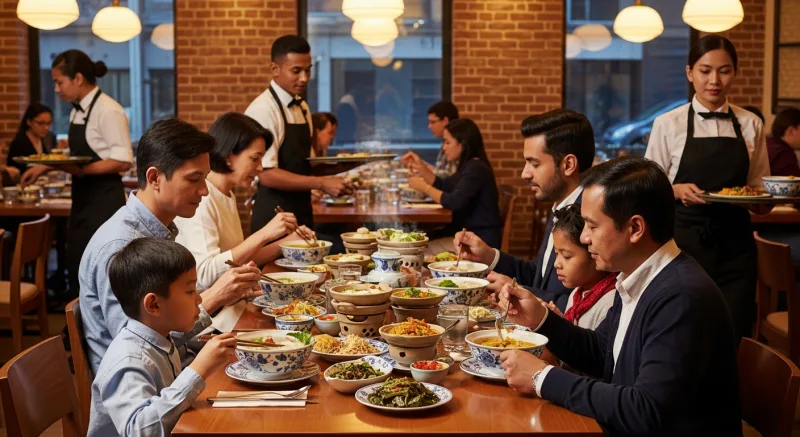
KwickOS’s intuitive interface reduces the learning curve for operators who may not have previous POS experience. Shogun Japanese Hibachi, a KwickOS customer, demonstrated that new operators achieve proficiency in under 5 minutes because the system follows the logic of how people actually work rather than imposing a technology-first workflow. For refugee-community restaurant operators building their first American business, this low-friction adoption means spending time cooking rather than fighting with software.
Online ordering through KwickMenu extends the reach of these restaurants beyond their immediate neighborhoods. A Burmese restaurant on Lafayette Road can reach Broad Ripple and Carmel through delivery, introducing its cuisine to customer bases that would never drive to the south side. KwickDriver’s flat $2 delivery fee makes this geographic expansion economically viable even on moderate-ticket orders.
Carmel, Fishers, and the Suburban Ring
Indianapolis’s northern suburbs — Carmel, Fishers, Westfield, and Noblesville — have experienced explosive restaurant growth driven by residential development. Carmel’s Main Street district alone has added over 30 restaurants in the past five years. These suburban restaurants serve affluent customers who expect metropolitan dining quality at Midwest prices — a combination that demands tight cost control.
For restaurant groups expanding from downtown Indianapolis to the suburban ring, KwickOS provides centralized management with per-location customization. The Mass Ave location runs a different menu and pricing structure than the Carmel location, but both report to the same dashboard. Real-time sales comparison between urban and suburban locations reveals market-specific trends that inform menu engineering and promotional strategy. This multi-location capability is how Crafty Crab scaled to 19 locations with 152 terminals — and it is exactly the growth infrastructure that Indianapolis restaurant groups need.
Indianapolis POS Decision Guide
Indianapolis is a city of events, conventions, and growing neighborhoods that reward restaurant operators who control costs and deliver value. The POS system running your Indy restaurant should reflect the same financial discipline that the market demands.
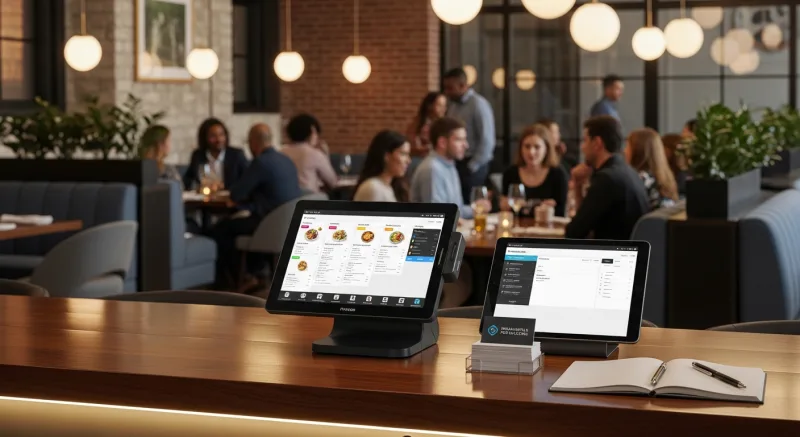
- Event-surge processing — Indy 500 and conventions create volume spikes that cloud systems handle unreliably
- Processor independence — Midwest margins demand negotiated processing rates, not locked-in fees
- Loyalty and retention — Mass Ave walkability means competitors are steps away; capture customers systematically
- Historic building compatibility — Fountain Square and older neighborhoods need local processing, not Wi-Fi-dependent systems
- Self-ordering kiosks — Race-week and convention surges need automated throughput
- Gift card integration — Convention attendees buy gift cards on impulse; capture that revenue natively
- Flat-rate delivery — Expanding geographic reach for ethnic restaurants needs predictable delivery costs
- Multi-location management — Downtown-to-suburbs expansion needs centralized oversight with local flexibility
The crossroads should lead somewhere better. For Indianapolis restaurants, that direction starts with technology that works as hard as the operators who chose it.
Indianapolis restaurant owners: Call (888) 355-6996 or visit KwickOS.com to see what a Midwest-smart POS system delivers for your operation.
Turn One-Time Diners into Regulars: Built-In Gift Cards & Loyalty
Most POS companies treat gift cards and loyalty as afterthoughts — expensive add-ons that cost $50-100/month extra. KwickOS includes them at no additional charge because we believe they are essential revenue tools, not luxury features.
Gift Cards That Actually Drive Revenue
Here is what most restaurant owners do not realize: gift card buyers spend an average of 20-40% more than the card's face value. A $50 gift card typically generates $60-70 in actual spending. KwickOS supports both physical gift cards and electronic gift cards that customers can purchase, send, and redeem through their phones.
- Physical gift cards — branded plastic cards that sit on your counter and sell themselves during holidays
- E-gift cards — customers buy and send digitally via text or email, perfect for last-minute gifts
- Balance tracking — real-time balance across all your locations, no manual reconciliation
- Reload capability — customers top up their balance, creating a built-in prepayment habit
Loyalty Points That Keep Them Coming Back
KwickOS loyalty is not a punch card from 2005. It is a digital points system that tracks every dollar spent and automatically rewards your best customers:
- Earn points on every purchase — configurable ratio (e.g., $1 = 1 point, or $1 = 10 points)
- Tiered rewards — silver, gold, platinum levels to incentivize higher spending
- Birthday rewards — automated birthday offers that bring customers back during their special month
- Points-for-payment — customers redeem points directly at checkout, seamless for your staff
Membership Programs
For restaurants running VIP programs or subscription models (like monthly coffee clubs), KwickOS membership management handles recurring billing, exclusive pricing tiers, and member-only menu items — all within the same system your cashier already uses.
The bottom line: Toast charges $75/month extra for loyalty. Square's loyalty starts at $45/month. KwickOS includes gift cards, e-gift cards, loyalty points, and membership management in every plan. That is $540-900/year you keep in your pocket.

Founder & CIO of KwickOS · 30 Years IT · 20 Years Restaurant Industry
Tom built KwickOS after running restaurants and IT companies for decades. He relocated the company to a 10,000 sq ft office in 2023 and now serves 5,000+ businesses across all 50 states, processing over $2M in daily sales.