Island Time Doesn’t Apply to POS Systems: What Honolulu Restaurants Actually Need
Updated March 2026 · By Tom Jin
Running a restaurant in Honolulu costs more than almost anywhere else in America, and the reasons compound in ways that mainland operators never consider. Ingredients arrive by container ship from the mainland, adding 20-40% to food costs before the delivery truck reaches the loading dock. Commercial rents in Waikiki rival Manhattan. The labor pool is constrained by an island geography that cannot absorb population spillover into cheaper suburbs the way every mainland city does. And the tourist economy that drives 60-70% of Waikiki restaurant revenue evaporates during global disruptions with a speed and severity that no mainland market matches.
In this environment, technology choices are not operational preferences. They are financial survival decisions. A POS system that charges 2.99% processing on Honolulu transaction volumes extracts thousands of dollars per month that an island restaurant cannot recover through cheaper rent or a less expensive labor market. There is no cheaper option on an island. There is only the option you chose and the consequences of choosing poorly.
The Waikiki Tourist Machine
Waikiki’s 2.5-mile strip of beach and hotels generates a dining economy that operates on patterns entirely driven by tourist arrivals. When flights from Tokyo, Seoul, and the American West Coast land, restaurant volume spikes predictably. When a pandemic, a natural disaster, or an airline disruption reduces those flights, volume can drop 60-80% in a matter of weeks. No mainland restaurant market faces this binary dependency on external arrivals.
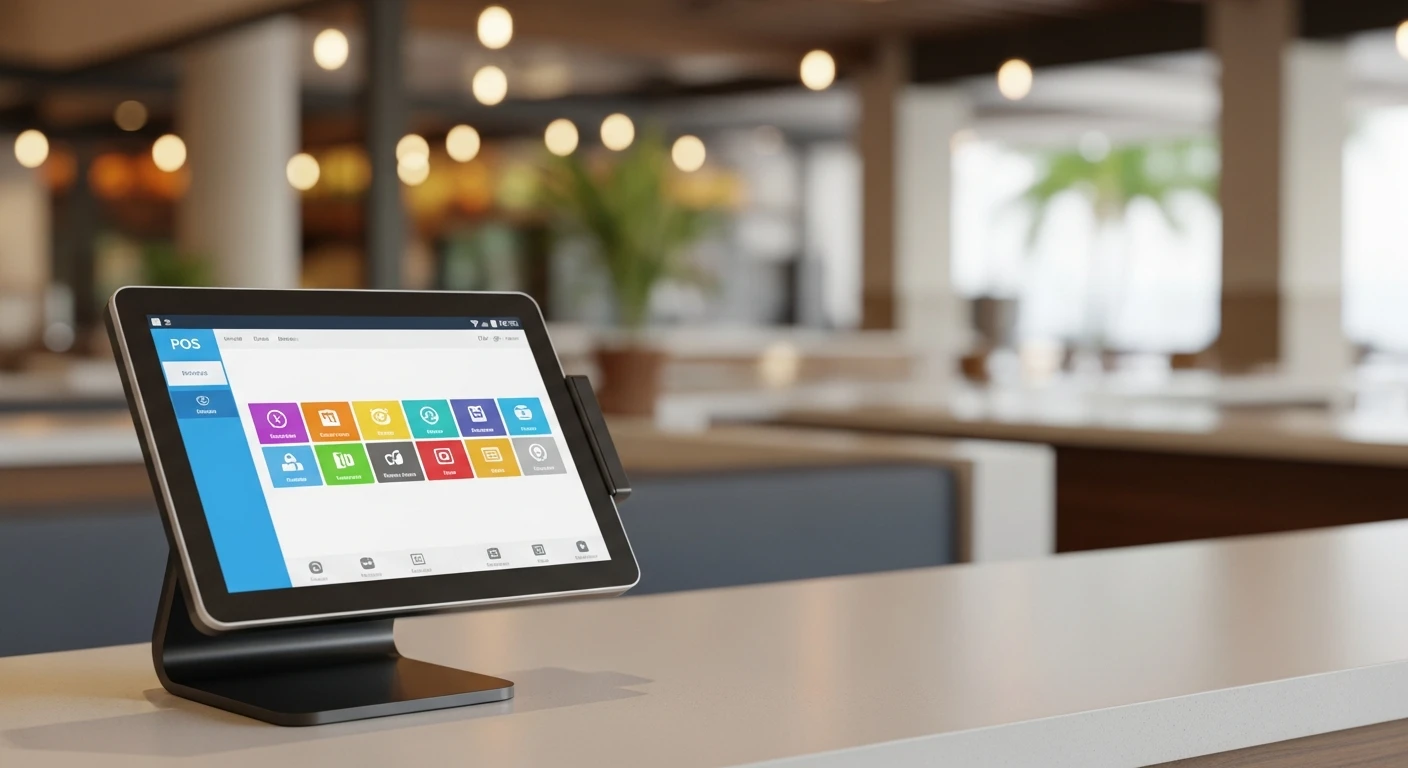
For Waikiki restaurants, the POS system must handle extreme seasonal variation without the costs scaling linearly with volume. Toast’s per-transaction processing fees mean you pay more when you are busy — fair enough — but the fixed monthly software fees and hardware leases persist during slow periods when revenue drops. KwickOS’s processor-agnostic model lets restaurant operators negotiate rates that reflect their actual volume patterns, and the software runs on hardware the restaurant already owns — no proprietary terminals with ongoing lease payments.
Japanese tourists represent a significant segment of Waikiki dining, and many Japanese visitors prefer payment methods and interactions in their language. While KwickOS currently supports English, Chinese, and Spanish natively, the Chinese language support serves the substantial Chinese tourist market that has grown alongside Japanese tourism. For the many Chinese-owned restaurants along Keeaumoku Street and in Chinatown, the Chinese-language interface means kitchen operations run in the language the staff speaks.
Chinatown: Honolulu’s Original Food District
Honolulu’s Chinatown is not a tourist attraction that happens to serve food. It is a living market district where Chinese, Vietnamese, Filipino, and Native Hawaiian food traditions intersect in a geography of narrow streets, open-air markets, and restaurants that have operated for generations. The mai tai was invented blocks from here, but Chinatown’s culinary identity runs deeper than cocktail history — it is dim sum houses, pho shops, plate lunch counters, and fresh seafood vendors operating at a pace and intensity that Waikiki’s tourist restaurants never match.
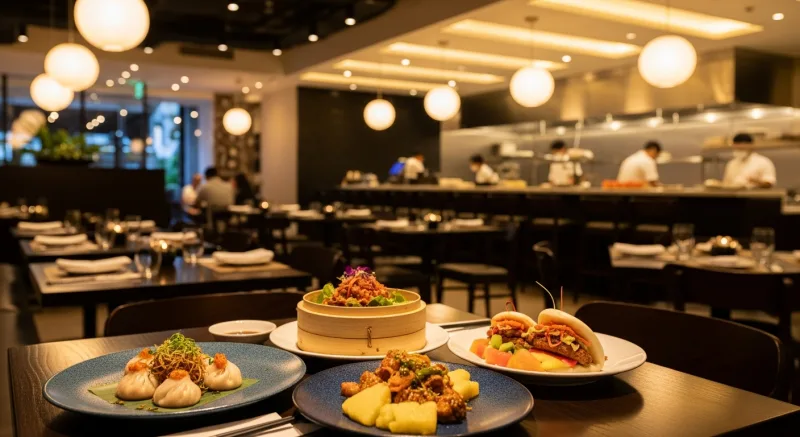
KwickOS’s Chinese language support is directly relevant for Chinatown’s Chinese restaurants, where kitchen display systems must show dish names in characters that the cooks actually read. A dim sum operation with 150 items on rotating carts needs a POS that tracks items added incrementally to open checks as carts pass tables — not the standard order-submit-close workflow that assumes a server collects a complete order before sending it to the kitchen.
Plate lunch counters — the quintessential Honolulu dining format — operate with a speed and efficiency that demands minimal POS friction. A customer approaches, orders a two-scoop-rice plate with chicken katsu and mac salad, pays, and moves on. The entire interaction takes 60-90 seconds. A POS system that adds even 15 seconds to this interaction through slow interfaces or cloud-dependent lag costs the restaurant four to six customers per hour during the lunch rush. KwickOS’s 1-millisecond local processing maintains the speed that plate lunch culture requires.
The Undersea Cable Reality
Hawaii’s internet connectivity depends on undersea fiber optic cables stretching 2,400 miles to the mainland. When a cable is damaged — by anchors, earthquakes, or marine activity — bandwidth degrades across the islands until repairs are completed, a process that can take weeks. Even during normal operations, latency to mainland cloud servers is inherently higher than any mainland city experiences because of the physical distance data must travel.
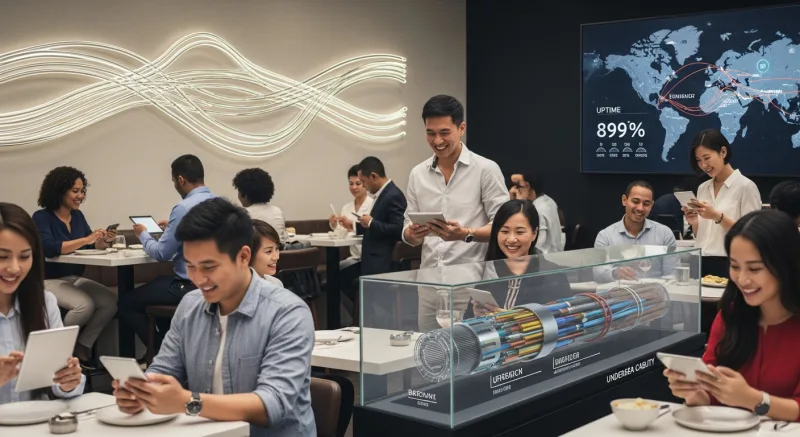
This geographical reality makes cloud-dependent POS systems fundamentally riskier in Hawaii than on the mainland. Toast and Square route every transaction through mainland servers. Even at best, the round-trip latency adds 80-120 milliseconds to each transaction compared to mainland operations. During cable degradation events, this latency increases unpredictably, and in worst-case scenarios, transactions fail entirely.
KwickOS processes locally. The transaction happens on the device at your counter with 1-millisecond speed. No undersea cable involved. No mainland server dependency. No latency that varies with Pacific Ocean conditions. Cloud synchronization happens in the background when connectivity is normal, but the transaction you are processing right now never waits for a server 2,400 miles away. For Hawaii, this is not a technical advantage. It is an architectural necessity.
The Cost Amplifier: Processing Fees on Island Prices
Honolulu restaurant prices are 30-50% higher than mainland equivalents, driven by ingredient shipping costs and elevated operating expenses. A lunch plate that costs $12 on the mainland costs $16-$18 in Honolulu. A dinner entrée that runs $28 in Houston runs $38-$45 in Waikiki. These higher prices mean higher transaction amounts, which means higher absolute processing costs on percentage-based fees.
On a $40 average dinner transaction in Waikiki, Toast’s 2.99% plus $0.15 takes $1.35. A competitive processor through KwickOS at 2.1% plus $0.08 takes $0.92. The $0.43 difference per transaction multiplied by 250 daily transactions is $107.50 per day — $39,237 per year. Because Honolulu prices are higher than mainland, the absolute dollar impact of processing rate differences is amplified. The same percentage difference that saves a Houston restaurant $25,000 per year saves a Honolulu restaurant $39,000.
This amplification effect makes processor independence more valuable in Honolulu than perhaps anywhere else in America. Every basis point saved in processing translates to more dollars because the transaction amounts are inherently higher. Accepting a locked-in rate without the ability to negotiate is more expensive on an island where everything costs more.
Haidilao and the Global Brand on Island Time
Haidilao Hot Pot, operating 600+ locations worldwide, demonstrates what enterprise-scale restaurant technology looks like in practice. With locations spanning continents, Haidilao’s operations require a POS system that handles global management while respecting local conditions — different currencies, different languages, different regulatory environments, and different infrastructure realities. KwickOS’s ability to serve operations at this scale, from single-location plate lunch counters to 600-location global enterprises, indicates an architectural maturity that purpose-built tourist-market systems like Square simply do not offer.
For Honolulu specifically, the Haidilao example matters because it demonstrates multi-language capability at enterprise scale. A hot pot restaurant in Honolulu serving Japanese tourists, Chinese visitors, local residents, and Filipino staff needs a system that does not treat multilingual support as an afterthought. KwickOS was built for this reality because its customer base includes some of the most linguistically diverse restaurant operations in the world.
Gift Cards and the Tourist Takeaway
Honolulu restaurants have a unique gift card opportunity: tourists purchasing gift cards as souvenirs or as gifts for mainland friends and family. A visitor who eats at a restaurant in Kailua and buys a $50 gift card for their friend back in San Francisco has created a marketing channel that costs the restaurant nothing and guarantees a future visit — or at minimum, generates awareness that no advertising campaign can replicate.
KwickOS integrates physical and digital gift cards directly into the POS. The server mentions gift cards while presenting the check. The tourist buys one through the same terminal that processes their dinner. No separate system, no third-party vendor, no additional fee. Digital gift cards sent via email solve the luggage-space problem that physical cards create for travelers — a tourist can buy a digital gift card on their phone and send it to the mainland instantly.
Loyalty programs through KwickOS convert tourist visits into digital relationships. A visitor who earns loyalty points during their Honolulu trip receives follow-up promotions for their next visit. When they return a year later, the system recognizes them, their dining preferences are logged, and the restaurant provides a personalized experience that justifies choosing this restaurant over the hundred other options on the strip.
Filipino Kitchen Culture and Staff Management
Honolulu’s restaurant workforce is heavily Filipino, reflecting Hawaii’s large Filipino population. Kitchen crews, prep staff, and dishwashers in many Honolulu restaurants communicate primarily in Tagalog or Ilocano. While KwickOS’s current language support covers English, Chinese, and Spanish, the system’s visual KDS interface with icon-based modifiers and color-coded categories reduces language dependency. A modifier displayed as a visual icon communicates across language barriers in ways that text-based systems cannot.
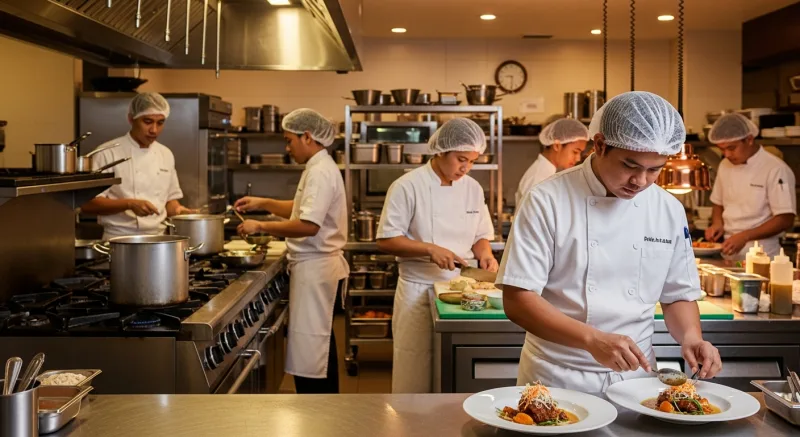
Fingerprint identification through KwickOS is particularly relevant for Honolulu’s restaurant staffing patterns. Many restaurant workers hold multiple jobs across different establishments — common in a high-cost-of-living market where a single restaurant salary often does not cover housing. Fingerprint-based clock-in prevents buddy-punching across shift transitions and ensures that each employee’s hours are accurately tracked, protecting both the worker’s earned wages and the restaurant’s labor budget.
Hurricane Season and Disaster Preparedness
Hawaii’s hurricane season runs from June through November. While direct hits are rare, the threat alone triggers preparation protocols that affect restaurant operations: supply chain acceleration (ordering extra inventory before potential storm disruption), generator testing, and operational planning for potential multi-day closures. The technology that runs the restaurant must participate in this preparedness.
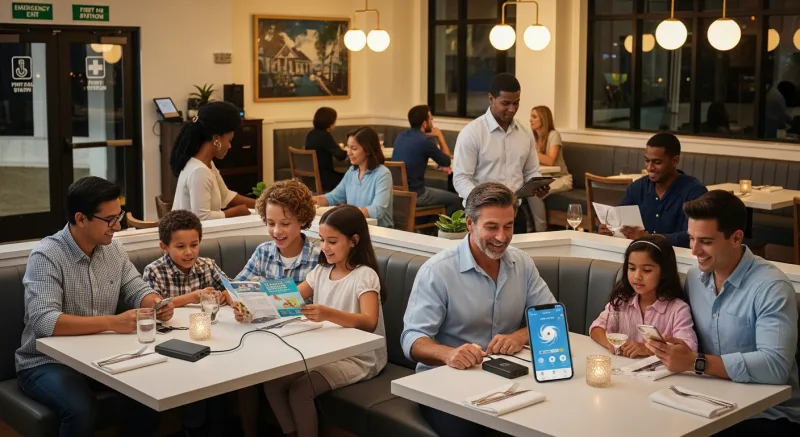
KwickOS’s local data storage means that all sales data, employee records, menu configurations, and customer information reside on local hardware in addition to cloud backup. If a storm disrupts internet for a week, the restaurant reopens with full system functionality on local hardware. No waiting for cloud restoration. No rebuilding configurations. The system picks up exactly where it left off because everything critical lives locally and syncs to the cloud as a backup, not as a dependency.
Honolulu’s POS Selection Priorities
Island restaurants cannot absorb inefficiency the way mainland operations can. There is no cheaper neighborhood to relocate to. There is no alternative supply chain. There is no surplus labor market. Every cost is amplified, and every technology failure is felt more acutely. Honolulu restaurants should prioritize:
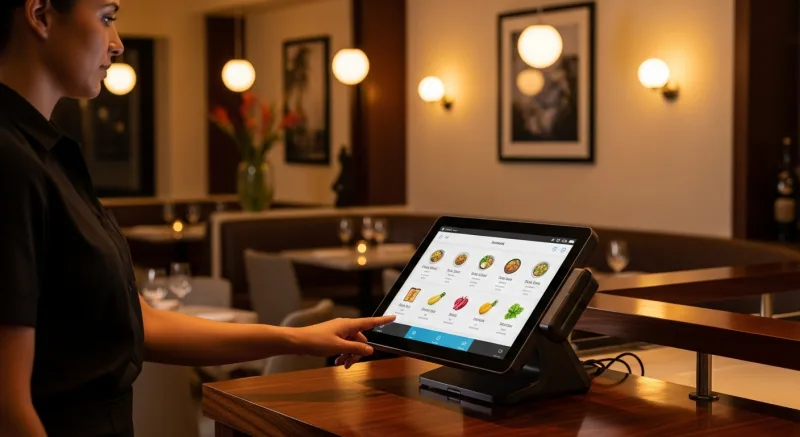
- Processor independence — Higher island prices amplify the absolute dollar impact of processing rate differences
- Local transaction processing — Undersea cable dependency makes cloud-only systems architecturally inappropriate for Hawaii
- Chinese language support — Chinatown and Chinese-owned restaurants need native character display
- Speed for plate lunch format — 60-second transactions cannot tolerate cloud latency
- Gift card integration — Tourist gift card purchases create zero-cost marketing and guaranteed return visits
- Loyalty for tourist conversion — One-time visitors become repeat customers through systematic retention
- Fingerprint security — Multi-job workforce patterns demand biometric accountability
- Local data resilience — Hurricane preparedness includes technology that works without cloud connectivity
Paradise comes with operational costs that the mainland does not understand. Your POS system should not be one of them.
Honolulu restaurant owners: Call (888) 355-6996 or visit KwickOS.com to discuss POS technology engineered for island conditions.
Turn One-Time Diners into Regulars: Built-In Gift Cards & Loyalty
Most POS companies treat gift cards and loyalty as afterthoughts — expensive add-ons that cost $50-100/month extra. KwickOS includes them at no additional charge because we believe they are essential revenue tools, not luxury features.
Gift Cards That Actually Drive Revenue
Here is what most restaurant owners do not realize: gift card buyers spend an average of 20-40% more than the card's face value. A $50 gift card typically generates $60-70 in actual spending. KwickOS supports both physical gift cards and electronic gift cards that customers can purchase, send, and redeem through their phones.
- Physical gift cards — branded plastic cards that sit on your counter and sell themselves during holidays
- E-gift cards — customers buy and send digitally via text or email, perfect for last-minute gifts
- Balance tracking — real-time balance across all your locations, no manual reconciliation
- Reload capability — customers top up their balance, creating a built-in prepayment habit
Loyalty Points That Keep Them Coming Back
KwickOS loyalty is not a punch card from 2005. It is a digital points system that tracks every dollar spent and automatically rewards your best customers:
- Earn points on every purchase — configurable ratio (e.g., $1 = 1 point, or $1 = 10 points)
- Tiered rewards — silver, gold, platinum levels to incentivize higher spending
- Birthday rewards — automated birthday offers that bring customers back during their special month
- Points-for-payment — customers redeem points directly at checkout, seamless for your staff
Membership Programs
For restaurants running VIP programs or subscription models (like monthly coffee clubs), KwickOS membership management handles recurring billing, exclusive pricing tiers, and member-only menu items — all within the same system your cashier already uses.
The bottom line: Toast charges $75/month extra for loyalty. Square's loyalty starts at $45/month. KwickOS includes gift cards, e-gift cards, loyalty points, and membership management in every plan. That is $540-900/year you keep in your pocket.

Founder & CIO of KwickOS · 30 Years IT · 20 Years Restaurant Industry
Tom built KwickOS after running restaurants and IT companies for decades. He relocated the company to a 10,000 sq ft office in 2023 and now serves 5,000+ businesses across all 50 states, processing over $2M in daily sales.