Best All-in-One POS System for San Francisco Restaurants
Published March 2026 · 10 min read
San Francisco is the most expensive city in America to open and operate a restaurant. Average startup costs exceed $300,000. Commercial rent in desirable neighborhoods runs $60-90 per square foot. The city mandates health care expenditures for employees, requires paid sick leave beyond state minimums, and enforces predictive scheduling laws that penalize last-minute shift changes. The minimum wage of $18.67 per hour is the highest of any major city. And the customers, shaped by working in the world's most demanding technology companies, expect a digital dining experience as polished as the apps they build for a living.
Running a restaurant in San Francisco is playing the game on the hardest difficulty setting. The technology platform you choose either helps you survive these economics or accelerates the path to joining the 60% of SF restaurants that close within five years.
The Cost Equation That Changes Everything
Before examining POS features, San Francisco operators need to confront the math. A 2,500-square-foot restaurant in the Mission District paying $70 per square foot in rent starts every year $175,000 in the hole before a single customer sits down. Add the San Francisco Health Care Security Ordinance expenditure of $3.56 per hour per employee (for businesses with 100+ employees; $2.38 for smaller ones), and a restaurant with 20 employees working an average of 30 hours per week spends an additional $110,000 to $185,000 annually on mandated health care, depending on size classification.
Layer on a minimum wage that pushes total loaded labor cost above $25 per hour with payroll taxes and benefits, food costs that run 5-10% higher than the national average due to Bay Area supplier pricing, and the city's 3.5% gross receipts tax for businesses above the threshold, and you're looking at break-even requiring $1.5 to $2 million in annual revenue for a mid-size restaurant. The national average break-even is roughly $700,000.
In this context, every operational inefficiency costs more in San Francisco than it does anywhere else. A POS system that saves ten minutes per shift in transaction processing time is worth more here because the labor cost of those ten minutes is higher. A processor-agnostic POS that saves $5,000 annually on processing fees has more impact when net margins are 2-3% instead of the national average of 5-6%. Technology isn't a nice-to-have in SF restaurant economics. It's a survival tool.
Tech-Savvy Diners and the Digital Experience Bar
San Francisco diners work at Google, Apple, Salesforce, Stripe, and hundreds of startups building consumer technology products. They interact with world-class user interfaces all day, and their tolerance for clunky digital experiences is effectively zero. A restaurant's online ordering page that looks like it was built in 2015, a payment terminal that takes six seconds to process, or a loyalty program that requires downloading a separate app and creating an account will lose these customers to the place down the block that got it right.
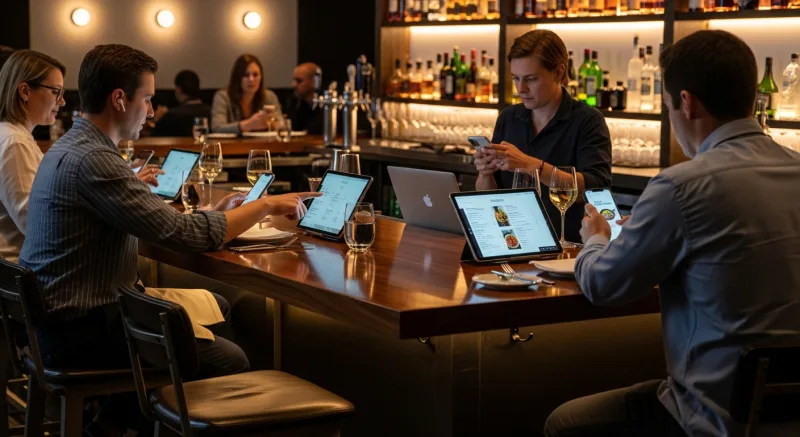
This creates a POS requirement that's less about features and more about execution quality. The online ordering experience through the POS needs to be fast, mobile-optimized, and visually clean. The payment processing needs to support Apple Pay, Google Pay, and tap-to-pay without fumbling. The loyalty program needs to work through the same ordering interface, not a separate system that fragments the customer experience.
KwickMenu provides a mobile-first online ordering experience that integrates directly with the POS without requiring a separate vendor, a separate login, or a separate management interface. When a Salesforce product designer orders lunch from their phone, the experience meets the standard they've been trained to expect. When they pay with Apple Pay through a contactless terminal, the transaction completes in under a second because it processes locally rather than routing through a distant cloud server.
Self-ordering kiosks have found strong adoption in San Francisco's fast-casual segment. The tech-worker customer actually prefers kiosk ordering to counter interaction for quick meals because they can customize precisely, pay instantly, and skip any social interaction during a 30-minute lunch break. KwickOS kiosk interface supports the level of customization that SF diners expect: granular modifiers, allergen filtering, calorie display (required by California law for chains), and seamless loyalty point redemption.
The Mandatory Health Care Surcharge: A POS Compliance Requirement
San Francisco's Healthy SF ordinance requires employers to spend a minimum amount on employee health care, and most restaurants pass this cost to customers as a line item on the check, typically 3-5% added as a "SF Mandate" or "Healthy SF Surcharge." This practice is legal and nearly universal in the city, but it creates a specific POS configuration requirement.
The surcharge must appear as a separate, clearly labeled line item on the receipt. It cannot be hidden in food prices because the city requires transparency. It needs to be calculated on the pre-tax subtotal, not on the total including sales tax. And critically, the surcharge is not subject to sales tax itself, which means the POS needs to apply it after the subtotal but before the tax calculation, or apply it as a non-taxable line item, depending on the implementation. Getting this wrong results in either overcharging customers (triggering complaints and potential lawsuits in a city with active consumer protection attorneys) or undercharging the tax authority (triggering audit penalties).
Most national POS platforms treat this as a custom workaround: add a "miscellaneous fee" line item and hope the tax math works out. KwickOS allows configurable surcharges with explicit tax treatment rules, so the SF health care surcharge is applied correctly by design rather than by creative workaround. When San Francisco updates the required rates, as it does annually, the adjustment is a single setting change rather than a re-engineering of a workaround.
Mission District Taquerias: Tradition Meets Volume
The Mission District's taqueria tradition dates back decades, and the neighborhood's Latino cultural identity is inseparable from the food. La Taqueria, El Farolito, Taqueria Cancun, and dozens of others operate in a format that combines enormous volume with deep cultural specificity. A busy Mission taqueria serves 800 to 1,200 customers per day, with average tickets of $12 to $16, primarily through counter service and takeout.
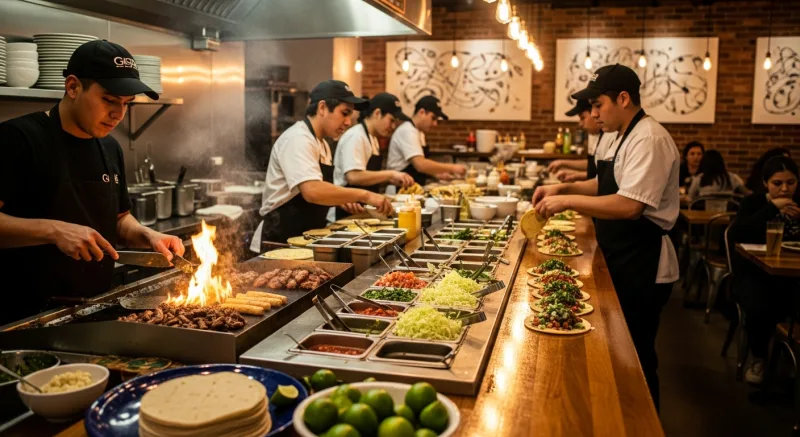
The POS requirements for a Mission taqueria are defined by speed and linguistic reality. Counter staff interact with customers in both English and Spanish, often switching mid-transaction. Kitchen communication happens exclusively in Spanish. The POS interface needs to be navigable in either language without switching modes, because the same cashier might take one order in English and the next in Spanish depending on who's standing in front of them.
The super burrito order is a case study in modifier complexity. Flour or corn tortilla. Protein choice from eight options. Rice, beans (black or pinto), salsa (six varieties), cheese, sour cream, guacamole, lettuce, avocado. Each topping is a yes or no, and the total combination possibilities number in the thousands. The POS modifier interface for this needs to be a single screen with one-tap toggles, not a multi-page wizard that adds 15 seconds per order. At 1,000 orders per day, 15 extra seconds per order is 4.2 hours of lost productivity.
KwickOS configurable grid layout handles the super burrito workflow on a single screen. Protein selection across the top, toppings as toggle buttons in a grid below, tortilla choice as a two-button toggle on the side. The entire order entry takes under eight seconds for a trained cashier. Kitchen display shows the order in Spanish with clear visual formatting that matches the assembly station layout.
Chinatown: 100+ Restaurants in 24 Blocks
San Francisco's Chinatown is the oldest in North America and one of the densest restaurant districts in any American city. Over 100 restaurants operate within a 24-block area, ranging from dim sum palaces seating 400 to eight-table Cantonese barbecue shops that have been family-operated for three generations. The POS needs in Chinatown are specific to a degree that most technology vendors don't bother addressing.
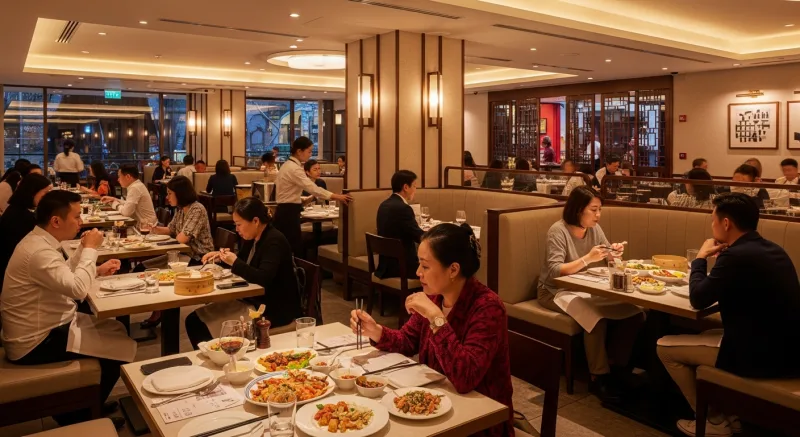
Chinese-language interface throughout the system is the baseline requirement, not a feature. Menu items displayed in Chinese characters on kitchen screens, not romanized approximations that create ambiguity between similar-sounding dishes. Customer receipts that can print in Chinese for customers who prefer it. Back-office reporting that ownership can review in Chinese, because the operators of many Chinatown restaurants are more comfortable analyzing their business in their native language.
Dim sum operations have a specific workflow: cart-based service where servers push carts through the dining room, stamping a card at each table to record what was selected. The modern version uses a handheld POS device that servers carry, tapping items as they're delivered to tables. The ticket stays open for the duration of the meal, accumulating small items ($4-6 each) over 60-90 minutes, then settling at the end. The POS needs to handle long-duration open tickets with dozens of small line items without slowing down or requiring mid-meal settlements.
KwickOS Chinese language support is native, not a translation layer applied over an English interface. Kitchen display items appear in Chinese characters. The back-office reporting interface operates in Chinese. This matters practically because a translated interface often mishandles formatting, truncates characters, or displays menu items in ways that create kitchen errors. Native support means the system was designed to work in Chinese from the ground up, which is the difference between a tool that tolerates a language and one that speaks it.
Fog Belt Versus Marina: Microclimate Dining Patterns
San Francisco's microclimates create dining pattern variations within a city that's only seven miles square. The Sunset and Richmond districts, wrapped in fog for much of the summer, see consistent dine-in traffic year-round because outdoor dining was never a major factor. The Marina and Mission get significantly more sun, and restaurants there see 20-30% traffic variations between foggy and sunny days, particularly for lunch service where workers might choose between going out and eating at their desk.
This microclimate effect means that even two locations of the same restaurant group, one in the Sunset and one in the Marina, experience different demand patterns on the same day. A POS with location-specific analytics helps operators understand these patterns over time, staffing the foggy Sunset location consistently while flexing Marina staffing based on weather-correlated demand data.
Delivery patterns also diverge by microclimate. Fog-belt neighborhoods generate higher delivery percentages because residents are less inclined to venture out in the damp and cold. Sunny neighborhoods see more walk-in and pickup traffic. The POS channel mix data, tracked over months, becomes a staffing and inventory planning tool that accounts for San Francisco's unique geography.
Predictive Scheduling and the POS Connection
San Francisco's Formula Retail Employee Rights Ordinance, commonly called the predictive scheduling law, requires covered employers to provide work schedules 14 days in advance and pay premiums for schedule changes made with less notice. While this technically applies only to "formula retail" establishments (chains with 40+ locations globally), the spirit of the law has influenced scheduling practices across the city's restaurant industry, and expanded coverage remains under active discussion at the Board of Supervisors.
A POS system that integrates scheduling with sales data helps operators build predictive schedules based on historical traffic patterns rather than gut instinct. If the POS data shows that Tuesdays consistently generate 30% less traffic than Wednesdays, the schedule can reflect that from the start rather than requiring day-of adjustments that might trigger predictive scheduling premiums.
KwickOS scheduling integration pulls from actual transaction data to suggest staffing levels by day and shift. This isn't just about efficiency; in San Francisco, it's about compliance risk reduction. A schedule built on data is defensible if challenged under the city's labor regulations. A schedule built on a manager's guess is not.
San Francisco POS Requirements: The Essentials
Processor freedom for maximum margin recovery: When your fixed costs are the highest in America, processing fee savings of $5,000 to $10,000 annually represent a meaningful percentage of net profit. Processor lock-in is financially irresponsible in SF.
Health care surcharge compliance: The POS must apply the SF mandated surcharge correctly as a non-taxable line item with transparent receipt labeling. Workarounds invite audits.
Native Chinese language support: Chinatown operations need Chinese characters on kitchen displays, customer receipts, and management reports. Translation layers are insufficient.
Sub-second transaction processing: Tech-worker customers benchmarking your payment speed against their Apple Watch are not being unreasonable. They're being San Franciscan.
Speed-optimized modifier interfaces: Mission taqueria-grade modifier entry handles 1,000+ daily transactions without adding seconds per order. The interface must mirror the assembly process.
Data-driven scheduling: Predictive scheduling compliance starts with POS data that accurately reflects demand patterns by location, day, and channel.
San Francisco restaurants pay the highest costs in the country and serve the most demanding customers. The POS system you choose either shaves those costs through processing savings, labor efficiency, and compliance accuracy, or it adds another line item to an already crushing overhead. To see how KwickOS handles the specific pressures of San Francisco restaurant operations, call (888) 355-6996 or visit KwickOS.com.

Tom Jin
Founder & CIO of KwickOS · 30 Years IT · 20 Years Restaurant Industry
Tom built KwickOS after decades running restaurants and IT companies. Today KwickOS serves 5,000+ businesses across 50 states.