Running a Restaurant in Chicago: Technology Decisions for a City That Takes Food Personally
Updated March 2026
Chicago does not have a food scene. Chicago has a food identity. It is the city where deep-dish is a religion, where an Italian beef joint that has been open since 1938 still outdraws the trendy spot next door, and where a neighborhood taqueria in Pilsen earns the same reverence as a Michelin-starred dining room in the West Loop. This is a city of 7,300 restaurants generating over $19 billion in annual sales, and every single one of them operates under conditions that make running a restaurant here uniquely demanding.
The technology you choose for your Chicago restaurant is not a back-office decision. It is a survival decision — shaped by weather that shuts streets down four months a year, health inspections that can close you overnight, a labor market squeezed between minimum wage increases and tip credit debates, and a delivery culture that exploded during the pandemic and never retreated.
The Winter Delivery Surge
From November through February, Chicago delivery orders increase by 35-50% compared to summer months. When the wind chill hits negative 20 and the CTA is running on delays, nobody walks to a restaurant. They order delivery. For restaurants that depend on foot traffic during warmer months, winter is the season when your delivery infrastructure either compensates for lost dine-in revenue or it does not.
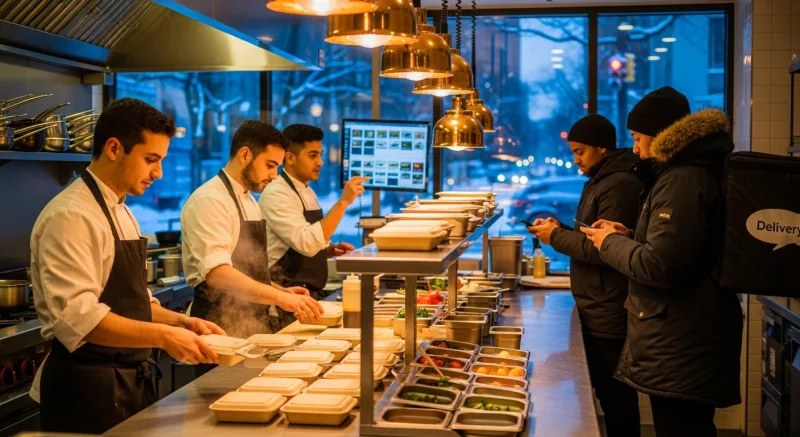
This creates an operational paradox. Your busiest delivery months are also your most expensive delivery months. Third-party platforms charge the same 20-30% commission year-round, but winter deliveries take longer (icy roads, slower drivers, more building access complications), leading to more customer complaints and more refund requests. A pizza restaurant in Lincoln Park paying 25% to DoorDash during a February blizzard is essentially subsidizing deliveries at a loss to maintain visibility on the platform.
Restaurants using KwickOS with KwickDriver pay a flat $2 per delivery plus $6.99 per 5 miles. No percentage of the order. No surge pricing during snowstorms. On a $35 winter delivery order, the difference between DoorDash’s $8.75 commission and KwickDriver’s $2 flat fee is $6.75 per order. Over a winter season with 40 deliveries per day for 120 days, that is $32,400 in savings — real money that funds the slower spring months.
Chicago’s Health Inspection Reality
The Chicago Department of Public Health conducts unannounced inspections that are among the most rigorous in the country. Results are published publicly and searchable online. A "fail" result does not just trigger a reinspection — it triggers a Yelp notification, a Google Maps flag, and social media attention that can tank a restaurant’s reputation overnight.
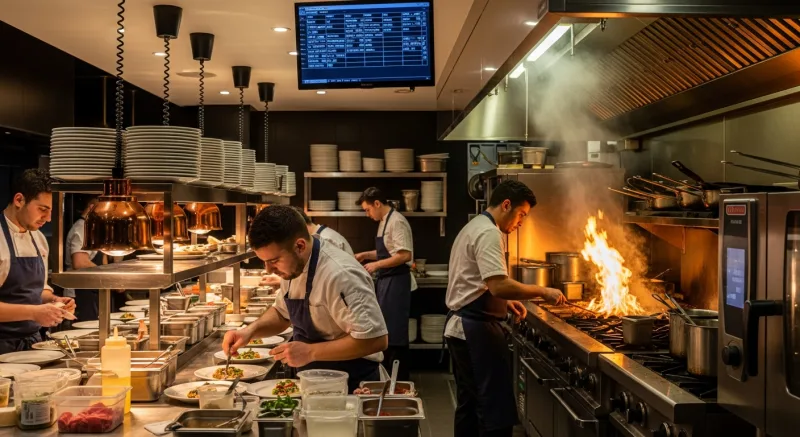
Modern POS systems play an increasingly direct role in inspection compliance. Temperature logging, food safety timers, FIFO (first-in-first-out) inventory tracking, and employee hygiene reminders are all inspection-relevant functions. KwickOS integrates with kitchen display workflows to prompt time-based food safety checks. A KDS station can display a timer that reminds staff to check holding temperatures every 30 minutes, log the reading, and flag items that exceed safe holding times.
For Chicago restaurants, this is not a convenience feature. It is documentation that protects you during an inspection. When the inspector asks when the chicken in the steam table was last temperature-checked, you show them the digital log, not a paper sheet that everyone forgot to fill out.
The West Loop Phenomenon and High-Rent Technology
The West Loop / Fulton Market district has become Chicago’s most concentrated restaurant corridor. Rents in the neighborhood range from $45 to $85 per square foot — higher than much of Manhattan for restaurant space. At those rates, every square foot of your dining room needs to generate revenue, and every square foot of your kitchen needs to maximize output.
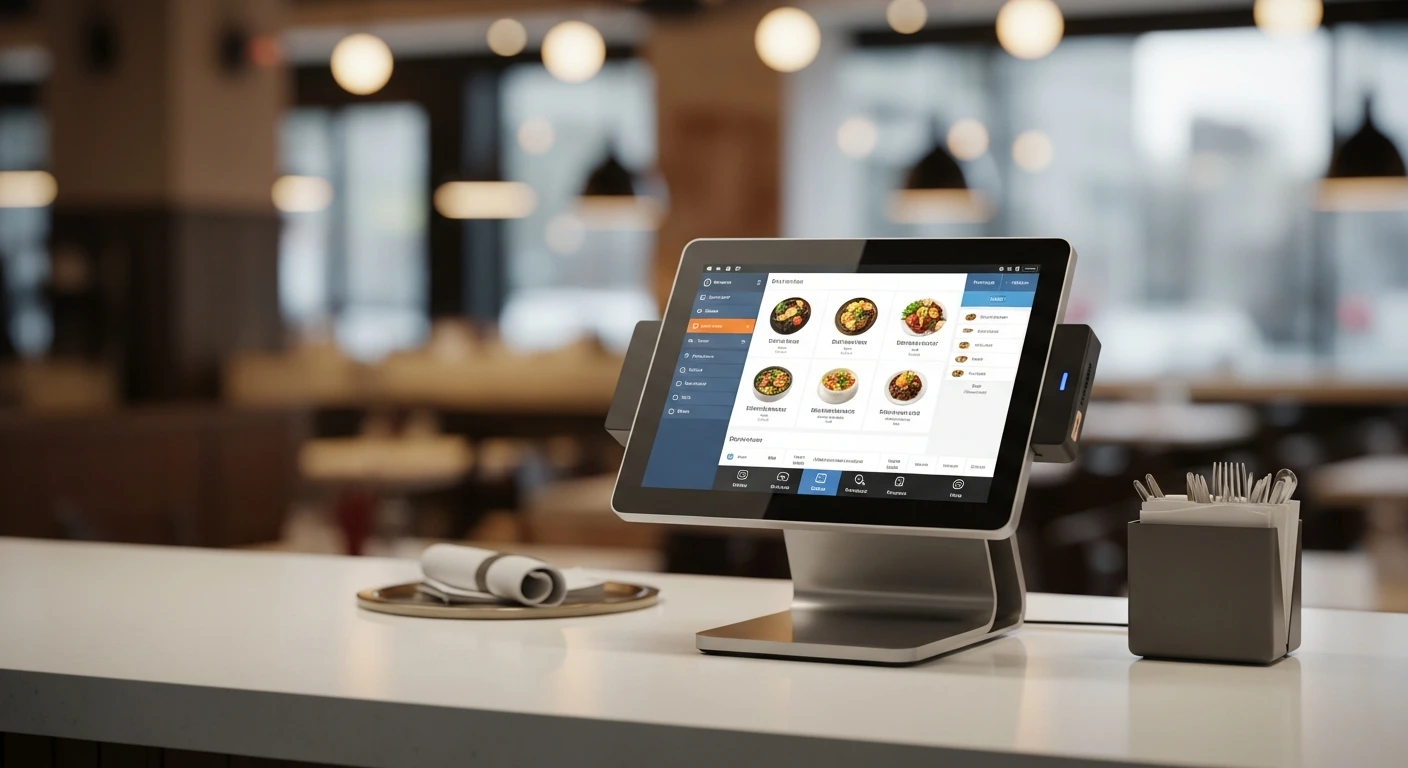
High-rent environments demand technology that is physically compact and operationally dense. A POS terminal that takes up 18 inches of counter space in a 400-square-foot restaurant is consuming revenue-generating real estate. KwickOS runs on any touchscreen hardware, including 10-inch tablets that mount on walls or attach to counters with minimal footprint. The same system that powers a suburban restaurant with ample space adapts to a West Loop kitchen where the line cook, prep station, and dishwasher share 200 square feet.
Kitchen display screens replace paper ticket printers and the clutter they create. A single mounted screen takes the space of a ticket rail and provides more information. In tight Chicago kitchens, that physical footprint difference matters — one less thing to bump into, one less fire hazard near the stove.
Multilingual Operations in a Multilingual City
Chicago’s restaurant workforce reflects the city’s extraordinary diversity. In Chinatown, kitchens operate primarily in Mandarin and Cantonese. In Pilsen and Little Village, Spanish dominates the back of house. In Albany Park, you might hear Urdu, Arabic, and Korean in a single kitchen. The front of house speaks English to customers while the back of house operates in the language that gets food out fastest.
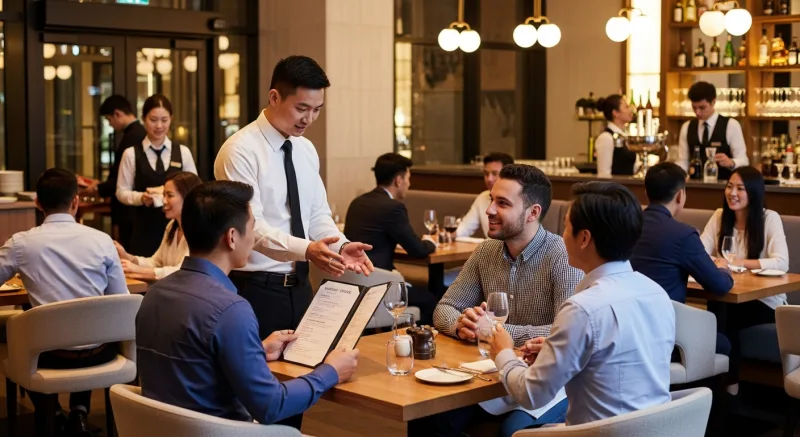
KwickOS supports English, Chinese, and Spanish natively in its interface. Each terminal or KDS station can display in a different language. A hostess station runs in English. The wok station runs in Chinese. The prep station runs in Spanish. Same orders, same data, different languages — all simultaneously.
For Chinatown restaurants specifically, Chinese language support is not optional. A dim sum operation with a 200-item menu needs characters displayed correctly on the KDS for kitchen staff. Transliterated English item names create confusion and slow production. Native Chinese display eliminates that friction entirely.
Neighborhood Economics Shape Technology Needs
Chicago’s neighborhoods are economically distinct in ways that directly affect restaurant technology requirements.
Wicker Park / Bucktown: Young professional clientele, high mobile ordering adoption, brunch-heavy weekends. Restaurants here need strong online ordering, social media integration, and the capacity to handle 200+ weekend brunch covers with a kitchen designed for 100. Self-ordering kiosks help manage the brunch rush without tripling front-of-house staff for three hours on Saturday.
Chinatown / Bridgeport: Multi-generational customer base, cash-heavy transactions, extended family dining. Technology needs include split-check capabilities for large group dining, multi-language support (English and Chinese minimum), and robust cash drawer management with fingerprint-secured access.
Pilsen / Little Village: Price-sensitive customers, high delivery demand, family-size portions that affect average ticket calculations. POS systems need flexible portion pricing (individual vs. family size), Spanish-language support for staff, and delivery integration that does not eat margins on $8 burrito orders.
Lincoln Park / Lakeview: Affluent customer base with high expectations for speed and convenience. Contactless payments, loyalty programs, and a polished online ordering experience are table stakes. These customers will leave a one-star review over a 5-minute wait for a takeout order.
KwickOS accommodates this range because it is configurable per location. A restaurant group operating in Chinatown and Lincoln Park simultaneously can run different language settings, different menu configurations, and different operational workflows on the same platform with centralized reporting.
The Seasonal Patio Calculation
Chicago restaurant patios are a four-to-five-month revenue window — roughly May through September. During those months, a restaurant with 20 patio seats can increase revenue by 30-40%. But patio service requires portable POS capability: servers taking orders outside, payments processing tableside, and kitchen tickets routing the same as indoor dining.
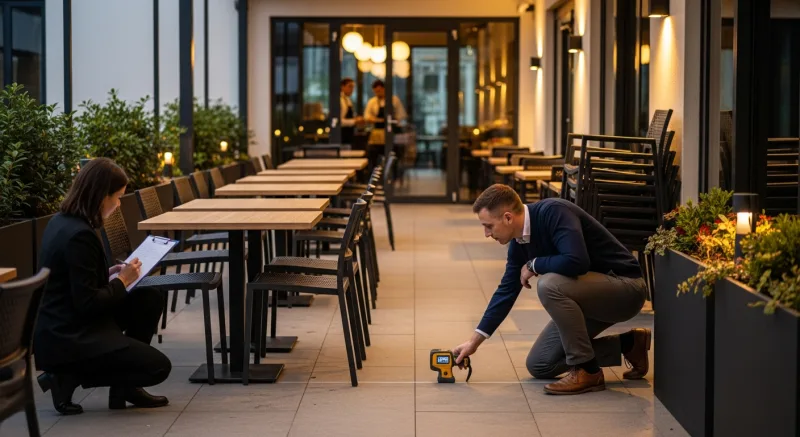
KwickOS runs on tablets that servers carry to the patio. Orders entered tableside flow directly to the kitchen display. Payment processes at the table — no running the card inside and returning. For Chicago restaurants that depend on patio season to build the financial cushion that gets them through winter, this operational efficiency during the warm months is not optional.
Processing Costs in a High-Volume City
Chicago restaurant transaction volumes are substantial. A mid-range restaurant in River North might process $80,000-120,000 per month in card payments. At Toast’s 2.99% + $0.15 rate, monthly processing fees on $100,000 in volume run to $3,140. An independent processor at 2.3% + $0.08 charges $2,380 for the same volume. Annual savings: $9,120.
KwickOS does not lock you into a processor. For Chicago restaurants where volume justifies aggressive rate negotiation, this flexibility can save $8,000-15,000 annually depending on volume. That is a significant line item in a city where profit margins average 3-6% for full-service restaurants.
Internet Reliability and the Hybrid Advantage
Chicago’s internet infrastructure is generally reliable in commercial districts, but older buildings in neighborhoods like Bridgeport, Back of the Yards, and parts of the South Side can have spotty connectivity. A restaurant in a century-old building with thick masonry walls and limited ISP options cannot afford a POS that stops working when the Wi-Fi drops.
KwickOS processes transactions locally with 1-millisecond response times. Internet connectivity is used for cloud sync, online ordering, and remote management — not for processing the transaction in front of you. If Comcast goes down at 7 PM on a Friday (as it does), your registers keep running, your kitchen display keeps displaying, and your cash keeps flowing. When the connection returns, everything syncs automatically.
For comparison, Toast is cloud-dependent. A connectivity disruption means degraded performance or complete service interruption. In a city where winter storms can knock out infrastructure, this is not a theoretical concern — it is a recurring one.
Deep-Dish and the Made-to-Order Kitchen Challenge
Chicago deep-dish pizza has a 30-45 minute bake time. This creates a kitchen management challenge that most POS systems ignore: coordinating items with radically different prep times within a single order. A table orders a deep-dish pizza, a salad, and garlic bread. The salad takes 3 minutes. The garlic bread takes 8. The pizza takes 40. Fire the salad at minute 37 and the garlic bread at minute 32, or the table stares at cold appetizers for half an hour waiting for pizza.
KwickOS KDS supports course-based firing with time offsets. The kitchen sees the pizza fire immediately, with the salad and bread displaying as "hold" items with countdown timers to their fire time. When the pizza hits minute 32, the garlic bread fires. At minute 37, the salad fires. Everything arrives at the table together. This automated timing replaces the shouting-across-the-kitchen approach that leads to mistakes during a busy service.
The Chicago Restaurant Technology Checklist
Before committing to a POS system for a Chicago restaurant, verify these capabilities against your specific needs:
- Delivery integration with flat-rate pricing — Winter delivery surges cannot survive percentage-based commissions
- Offline transaction processing — Old buildings and winter storms make connectivity unreliable
- Multilingual interface — Your kitchen staff’s primary language should be on the screen
- Compact hardware options — Small kitchens in high-rent neighborhoods need space-efficient solutions
- Course-based KDS timing — Deep-dish timing coordination is a real operational need
- Food safety logging — Chicago health inspections are rigorous and results are public
- Processor freedom — High-volume Chicago restaurants have negotiating leverage; use it
- Portable service for patios — Five months of patio season fund the winter; make them efficient
Chicago restaurants face operational challenges that generic POS systems were not designed to solve. Weather extremes, regulatory scrutiny, linguistic diversity, and neighborhood-specific economics require technology that adapts to where you operate, not technology that forces you to adapt to it.
Chicago restaurant owners: Call (888) 355-6996 or visit KwickOS.com to discuss your neighborhood’s specific needs.
The Revenue Features Most "All-in-One" Systems Charge Extra For
When POS companies say "all-in-one," they rarely mean gift cards and loyalty are included. Toast charges $75/month for their loyalty add-on. Square Loyalty starts at $45/month. Clover requires third-party apps. KwickOS includes all of these natively — zero extra cost.
Physical & Electronic Gift Cards
Sell branded physical cards at the register. Send e-gift cards via text or email. Track balances across every location in real time. Gift card holders spend 20-40% more than face value — this is not a nice-to-have, it is a revenue multiplier.
Points-Based Loyalty System
Every transaction earns points. Customers see their balance on receipts and can redeem at checkout. Configurable earn ratios, tiered VIP levels, and automatic birthday rewards. No separate app required — it runs inside the POS your cashier already knows.
Membership & Subscription Management
Run coffee clubs, wine memberships, or VIP dining programs. Recurring billing, exclusive member pricing, and member-only items — managed from the same dashboard as your daily operations. Your customers feel special. Your revenue becomes predictable.
Real impact: businesses using KwickOS loyalty features see repeat visit rates increase by up to 35%. Gift card programs generate an average of 15% additional revenue during holiday seasons.

Tom Jin
Founder & CIO of KwickOS · 30 Years IT · 20 Years Restaurant Industry
Tom built KwickOS after decades running restaurants and IT companies. Today KwickOS serves 5,000+ businesses across 50 states.