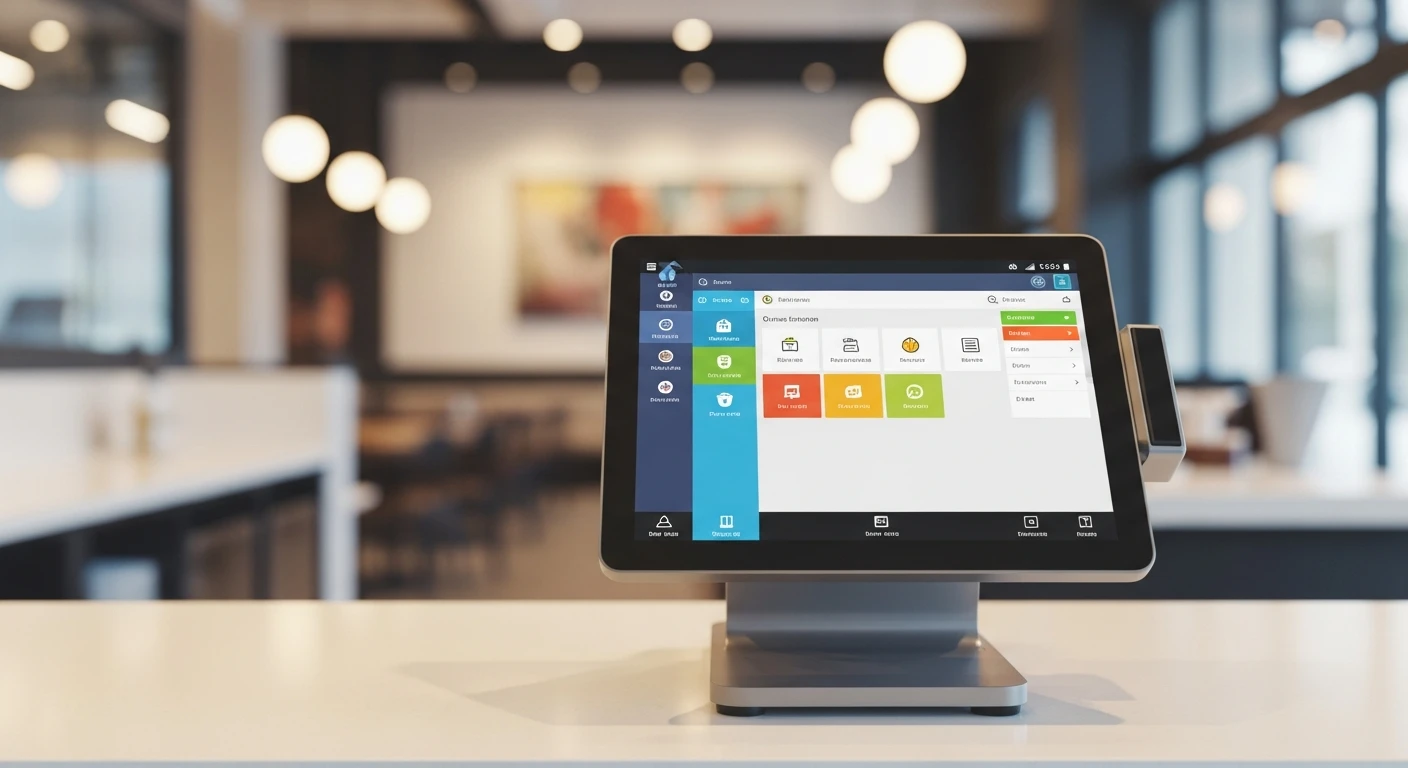
For entrepreneurs exploring Island POS, the revenue math is more compelling than most realize. Hawaii occupies a unique position in the American restaurant landscape. The state's tourism industry drives restaurant spending that far exceeds what the local population alone could support — nearly 10 million visitors annually, each spending an average of $200/day on food and activities. Honolulu alone has approximately 2,200 restaurants serving a resident population of 350,000 and a tourist population that effectively doubles the city's dining demand during peak season.
For a POS reseller, Honolulu presents an opportunity unlike any mainland market. The restaurant density per capita is among the highest in America. The average card volume per restaurant is inflated by tourist spending. And the competitive POS landscape is surprisingly thin — most mainland POS companies do not invest sales resources in Hawaii because the market is perceived as small and remote.
That perception is wrong, and it is your advantage.
Why Hawaii's Geography Creates a POS Moat
Most POS resellers think about geography in terms of drive time between prospects. In Honolulu, the geography creates something much more powerful: a natural barrier to competition. Toast, Square, and SpotOn all have mainland sales teams. None of them maintain dedicated Hawaii-based sales operations. When a Honolulu restaurant owner has a POS issue at 8 PM Hawaii Standard Time, it is 1 AM on the East Coast. Mainland-based support is asleep.
A locally-based KwickOS reseller in Honolulu has a structural advantage that no mainland competitor can overcome without opening a Hawaii office — which none of them are likely to do for a market of 2,200 restaurants. You are not just selling a better POS system. You are selling local presence, local knowledge, and local support in a market that has been underserved by mainland vendors.
And KwickOS's 24/7 multilingual support supplements your local presence with round-the-clock backup. When you are asleep, KwickOS's support team is available. When the mainland competitors' support is asleep, their Hawaiian merchants have nobody to call.
The Offline Imperative
Hawaii's internet infrastructure is fundamentally different from the mainland. The islands connect to the global internet through a small number of undersea fiber optic cables. When one of those cables is damaged — as has happened multiple times due to ship anchors, earthquakes, and natural wear — the entire state can experience degraded connectivity. Additionally, Hawaii's tropical weather produces heavy rain and occasional hurricanes that disrupt local internet service.
For a cloud-only POS system like Toast or Square, any internet disruption means the POS goes down. No transactions can be processed. No orders can be taken. In a tourist-dependent market where a single dinner service can generate $5,000-$15,000 in revenue, even 30 minutes of downtime is catastrophic.
KwickOS's hybrid local+cloud architecture eliminates this risk entirely. All transaction processing happens locally on the restaurant's hardware at 1ms latency. The cloud provides backup, remote management, and multi-location visibility. But when the internet goes down — whether for five minutes or five hours — the local system keeps running. Every transaction is processed, stored, and synced when connectivity returns.
In Hawaii, this is not a feature. It is the single most important POS capability. And when you demonstrate this to a Honolulu restaurant owner who has experienced a cloud POS outage during a busy Saturday night, the sale is essentially made.
Honolulu's Restaurant Landscape
Waikiki: The Tourist Engine
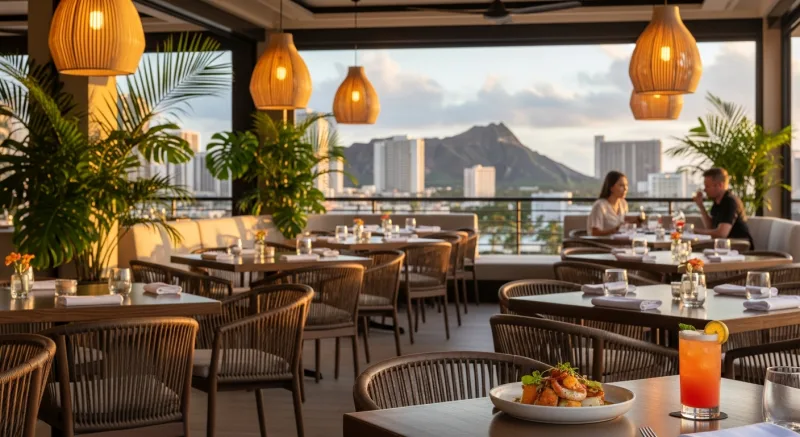
Waikiki's restaurant concentration along Kalakaua Avenue and the surrounding streets generates some of the highest per-restaurant card volumes in America. Tourist spending drives average monthly card volumes of $65,000-$120,000 for established Waikiki restaurants. At 0.15% residual, a single Waikiki placement generates $97-$180 per month. Five Waikiki placements could generate $6,000-$10,800 per year from one neighborhood.
Chinatown: Multilingual Heritage
Honolulu's Chinatown along Hotel Street and Maunakea Street is one of the oldest Chinatowns in America. The neighborhood houses a mix of traditional Chinese restaurants, Vietnamese pho shops, and newer concepts that blend Pacific and Asian cuisines. KwickOS's native Chinese and English support serves this community directly, and the close-knit nature of Chinatown means one successful placement generates rapid word-of-mouth referrals.
Kaimuki and Kapahulu: Local Favorites
Away from the tourist corridors, neighborhoods like Kaimuki (along Waialae Avenue) and Kapahulu serve primarily local residents. These restaurants have lower card volumes but stronger community roots and lower attrition. The operators here value reliability above all else — and KwickOS's offline capability is the ultimate reliability guarantee.
The North Shore and Windward Side
Beyond Honolulu, Oahu's North Shore (Haleiwa) and Windward communities (Kailua, Kaneohe) have growing restaurant scenes. Internet reliability in these areas is even lower than in Honolulu proper, making KwickOS's offline architecture even more critical.
Revenue Math: Hawaii Premium
Hawaii's tourist-inflated card volumes make the residual math particularly attractive:
- Average monthly card volume (blended tourist/local): $52,000
- Per-merchant monthly residual (0.15%): $78
- Total Oahu restaurants: ~3,000
- Year 1 (8 placements/month — lower target for island market): ~$46,000
- Year 2 monthly run-rate: $11,000+
- Year 2 annual residual: $126,000+
Note that I use a lower placement target for Hawaii — 8 per month instead of 10 — because the total addressable market is smaller. But the higher average card volume compensates, producing Year 2 residual income comparable to much larger mainland markets.
Three-Tier Partnership
Referral Partner: Hawaii's tourism industry includes hotel concierges, property managers, and tourism consultants who interact with restaurant operators regularly. The referral tier lets you earn from these interactions. KwickOS handles the 7-10 day implementation and all support.
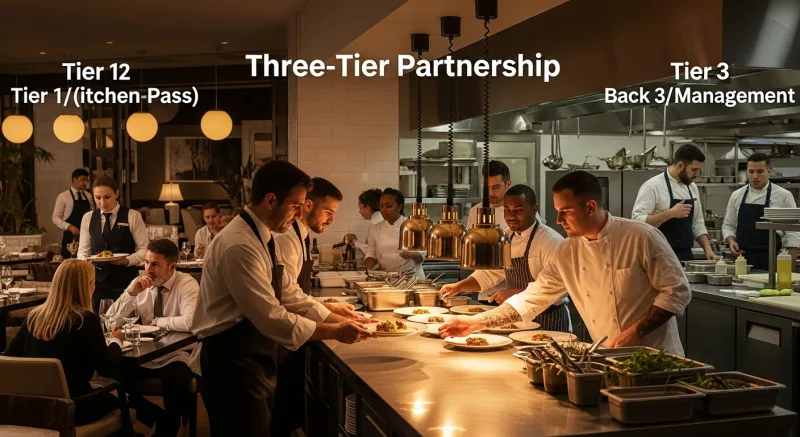
Active Reseller: In Hawaii's concentrated market, an active reseller can visit every restaurant on Oahu within a month. You demo, sell, and manage relationships. KwickOS handles the 1-3 hour installation and 1-2 hour training. The small market size means you know your entire territory personally — which translates to stronger relationships and lower attrition.
Full Partner: For an established Hawaii-based technology company, the full partner tier provides island-wide territory rights. The highest residual splits and the ability to expand to Maui, Big Island, and Kauai when ready.
Case Studies for Hawaii Conversations
Crafty Crab: Proving Multi-Location Capability
Hawaii restaurant groups with locations on multiple islands face unique management challenges. Crafty Crab's 19-location deployment with centralized management and one-click menu sync demonstrates that KwickOS handles geographic dispersion — whether that is locations across a mainland metro area or across Hawaiian islands.

T. Jin: Remote Monitoring for Distributed Operations
For a Hawaii operator with restaurants on Oahu and Maui (a common pattern), T. Jin's real-time remote monitoring across 15 stores eliminates the need for inter-island flights to check on operations. Every location's performance is visible in real-time from any device.
Haidilao: Global Brand, Local Technology
Haidilao's presence in Hawaii and worldwide, powered by KwickOS across 600+ locations, provides instant credibility. If KwickOS handles Haidilao's global operations, it can handle a five-location restaurant group across the Hawaiian islands.
The Island Economics of POS Reselling
Operating a POS reseller business in Hawaii has unique economics. Your cost of living is higher — but so is the value of every placement. The compact geography means lower travel costs and time — you can reach any restaurant on Oahu within 45 minutes. And the natural competitive moat means your portfolio is more defensible. When a mainland POS company sends a sales rep to Hawaii for a week-long blitz, they leave after the week. You stay. And the restaurant owners know it.
This permanence creates a referral dynamic that accelerates over time. Hawaii's restaurant community is tight. Everyone knows everyone. When three or four restaurants in Kaimuki switch to KwickOS and have a positive experience, the remaining restaurants in the neighborhood learn about it within weeks. The island's compact social network amplifies word-of-mouth in ways that simply do not happen in sprawling mainland metros.
Expanding Beyond Oahu
Once you establish your Oahu portfolio, the neighbor islands represent natural expansion territory:
- Maui: ~800 restaurants, heavily tourist-driven, extremely underserved by POS vendors
- Big Island (Hawaii): ~600 restaurants across Kona and Hilo, even more dependent on offline POS capability due to rural infrastructure
- Kauai: ~350 restaurants, smallest market but highest per-restaurant card volumes due to luxury resort concentration
A reseller covering all four major islands with a portfolio of 200+ merchants across Hawaii generates monthly residual income exceeding $15,600 — an annual rate of $187,000+ — from a total market that most mainland POS companies consider too small to bother with.
That disregard from the competition is your biggest asset. Hawaii is an island — literally and figuratively — where a dedicated local reseller can build an extraordinary business while the mainland competition ignores it.
Explore the KwickOS Partner Program or call (888) 355-6996 to discuss the Hawaii market opportunity.
Your Secret Selling Weapon: Gift Cards, Loyalty & Points — Included Free
Here is what closes deals for KwickOS resellers: when a merchant asks "what about gift cards?" or "do you have a loyalty program?" — you say "It is included. No extra monthly fee." Watch their face when they realize Toast charges $75/month and Square charges $45/month for the same thing.
Why This Matters for Your Sales Pitch
Gift cards and loyalty programs are the features merchants ask about but competitors charge extra for. This is your competitive advantage in every demo:
- Gift card program — physical cards + e-gift cards, multi-location balance sync. Sell it as "your own Starbucks card" for their business
- Points system — automatic point earning on every transaction. Customers come back more often, spend more each visit
- Membership tiers — VIP programs, subscription models, exclusive pricing. Perfect upsell for restaurants, salons, and coffee shops
- CRM integration — customer purchase history, preferences, birthday tracking, SMS/email marketing all from one screen
The Math That Closes Deals
Toast loyalty add-on: $75/month = $900/year. Square loyalty: $45/month = $540/year. KwickOS: $0 extra. Over a 3-year contract, that is $1,620-2,700 your merchant saves — just on loyalty and gift cards. Add payment processing freedom savings ($6,000+/year) and you are showing $8,000+ in annual savings. That is an easy yes.