The $47,000 Mistake: Why Restaurants Without Loyalty Programs Lose Their Best Customers
Running a restaurant without the right loyalty program is like driving without a dashboard. A loyal customer visits your restaurant twice a month. They spend $35 per visit. They do this for 5 years.
That's $35 × 24 visits/year × 5 years = $4,200 in lifetime value. From one person.
Now imagine you lose just 10 of these loyal customers per year because you don't have a loyalty program — because there's nothing keeping them coming back to you instead of the new place down the street.
10 customers × $4,200 = $42,000 in lost lifetime value. Every year.
Add the acquisition cost of replacing them (roughly $500 per new customer in marketing), and you're looking at $47,000 in annual losses from not having a system that costs $0 to implement.
That's not a typo. Zero dollars.
But we'll get to that. First, let's talk about why your regulars are leaving — and what you can do about it starting this week.
The Psychology of Why Loyalty Programs Work
Loyalty programs work because of a cognitive bias called the endowment effect. Once people earn something — even something as abstract as "points" — they value it more than its objective worth.
A customer with 80 out of 100 points needed for a free dessert will drive past three other restaurants to eat at yours. Not because your food is necessarily better. But because they have something invested in your restaurant that they don't have elsewhere.
Here's the data to back it up:
- Loyalty members visit 2x more often than non-members
- They spend 15-25% more per visit (they're already committed, so upsizing is easy)
- They refer 50% more new customers (word-of-mouth becomes systematic)
- Customer retention increases by 25-40% when a loyalty program is in place
That last number is the one that should keep you up at night. A 5% increase in customer retention produces a 25-95% increase in profits (Harvard Business Review). A loyalty program delivers 25-40% retention improvement.
The math isn't subtle.
Understanding the Points System
The most common and effective loyalty mechanism is a points system. Here's how it works in practice:
The Basic Structure
- Earning: $1 spent = 1 point (keep it simple — customers shouldn't need a calculator)
- Redemption: 100 points = $5 off (or a free item worth ~$5)
- Effective discount: 5% — enough to feel valuable, not enough to hurt margins
Power Moves
- Double-point days: Run 2x points on slow days (Tuesday, Wednesday) to drive traffic
- Birthday bonus: 50 bonus points during birthday month (guaranteed visit)
- Gift card bonus: 2x points when loading a gift card with $50+ (increases gift card sales AND loyalty engagement)
- Referral bonus: 25 points when a friend joins (viral growth)
What NOT to Do
- Don't make rewards unreachable (if it takes 6 months to earn a free coffee, nobody cares)
- Don't require an app download (friction kills enrollment)
- Don't use paper punch cards (they get lost, they get faked, they generate zero data)
With KwickOS, points are tracked by phone number. Customer gives their number at checkout, points auto-accrue. No app, no card, no friction. Shogun Japanese Hibachi had their entire team trained on the system in under 5 minutes.
Membership Tiers: The Advanced Play
Once your basic points program is running, consider adding membership tiers:
🥉 Bronze (Default)
1 point per $1 · Standard rewards · Birthday bonus
🥈 Silver ($500+/year)
1.5x points · Priority seating · Exclusive menu previews
🥇 Gold ($1,200+/year)
2x points · Free delivery · Annual dinner event · VIP treatment
Tiered membership creates aspiration. Silver members want to reach Gold. Gold members feel special and never leave. It's the airline frequent flyer model applied to your neighborhood restaurant.
Gift Cards + Loyalty: The Revenue Flywheel
Gift cards and loyalty are most powerful when they work together. Here's the flywheel:
- Customer buys a $50 gift card → earns 100 bonus points (double points on gift cards)
- Recipient redeems gift card → enrolled in loyalty program at checkout (phone number capture)
- Recipient earns points → comes back to redeem reward
- Repeat customer buys their own gift cards → cycle continues
Tiger Sugar does this beautifully. Every e-gift card redemption automatically enrolls the recipient in loyalty with electronic receipts. Their repeat customer rate increased 34% in the first quarter.
This flywheel only works when gift cards and loyalty are integrated in the same system — not separate add-ons bolted together with APIs.
How to Set Up Your Loyalty Program (Step by Step)
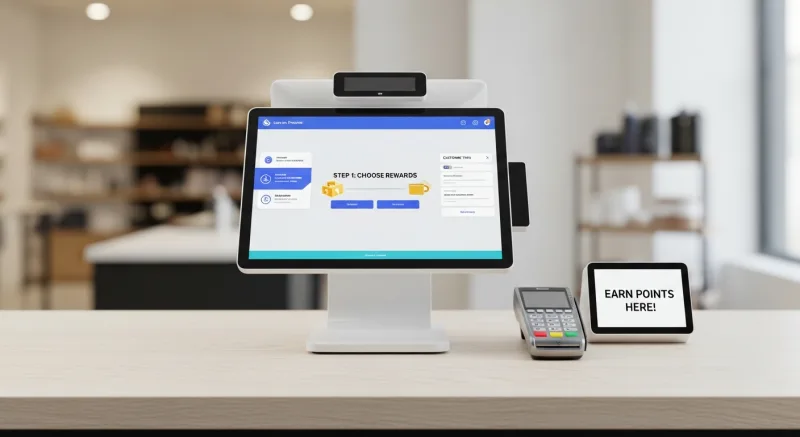
Step 1: Choose a POS With Built-In Loyalty ($0)
This is the most important decision. If your POS charges $45-74/month for loyalty, you're paying $540-888/year before you even start. With KwickOS, loyalty, points, membership, and gift cards are all included at no extra cost.
Step 2: Define Your Points Structure
Keep it dead simple: 1 point per $1, 100 points = $5 reward. You can always adjust later. The mistake is overcomplicating it from day one.
Step 3: Train Staff on Enrollment
The script: "Would you like to join our free rewards program? Just your phone number — you'll earn points on every visit." That's 5 seconds. Do it at every single checkout.
Step 4: Set Up Automatic Triggers
Configure these in your POS:
- Welcome bonus: 10 points on enrollment
- Birthday reward: auto-detect from signup
- Lapsed customer alert: if a member hasn't visited in 30 days, flag them
- Milestone celebration: 500 lifetime points = "Thank you! Here's a surprise reward"
Step 5: Promote (Minimally)
Put a small sign at the register: "Join our rewards — earn 1 point per $1, redeem for free food." Update your online ordering to show loyalty options. That's it. Don't overthink the marketing — staff enrollment at checkout drives 80%+ of signups.
Real Results from Real Restaurants
Diva Nail Beauty (4 locations, KwickOS) — Implemented automated loyalty and commission tracking. Result: 90% efficiency increase in operations, with loyalty members booking 2.3x more appointments than non-members.
T.Jin China Diner (15 locations, 75 terminals) — Real-time loyalty synchronization across all stores. A customer earns points at the Downtown location and redeems at the Airport location. Seamless. This is only possible when loyalty is built into the POS core, not bolted on.
The Cost Comparison That Settles It
| Annual Loyalty Cost | Toast | Square | Clover | KwickOS |
|---|---|---|---|---|
| Loyalty + Points | $600/yr | $540/yr | $888/yr | $0 |
| + Gift Cards | +$600 | +$0 | +$588 | $0 |
| Total/Year | $1,200 | $540 | $1,476 | $0 |
Start Today, See Results This Month
A loyalty program isn't a long-term project. It's a switch you flip.
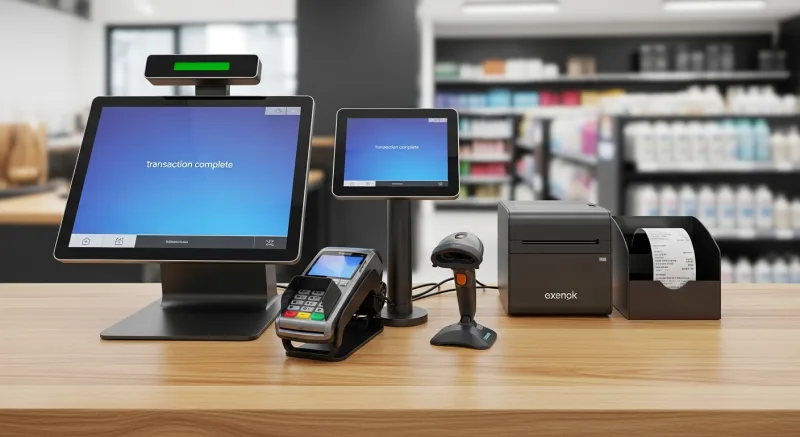
With the right POS, you can go from zero to fully operational loyalty in a single afternoon. Define your points, train your staff (5 minutes), and start enrolling customers at the next checkout.
Within 30 days, you'll have data showing exactly how loyalty affects visit frequency and average ticket size. Within 90 days, you'll wonder why you waited so long.
The $47,000 mistake is one you can stop making right now.
Launch Your Loyalty Program Today
KwickOS includes loyalty, points, membership tiers, and gift cards at $0/month. See it in action.
Get a Free Demo →