 Tom Jin
Korean food isn't having a moment. It's having a decade.
Searches for Korean cuisine have climbed sharply over the past few years — by some industry measures interest in Korean BBQ and Korean fried chicken is up well over 300% from where it sat at the start of the trend. K-pop fills stadiums. K-dramas top streaming charts. Korean skincare took over every beauty aisle in America. And riding that same "Hallyu" wave, the food has gone from niche to mainstream in towns that didn't have a single Korean restaurant five years ago.
Here's the problem most owners don't see coming: a trend that big creates demand faster than supply. Customers want Korean BBQ, gochujang wings, kimchi everything, and Dalgona-everything — but they don't know where to get it. They're searching, scrolling, and asking friends. And the restaurants that show up in that search, that scroll, that conversation are the ones that win the decade.
But it gets worse: most restaurants with genuinely great Korean food are invisible. The food is incredible. The marketing is nonexistent. They're letting a once-in-a-generation tailwind blow right past the front door.
This guide fixes that. We'll cover how to position your concept, how to ride social media trends without a marketing degree, how to run influencer partnerships that actually move covers, and — the part everyone forgets — how to turn one viral visit into a customer for life.
First, Understand What's Actually Driving the Wave
You can't market a trend you don't understand. The K-food wave isn't really about food. It's about culture.
Young diners aren't seeking out Korean fried chicken because they read a nutrition study. They're seeking it because they watched a music video, a variety show, a mukbang, or a 15-second clip of a cheese pull stretching three feet into the air. The food is the edible souvenir of a culture they already love.
That changes everything about how you market it. You're not selling "dinner." You're selling participation in something that feels global, young, and exciting. The sizzle of meat on a tabletop grill. The communal chaos of a Korean BBQ table. The crunch — that specific, loud, glorious crunch — of double-fried chicken.
Here's the thing: that emotional pull is your unfair advantage. Most cuisines have to manufacture excitement. Korean food arrives with the excitement pre-installed. Your job is simply not to waste it.
Position Your Korean BBQ as an Experience, Not a Meal
Korean BBQ is the crown jewel of the trend — and the most under-marketed. Why? Because owners describe it like a menu and customers experience it like an event.
The number one barrier for a first-time Korean BBQ guest isn't price. It's fear of looking stupid. They don't know how to grill the meat, when to flip it, what the little dishes are, or how to order. That anxiety keeps thousands of curious customers from ever booking a table.
So flip your marketing to attack that fear directly:
- Lead with the experience. Show the table, the grill, the banchan spread, the group of friends laughing. Sell the night, not the protein.
- Make beginners feel safe. Offer a clearly labeled "first-timer" set or an all-you-can-eat option that removes the guesswork. Train servers to grill the first round for new guests. (For the operational side of AYCE pricing without bleeding margin, see our deep dive on Korean BBQ profitability.)
- Name the regional story. "Galbi" and "samgyeopsal" aren't intimidating when you explain them with a one-line story. Specificity signals authenticity, and authenticity is what diners are paying a premium for.
And don't underestimate the table itself as a marketing asset. A tabletop grill with friends gathered around it is the single most photogenic setup in casual dining. Every table is a content studio. Make it easy — and inviting — for guests to film.
Korean Fried Chicken: The Gateway Drug of K-Food
If Korean BBQ is the crown jewel, Korean fried chicken (KFC — the good kind) is the gateway. It's familiar enough that nobody's scared of it, and different enough that one bite converts people for life.
Position it on three pillars:
- The crunch. Double-frying creates a shatteringly crisp shell that stays crunchy even under sauce. This is your hero. Film it. Mic it. Let people hear it.
- The sauces. Soy garlic, sweet-and-spicy gochujang, honey butter — give them names, give them heat levels, give them a reason to come back and try the next one.
- The format. Whole, wings, boneless, sliders — Korean fried chicken travels well, which makes it a delivery and takeout machine. That matters more than you think; we'll come back to it.
For the kitchen workflow that lets you serve double-fried chicken at volume without bottlenecks, we wrote a full Korean fried chicken operations guide. Get the operations right first — there's nothing worse than going viral and then serving soggy chicken to the crowd it brought you.
Win the Algorithm: Social Media for K-Food
Here's a number that should reframe your entire marketing budget: short-form video is where the K-food trend lives and dies. TikTok, Instagram Reels, and YouTube Shorts didn't just report the wave — they created it.
And here's why that's great news for you: Korean food is almost impossible to film badly. The cheese pull, the sizzling grill, the sauce drizzle, the ASMR crunch — these are the exact moments the algorithm rewards. You don't need a videographer. You need a phone and the discipline to post.
A few rules that consistently work:
- Post the moment, not the menu. A three-second cheese pull beats a 30-second menu tour every time.
- Use trending Korean and food audio. Ride sounds and hashtags that are already moving. The algorithm surfaces content that fits patterns it's already promoting.
- Show real people. Staff plating, customers reacting, the chef's hands at work. Authenticity outperforms polish on these platforms.
- Post consistently. One viral hit is luck. A consistent feed is a strategy. Aim for a steady cadence, not a one-time blitz.
For a complete framework, our TikTok marketing guide for restaurants walks through content ideas, hashtag strategy, and how to turn views into reservations. K-food concepts have an unfair head start on every tactic in it.
But here's the trap nobody warns you about: views are not customers. A video with 2 million views and zero way to capture those viewers is a fireworks show — bright, loud, and gone. Which brings us to the part that actually pays your rent.
Influencer Partnerships That Move Covers (Not Just Views)
Korean food and influencers are a natural match — the content practically makes itself. But most restaurants run influencer "partnerships" wrong: they comp a meal for someone with a big follower count and hope.

Do this instead:
- Go local and micro. A food creator with 5,000–50,000 local followers will out-perform a national star with a million scattered ones. Their audience lives within driving distance of your door. That's the whole game.
- Brief the moment, not the script. Tell them which shot is the hero — the cheese pull, the grill, the crunch — then let them be themselves. Their audience trusts their voice, not your ad copy.
- Track it at the register. This is the difference between marketing and gambling. Give each influencer a unique promo code or a loyalty offer redeemed at checkout. Now you know exactly how many real visits — not views — each partnership produced.
That last point is where most restaurants leak money. If you can't tie a partnership to actual transactions, you're flying blind. A POS that captures the promo code, the new customer, and the loyalty sign-up in one checkout flow turns "I think that influencer helped" into "that influencer drove 47 first-time visits and 12 loyalty enrollments." For the broader playbook, see our restaurant influencer marketing guide.
The Part Everyone Skips: Keeping the Customer After the Trend Sends Them
And that's not all. Here's the hard truth about riding a trend: trends are rented, not owned. The K-food wave will keep bringing curious first-timers to your door for years — but the algorithm that sent them will just as happily send them to the next viral spot tomorrow.
So the real question isn't "how do I go viral?" It's "what happens at the register when the viral visit arrives?"
This is where most restaurants throw the whole thing away. They spend energy, comped meals, and creative effort to get a customer through the door once — and then let them walk out as an anonymous stranger. No name. No email. No reason to ever come back. Think about what that costs: if a viral push brings you 500 first-timers and you capture none of them, you've paid full price for traffic and kept zero of the asset.
The fix lives at checkout:
- Loyalty and points at the POS. Enroll the first-timer at the register — a quick phone number, a points balance, a reason to return. A trend brings them once; a well-built loyalty program brings them back twenty times.
- Memberships for your superfans. The hardcore K-food crowd will happily pay for a membership that gets them member-only sauces, early access to limited drops, or a free birthday meal. Recurring revenue from the people who already love you.
- Gift cards and e-gift cards. Korean food is social and gift-friendly — friend groups, K-pop fan communities, birthdays. Sell physical gift cards at the counter and e-gift cards online so a fan can send "you HAVE to try this place" with a balance attached. E-gift cards are also your single best holiday revenue lever; sell them where the trend traffic already is.
Tom's rule after 20 years in restaurants and 30 in IT: spend on getting them in the door, but build to keep them. The marketing is the spark. The loyalty, membership, and gift card programs are what turn a spark into a fire that's still burning long after the trend cools.
Don't Forget the Delivery Side of the Wave
Remember how we said Korean fried chicken travels well? That's not a footnote — it's a revenue stream. A huge share of trend-driven discovery converts to delivery and takeout orders, especially among the younger diners driving the wave.
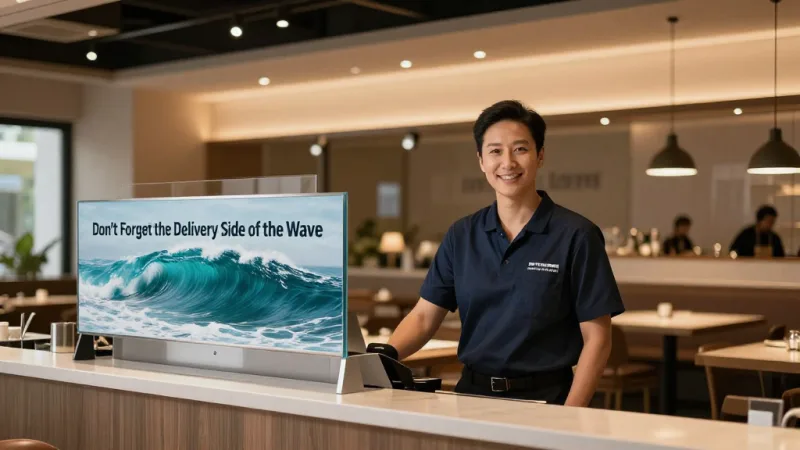
Here's the catch: if every one of those orders comes through DoorDash or UberEats at a 15–30% commission, the trend is making the apps rich, not you. On a busy K-food night, those commissions can quietly erase your margin entirely.
This is exactly why processor freedom and first-party ordering matter. KwickDriver charges a flat $2 + $6.99 per delivery instead of a percentage that scales with your success. The bigger the trend gets, the more a flat fee saves you. Run your own numbers with our savings calculator and see what a commission-free delivery model does to a high-volume Korean concept.
The Tech That Lets a Small Restaurant Punch Above Its Weight
You don't need to be Haidilao — the 600+ location hot pot giant — to run like a modern operation. You need a platform that does at the register everything your marketing promises out front.
That's the whole idea behind how KwickOS compares to Toast and Square. Where most POS systems lock you into their payment processor and bolt on loyalty as an afterthought, KwickOS runs as one platform:
- POS checkout built for the K-food workflow — table BBQ timers, banchan refill tracking, group payment splitting, and combo meal management (the full setup is in our Korean restaurant POS guide).
- Loyalty, points, and memberships native to the checkout — so the trend-driven first-timer becomes a tracked, re-engageable regular without a second app.
- Gift cards and e-gift cards sold and reloaded right at the register or online.
- Processor-agnostic payments — keep 100% of your processing freedom and stop handing a percentage of every viral night to a locked-in vendor.
- Hybrid local + cloud — 1ms local speed and full offline operation, so a rush that a viral video created never crashes your night.
- Multi-language — English, Korean-friendly menus, Chinese, and Spanish built in, with bilingual kitchen tickets.
One platform. POS, CRM, loyalty, gift cards, delivery, and signage. That's what lets a single-location Korean spot market like a chain and keep every customer the trend sends it.
The Bottom Line
The K-food wave is the best tailwind the restaurant industry has handed a cuisine in a generation. Demand is already in your neighborhood, already searching, already scrolling. You don't have to create it — you only have to capture it.
Position your Korean BBQ as an experience and your fried chicken as the gateway. Feed the algorithm the moments it craves. Run local micro-influencer partnerships you can actually measure. And then — this is the part that separates the restaurants that ride the wave from the ones that get dumped by it — capture every single trend-driven customer at checkout with loyalty, memberships, and gift cards so they come back long after the trend moves on.
The viral video is rented. The loyal regular is owned. Build for the second one.
Ready to build the back end behind the buzz? Explore partnering with KwickOS or see the platform that runs checkout, loyalty, gift cards, and delivery as one system.
Ride the Wave. Keep the Customer.
From Korean BBQ table timers and bilingual tickets to loyalty, memberships, and gift cards — KwickOS is the all-in-one platform that turns trend-driven traffic into lifelong regulars. See it in action.
Get My Free DemoFrequently Asked Questions
Why is Korean food so popular right now?
The K-food wave is riding the broader "Hallyu" (Korean wave) of K-pop, K-dramas, and Korean beauty that has gone mainstream worldwide. Industry data shows interest in Korean cuisine has climbed sharply over the past few years, with Korean BBQ and Korean fried chicken leading the surge. Younger diners discover dishes through short-form video, then seek out local restaurants to try them in person — which means the demand already exists in your neighborhood; the question is only whether your restaurant is the one they find.
How do I market Korean BBQ to customers who have never tried it?
Lower the intimidation barrier. Most first-timers worry they won't know how to grill the meat or order correctly, so lead your marketing with the experience — the sizzle, the shared table, the banchan spread — and make it feel social and fun rather than complicated. Use short video showing the table-side grilling, offer a clearly labeled "beginner" set menu or all-you-can-eat option, and train staff to coach new guests. Capture that first-timer at checkout with a loyalty sign-up so their one curious visit becomes a habit.
What social media platforms work best for Korean food marketing?
Short-form video platforms — TikTok, Instagram Reels, and YouTube Shorts — drive the K-food trend because the food is inherently visual and interactive: cheese pulls, sizzling grills, sauce drizzles, and the ASMR crunch of Korean fried chicken. Post consistently, use trending Korean and food hashtags and audio, and showcase the most shareable moments. Reels and TikTok reach new customers; a loyalty app or SMS list keeps them coming back after the algorithm moves on.
How do I turn trend-driven traffic into loyal repeat customers?
Trends bring people through the door once; loyalty programs, memberships, points, and gift cards bring them back. Capture every trend-driven first-timer at the POS with a loyalty enrollment or e-gift card offer, then use CRM data to re-engage them with points, birthday rewards, and member-only specials. A platform like KwickOS runs POS checkout, loyalty, gift cards, and CRM as one system, so the customer a viral video sent you isn't lost the moment they walk out.
Are influencer partnerships worth it for a Korean restaurant?
Yes, especially with local micro-influencers (5,000 to 50,000 followers) whose audiences live within driving distance. Korean food is highly shareable, so a single well-shot video of a cheese-pull or a fried chicken crunch can reach tens of thousands of nearby diners for the cost of a comped meal. Track results with a unique promo code or loyalty offer redeemed at checkout so you know exactly which partnerships drive real visits — not just views.