
 Ming Ye
You hand out stamp cards. Customers collect stamps. After 10 drinks, they get one free. Simple. Fair. And quietly destroying your margins while doing almost nothing for retention.
Here's the problem: a customer who orders a $4.50 plain green tea gets the same stamp as someone who orders an $8.50 taro milk tea with boba, pudding, and extra cream cheese foam. You're giving away a free drink after $45 in revenue from one customer and $85 from another — but the free drink costs you the same $0.83 either way.
But it gets worse. That stamp card sitting in their wallet? According to industry data on restaurant loyalty programs, paper cards have an 80% loss rate. Eight out of ten customers lose the card, restart from zero, and eventually stop caring. Your "loyalty program" is really a customer frustration program.
And that's not all: the shops that switched from stamps to points-based digital loyalty saw average order values climb 18-24%. Not because they changed their menu. Because they changed how customers think about ordering.
This guide breaks down the exact loyalty structure that turns occasional bubble tea drinkers into daily customers — the point system, the tier design, the birthday hooks, the referral multipliers, and the POS integration that makes it all run without adding a single minute to your staff's workload.
Why Stamps Fail and Points Win in Bubble Tea
Let's start with the uncomfortable math behind your stamp card.
A stamp card says: "Every drink is worth the same." But your drinks are not worth the same. A bubble tea shop's menu typically spans from $4 basic teas to $9+ specialty creations with premium toppings. When you give one stamp per transaction regardless of total, you're telling your highest-spending customers that their $9 order matters exactly as much as a $4 order.
Here's the thing: those high-value customers are the ones you most need to retain. They represent 35-40% of your revenue from maybe 20% of your transactions.
A points-based system fixes this by rewarding dollars spent, not visits made. A simple 1 point per dollar model means the $8.50 customer earns nearly twice as many points as the $4.50 customer — and they feel it. They're motivated to add that extra topping, upgrade to the large, try the premium seasonal drink.
| Metric | Stamp Card | Points Program |
|---|---|---|
| Avg order value impact | No change | +18-24% |
| Card/account loss rate | ~80% (paper) | ~3% (digital) |
| Customer data captured | None | Phone, birthday, preferences |
| Upsell incentive | None | More $ = more points |
| Multi-location tracking | Impossible | Automatic |
Tiger Sugar, a KwickOS customer with 2 stores and 2 self-ordering kiosks, saw this firsthand. Their kiosks prompt loyalty enrollment at checkout with minimal steps — tap phone number, confirm, done. Within three months of switching from paper stamps to POS-integrated digital points, their enrollment rate hit 52% of transactions and repeat visit frequency increased measurably.
The 3-Tier Structure That Creates Daily Customers
A flat points program is better than stamps, but it's still leaving money on the table. The real magic happens when you add tiers.
Think of tiers like a game. Customers don't just want the reward — they want the status. And the gap between tiers creates urgency. "You're only $22 away from Gold" is a far more powerful motivator than "You have 178 points."
Here's the 3-tier structure that works for bubble tea shops:
Tier 1: Tea Lover (Free — Everyone Starts Here)
- 1 point per dollar spent
- Birthday drink reward (free basic drink)
- Early access to new seasonal flavors (24 hours before public launch)
Tier 2: Boba VIP ($150 cumulative spending)
- 1.5 points per dollar spent (50% faster earning)
- Free topping on every drink (cost to you: $0.15-$0.25)
- Double points on Tuesdays (your slowest day)
- Birthday: free premium drink + free topping
Tier 3: Pearl Elite ($400 cumulative spending)
- 2 points per dollar spent
- Free size upgrade on every drink
- Monthly surprise reward (varies — keeps it fresh)
- Priority pickup (name on screen, skip the wait)
- Birthday: free drink + free topping + $5 bonus credit
Why three tiers and not five? Because according to research on pricing psychology, 74% of customers aim for the middle tier. With three tiers, your "middle" (Boba VIP) is achievable in 2-3 months of regular visits. That's close enough to feel real. Five tiers spread the psychological energy too thin — customers get lost and disengage.
Now here's the genius of the $150 threshold for Tier 2. A regular bubble tea customer spending $6.50 per visit, twice a week, reaches $150 in about 12 weeks. That's three months of consistent visits before they "level up." During those three months, the habit is forming. By the time they hit Boba VIP, they're not deciding whether to get bubble tea — they're deciding which flavor.
The First-Reward Trap: Why 10 Drinks Is Too Many
Most loyalty programs set the first reward at 10 visits. It feels round. It feels fair. And it's wrong.
Here's why: the psychological research on goal completion shows that motivation increases as people get closer to a goal. But if the goal is too far away at the start, they never build enough momentum to care.
Set your first free drink at 7 visits (or roughly $45-50 in points). That's about two weeks of regular visits. The customer gets their first reward while the excitement of joining is still fresh.
After the first reward, you can stretch the cycle. Set the second reward at 10-12 visits. By now, they've already experienced the dopamine hit of earning a free drink. They're hooked. The longer second cycle doesn't feel longer — it feels normal.
This front-loaded structure costs you one extra free drink per customer over the first few months. That's about $0.83 in actual cost. In exchange, you've created a customer who visits twice a week instead of once, with an average order value 20% higher than non-members. The math is not close.
Birthday Rewards: The $0.83 Investment That Returns $47
Birthday rewards are the single highest-ROI component of any loyalty program. And most bubble tea shops either skip them entirely or execute them badly.
Here's what not to do: "Happy Birthday! Here's 10% off your next drink." A 10% discount on a $6.50 drink is $0.65. Nobody is making a special trip for $0.65.
Here's what to do: "Happy Birthday! Your next drink is FREE — any size, any toppings. Bring a friend and they get 50% off too."
The free birthday drink costs you $0.83 in ingredients. But the customer doesn't come alone on their birthday. Industry data shows birthday reward redemptions average 2.3 people per visit. The birthday customer gets a free drink. Their friend buys a full-price drink. Often a third person tags along.
Result: $0.83 in cost generates $13-$18 in same-visit revenue and creates a powerful emotional association between your shop and celebration. That emotional anchor drives repeat visits for months.
Your POS system needs to handle this automatically. With KwickOS, birthday rewards are triggered by the customer's profile — the system sends a push notification or SMS three days before the birthday, and the reward auto-applies at checkout during the birthday week. Staff doesn't need to remember anything. The customer just sees "Birthday Reward Applied" on the screen.
Referral Programs: Turn 1 Customer Into 3
Word-of-mouth drives bubble tea more than almost any other food category. The drinks are photogenic. The toppings are customizable. The culture is social. Your loyalty program should weaponize this.
Here's the referral structure that works:
- Referrer gets: 50 bonus points (about $5 value) when their friend signs up AND makes a first purchase
- New customer gets: Free topping on their first drink + double points on their first 3 visits
The key is that both sides win, and the new customer's benefit is immediate (free topping right now) plus ongoing (double points for 3 visits). This creates a fast hook — they see the program's value on their very first visit.
And that's not all: make the referral process dead simple. A unique referral code tied to each customer's phone number. The friend enters the code at checkout (on the kiosk or at the register), and both rewards apply instantly. No forms. No apps to download. No waiting.
Rockin' Rolls, a KwickOS customer with 3 stores and 49 iPad self-ordering stations, uses their kiosk checkout flow to prompt referral code entry. The screen asks "Have a friend's referral code?" right before payment. It takes two seconds for the customer and generates measurable new sign-ups per month.
Digital vs App: You Don't Need a Custom App
Here's a pattern interrupt that saves you $15,000-$40,000: you do not need a custom mobile app for your bubble tea loyalty program.
Custom apps cost $15,000-$40,000 to build, $3,000-$5,000/year to maintain, and face the biggest hurdle in mobile: download friction. According to industry data, fewer than 30% of customers will download a single-store app. The rest won't bother — and you've lost them from your loyalty program entirely.
Instead, use a POS-integrated loyalty system that ties to the customer's phone number. No download required. The customer gives their phone number at checkout (or enters it on the kiosk screen), and they're in. Points accrue automatically. Rewards apply automatically. Balance checks happen via text or a simple web link.
KwickOS loyalty works exactly this way. The customer's phone number IS their loyalty account. At checkout — whether at the POS terminal, on a self-ordering kiosk, or through KwickMenu online ordering — the system looks up their account, applies any available rewards, and shows their points balance. The whole interaction adds about four seconds to checkout.
For shops that want more engagement, KwickOS also supports e-gift cards tied to the same phone number. A customer can load a prepaid balance, earn loyalty points on every load, and pay with their balance — all from one account. Gift card recipients automatically become loyalty members. It's a flywheel: gift cards feed loyalty, loyalty feeds repeat visits, repeat visits feed revenue.
Double-Points Days: Fill Your Slowest Day
Every bubble tea shop has a slow day. Usually Tuesday or Wednesday. You're paying rent, you're paying staff, and you're making half the revenue of a Saturday.
Double-points days solve this without discounting. Instead of "20% off on Tuesdays" (which trains customers to wait for discounts), you offer "2x points every Tuesday." The customer still pays full price. They just earn rewards faster.
The psychology is different from a discount. A discount says "our product is worth less today." Double points says "today is a special opportunity to earn." One devalues your brand. The other creates excitement and urgency.
Here's the thing: double-points days work even better when combined with tiers. A Boba VIP member earning 1.5x points on a double-points Tuesday is effectively earning 3x points. A Pearl Elite member earning 2x on a double-points day is earning 4x. That's a free drink in just 2-3 visits. The high-value customers feel like insiders getting an exclusive deal — which they are.
Your POS needs to handle this automatically — no manual overrides, no staff training. KwickOS lets you set point multipliers by day of week, time of day, or even specific menu items. Set it once, and the system runs it forever. Staff never touches it.
The Checkout Flow: Where Loyalty Enrollment Actually Happens
The best loyalty program in the world is worthless if customers don't sign up. And sign-up happens at exactly one moment: checkout.
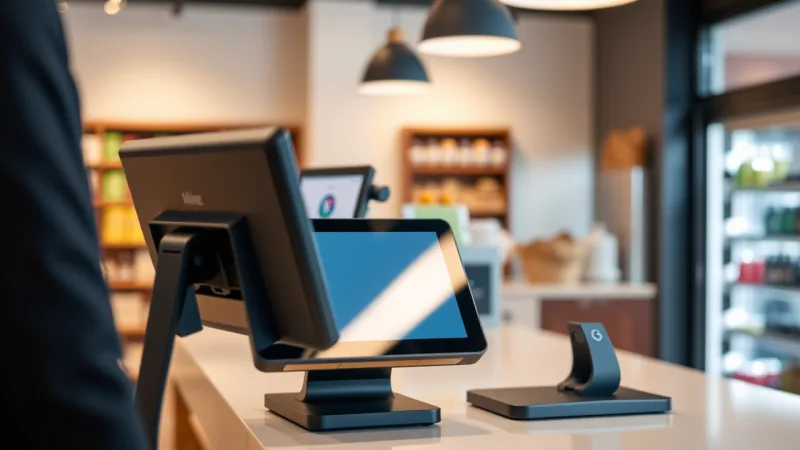
Your POS checkout flow needs to include a loyalty prompt that takes no more than 5 seconds. Here's what that looks like on a self-ordering kiosk:
- Customer finishes building their drink
- Screen shows: "Enter phone number to earn points" with a keypad
- If new: "Welcome! You just earned [X] points. [Y] more to a free drink!"
- If returning: "Welcome back! You have [X] points. [Reward available/Points to next reward]"
- Payment screen
No forms. No email required. No app download. Phone number and go.
Tiger Sugar's 2 self-ordering kiosks handle this seamlessly. The KwickOS kiosk interface was configured for minimal-step personalization — the loyalty prompt is built into the natural checkout flow, not bolted on as an interruption. Customers who don't want to join simply tap "Skip" and proceed to payment.
At staffed registers, the flow is even simpler. The cashier asks "Phone number for points?" as they're ringing up the order. One question, three seconds, done. KwickOS supports multilingual POS interfaces in English, Chinese, and Spanish, so language is never a barrier to enrollment — critical for bubble tea shops serving diverse neighborhoods.
Measuring What Matters: 5 Metrics That Prove ROI
You're spending money on free drinks, bonus points, and birthday rewards. How do you know it's working?
Track these five numbers monthly:
| Metric | Target | Why It Matters |
|---|---|---|
| Enrollment rate | 40%+ of transactions | Below 40% means your checkout prompt needs work |
| Active member rate | 60%+ visit monthly | Below 60% means your rewards aren't compelling enough |
| Member AOV vs non-member | +15% or more | Points should incentivize larger orders |
| Visit frequency (members) | 2x+ per week | Below this means tiers aren't driving urgency |
| Redemption rate | 60-70% | Below 60% = rewards too hard. Above 80% = giving too much away |
KwickOS generates these reports automatically across all locations. For multi-store operations like Crafty Crab Seafood (19 stores, 152 terminals), loyalty performance data flows into a single dashboard — you can compare enrollment rates, redemption patterns, and revenue impact store by store. That level of visibility is impossible with paper stamps and spreadsheets.
Want to see how your current setup compares? Use our loyalty program ROI calculator to model the revenue impact for your specific volume and average ticket.
What This Costs (And What It Returns)
Let's run the numbers for a bubble tea shop doing $25,000/month in revenue.
| Cost Category | Monthly Cost |
|---|---|
| Redeemed free drinks (~120/month at $0.83 cost) | $100 |
| Free toppings for Boba VIP members | $180 |
| Birthday rewards | $45 |
| Referral bonuses | $75 |
| Size upgrades for Pearl Elite | $60 |
| Total loyalty cost | $460/month (1.8% of revenue) |
Now the return side:
| Revenue Impact | Monthly Value |
|---|---|
| AOV increase (+20% on member transactions) | +$2,200 |
| Frequency increase (1.4x to 2.1x visits/week) | +$3,400 |
| New customer referrals | +$800 |
| Total incremental revenue | +$6,400/month |
You're spending $460 to generate $6,400. That's a 13:1 return. And unlike advertising — where you pay every month and the customer might never come back — loyalty revenue compounds. Every new member you add this month generates revenue next month, and the month after, and the month after that.
The software cost? With KwickOS, the loyalty module is built into the platform. There's no add-on fee, no per-member charge, no third-party integration to manage. Your POS, your CRM, your gift cards, your loyalty — it's all one system. Compare that to Toast, which charges extra for loyalty and locks you into their payment processing at 2.99% + $0.15 per swipe. With KwickOS being processor-agnostic, you're already saving $3,000-$8,000/year on processing — money you can reinvest into your loyalty rewards.
Build a Loyalty Program That Creates Daily Customers
KwickOS includes loyalty, gift cards, CRM, and online ordering in one platform — no add-on fees, no third-party integrations. See it in action.
Get a Free Demo