
 Ming Ye
You spent $14,000 on marketing last year. You ran social media campaigns, printed flyers, offered 20%-off coupons, partnered with influencers. And after all that effort, your average customer still only visits 1.6 times per month.
Meanwhile, the gym down the street has 2,400 members paying $39/month — and 40% of them barely show up. That's $37,440 every single month in revenue from people who don't even use the service.
Here's the thing: restaurants are starting to copy that model. And the ones doing it right are generating $8,000 to $25,000 per month in guaranteed recurring revenue before a single walk-in customer opens the door.
This isn't a gimmick. It's a structural shift in how restaurants make money. And if you're not paying attention, your competitors will lock in your best customers before you do.
Why the Gym Model Works for Restaurants
The gym industry figured out something decades ago that restaurants are just now discovering: people will pay for access even when they don't use it.
According to restaurant industry data, the average gym membership utilization rate sits around 55-65%. That means 35-45% of membership revenue comes from members who pay but rarely visit. Restaurants are seeing similar patterns. Early adopters report membership utilization rates between 55% and 70%, meaning 30-45% of membership fees flow directly to the bottom line as pure margin.
But it gets worse — for non-members, that is. Here's what happens when a customer becomes a member:
- Visit frequency jumps 2.8x. A customer who visited 1.6 times/month starts coming 4.5 times/month. Even with discounted pricing, total spend increases.
- Guest spending appears. Members bring friends. Industry research suggests that member-accompanied guests spend 22% more per visit than solo walk-ins because of social dining psychology.
- Add-on purchases spike. When the entree is "free" or discounted, members are far more willing to add dessert, premium drinks, and appetizers. Marginal revenue per visit increases even as the perceived cost decreases.
- Churn drops to near zero. Once someone is paying monthly, switching to a competitor means losing their investment. This is the same reason people stay with their gym even when a new one opens closer.
And that's not all: the predictability changes everything about how you operate. When you know that 400 members are generating $19,600/month regardless of weather, holidays, or a competitor's grand opening, you can staff smarter, order more precisely, and negotiate better deals with suppliers.
The Economics: How Restaurant Memberships Actually Make Money
Let's run the numbers on a mid-size casual restaurant — 80 seats, $22 average ticket, 180 covers/day, $3,960/day in revenue.
Here's a three-tier membership structure that works:
| Tier | Monthly Fee | Benefits | Target Members | Monthly Revenue |
|---|---|---|---|---|
| Regular | $29 | 10% off all orders, free birthday entree, early access to specials | 300 | $8,700 |
| Premium | $69 | 20% off, 2 free appetizers/month, priority seating, members-only menu items | 150 | $10,350 |
| VIP | $149 | 30% off, 4 free entrees/month, reserved table, private events, guest passes | 50 | $7,450 |
| Total | 500 | $26,500 |
At 60% average utilization, the actual cost of delivered benefits (food cost on redeemed items) runs approximately $9,500-$12,000/month. That leaves $14,500-$17,000/month in net membership revenue — money that arrives on the 1st of every month regardless of foot traffic.
Here's the thing: this doesn't replace your regular revenue. It supplements it. Members still order drinks, bring guests, and purchase items outside their benefits. The membership simply guarantees a baseline that smooths out the feast-or-famine cycle that kills so many restaurants.
Capacity Planning: The Math Your Gym Doesn't Want You to Know
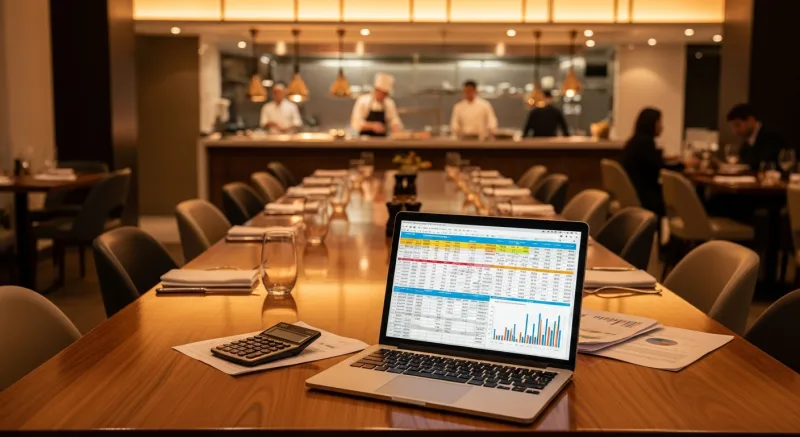
The biggest fear restaurant owners have about memberships is capacity: "What if everyone shows up on Friday night?"
They won't. And here's the data that proves it.
Industry research on subscription dining models shows that on any given day, only 10-15% of members visit. On peak nights (Friday/Saturday), that number climbs to 18-22%. On slow days (Monday/Tuesday), it drops to 6-8%.
For our 500-member example:
| Day Type | Member Visit Rate | Expected Member Visits | As % of 180 Daily Covers |
|---|---|---|---|
| Monday-Wednesday | 7% | 35 | 19% |
| Thursday | 12% | 60 | 33% |
| Friday-Saturday | 20% | 100 | 56% |
| Sunday | 14% | 70 | 39% |
But it gets worse for your slow days — in a good way. Those 35 member visits on Monday fill seats that would otherwise be empty. You're paying rent and labor for those hours regardless. Members turning dead nights into productive nights is the hidden superpower of the model.
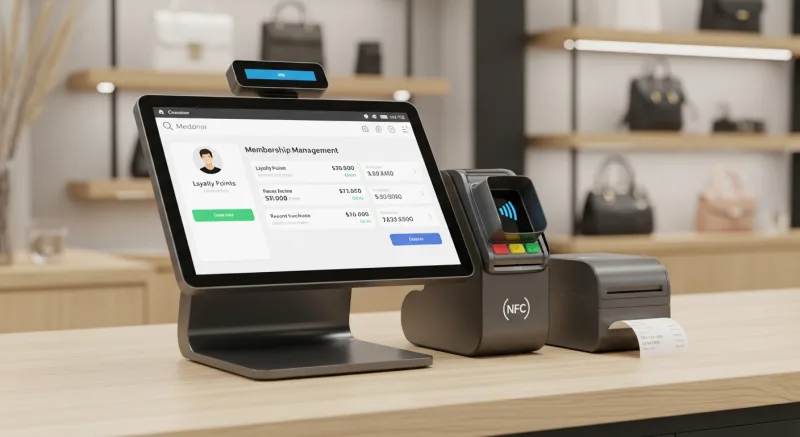
The key is tracking this data in real time. Your POS system needs to show you daily member visit counts, utilization by tier, and capacity projections so you can throttle new sign-ups before you hit constraint. KwickOS tracks all of this natively — member check-ins at the POS terminal via phone number, fingerprint scan, or loyalty card tap, with live dashboards showing utilization by hour, day, and tier.
5 Membership Structures That Actually Work
Not every membership model fits every restaurant. Here are five proven structures matched to different business types:
1. The Coffee Shop Unlimited (Best for QSR & Cafes)
$29-39/month for unlimited drip coffee or tea. This is the gateway drug of restaurant memberships. Cost per cup is $0.25-0.40, members average 15 cups/month (cost: $4.50), and 30% of visits result in a food add-on purchase averaging $6.80.
Tiger Sugar runs a variation of this with their bubble tea shops — 2 self-ordering kiosks per location let members scan in, customize their drink with minimal steps, and check out without staff interaction. The kiosk interface automatically applies the membership discount and tracks remaining benefits.
2. The Meal Plan (Best for Fast Casual)
$199/month for 20 lunch entrees ($9.95/meal effective price vs. $14 regular). This targets the office lunch crowd. The restaurant pre-sells 20 meals at a discount but only delivers on average 14 (70% utilization). Effective revenue per delivered meal: $14.21 — more than the regular menu price.
3. The Discount Club (Best for Full-Service)
$49-79/month for 15-25% off all orders plus perks. This is the model in our economics table above. It works because the discount drives frequency, the frequency drives total spend, and the total spend exceeds what non-members generate.
4. The Experience Membership (Best for Upscale)
$199-299/month for exclusive experiences: chef's table dinners, wine tastings, cooking classes, early access to seasonal menus, reserved seating. The deliverable cost is low (you're already cooking and buying wine), but the perceived value is extremely high.
5. The Family Plan (Best for Casual & Family Dining)
$89/month for a family of 4: kids eat free every visit, 15% off adult entrees, free birthday celebrations with dessert. Families are the most price-sensitive restaurant demographic and the most loyal when they feel they're getting a deal. This model locks in 4-6 visits/month from high-AOV tables.
The Checkout Flow: How Members Actually Use It
Here's where most membership programs fail: the redemption experience. If checking in as a member is awkward, slow, or requires staff to remember procedures, the program dies.
The POS checkout flow needs to be seamless:
- Member identification. Phone number lookup, loyalty card scan, or fingerprint (KwickOS supports 1:N fingerprint matching — one touch identifies the member from the entire database, no ID number needed).
- Automatic benefit application. The POS reads the member's tier and remaining benefits, then applies the correct discount or comps the correct items without cashier intervention.
- Usage tracking. Every redemption is logged: which benefits were used, remaining allocation, visit count this month. This data feeds capacity planning and identifies members at risk of cancellation (if utilization drops below 20%, trigger a re-engagement campaign).
- Upsell prompts. After applying membership benefits, the POS can prompt: "Add a dessert? Members save 20%" or "Upgrade to a premium cocktail for $3 more?" These prompts increase per-visit revenue while making the member feel their discount extends to everything.
- Receipt with value summary. Every receipt shows "You saved $8.40 today" and "Total savings this month: $47.20." This reinforces the value of the membership and reduces cancellation.
This is exactly why the technology behind the membership matters as much as the pricing. A POS that can't track individual member benefits, auto-apply discounts, and surface real-time utilization data will turn your membership program into a manual nightmare that bleeds money.
Gift Cards and E-Gift Cards: The Secret Membership Acquisition Channel
Here's a pattern interrupt most operators miss: gift cards are the best membership conversion tool you have.
When someone receives a $50 gift card to your restaurant, they're already predisposed to like the experience (someone who knows them chose it). After they redeem the card and enjoy the meal, that's the moment to present the membership offer.
The pitch is simple: "You just spent $50 on a single meal. For $49/month, you'd get 20% off every visit plus free appetizers. If you come just twice a month, the membership pays for itself."
Smart operators are building this into the POS flow: when a gift card or e-gift card balance hits zero at checkout, the terminal displays a membership offer with a QR code for instant sign-up. KwickOS processes the first month's fee right there at the register — same terminal, same transaction, no friction.
And it works in reverse too. Offer "Give a Membership" e-gift cards during holidays. Instead of a $100 gift card that gets used once, the gift giver purchases a 3-month membership ($147-$207) that creates a repeat customer. According to restaurant industry data, gift-card-originated memberships have a 45% conversion rate to full annual membership after the gifted period ends.
Loyalty Points Inside a Membership: Double the Stickiness
Some operators think memberships replace loyalty programs. That's backwards. The most effective approach is layering loyalty points on top of the membership.
Here's why: the membership handles recurring revenue and visit frequency. The loyalty program handles per-visit spending behavior. Together they create two independent reasons to keep coming back.
Example structure:
- All members earn 2x points on every dollar spent (vs. 1x for non-members)
- Premium and VIP members earn 3x points
- Points redeem for items outside membership benefits: merchandise, cooking classes, private events, off-menu items
- Points create a sunk-cost effect: a member with 2,400 points toward a free chef's dinner is far less likely to cancel their membership than one with zero points
KwickOS manages both systems from a single dashboard — the loyalty engine and membership tracker share the same customer profile, so members see their tier status, points balance, remaining benefits, and savings history in one place. No separate apps. No fragmented data.
Real-World Inspiration: How Multi-Location Operators Scale This
Single-location restaurants can run memberships with a spreadsheet and good intentions. Multi-location operators cannot.
Consider the complexity: a member joins at Location A but wants to use benefits at Location B. Their VIP status needs to be recognized instantly at any terminal. The discount needs to apply correctly. The usage needs to sync so they can't double-dip by redeeming the same benefit at two locations on the same day.
This is exactly the kind of problem that T. Jin China Diner solved when they scaled to 15 stores with 75 terminals. Their centralized management system means a member enrolled at one location is instantly recognized across all 15 — fingerprint scan, benefit lookup, discount application, and usage tracking happen in real time through the hybrid local+cloud architecture.
Crafty Crab Seafood takes it further with 19 locations and 152 terminals. When they update membership tiers or adjust benefit structures, one click syncs the changes across every terminal in every location. No store-by-store configuration. No version mismatches. No member showing up to a location that hasn't received the update yet.
The hybrid architecture matters here more than most operators realize. If your membership data lives entirely in the cloud, a 30-second internet outage means your staff can't verify members, can't apply discounts, and can't process membership checkouts. KwickOS stores member data locally on each terminal (1ms lookup) while syncing to the cloud in real time. When the internet drops, the local database keeps working. When it reconnects, everything syncs automatically.
Cancellation Management: The Part Nobody Wants to Talk About
Every membership program will have churn. The question is whether you manage it or let it manage you.
Industry data on subscription services suggests that unmanaged churn runs 8-12% per month in the first 6 months. Managed churn — with the right systems — drops to 3-5% per month after the initial adjustment period.
Here's what "managed" looks like:
- 30-day cancellation notice. This gives you a window to make a retention offer.
- Pause option. Let members freeze for 1-2 months per year instead of canceling. This reduces churn by up to 35% because many cancellations are driven by temporary situations (vacation, budget crunch, seasonal) rather than permanent dissatisfaction.
- Usage-triggered outreach. When a member's visit frequency drops below 2 per month, the system auto-sends a re-engagement message: "We miss you! Here's a free appetizer on your next visit — on top of your regular member benefits."
- Downgrade path. Instead of canceling entirely, offer a lower tier. A VIP member dropping from $149 to $49/month is $49/month you still keep.
- Win-back campaigns. 30, 60, and 90 days after cancellation, send targeted offers: "Come back for 50% off your first month." Win-back rates of 15-20% are common when the timing and offer are right.
All of this requires a POS CRM that tracks member lifecycle events, triggers automated communications, and gives you a dashboard showing churn trends by tier, reason, and timeframe. Running this manually across even a single location is unsustainable.
Getting Started: The 90-Day Launch Plan
You don't need to build a full three-tier membership program on day one. Here's how to launch in phases:
Days 1-30: Foundation
- Choose your POS platform (needs: recurring billing, member profiles, auto-discount, utilization tracking)
- Design one tier — start simple with a $49/month discount club
- Set your capacity cap (start conservative: 200-300 members for an 80-seat restaurant)
- Create the sign-up flow: at the register, on your website, and through your online ordering page
Days 31-60: Soft Launch
- Invite your top 50 customers (your CRM loyalty data tells you who they are) to join as founding members at a 20% discount on the monthly fee — locked for life
- Track every metric: sign-ups, visit frequency, utilization rate, add-on purchases, capacity impact
- Train staff on member identification and benefit application at checkout
- Promote through table tents, receipt messages, and e-gift card offers
Days 61-90: Scale
- Open enrollment to all customers
- Add a second tier (Premium at $99 or VIP at $149) based on early data
- Launch referral rewards: members who bring a new member get a free month
- Set up automated lifecycle marketing: welcome sequence, usage reminders, renewal nudges
By day 90, you should have 100-200 members generating $5,000-$15,000/month in recurring revenue. More importantly, you'll have the data to optimize pricing, benefits, and capacity for long-term growth.
The Processor-Agnostic Advantage for Memberships
Here's a detail that seems minor until you do the math: every membership payment is a recurring transaction that your payment processor charges a fee on.
500 members at $69/month average = $34,500 in monthly membership transactions. At a locked rate of 2.99% + $0.15 per transaction, you're paying $1,106/month — $13,275/year — just in processing fees on membership revenue alone.
With an interchange-plus rate through a processor you chose yourself, that drops to approximately $862/month — $10,344/year. That's $2,931/year in savings that go straight to your bottom line, on membership payments alone, before counting your regular sales volume.
This is why processor-agnostic platforms matter even more for membership-based restaurants. You're adding an entire new revenue stream of recurring payments — and locked-in processing rates take a bigger bite from predictable monthly charges than from variable daily sales.
KwickOS lets you choose any processor, negotiate interchange-plus pricing, and save $3,000-$8,000/year on processing — money that funds your membership benefits, marketing, or goes straight to profit. Use our processing fee calculator to see the exact impact on your numbers.
Build Your Membership Program on a Platform That Can Handle It
KwickOS gives you recurring billing, member profiles, fingerprint check-in, auto-discount at POS, utilization tracking, and processor freedom — everything you need to run a membership program that actually works.
Get a DemoFrequently Asked Questions
How does a gym-style restaurant membership work?
Members pay a fixed monthly fee (typically $49 to $299) for dining benefits like unlimited coffee, discounted entrees, free appetizers, or a set number of included meals per month. Like a gym membership, the restaurant profits because most members don't use their full allocation — industry data suggests utilization rates average 55-70%, meaning 30-45% of membership revenue is pure margin.
What's the ideal number of members for a 100-seat restaurant?
Most operators cap active memberships at 3-5x their daily capacity. For a 100-seat restaurant serving 200 covers per day, a safe starting point is 600-800 members. This accounts for the natural usage curve where only 10-15% of members visit on any given day. Your POS system should track daily member visits so you can adjust the cap based on real data.
Do restaurant memberships cannibalize regular revenue?
When designed correctly, no. The key is structuring benefits around items with low marginal cost (beverages, appetizers, sides) and offering percentage discounts rather than unlimited free food on high-cost entrees. Members also bring non-member guests, spend more on add-ons outside their benefits, and visit more frequently — typically 2.8x more often than non-members.
What POS features do I need to run a membership program?
You need recurring auto-billing, member identification at checkout (fingerprint, phone number, or card scan), automatic discount application based on membership tier, usage tracking to prevent abuse, and reporting to monitor utilization rates. A platform like KwickOS handles all of this natively, including member-specific loyalty points, e-gift card integration, and multi-location member recognition.
How do I handle membership cancellations without losing money?
Build in a 30-day cancellation notice period and require a minimum commitment of 3 months. Offer a "pause" option (1-2 months per year) instead of cancellation — this reduces churn by up to 35%. Track cancellation reasons in your POS CRM so you can address systemic issues. Some operators also offer a discounted "alumni" tier that keeps former members engaged at a lower price point.