
 Ming Ye
Look at your revenue from last month. Now look at the month before that.
If you are like most restaurant owners, those numbers are different — sometimes wildly different. A rainy Tuesday kills dinner service. A holiday weekend doubles it. You are riding a revenue roller coaster, and every month starts at zero.
Meanwhile, the gym down the street collects $47,000 in membership fees on the first of every month. Before a single person walks through the door. Rain or shine. Holiday or not.
Here's the thing: restaurants are starting to do the same thing. And the numbers are staggering.
A restaurant with just 200 active members paying $49/month generates $9,800 in guaranteed recurring revenue — every single month. That is $117,600 per year that does not depend on weather, foot traffic, or whether your Instagram post went viral.
But it gets worse for the restaurants that do not have memberships. Because those 200 members are not just paying fees. According to restaurant industry data, members visit 2.8x more often than non-members and spend 34% more per visit. The membership fee is just the beginning. The real money comes from the visits the membership creates.
This guide walks you through every step of building a membership program — from tier design and pricing psychology to auto-billing setup and retention strategies that keep members past the critical 90-day mark.
Why Restaurant Memberships Work (and Why Now)
Memberships are not new. Country clubs, wine clubs, and coffee subscriptions have proven the model for decades. What is new is the technology that makes it practical for any restaurant — even a single-location operation.
Three forces are driving the restaurant membership trend in 2026:
1. Consumers are subscription-conditioned. The average American pays for 6.7 subscriptions. Netflix, Spotify, Amazon Prime — monthly billing is no longer unusual. It is expected. When a restaurant offers a membership, customers already understand the model.
2. POS technology finally supports it. Five years ago, running a membership program meant spreadsheets, manual billing, and hoping your staff remembered who was a member. Modern POS platforms like KwickOS integrate membership management directly into the checkout flow — auto-billing, member identification at the register, benefit tracking, and renewal management all happen automatically.
3. Restaurant margins demand predictability. With food costs rising and labor costs at historic highs, restaurant margins are thinner than ever. Industry research suggests the average full-service restaurant operates on 3-9% net margins. Membership revenue is almost pure profit because the food cost is incremental — members eat meals they would have eaten somewhere else.
And that's not all: membership programs also solve the gift card problem in reverse. While gift cards bring in upfront revenue that gets redeemed later, memberships bring in monthly revenue that creates ongoing visits. The smartest restaurants do both — offering e-gift card promotions to non-members while building a separate membership revenue stream.
The Membership Math: What 200 Members Actually Looks Like
Before we get into design, let us look at the real financial impact of a modest membership program.
Assume you launch with three tiers and, after 90 days of promotion, reach 200 active members distributed as follows (industry data suggests 74% of customers choose the middle tier when three options are presented):
| Tier | Monthly Fee | Members | Monthly Revenue |
|---|---|---|---|
| Silver | $19 | 40 (20%) | $760 |
| Gold | $49 | 130 (65%) | $6,370 |
| Platinum | $99 | 30 (15%) | $2,970 |
| Total | 200 | $10,100 |
That is $121,200 per year in recurring membership fees alone.
But here is where it gets interesting. Those 200 members are not just paying fees — they are visiting more often and spending more per visit. If members visit 2.8x per month (vs. 1.1x for non-members) and spend an average of $38 per visit:
200 members × 2.8 visits × $38/visit = $21,280/month in member dining revenue.
Total monthly impact: $10,100 (fees) + $21,280 (dining) = $31,380/month from your membership base. That is $376,560 per year from 200 people.
Now compare that to 200 non-members visiting 1.1x per month at $32/visit: $7,040/month, or $84,480/year. The membership program generates 4.5x more revenue from the same 200 customers.
Step 1: Design Your Tier Structure
Every successful membership program has exactly three tiers. Not two. Not four. Three.
Here's why: the middle tier exists to be chosen. The low tier exists to make the middle tier look valuable. The high tier exists to make the middle tier look reasonable. This is called the decoy effect, and it is the most reliable pricing psychology principle in existence.
Tier 1: The Entry Level (The Anchor)
Price this at roughly the cost of one typical visit. If your average check is $28, price it at $29/month. The psychology is powerful — "I spend that much on one dinner anyway, so this is basically free."
Typical benefits:
- 10% off all dine-in orders
- Priority seating (skip the waitlist)
- Birthday month free dessert
- Early access to seasonal menu items
- Member-only newsletter with chef stories
Tier 2: The Sweet Spot (The One You Want Them to Choose)
Price this at 2x your entry tier. Load it with benefits that make the math undeniable.
Typical benefits (includes all Tier 1 benefits plus):
- 1 free entree per month (up to $25 value)
- 15% off all dine-in orders
- Free appetizer with every visit
- Exclusive monthly member tasting event
- 2 free e-gift cards ($10 each) to share with friends
- Double loyalty points on every purchase
The free entree alone is worth the membership fee. Everything else is bonus. This makes the decision easy.
Tier 3: The VIP (The Aspiration)
Price this at 2.5-3x your entry tier. Make it genuinely exclusive — limited to 30-50 members.
Typical benefits (includes all Tier 2 benefits plus):
- 2 free entrees per month
- 20% off all orders (dine-in, takeout, delivery)
- Quarterly private chef's dinner (8-person table)
- Off-menu items available only to VIPs
- Reserved parking spot (if applicable)
- Name on the VIP wall
- $50 in e-gift cards monthly to share
The scarcity of VIP spots is the point. When you tell Gold members "only 3 Platinum spots remain," upgrades happen fast.
Step 2: Set Up the Technology
A membership program without proper technology is a customer service nightmare. You need your POS system to handle four things automatically:
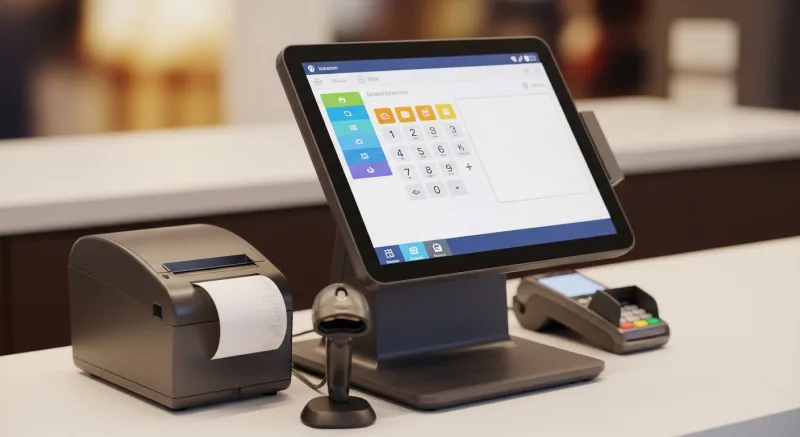
- Member identification at checkout. When a member pays, the system must instantly recognize them — by phone number, loyalty card, or fingerprint — and apply their benefits without the cashier needing to remember anything.
- Automatic monthly billing. Charging 200 credit cards manually on the first of every month is not a plan. Your POS needs to store payment methods securely and process renewals automatically.
- Benefit tracking. If a Gold member gets 1 free entree per month, the system needs to know whether they have used it this billing cycle. Otherwise your staff is guessing, and members are either shortchanged or double-dipping.
- Renewal and cancellation management. Failed payments, expired cards, pause requests, and cancellations need automated workflows — not a manager with a spreadsheet.
This is where your POS choice matters enormously. Most legacy POS systems treat memberships as an afterthought — or do not support them at all.
KwickOS handles all four natively. The CRM and loyalty module lets you create unlimited membership tiers, set benefit rules, automate billing, and track member status in real time. When a Gold member taps their phone at checkout, the cashier sees "Gold Member — Free Entree Available — 15% Discount Applied" instantly. No guesswork, no delays, no forgotten benefits.
And because KwickOS uses processor-agnostic payment integration, your membership billing goes through your own chosen processor at your negotiated rate — not a locked-in rate that eats into your recurring revenue. On 200 recurring charges per month, that difference in processing fees adds up to $600-$1,400/year in savings.
Here is what the checkout flow looks like for a membership visit:
- Member arrives — host checks reservation system, sees VIP flag, seats immediately
- Server greets by name (member profile appears on the handheld terminal)
- Member orders — system automatically tracks free entree eligibility
- At checkout, member pays with their card or taps their phone
- POS applies 15% discount, deducts free entree, awards double loyalty points
- Receipt shows: "Gold Member — You saved $14.20 today — Next free entree resets in 18 days"
That last line is critical. It tells the member exactly when to come back. Open loop created. Visit scheduled in their mind.
Step 3: Price for Psychology, Not Just Math
Most restaurant owners price their membership by calculating the cost of benefits and adding a margin. This is backwards.
You should price based on three psychological principles:
The break-even anchor. Your entry tier should feel like the member "gets their money back" on the first visit. A $29/month membership with 10% off means the member breaks even at $290 in monthly spending — roughly 2-3 visits. Since the average member visits 2.8x, most members feel like they are winning. And they are telling their friends.
The value gap. The difference between Tier 1 and Tier 2 should be dramatically more value for only 2x the price. If Tier 1 gives 10% off, Tier 2 should give 15% off PLUS a free entree PLUS an event. The goal: make anyone looking at Tier 1 think "I'd be foolish not to get Tier 2."
The exclusivity premium. Tier 3 is not priced on value — it is priced on status. The quarterly chef's dinner, the off-menu items, the name on the wall — these things do not have a rational "price." They have a status value that certain customers will pay for gladly.
But it gets worse for restaurants that skip this thinking. A poorly priced membership — one where members feel like they are overpaying — creates negative word-of-mouth that is harder to recover from than never having a program at all.
Step 4: Launch With Urgency
The biggest mistake restaurants make is launching a membership program quietly. No announcement, a small sign by the register, maybe a social media post. This guarantees failure.
Instead, use a 30-day launch sequence:
Days 1-7: Pre-launch waitlist. Announce the program on social media and in-restaurant with a simple message: "Our membership program launches on [date]. The first 50 members get Founding Member pricing — locked in for life." Collect email addresses and phone numbers.
Days 8-14: Founding Member window. Open enrollment to your waitlist first. Offer 20% off the monthly fee, forever, for anyone who joins in the first week. This is your "Founding Member" rate. The lifetime lock-in makes it feel like a once-in-a-lifetime deal, because it is.
Days 15-21: Public launch. Open enrollment to everyone at regular pricing. Train every server to mention the program at checkout: "Did you know our Gold members save 15% on every visit and get a free entree every month? Would you like me to show you how it works?"
Days 22-30: Scarcity push. Announce that Platinum membership is limited to 30 spots. Post a countdown. When it hits 25 filled, make noise. "Only 5 Platinum spots remain." Scarcity is not a gimmick — it is real. You genuinely cannot give VIP treatment to unlimited people.
During launch, leverage your existing loyalty program data to identify your best candidates. Customers who visit 2+ times per month and spend above average are your ideal founding members. With KwickOS, you can pull this list directly from your CRM and send targeted invitations — or even offer existing loyalty points holders an exclusive bonus for upgrading to membership.
Step 5: Gift Cards as Your Membership Growth Engine
Here is a strategy most restaurants miss: gift cards are your best membership acquisition tool.
When a Gold member gets 2 free $10 e-gift cards each month to share with friends, two things happen:
- The member feels generous and engaged (they are literally giving your restaurant away as gifts)
- The gift card recipients visit your restaurant, experience it, and become membership prospects
The math works beautifully. Each $10 e-gift card costs you roughly $3-4 in food cost. But the recipient spends an average of $34 on their visit (the gift card covers part of the check, not all of it). And according to restaurant industry data, 11% of gift card recipients who visit convert to members within 60 days when a server mentions the program.
200 Gold members × 2 gift cards/month = 400 gift cards distributed. If 60% are redeemed and 11% of redeemers convert, that is 26 new members per month from gift cards alone.
This creates a flywheel: members bring in gift card recipients, who become members, who bring in more gift card recipients. KwickOS tracks the entire chain — from gift card issuance to redemption to membership conversion — so you can see exactly which members are your best ambassadors.
Step 6: Retain Members Past the 90-Day Danger Zone
Industry data is brutal on membership retention. Across all subscription businesses, the highest cancellation risk is between day 60 and day 90. If a member makes it past 90 days, their likelihood of staying for 12+ months jumps dramatically.
Here is your 90-day retention playbook:
Week 1: Welcome email with a personal note from the chef. Include their member card (physical or digital), a guide to their benefits, and an invitation to this month's member event.
Week 2-3: If the member has not visited, send a "We miss you" text with a bonus — "Your first member visit includes a complimentary chef's appetizer selection. Come see us this week."
Month 1 check-in: Automated email showing their savings so far. "You saved $47.20 this month with your Gold membership. At this pace, you'll save $566 this year." Loss aversion is powerful — nobody cancels when they see concrete savings.
Month 2: Surprise upgrade. Give every member a one-time bump to the next tier for one visit. Let Gold members experience Platinum for a day. The taste of the higher tier drives upgrade conversations.
Month 3: Personal check-in from management. Not automated — a real phone call or handwritten note. "Thank you for being a founding member. Your feedback has already shaped our new summer menu." This creates emotional investment that makes cancellation feel like a betrayal of a relationship, not just clicking a button.
T. Jin China Diner, which operates 15 locations with 75 terminals on KwickOS, runs a variation of this playbook across all stores. Their membership retention at 6 months exceeds 88% — significantly above the industry average. The key, according to their operations team, is that KwickOS's real-time dashboard lets managers at any location see which members have not visited in 14+ days and trigger personalized outreach immediately.
Step 7: Track the Right Metrics
You cannot improve what you do not measure. These are the five numbers that determine whether your membership program is thriving or dying:
| Metric | Target | Why It Matters |
|---|---|---|
| Monthly Recurring Revenue (MRR) | Growing 5-10%/month in year 1 | Total membership fee revenue |
| Member Visit Frequency | 2.5+ visits/month | Below 2x = cancellation risk |
| Member Average Check | 20%+ above non-member avg | Members should spend more, not less |
| Churn Rate | Below 5%/month | Above 8% = structural problem |
| Gift Card Conversion Rate | 8-12% of redeemers join | Measures your growth flywheel |
KwickOS surfaces all five metrics in a single membership dashboard — no exporting to Excel, no combining reports from three different systems. Multi-location operators like Crafty Crab Seafood (19 stores, 152 terminals) can view membership health by location, by tier, and by date range from one screen, whether they are in the office or checking from their phone via the mobile reporting app.
Common Mistakes That Kill Membership Programs
After working with 5,000+ merchants across 50 states, we have seen every membership mistake imaginable. Here are the five that kill programs fastest:
1. Too many benefits, not enough exclusivity. If everyone gets everything, nothing feels special. The power of membership is exclusivity — off-menu items, private events, priority access. If non-members can get the same treatment by asking nicely, your membership has no value.
2. No checkout integration. If your staff has to manually look up members and calculate discounts, benefits will be forgotten, members will be frustrated, and staff will stop mentioning the program. Your POS must automate this completely.
3. Ignoring dormant members. A member who has not visited in 3 weeks is a cancellation waiting to happen. Without automated dormancy alerts — which KwickOS triggers at 14 days of inactivity — you will not know until the cancellation email arrives.
4. No pause option. When a member asks to cancel, offering a 1-3 month pause saves 40-60% of cancellation requests. Vacations, tight months, temporary moves — many cancellation reasons are temporary. A pause option keeps the door open.
5. Pricing tiers that compete with each other. If Tier 1 is too good, nobody upgrades. If Tier 2 is too close to Tier 3, your Platinum spots sit empty. The tiers must form a clear escalation where each level is obviously more valuable than the last.
Memberships + Loyalty Points: The Hybrid That Maximizes Lifetime Value
Here is the pattern interrupt most restaurant owners need to hear: your membership program and your loyalty program should not be the same thing.
Loyalty programs (earn points, get rewards) are for everyone. They capture data, encourage repeat visits, and give you a reason to communicate with customers. Memberships are for your best customers. They create recurring revenue, deepen the relationship, and offer benefits that transcend discounts.
The ideal setup:
- All customers earn loyalty points on every purchase (1 point per $1 spent)
- Members earn double points (2 points per $1), accelerating their rewards
- Gold and Platinum members get exclusive redemption options — like a private dinner for 100,000 points that is not available to regular loyalty members
- Loyalty-to-membership conversion: When a loyalty member hits a spending threshold (say, $500 in a quarter), send an automated offer: "You spend enough to be a Gold member — and you'd save $180/year. Want to upgrade?"
This hybrid approach is built into KwickOS's CRM module. The same system that tracks gamified loyalty points also manages membership tiers, auto-billing, and benefit application — all from one unified customer profile. No third-party integrations. No data silos. One customer, one profile, one system.
The Bottom Line
A restaurant membership program is not a marketing gimmick. It is a fundamental shift in how your business generates revenue — from unpredictable, transaction-by-transaction income to a base of reliable, recurring revenue that grows every month.
200 members at an average of $49/month gives you $9,800 in guaranteed monthly revenue. Add the incremental dining revenue from member visits, the gift card growth flywheel, and the loyalty points multiplier, and a modest membership program can contribute $300,000+ in annual revenue for a single-location restaurant.
The only question is whether your POS system can support it. If your current system cannot auto-bill, track benefits, identify members at checkout, and report on member metrics — you are trying to run a 2026 business on 2016 technology.
Build Recurring Revenue That Grows Every Month
KwickOS includes membership management, loyalty programs, e-gift cards, and automated billing — all built into one platform. See how it works for your restaurant.
Calculate Your Membership Revenue