 Rain Lee
Open your booking software right now. Count how many appointments you have scheduled for next week.
Now calculate what you need just to cover rent, payroll, and supplies.
If those two numbers make your stomach drop, you are running your spa the hard way — hustling for every single appointment, one walk-in at a time, praying that Tuesday does not turn into a ghost town that bleeds $800 in fixed costs with nothing to show for it.
Here's the thing: the most profitable spas in America do not operate this way. They wake up on the first of every month with $10,000, $15,000, even $25,000 already deposited — before a single client walks through the door. The difference is not better marketing or a fancier location. It is a membership program.
A spa with just 120 members paying an average of $120/month generates $14,400 in guaranteed monthly revenue. That is $172,800 per year in predictable income that covers your base costs regardless of walk-in traffic, weather, holidays, or economic uncertainty.
And that is not all: members do not just pay their monthly fee and disappear. They spend an average of 2.3x more than non-members on add-on services, retail products, and upgrades. That $14,400/month in membership fees typically generates another $8,000-$12,000 in additional monthly spending.
This guide shows you exactly how to build, price, and manage a spa membership program that transforms your business from appointment-dependent to revenue-predictable. We will cover the math, the psychology, the technology, and the retention tactics that keep members paying month after month.
Why Membership Revenue Changes Everything for Spas
The traditional spa business model is fundamentally broken. You sell time — an hour here, ninety minutes there — and when that time goes unsold, the revenue is gone forever. You cannot put an empty 2:00 PM Tuesday facial slot in a box and sell it next Saturday.
But it gets worse: the costs keep running whether clients show up or not. Rent is due. Staff is on the clock. Products expire on shelves. A spa with 60% utilization and one with 90% utilization pay roughly the same fixed costs — but the gap in profitability between them is the difference between barely surviving and thriving.
Membership programs solve this by converting unpredictable per-visit revenue into predictable monthly recurring revenue (MRR). Here is what that shift looks like in real numbers:
| Metric | Walk-In Only Model | Membership Model (120 members) |
|---|---|---|
| Guaranteed monthly revenue | $0 | $14,400 |
| Average client visits per year | 3.2 | 9.6 |
| Average annual spend per client | $384 | $1,680 |
| Client lifetime (years) | 1.8 | 4.2 |
| Lifetime client value | $691 | $7,056 |
| Revenue predictability | Week-to-week guessing | 85%+ forecasted 30 days out |
The lifetime value difference alone — $691 vs. $7,056 per client — should make every spa owner stop and rethink their entire business model. Members visit more, spend more, refer more, and stay longer. They are not just clients; they are the financial foundation of your business.
Designing Your Membership Tiers: The 3-Tier Framework
Here is where most spa owners go wrong: they create one membership option at one price and wonder why signups are slow. The psychology of choice demands three tiers. Research shows that 74% of customers choose the middle option when presented with three choices — but only if the tiers are designed correctly.
The secret is not just offering three prices. Each tier needs to serve a specific psychological purpose:
- Tier 1 (Essential) — The entry point. Low enough to feel like a no-brainer. This tier exists to get people into the membership habit.
- Tier 2 (Premium) — The sweet spot. This is your target tier, the one you actually want most people to choose. Price it to feel like incredible value compared to Tier 3.
- Tier 3 (VIP) — The anchor. This tier makes Tier 2 look reasonable. Some clients will choose it (and they are your most profitable members), but its primary job is making Tier 2 irresistible.
Here is a proven 3-tier structure for a mid-market day spa:
| Glow (Essential) | Radiance (Premium) | Luxe (VIP) | |
|---|---|---|---|
| Monthly fee | $89 | $139 | $219 |
| Monthly service credit | $100 | $165 | $275 |
| Discount on additional services | 10% | 15% | 20% |
| Retail discount | 10% | 15% | 20% |
| Guest passes per month | 0 | 1 | 2 |
| Priority booking | — | 48-hour advance | 72-hour advance |
| Birthday bonus | $15 credit | Free upgrade | Free signature service |
| Credit rollover | 1 month | 2 months | 3 months |
Notice the pricing psychology at work. The Glow tier gives $100 in value for $89 — an 11% savings that feels modest. The Radiance tier gives $165 for $139 — an 18% savings that feels substantially better. And the Luxe tier gives $275 for $219 — a 20% savings, but at a price point that makes Radiance feel like the smart, responsible choice.
And that's not all: the guest passes in the Premium and VIP tiers serve double duty. Members bring friends, friends experience your spa for free, and 38% of guest pass recipients convert to members themselves. Your existing members become your sales team without realizing it.
Pricing Strategy: The Math Behind Profitable Membership Fees
Pricing your membership tiers is not guesswork. It is arithmetic. Here is the formula that ensures your program is profitable from day one:
Monthly fee = (Average service cost × desired visits/month) × discount factor × margin target
Let us work through this with real numbers. Suppose your average facial costs $120 and you want members to come once per month:
- Service value per visit: $120
- Your cost to deliver (labor + product): $42 (35% of retail price)
- Your gross margin per visit: $78
- Membership discount: 15% off retail → member pays $102 value
- You charge: $89/month
- Your cost to deliver: still $42
- Your membership margin: $47 per member per month
But here is where it gets interesting. Not every member uses their credit every month. Industry data shows that 22-28% of monthly service credits go unused in any given month. That unused credit is pure margin — the member pays $89, you deliver $0 in services, and the credit rolls over (encouraging them to stay).
Here's the thing: this is not exploitative. It is the same model that makes gym memberships, Netflix, and Amazon Prime work. Members pay for access and convenience. Some months they use more, some months less. Over time, they get genuine value, and you get predictable revenue. Everyone wins.
For a 120-member program with typical utilization rates:
| Scenario | Members | Monthly Revenue | Service Delivery Cost | Gross Profit |
|---|---|---|---|---|
| 100% utilization | 120 | $14,400 | $5,040 | $9,360 |
| 75% utilization (typical) | 120 | $14,400 | $3,780 | $10,620 |
| 60% utilization | 120 | $14,400 | $3,024 | $11,376 |
Even at 100% utilization — every member using their full credit every month — your program generates $9,360 in monthly gross profit. At the more typical 75% utilization, that jumps to $10,620. And this does not include the additional services, upgrades, and retail products that members purchase on top of their monthly credit.
Auto-Billing Setup: The Technology That Makes It Work
A membership program without automated billing is a membership program that fails. Manual invoicing, chasing payments, and tracking credits by hand is a recipe for errors, missed payments, and staff frustration. You need a POS system that handles recurring billing natively.
Here is what your auto-billing system needs to do:
- Charge membership fees automatically on the same day each month, with retry logic for failed payments (attempt again at 3 days, 7 days, and 14 days before flagging).
- Apply service credits automatically when a member checks out. The system should know the member's tier, available credits, and applicable discount without the front desk doing mental math.
- Track credit rollover according to tier rules. If a Radiance member skips January, their $165 credit should appear in February alongside the new month's credit — up to the 2-month rollover limit.
- Send automated notifications: payment confirmation, low credit alerts, credit expiration warnings, and renewal reminders.
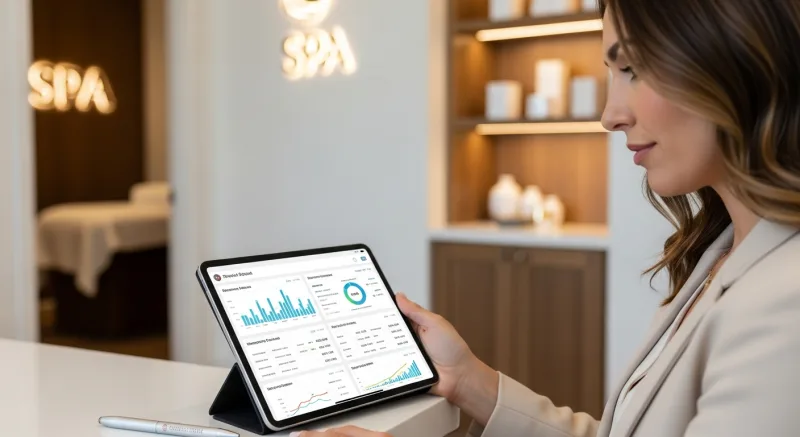
- Generate reports on member retention, visit frequency, average member spend, churn rate, and revenue by tier.
This is where your choice of POS system matters enormously. Many salon and spa POS systems charge extra for membership management or only offer basic recurring billing without the tier logic, credit rollover, and reporting you need.
Diva Nail Beauty — a 4-store beauty operation running on KwickOS — tracks commission splits, membership tiers, and service credits across all locations from a single dashboard. Before implementing automated membership billing, their staff spent 6+ hours per week manually tracking member visits and credits. After automation, that dropped to under 30 minutes per week — a 90% efficiency increase that freed staff to focus on client experience instead of spreadsheets.
The key is choosing a platform that integrates membership management directly into the POS workflow. When a member checks in, the system should automatically display their tier, available credits, and personalized upsell suggestions — all without the front desk clicking through multiple screens. KwickOS does this natively across its CRM and loyalty module, with multi-language support (English, Chinese, Spanish) that serves diverse clientele without friction.
The Launch: Getting Your First 50 Members in 30 Days
Now let us get tactical. Launching a membership program is not "build it and they will come." You need a structured 30-day launch sequence that creates urgency, leverages social proof, and converts your existing client base first.
Week 1: Founding Member Pre-Launch
Contact your top 30 clients personally — phone call or in-person, not email. Offer them "Founding Member" status at 20% off the first 3 months. Founding Members also get a permanent badge in your system and early access to new services. This creates exclusivity and seeds your program with your most loyal clients, who will evangelize the program to others.
Target: 15-20 founding members.
Week 2: Existing Client Rollout
Email your full client list with a time-limited launch offer: first month free when you commit to 3 months. Run an e-gift card promotion alongside it — "Give a friend a free first month, get a $25 credit" — to turn signups into referral machines.
Have front desk staff mention the membership to every single client during checkout. The script is simple: "We just launched our membership program — you would have saved $18 on today's visit as a Radiance member. Want me to show you how it works?"
Target: 20-25 new members.
Week 3-4: Social Proof and Scarcity
Post member testimonials and "X spots remaining" updates on social media. Run a "last chance for founding pricing" deadline. Host a members-only event (mini facial party, product sampling) that non-members can attend as guests — but only if a member brings them.
Target: 10-15 new members.
Total 30-day target: 50 founding members generating $5,950/month in recurring revenue.
From there, organic growth takes over. With guest passes, referral bonuses, and consistent front-desk enrollment, most spas add 8-12 new members per month after launch, reaching 120+ members within 6 months.
Retention: Keeping Members Beyond Month 3
Here is the brutal truth about spa memberships: 38% of new members cancel within the first 3 months. If you do not have a retention strategy, your membership program becomes a revolving door that costs more in acquisition than it generates in revenue.
The first 90 days are make-or-break. Here is the retention framework that keeps 85%+ of members past the 6-month mark:
The 30-60-90 Engagement Sequence:
- Day 7: Personal welcome call from the spa manager. Ask about their first visit, suggest their next service, and book their next appointment on the spot. Members who book their second appointment within 7 days of joining have a 73% retention rate at 6 months, versus 41% for those who do not.
- Day 30: Send a "Your first month" summary — services used, credits remaining, savings achieved. Include a personalized recommendation for a service they have not tried. The goal is to demonstrate value before the first renewal hits.
- Day 60: Offer a complimentary add-on (hot stone upgrade, aromatherapy enhancement) on their next visit. This costs you $8-15 in product but creates a "surprise and delight" moment that resets the emotional clock on their membership.
- Day 90: This is the danger zone. Send a personal message from their primary therapist acknowledging their 3-month milestone and previewing an exclusive service or event coming next month. Create a forward-looking reason to stay.
But it gets worse when you lose members — because acquisition costs are 5-7x higher than retention costs. Spending $12 on a complimentary upgrade to keep a $139/month member is the highest-ROI investment you can make.
The Pause vs. Cancel Strategy:
When a member wants to cancel, never process the cancellation immediately. Instead, offer a pause: freeze their membership for 1-3 months while keeping their tier and any accumulated credits. Data shows that 62% of members who pause will reactivate, compared to only 8% of those who fully cancel.
If they insist on canceling, offer a one-tier downgrade instead: "Instead of canceling your Radiance membership, would you like to switch to Glow for $89/month while things slow down?" This preserves 64% of the revenue and keeps them in the membership ecosystem.
Tracking the Right Metrics
You cannot improve what you do not measure. Here are the six metrics every spa membership program should track monthly — and the benchmarks that separate healthy programs from struggling ones:
| Metric | How to Calculate | Healthy Benchmark | Warning Sign |
|---|---|---|---|
| Monthly Recurring Revenue (MRR) | Sum of all active membership fees | Growing 5-10%/month in Year 1 | Flat or declining |
| Churn rate | Cancellations ÷ total members | Under 5%/month | Over 8%/month |
| Visit frequency | Total member visits ÷ active members | 1.1-1.4 visits/month | Under 0.8/month |
| Average member spend | (Membership fee + additional purchases) ÷ members | 1.5x-2.5x the membership fee | Under 1.2x |
| Credit utilization | Credits used ÷ credits issued | 70-80% | Under 50% (disengaged) or over 95% (underpriced) |
| Net member growth | New members − cancellations | Positive every month | Negative 2+ months in a row |
Your POS system should generate these reports automatically. If you are calculating these numbers in a spreadsheet, you are already behind — and probably making errors. A modern spa management platform like KwickOS tracks all six metrics in real-time across multiple locations, so you can spot problems before they become crises.
Use our membership revenue calculator to model different tier structures and see projected annual revenue based on your specific numbers.
Common Mistakes That Kill Spa Membership Programs
After watching hundreds of beauty and spa businesses launch membership programs, these are the five mistakes that cause the most damage:
1. Pricing too low to seem "affordable." A $49/month spa membership attracts price-sensitive clients who churn the fastest and complain the loudest. Price for value, not for volume. Your ideal member is not looking for the cheapest option — they are looking for the best value.
2. Offering too much in the base tier. If Tier 1 includes everything a client needs, there is no reason to upgrade. Design Tier 1 to be good — but make Tier 2 obviously better. The jump from $89 to $139 should feel like a bargain, not a stretch.
3. Not training front desk on enrollment. Your membership program lives or dies at the front desk. If your receptionist cannot explain the tiers, calculate savings for a specific client, and handle objections in under 90 seconds, you are leaving money on the table. Role-play enrollment conversations weekly.
4. Ignoring the technology. Manual credit tracking, handwritten visit logs, and end-of-month spreadsheet reconciliation do not scale past 30 members. Invest in a POS system that handles membership billing, credit management, and reporting natively. The staff hours you save will pay for the software within the first month.
5. No win-back campaign for canceled members. A member who cancels is not gone forever — but only if you follow up. Send a personalized offer at 30, 60, and 90 days post-cancellation. A "we miss you" offer of one free service with re-enrollment converts 12-18% of canceled members back into active members.
Scaling: From 1 Location to Multiple
Once your membership program is working at one location, the natural question is: how do you scale it across multiple locations?
This is where most spa owners hit a wall. Memberships that work beautifully at a single location become an operational nightmare at three or four locations — unless your technology supports it.
The critical requirement is centralized membership management with location-level flexibility. A member who joins at your downtown location should be able to use their credits at your suburban location. Their tier, credits, preferences, and visit history should follow them automatically.
Diva Nail Beauty solved this across their 4 stores by running all locations on KwickOS with centralized reporting. Their members can book at any location, and commission splits are calculated automatically based on which technician performs the service — regardless of which location the member originally joined. No manual reconciliation, no inter-store transfer headaches, no confused front desk staff.
For multi-location spas, you also need a system that does not lock you into a single payment processor. When you are processing $50,000+/month in membership charges across multiple locations, the difference between a locked 2.99% rate and a negotiated interchange-plus rate of 2.2% saves you $3,950/year — money that goes straight to your bottom line. KwickOS is processor-agnostic, meaning you choose the processor with the best rate for your volume.
The Gift Card Connection
Here is a pattern interrupt most spa owners miss: gift cards are the single best membership acquisition tool.
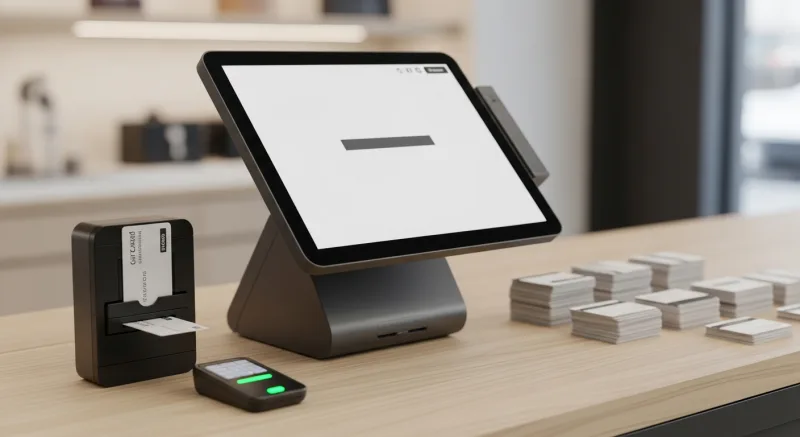
When someone receives a spa gift card, they have already been pre-qualified. Someone else spent money to send them to your business. They walk in predisposed to enjoy the experience. They are the perfect membership prospect.
The play is simple: when a gift card recipient checks out after their first visit, your front desk says: "You enjoyed today's facial, right? If you became a Radiance member, that same facial would be included every month for $139 — and you'd save 15% on everything else. Want me to set you up?"
Gift card recipients who are offered membership at checkout convert at 22-28% — nearly triple the rate of cold walk-ins. Pair this with a strong gift card program and you have created a self-reinforcing acquisition engine: gift cards bring new clients, new clients become members, members buy gift cards for friends, and the cycle repeats.
Your Next Step
Building a spa membership program is not a someday project. Every month without recurring revenue is a month of unnecessary financial stress and missed profit.
Start with the math: take your average service price, calculate what 120 members at a 15% discount would generate, and compare that to your current monthly revenue. The gap between where you are and where you could be is your motivation.
Then get the technology right. Your POS system needs to handle automated billing, tier management, credit tracking, and multi-location support without bolted-on workarounds or manual spreadsheets. KwickOS is built for exactly this — with native membership management, automated commission tracking, fingerprint-based staff authentication, and the processor freedom to keep more of every dollar you collect.
The spas that thrive in 2026 and beyond are the ones that stop selling appointments and start selling relationships. Membership is how you make that shift.
Build Predictable Spa Revenue
KwickOS includes native membership management, automated billing, and commission tracking for beauty and spa businesses. See how it works for your spa.
Get a Free Demo