 Tom Jin
It's Friday night. The tables are full, a draft is firing in the back, and the register up front is the busiest it'll be all week. That's exactly when the leaks open up.
A regular walks in for his comic pull and it's not in the box — someone grabbed the last copy off the new-release wall because nobody flagged it as reserved. A kid buys a chase rare for $8 that's been trending at $40 online for a month, because the sticker never got updated. Two players who pre-registered for the tournament didn't show, and their seats sat empty while three walk-ins got turned away. And at close, you've got a hold box full of comics from six weeks ago that nobody's coming back for, already paid for out of your pocket to the distributor.
Here's the thing: not one of those is a catastrophe. Each one is just a normal Friday. A missed pull, a mispriced single, two empty seats, a box of dead stock. Individually they're pocket change. Added up across a year, a mid-size hobby shop quietly loses somewhere around $13,000 — not to a bad location or a slow month, but to the three things a generic register was never designed to track.
The fix isn't a bigger store or more foot traffic. It's the POS and checkout system at the counter — one that understands a pull list is a subscription, a single is a one-of-a-kind item with a moving price, and an event is money you collect before anyone rolls a die. Let's walk through it.
Why a General Retail POS Fails a Game Store
Most POS systems assume the simplest possible story: an item has a barcode, a customer buys it, money comes in, the item leaves and never comes back. That works beautifully for a convenience store selling a bag of chips. It falls apart in a hobby shop for three reasons at once.
Your best customers are on a standing order. The comic pull, the weekly TCG booster, the monthly miniatures release — these aren't one-off sales, they're reservations that renew on their own. A POS that only knows how to ring a barcode has no idea that eleven copies of next week's issue are already spoken for, so you either over-order and eat the returns or under-order and disappoint the regulars who keep the lights on.
Half your inventory is one of a kind. A trading-card single isn't a SKU with a quantity — it's this card, in this condition, at a price that can double or halve depending on what's winning tournaments this month. A register that treats a near-mint chase rare and a beat-up common as the same "card" can't price either one right, can't tell you what your singles case is actually worth, and can't tell you when a $60 slab walks out the door.
You don't just sell — you host. Friday Night Magic, a Warhammer campaign, a pre-release event: these are the heartbeat of a game store, and they're a business a retail register knows nothing about. Entry fees, reserved seats, prize payouts, player standings — all of it ends up on a clipboard and in someone's head.
Force a game store into a generic system and you get exactly the setup most shops live with: sticky notes on hold boxes, singles priced by gut, tournaments run on a spreadsheet, and no single record tying a player to what they pull, what they buy, and what they've won. Every one of those gaps is a leak. Let's close the biggest one first.
The Signature System: The Pull List That Runs Itself
This is the piece that pays for the whole system, so we'll spend the most time here. A pull list — the standing reservation of what a customer wants every week — is the single most valuable thing a game or comic store owns, and it's the thing a generic POS handles worst.
The reservation lives on the customer, not a sticky note. In KwickOS, each customer's pull list is attached to their profile: the titles, sets, and new releases they want, standing until they change it. When a customer picks up, each item rings against their account and the list simply rolls to the next week. Nothing to re-write, nothing to lose.
The list tells you what to order — before you order it. This is where the money is. Before you place the weekly distributor order, the system already knows how many copies of each title are spoken for. You order to demand instead of guessing: no more twelve extra copies of a book that flops sitting in a long box, no more selling out of the issue eleven people reserved by 6 p.m. Friday. And when a pull goes unclaimed, it's flagged automatically after your grace window — so a $40 stack doesn't quietly age out in the hold box while you keep paying the distributor for it.
A reservation is recurring revenue. The reason this matters beyond convenience: a pull list behaves like a subscription. It's predictable weekly income you can count on, from customers who have a standing reason to walk in every single week. Treat it like the recurring business it is and the whole store gets more stable.
Watch how much the math changes over a year for a mid-size shop once the software runs the pulls, the singles, and the events instead of a clipboard and a shrug:
| Annual leak source | On a cash register | On KwickOS |
|---|---|---|
| Over/under-ordered releases & unclaimed pulls in the hold box | ~$5,200 | ~$1,400 |
| High-value singles: shrink, theft, and mispricing | ~$3,600 | ~$700 |
| Tournament fees uncollected & empty reserved seats | ~$3,100 | ~$500 |
| Hours reconciling pull lists and buylist by hand | ~$1,900 | ~$0 |
| Total leaking per year | ~$13,800 | ~$2,600 |
That's roughly $11,000 a year recovered — and not one dollar of it comes from raising prices or pulling more foot traffic. It comes from a pull list that knows what's reserved, a singles case that knows what it's worth, and events that collect before they start.
Singles Inventory: Every Card Its Own Item
A game store rings up two completely different kinds of things at the same counter — sealed product with a barcode, and singles that are effectively one of a kind — and a generic POS only understands the first.
Set, condition, and a price that moves. In KwickOS, a single is its own item with its set, a condition grade, and its own price — so a near-mint chase rare and a played common are two records at two prices, not one blurry "card." When the market moves, you reprice the item, not a whole shapeless bucket. Your singles case stops being a mystery and starts being an inventory line you can actually value.
Buylist and trade-ins that keep the money in the shop. Half of a game store's singles business is buying, not selling. When a customer sells you a collection, the buylist logs each card with its grade and payout — and that payout can go out as store credit instead of cash, which keeps the money on your floor and pulls the seller back to spend it. You track what you paid against what it resells for, so you actually know your margin on the singles wall.
Loss prevention on the stuff that walks. High-value singles and graded slabs carry real dollars, and the same controls that protect any retailer apply here — our full breakdown of POS loss prevention covers the void, discount, and shrinkage tracking that stops inventory from disappearing from an open case. Staff sign in with fingerprint 1:N, so every sale, discount, void, and buylist payout is attributed to a real person — no shared logins, no "I don't know who marked that down." That attribution is the same engine that helped Diva Nail Beauty, a four-location shop, post a 90% efficiency gain on payout and reconciliation work; in a game store it's what makes staff buylist commissions and discount abuse both visible at once. For the barcode and cycle-count fundamentals under all of it, our retail inventory guide is the place to start.
Tournament Nights: Collect Before the Game Starts
Events are why people drive past two other shops to get to yours — and on a cash register, they're the least controlled money in the building. KwickOS runs them as bookable seats instead of a clipboard.
Paid registration, up front. Players register and pay entry ahead of time instead of you chasing $10 bills at the door. A reserved seat can require a deposit that's forfeited on a no-show and applied to their tab when they do show — the same deposit mechanic we detail in our no-show prevention guide, pointed at your gaming tables. Those two empty seats on Friday that turned away three walk-ins? They stop happening, because a seat someone reserved either shows up paid or forfeits.
Prizes and standings that tie back to real people. Prize payouts — store credit, packs, or cash — are recorded against the event, not guessed at the counter, so your prize pool actually balances against entries collected. And because every event links to the players' profiles, your best regulars and your biggest spenders are visible, not just faces you recognize. Running the night is fast, too: registration and checkout happen on the same guided screen that got Shogun Japanese Hibachi new staff productive on KwickOS in under five minutes, so a part-timer can run the door on a packed pre-release without a manager hovering.
Processor Freedom on Big Tickets
Here's a leak that hides in plain sight because it's a percentage, not an event. A game store's average sale looks small — a few boosters, a coffee-table board game — until a collector drops $1,500 on a sealed case, a whale buys a $600 graded slab, or you settle a collection buyout in one swipe. On tickets that size, the difference between a locked flat rate and a rate you negotiated yourself is real money, every single time.
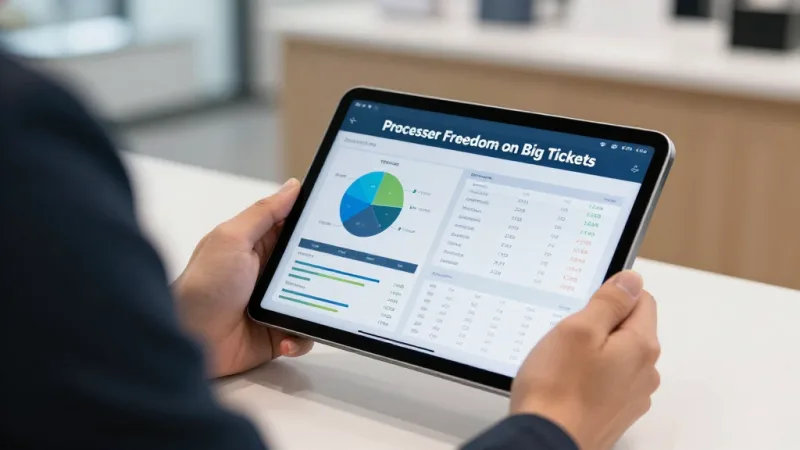
KwickOS is processor-agnostic — you keep 100% of the choice and negotiate your own rate, instead of being forced onto a POS vendor's mandatory processing. It's one of the clearest lines in any honest comparison against a locked platform. Watch what it does for a shop running $40,000 a month in card volume:
| Locked flat rate (2.9% + $0.30) | Negotiated interchange-plus (~2.3%) | |
|---|---|---|
| Monthly card volume | $40,000 | $40,000 |
| Effective monthly fee | ~$1,220 | ~$940 |
| Annual processing cost | ~$14,640 | ~$11,280 |
| Kept per year | ~$3,400 | |
That's ~$3,400 a year that stays in the business for doing nothing but owning your processor — and on a floor that rings the occasional $1,500 sealed case, the real gap is often wider. Run your own numbers with the processing fee calculator before you sign another locked contract.
Gift Cards, Loyalty, and a Recurring Play Pass
The pulls, singles, and events are the headline. The recurring revenue is everything around them — and it's where most game stores leave the easiest money on the table.
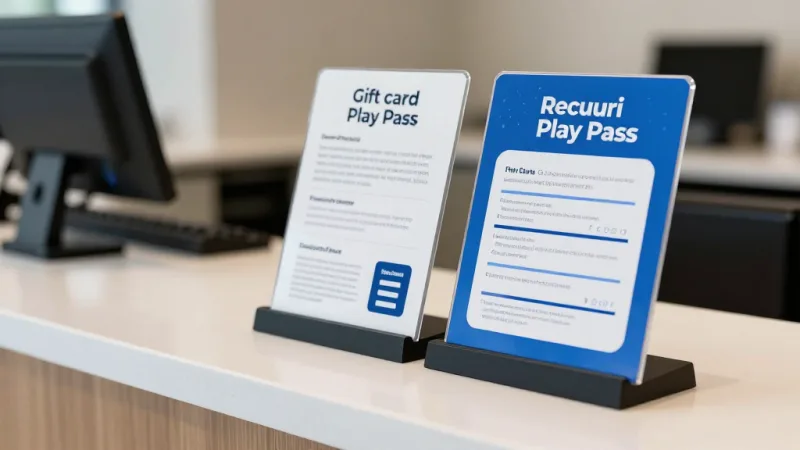
Gift cards and e-gift cards. A hobby shop is one of the most natural gifting stores there is — the birthday kid who's into a game the parent can't pronounce, the holiday "he collects something, I have no idea what." KwickOS includes native physical and digital gift cards and e-gift cards a customer can buy online and send in seconds. And gift card breakage — the slice that's never fully redeemed — becomes recognized revenue on your books.
Loyalty points. A points program that rewards every purchase gives the casual booster buyer a reason to come back to you instead of ordering singles online — and turns event nights into point-earning habits.
A recurring Play Pass membership. This is the play most shops never run and absolutely should. A monthly club — reserved table time, members-only presale on hot releases before they hit the wall, a monthly pack credit, and early buylist windows — turns the community you already host into predictable recurring revenue, billed automatically with failed-card dunning so you're never chasing payments. Because the membership, points, gift cards, the pull list, and every past purchase all live on one shared customer profile, you can send the presale alert only to the players who actually buy that game, and the buylist window only to the collectors — the right nudge to the right player at the right moment.
One Dashboard Across Locations — Even When the Wi-Fi Drops
Growing from one store to three shouldn't mean three disconnected registers, three separate singles catalogs, and three pull lists that don't talk. KwickOS runs every location on one dashboard — the same architecture that lets T. Jin China Diner monitor 15 stores and 75 terminals in real time from anywhere. For a multi-store hobby shop that means one customer database, one pull list that follows a player between locations, one report on which stores, games, and event nights actually make money.
Delivery is built in, too. When a customer buys a big board game or a case they'd rather not haul across town, KwickDriver handles the local run at a flat $2 + $6.99 per 5 miles instead of a marked-up third-party rate — the same delivery engine that keeps first-party orders profitable across the platform.
And because Friday night is exactly when your internet is most likely to buckle under a room full of phones, hybrid local + cloud matters here more than almost anywhere. Checkout, event registration, singles lookups, and pull pickups all keep working even if the connection drops in the middle of a packed pre-release; the terminal runs locally at ~1ms and syncs when the internet returns. No "sorry, our system's down" while a $1,500 case sits at the register. The platform is multi-language (English, Chinese, Spanish) out of the box, for a diverse community and a diverse crew.
The Bottom Line
A game store doesn't lose money because the hobby is shrinking or the location is wrong. It loses money in the gaps a cash register can't see: the pull that got sold off the wall, the single mispriced by $32, the two reserved seats that sat empty, the case of dead stock in the hold box, and the processing percentage skimmed off every big sealed order.
Close those gaps and the same store — same shelves, same tables, same Friday-night crowd — keeps roughly eleven thousand dollars more a year and runs calmer doing it. That's the job of a POS built for how a hobby shop really works: a pull list that runs itself, a singles case that knows its own value, events that collect before they start, processor freedom on the big tickets, and gift cards, loyalty, and a membership that turn one weekly visit into a regular for life. See how it fits a specialty retail floor like yours.
Stop Losing Money in the Long Boxes
KwickOS runs your pull lists, prices your singles, collects your tournament entries, and lets you keep your own processor. See what it looks like for your game store.
Calculate Your SavingsFrequently Asked Questions
How does a game store POS handle pull lists and weekly reservations?
In KwickOS, a customer's pull list is a standing reservation tied to their profile: the comic titles, TCG products, or new releases they want every week. When a shipment arrives, the system tells you exactly how many copies are already spoken for before you order from the distributor, so you stop over-ordering dead stock and under-ordering the thing that sells out. Each pull rings up against the customer's account, and because the list renews on its own, those reservations behave like recurring revenue instead of a stack of sticky notes. Unclaimed pulls are flagged automatically so nothing sits in a hold box for three months untracked.
Can a hobby store POS track individual trading-card singles?
Yes. KwickOS treats every single as its own item with a set, condition grade, and price, not a generic "card" SKU, so a near-mint chase rare and a played common are two different records at two different prices. High-value singles and graded slabs are tracked individually for shrinkage and theft, buylist trade-ins post payout as store credit that keeps the money in the shop, and staff sign in by fingerprint so every sale, discount, void, and buylist payout is attributed to a real person. That's the same attribution engine that helped four-location Diva Nail Beauty post a 90% efficiency gain on payout and reconciliation work.
How does a POS manage in-store tournaments and game nights?
KwickOS runs events as bookable seats: players register and pay entry ahead of time, a reserved seat can require a deposit that's forfeited on a no-show and applied to the tab when they show up, and prize payouts — store credit, packs, or cash — are recorded against the event instead of guessed at the counter. Entry fees are collected up front rather than chased at the door, empty reserved seats stop costing you table time, and every event ties back to the players' profiles so your best regulars are visible. New staff can run registration and checkout in minutes on the same guided screen that got Shogun Japanese Hibachi productive in under five.
Does a game store POS support gift cards, loyalty, and memberships?
KwickOS includes native physical and digital gift cards and e-gift cards, a points loyalty program that rewards every purchase, and a recurring Play Pass membership billed automatically with failed-card recovery — reserved table time, members-only presale on hot releases, a monthly pack credit, and early buylist windows. Because gift cards, points, the membership, the pull list, and every past purchase live on one shared customer profile, you can send the presale alert to the players who actually buy that game, and gift card breakage becomes recognized revenue on your books.