 Tom Jin
You closed $42,000 last month. Great. Now it's the first of the new month, and that number resets to zero.
Every table needs to be filled again. Every customer needs to walk through the door again. Every sale needs to be made again — from scratch.
That's the trap of transactional revenue. You're running on a treadmill where the speed keeps increasing, but you never actually get anywhere. Miss one slow week and your month is wrecked. Lose a few regulars and your quarterly projections collapse.
Here's the thing: businesses with 30%+ recurring revenue are valued at 2-3x more than purely transactional businesses. Not because they earn more — but because investors and buyers know that predictable revenue is fundamentally more valuable than revenue you have to re-earn every single day.
And that's not all: according to restaurant industry data, acquiring a new customer costs 5-7x more than retaining an existing one. Every subscription, membership, and stored-value program you launch isn't just creating recurring revenue — it's dramatically reducing your cost of earning each dollar.
I've spent 30 years in IT and 20 years in the restaurant industry, and I've watched thousands of small businesses through KwickOS. The ones that survive recessions, staffing shortages, and slow seasons all have one thing in common: they built recurring revenue before they needed it.
This guide covers 8 recurring revenue models that work for restaurants, retail, beauty, and service businesses — with real math and step-by-step implementation for each.
Model 1: Service Subscriptions — The "Netflix of Your Business"
A service subscription charges customers a flat monthly fee for ongoing access to your products or services. It's the most straightforward recurring model, and it works across virtually every industry.
How it works in practice:
- Coffee shop: $29/month unlimited drip coffee. At an average cost of $0.47/cup, even a customer who comes in every single day costs you $14.10 — you're still making $14.90/month in margin. And most subscribers come 12-15 times per month, not 30.
- Nail salon: $79/month for two manicures. Your cost per service is roughly $18 in labor + product. Two visits = $36 in cost. That's $43/month margin per subscriber.
- Restaurant: $99/month for one complimentary entree per week (up to $25 value). Average food cost on a $25 entree is $7.50. Four weekly visits = $30 food cost. You net $69 — plus whatever else they order.
But it gets worse for businesses that don't offer subscriptions: while you're scrambling to fill seats on a rainy Tuesday, your competitor with 200 active subscribers already has $19,800 hitting their account on the first of every month — rain or shine.
The math that matters:
| Metric | Without Subscriptions | With 150 Subscribers at $59/mo |
|---|---|---|
| Guaranteed monthly revenue | $0 | $8,850 |
| Revenue needed from walk-ins | $42,000 | $33,150 |
| Stress level on slow days | Extreme | Manageable |
Your POS system needs to support auto-billing and member identification at checkout. With KwickOS, members scan their fingerprint or enter their phone number at the terminal, and the system instantly applies their subscription benefits — no cards to carry, no codes to remember.
Model 2: VIP Membership Programs — Exclusivity That Pays Monthly
VIP memberships differ from basic subscriptions by selling status and access, not just product. Customers pay for the feeling of being an insider.
Here's what makes this model powerful: VIP members visit 2.4x more frequently and spend 67% more per visit than non-members, according to restaurant industry data. They're not just paying you a monthly fee — they're becoming your best customers.
Real example — how a restaurant structures VIP tiers:
- Silver ($29/month): 10% off all orders, birthday entree, early access to seasonal menu items
- Gold ($59/month): 15% off, free appetizer per visit, priority seating, members-only tasting events (quarterly)
- Platinum ($99/month): 20% off, free entree per week, reserved table, private chef dinner (annually), 2x loyalty points on every purchase
Notice the loyalty points integration at the Platinum level? That's the key — layer your membership program on top of your existing loyalty and points system so members earn rewards faster, which increases visit frequency even further.
Tiger Sugar, one of our KwickOS merchants with 2 stores and 2 self-ordering kiosks, ran a VIP pilot where Gold members got a free topping upgrade on every drink. The result: Gold members ordered 3.1 times per week versus 1.2 for non-members. That's an extra $18.50/week in revenue per member — on top of the $59 monthly fee.
Model 3: Prepaid Stored-Value & Auto-Reload Gift Cards
Wait — gift cards as recurring revenue? Absolutely. And this is the model most small businesses overlook entirely.
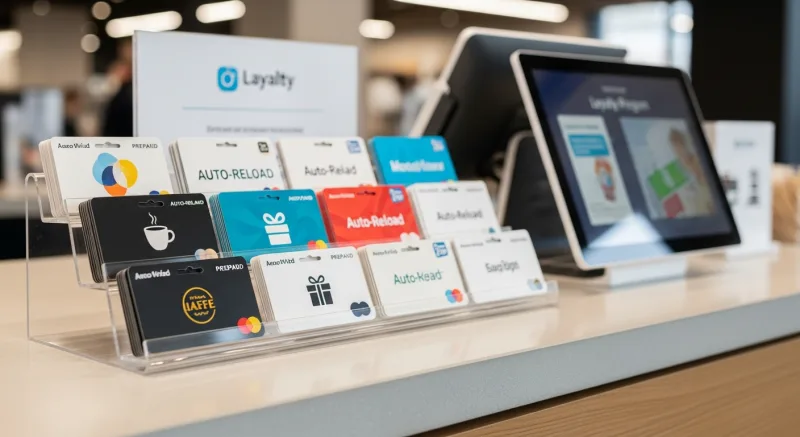
Here's how it becomes recurring: auto-reload. A customer loads $50 onto a gift card or stored-value account. When their balance drops below $10, their credit card is charged automatically to reload the balance to $50. They never think about it. They never have to re-decide. The money just flows.
According to industry data, auto-reload gift card customers spend 34% more than cash or credit customers because the money feels "already spent." It's the same psychology behind casino chips — once it's on the card, spending it feels frictionless.
And that's not all — there's breakage. Industry-wide, approximately 15% of gift card and stored-value balances are never fully redeemed. That's revenue you've already collected with zero cost of goods.
E-gift cards extend this even further. Digital gift cards purchased online can be delivered instantly via text or email, making them perfect for last-minute gifts, corporate incentives, and impulse purchases. A customer standing in line at your competitor's store can buy your e-gift card and be at your door in 10 minutes.
Use your POS checkout flow to prompt every customer: "Would you like to add $25 to a reloadable card and get a $5 bonus today?" KwickOS supports custom checkout prompts that trigger gift card and e-gift card upsells automatically at the payment screen — no staff training needed.
Stored-value revenue math for a single location:
| Metric | Value |
|---|---|
| Active auto-reload accounts | 80 |
| Average reload amount | $50 |
| Average reloads per month | 1.8 |
| Monthly stored-value revenue | $7,200 |
| Breakage revenue (est. 15%) | $1,080 |
| Total monthly recurring value | $8,280 |
Model 4: Product Subscription Boxes — Curated Monthly Deliveries
If your business sells any physical product — coffee beans, hot sauce, baked goods, beauty products, specialty ingredients — you can box it up and ship it monthly.
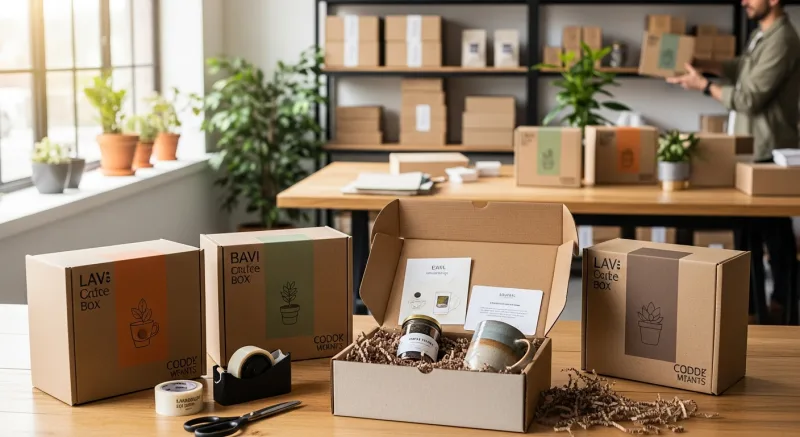
Here's the thing: product boxes work because they combine two powerful psychological triggers — the surprise element (what's in this month's box?) and the commitment device (I'm already paying, might as well enjoy it).
Examples by business type:
- Coffee shop: $34/month — 2 bags of single-origin beans + a new brewing tip card. Cost: $11 in product + $4 shipping = $19/month margin.
- Restaurant: $49/month — chef's selection of house-made sauces, spice blends, and a recipe card. Baked Cravings, a KwickOS merchant running self-serve kiosks at Lego Land, turned their popular flavors into a subscription box that generates steady revenue even outside of peak tourist season.
- Retail: $39/month — curated selection of seasonal products from your inventory. This doubles as inventory management — feature slow-moving items alongside bestsellers.
The checkout process matters here too. When a customer buys a product they love in-store, your POS should prompt: "Get this delivered monthly and save 10%." KwickOS tracks product purchase history and can trigger subscription upsells at the point of sale for items a customer has purchased 3+ times.
Model 5: Maintenance Plans — Scheduled Service Revenue
Maintenance plans guarantee that customers return on a fixed schedule, paying a predictable amount each time. This model is a natural fit for beauty, spa, and service businesses — but restaurants can use it too.
Real-world applications:
- Nail salon: $149/month — gel manicure every 2 weeks + one pedicure. Diva Nail Beauty, operating 4 stores on KwickOS, uses automated commission calculation to track technician performance on maintenance-plan clients. Their efficiency increased 90% after switching from manual tracking.
- Barbershop: $49/month — haircut every 3 weeks + beard trim. Auto-scheduled via the booking system.
- Restaurant equipment: If you're a POS reseller or service provider, $89/month per location for quarterly hardware inspections, priority support, and firmware updates.
But it gets worse for businesses without maintenance plans: the average nail salon loses 40% of clients annually to competitor promotions, schedule disruption, or simple forgetfulness. A maintenance plan with auto-scheduled appointments and auto-billing eliminates all three of those churn drivers at once.
Model 6: Digital Content & Classes — Knowledge You Sell Repeatedly
Every small business owner has expertise that customers will pay to access. The cost of delivering digital content is nearly zero after creation, making this one of the highest-margin recurring models.
Concrete examples:
- Restaurant: $19/month cooking class subscription — one live virtual class per month plus access to a recipe library. A sushi restaurant could offer "Master Rolls at Home" with a $200 knife kit upsell.
- Coffee shop: $12/month home brewing course — weekly videos on pour-over, cold brew, and espresso techniques. Subscribers get 15% off beans purchased in-store or online.
- Retail: $15/month styling tips and early access to new arrivals. Fashion and home goods retailers have built loyal followings with this model.
And that's not all — digital subscriptions create a data goldmine. You learn exactly what your customers are interested in, which lets you stock inventory, plan menus, and design promotions with surgical precision. Connect this data back through your POS and you'll know that your Tuesday cooking class subscribers also spend 2.3x more on dine-in than your average customer.
Model 7: Corporate Accounts & Bulk Programs
One corporate account can be worth 50 individual customers. And corporate purchasing is inherently recurring — office lunch orders happen weekly, client gifts happen quarterly, and employee perks renew annually.
Three corporate recurring models:
- Weekly catering: $400-$2,000/week for office lunch delivery. Lock in a 6-month commitment with a 5% discount. A single office building with 200 employees can generate $8,000+/month.
- Corporate gift card programs: $2,500-$10,000/quarter in bulk e-gift card purchases for client appreciation, employee bonuses, and holiday gifting. E-gift cards make this effortless — HR uploads a CSV of email addresses, your system delivers branded digital gift cards instantly.
- Employee perks partnerships: $500-$1,500/month for discounted meals or services for a company's employees. The company pays you a flat monthly fee; their employees show a corporate loyalty card at checkout for 15% off.
T. Jin China Diner, with 15 stores and 75 terminals running on KwickOS, manages corporate accounts across multiple locations from a single dashboard. When a corporate client wants to order lunch for their downtown office, the system routes it to the nearest location automatically — with real-time tracking for both the restaurant and the client.
Model 8: Auto-Replenishment — Products That Reorder Themselves
Auto-replenishment is the "set it and forget it" model. Customers authorize recurring purchases of products they use regularly, and the order processes automatically on a fixed schedule.
Where this works:
- Coffee beans: 1 lb every 2 weeks, $16/delivery. The customer never runs out. You never lose the sale to a grocery store impulse buy.
- Beauty products: Shampoo, conditioner, skincare products on a 4-6 week cycle. The salon captures revenue that would otherwise go to Amazon.
- Restaurant staples: Hot sauce, spice rubs, salad dressings — anything your customers ask "Can I buy a bottle of that?" gets an auto-ship option.
- Grocery/specialty: Weekly produce boxes, biweekly snack bundles, monthly cheese selections.
Here's the thing: auto-replenishment has the highest retention rate of any recurring model — industry research suggests over 85% continuation at the 6-month mark. Customers don't cancel because they still need the product. They just need a reason not to buy it from someone else, and the convenience of auto-delivery is exactly that reason.
Your POS needs to support repeat order profiles and automated scheduling. KwickOS enables auto-replenishment through its online ordering module — customers set their delivery frequency at checkout, and the system processes the order, charges their card, and sends a confirmation automatically. Integration with KwickDriver means local deliveries cost a flat $2 + $6.99 instead of the 25% commission you'd pay DoorDash or UberEats.
The Implementation Roadmap: Week by Week
Don't try to launch all 8 models at once. Here's the sequence that works:
Week 1-2: Start with stored-value and gift cards. This is the fastest to launch because you likely already have gift card capability in your POS. Add auto-reload prompts to your checkout flow. Design an e-gift card landing page. Train staff to mention reloadable cards at every transaction.
Week 3-4: Launch your membership or subscription. Pick one model — either a VIP membership or a service subscription — and keep it simple. One or two tiers maximum. Price it so the perceived value is 2-3x the monthly cost. Use your existing loyalty program data to identify your best candidates — customers who already visit 2+ times per month are natural early adopters.
Month 2: Add corporate accounts. Walk into 5 nearby office buildings with a one-page proposal: weekly lunch delivery, corporate gift cards, or employee perks. Close one account and you've added $1,000-$4,000/month in recurring revenue.
Month 3: Layer on product subscriptions or auto-replenishment. By now you have data on what your subscribers and members buy most. Turn those top products into auto-ship options.
What Your POS Must Support
Recurring revenue programs fail when the technology can't keep up. Here's what you need:
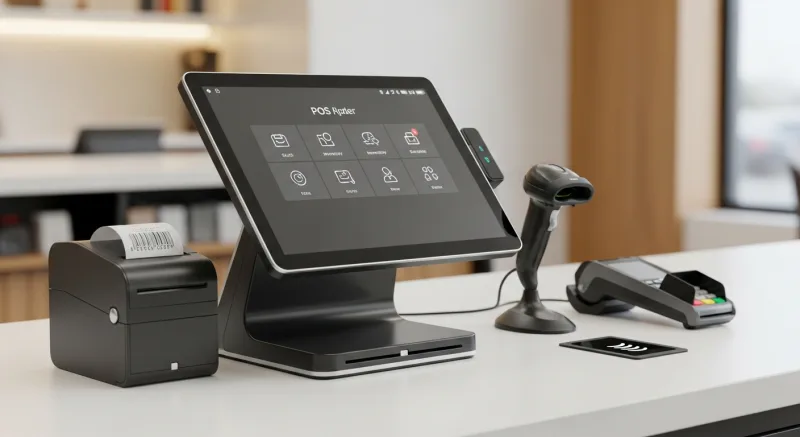
- Auto-billing: Charge cards on file automatically without manual processing
- Member identification at checkout: Phone number, loyalty card, or fingerprint scan (KwickOS supports all three, including 1:N fingerprint matching that identifies members instantly)
- Gift card and e-gift card management: Issue, reload, auto-reload, check balance, and track breakage
- Loyalty points integration: Members earn points faster, creating a virtuous cycle of engagement
- Subscription reporting: Separate recurring vs one-time revenue, track churn rate, identify at-risk subscribers
- Multi-language support: If you serve diverse communities, your membership signup and checkout screens need to work in their language. KwickOS supports English, Chinese, and Spanish natively.
Critically, your POS must be processor-agnostic so that auto-billing and stored-value transactions aren't inflated by locked-in processing rates. On a membership program processing $8,000/month in recurring charges, the difference between a locked 2.99% rate and a negotiated interchange-plus rate saves you $400-$600/year — money that goes straight to your bottom line. See our credit card processing fees guide for the full breakdown.
Crafty Crab Seafood, running 19 stores with 152 terminals on KwickOS, manages loyalty points, gift card programs, and VIP membership benefits across all locations from one centralized dashboard. A member who signs up at the downtown location can redeem points at any of the 19 stores — and the system tracks it all automatically with one-click menu sync across every terminal.
The Revenue Stack: Combining Models for Maximum Impact
The real power comes from stacking multiple recurring models together. Here's what that looks like for a single-location restaurant doing $40,000/month:
| Recurring Model | Monthly Revenue | Effort to Maintain |
|---|---|---|
| VIP Membership (80 members × $59) | $4,720 | Low (automated) |
| Auto-reload gift cards (60 accounts) | $2,160 | Minimal |
| Corporate catering (2 accounts) | $3,200 | Medium |
| Product auto-ship (40 subscribers × $34) | $1,360 | Low |
| Total recurring revenue | $11,440/month | |
| Recurring as % of total revenue | 28.6% |
That's $11,440/month you don't have to re-earn. $137,280/year that hits your account whether it's raining, whether there's construction on your block, whether a competitor opens down the street.
For a restaurant operating on 8% net margins, $137,280 in recurring revenue generates about $11,000 in additional annual profit — the equivalent of generating $137,000 in new transactional revenue. Except this revenue costs almost nothing to acquire after the initial setup.
Want to see how these models would work for your specific business? Use our profit margin calculator to model the impact, or compare KwickOS to Toast to see why processor freedom and built-in membership tools matter for your recurring revenue bottom line.
Build Recurring Revenue Into Your Business
KwickOS includes membership management, gift cards, e-gift cards, loyalty points, auto-billing, and processor-agnostic payments — everything you need to launch recurring revenue programs that actually work.
Get a Demo