March 13, 2026 · 13 min read
Houston Has 12,000 Restaurants. Every One With a Locked POS Is Losing $3,400/Year.
Houston is America's most ethnically diverse city, and its restaurant scene reflects that: Vietnamese crawfish boils, Nigerian suya, Salvadoran pupusas, Texas BBQ, Tex-Mex, Indian curry houses, and Chinese hot pot — all within a few miles of each other. This diversity built one of the most vibrant food economies in the country. But a common thread links all 12,000+ Houston restaurants: those using locked POS systems are overpaying for payment processing by thousands per year.
The Houston math: Average Houston restaurant card volume: $800K/year. Lock-in excess: 0.43%. Annual cost: $3,440. Over three years: $10,320. Across all 12,000 Houston restaurants on locked systems: $41.3 million/year extracted from the local economy.
Texas Surcharging: The Legal Framework
Texas allows credit card surcharging up to 4% on Visa and Mastercard transactions. The surcharge cannot exceed your actual cost of processing. Debit card surcharging is prohibited. Texas requires disclosure at the point of entry, at the register, and on the receipt.
Houston's restaurant market is price-sensitive. Unlike Manhattan or Beverly Hills, Houston diners respond to value pricing. Implementing a 3% surcharge in a market where the Tex-Mex joint next door does not surcharge is a competitive risk. Most Houston restaurants absorb the processing cost entirely.
This makes processor choice even more critical. If you absorb the full processing cost and your processor charges 0.40% more than necessary, that excess comes directly from your bottom line. In a city where restaurant rents average $20-35 per square foot (far below coastal cities), processing fees represent a larger percentage of overhead than rent-heavy markets. Getting the best processing rate is proportionally more impactful for Houston restaurant margins than for NYC or LA.
Houston's Energy Economy and Restaurant Revenue
Houston's economy pulses with the energy sector. When oil is up, corporate dining, entertainment spending, and restaurant gift card purchases surge. When energy prices dip, the restaurant industry feels it within weeks. This cyclicality means Houston restaurants need maximum financial flexibility, and paying excess processing fees during downturns is the opposite of flexibility.
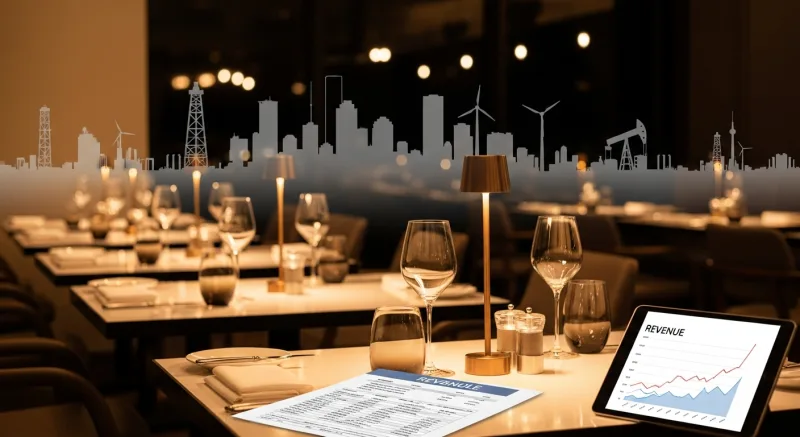
During the 2020 oil price crash, Houston restaurants that had negotiated processing rates could renegotiate as their volume dropped. Restaurants locked into POS processor agreements had no leverage — they paid the same inflated rate on declining volume, compounding the revenue loss.
KwickOS's processor freedom means you can respond to Houston's economic cycles: negotiate aggressive rates when volume is high and you have leverage, and switch to lower-fee processors during slower periods when every dollar matters more.
The Chinatown Factor: Bellaire and Beyond
Houston's Chinatown, centered on Bellaire Boulevard, is the second-largest Chinese food corridor in the country after LA's San Gabriel Valley. Hundreds of Chinese, Vietnamese, and pan-Asian restaurants process transactions in a community where multilingual service matters and cultural understanding of business practices is essential.
KwickOS serves this community with native Chinese language support. Processor choice means working with ISOs that serve the Chinese-American restaurant community specifically, offering competitive rates and culturally appropriate customer service. Toast's English-only customer support is a significant limitation for Bellaire restaurant owners who prefer conducting business in Mandarin or Cantonese.
Houston's Sprawl: The Multi-Location Advantage
Houston's sprawling geography means successful restaurants often expand to multiple locations across the metro area: a flagship in Montrose, a second location in The Woodlands, a third in Sugar Land. A three-location operation processing $2.4M/year in combined cards pays $10,320/year in lock-in excess.
KwickOS manages multi-location Houston operations with per-location processor flexibility. The Montrose location might negotiate a better rate from a downtown ISO. The Woodlands location might get a better deal from a suburban-focused processor. Each location optimizes independently while the owner manages everything from a single dashboard.
KwickOS is headquartered in Spring, Texas — just north of Houston at 6405 Cypresswood Dr #250. For Houston restaurant owners, that means local support from a company that understands the Houston market firsthand.
Hurricane Season and Offline Resilience
Houston's relationship with hurricanes is well documented. Harvey in 2017 shut down the city for weeks. Beryl in 2024 knocked out power and internet across the metro. When a tropical storm threatens Houston, internet infrastructure is among the first casualties.
A cloud-dependent POS fails when the internet fails. During the post-storm recovery period — when restaurants that can reopen are desperately needed by the community — a Toast restaurant without internet cannot process cards. It is effectively closed even if the physical building is fine.
KwickOS processes locally. If your restaurant has power and a payment terminal, you are operational. Internet connectivity is optional for core POS functions. During Harvey recovery, the restaurants that could process transactions first captured disproportionate revenue from a city desperate for normalcy. Offline capability is not a theoretical advantage in Houston — it is a tested, proven necessity.
The Houston BBQ and Crawfish Calculation
Houston's BBQ joints and crawfish restaurants face a unique processing challenge: large group orders with shared checks. A family of six ordering three pounds of crawfish, a brisket platter, sides, and drinks generates a $120-180 check that frequently gets split three ways.
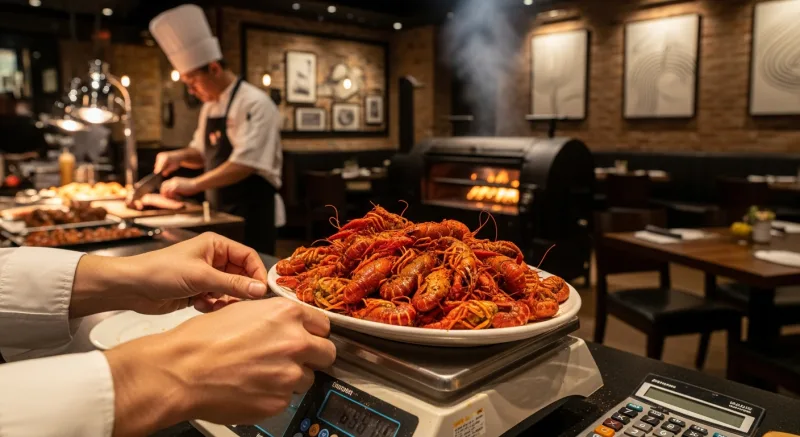
Each split creates an additional per-transaction fee. A restaurant processing 50 split checks per day at $0.15/split pays $7.50/day or $2,700/year in unnecessary split fees. With a processor that handles splits as a single settlement event, those fees disappear.
Houston Gift Cards and Corporate Dining
Houston's energy company executives drive a significant corporate dining and gift card market. A $150 gift card to a Galleria-area steakhouse is a standard client gift. A $500 gift card package for a corporate holiday party is common. Houston restaurant gift card programs can generate $80,000-150,000/year from corporate accounts alone.
KwickOS gift cards are processor-independent, ensuring that corporate gift card balances — which can exceed $75,000 at any given time — remain redeemable regardless of processor changes.
The Three-Year Cost for a Houston Restaurant
Houston restaurant: $800K/year in card sales:
Locked processor: ~$25,620/year
Negotiated processor via KwickOS: ~$22,180/year
Annual savings: $3,440
Three-year savings: $10,320
Houston restaurants already survive hurricanes, oil price swings, and one of the most competitive dining markets in America. You do not need to also survive payment processing lock-in. The fix is straightforward: a processor-agnostic POS, a competitive processor, and the freedom to negotiate.
Houston restaurant owners: your neighbor in Spring is ready to help. Call (888) 355-6996 or visit kwickos.com for a free demo.
KwickOS · 6405 Cypresswood Dr #250, Spring TX 77379
Turn One-Time Diners into Regulars: Built-In Gift Cards & Loyalty
Most POS companies treat gift cards and loyalty as afterthoughts — expensive add-ons that cost $50-100/month extra. KwickOS includes them at no additional charge because we believe they are essential revenue tools, not luxury features.
Gift Cards That Actually Drive Revenue
Here is what most restaurant owners do not realize: gift card buyers spend an average of 20-40% more than the card's face value. A $50 gift card typically generates $60-70 in actual spending. KwickOS supports both physical gift cards and electronic gift cards that customers can purchase, send, and redeem through their phones.
- Physical gift cards — branded plastic cards that sit on your counter and sell themselves during holidays
- E-gift cards — customers buy and send digitally via text or email, perfect for last-minute gifts
- Balance tracking — real-time balance across all your locations, no manual reconciliation
- Reload capability — customers top up their balance, creating a built-in prepayment habit
Loyalty Points That Keep Them Coming Back
KwickOS loyalty is not a punch card from 2005. It is a digital points system that tracks every dollar spent and automatically rewards your best customers:
- Earn points on every purchase — configurable ratio (e.g., $1 = 1 point, or $1 = 10 points)
- Tiered rewards — silver, gold, platinum levels to incentivize higher spending
- Birthday rewards — automated birthday offers that bring customers back during their special month
- Points-for-payment — customers redeem points directly at checkout, seamless for your staff
Membership Programs
For restaurants running VIP programs or subscription models (like monthly coffee clubs), KwickOS membership management handles recurring billing, exclusive pricing tiers, and member-only menu items — all within the same system your cashier already uses.
The bottom line: Toast charges $75/month extra for loyalty. Square's loyalty starts at $45/month. KwickOS includes gift cards, e-gift cards, loyalty points, and membership management in every plan. That is $540-900/year you keep in your pocket.

Tom Jin
Founder & CIO of KwickOS · Based in Spring, TX · 30 Years IT · 20 Years Restaurant Industry
Tom built KwickOS right here in the Houston metro area. With headquarters in Spring, TX and 5,000+ businesses served nationwide, KwickOS understands Houston's restaurant market because it lives here.