March 13, 2026 · 13 min read
How to Build a Loyalty Program That Actually Works (Not Just Punch Cards)
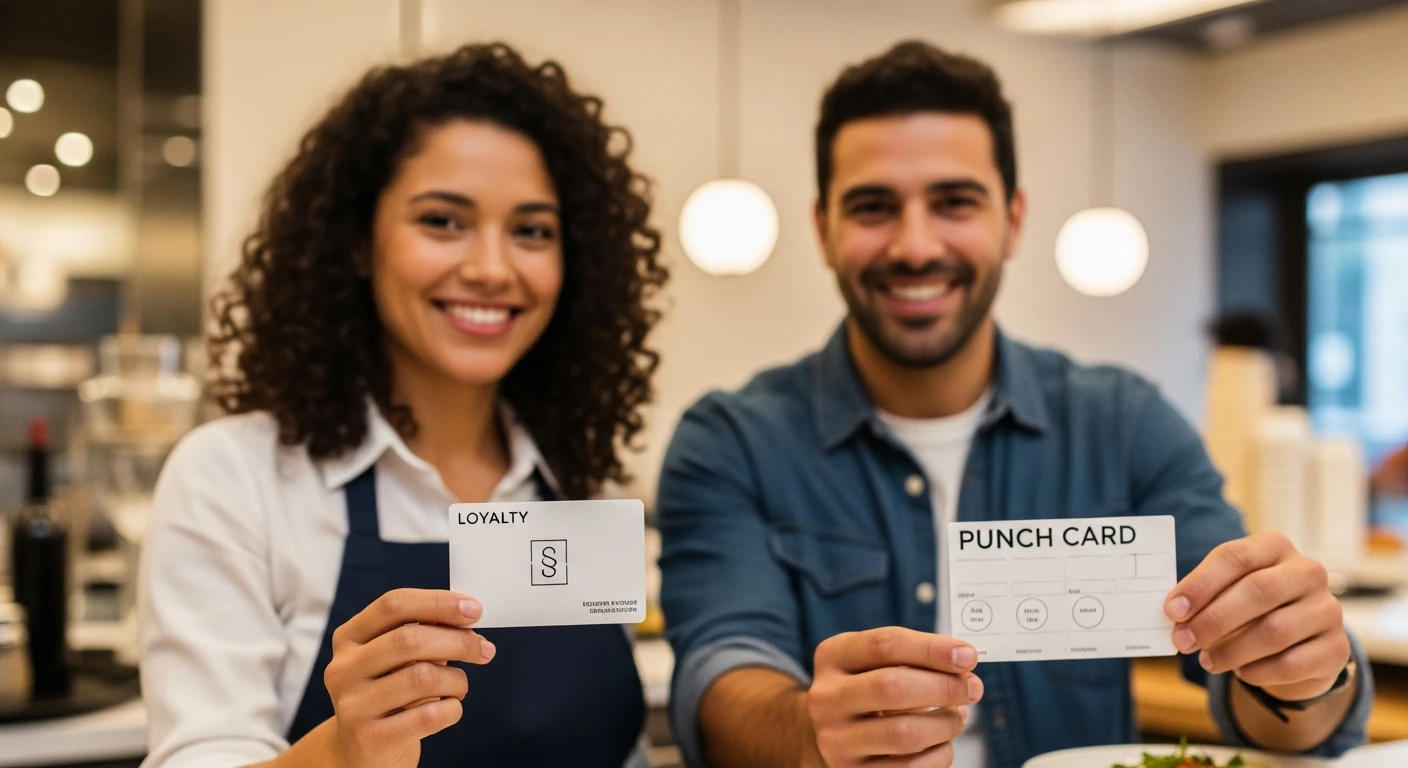
You are spending $85–$150 to acquire each new customer through ads and promotions. They walk in once, maybe twice—and then vanish. Meanwhile, the cardboard punch card taped to their fridge is doing absolutely nothing to bring them back. Sound familiar? You are not alone: 67% of small business owners say customer retention is their biggest growth challenge in 2026. The problem is not your food, your service, or your prices—it is that you have no system to keep customers coming back. The solution is a digital loyalty program that captures data, automates follow-up, and rewards your best customers differently from one-time visitors. Here is exactly how to build one in 30 days, step by step.
Key takeaway: Businesses with well-designed digital loyalty programs see a 28–35% increase in repeat visit frequency within 90 days. Tiered programs (Bronze/Silver/Gold) outperform flat-rate programs by driving 18% higher average spend among top-tier members. The cost to retain an existing customer is 5–7x less than acquiring a new one.
Why Punch Cards Fail (and What to Replace Them With)
Punch cards have been the default loyalty tool for small businesses since the 1970s. Buy 10 sandwiches, get 1 free. Simple, tangible, familiar. And deeply flawed.
Here is what is wrong with punch cards:
- No data: You have no idea who your loyal customers are, how often they visit, or what they order. The card tells you nothing.
- Fraud: Employees punch extra holes. Customers use pens. A 2019 study found that 15–20% of punch card redemptions show signs of fraud—costing the average small business $1,200–$2,400 per year in unearned freebies.
- Lost cards: The average consumer loses a loyalty card within 3 months. That is not retention—that is attrition disguised as a program.
- No communication channel: You cannot email a punch card holder. You cannot send them a birthday offer. You cannot notify them about a new menu item. The card is a dead end.
- Flat incentive: Every customer gets the same deal regardless of how much they spend. Your $200/week regular gets the same free sandwich as someone who visits twice a year.
But here is the good news. Digital loyalty programs solve every one of these problems. They capture customer data, prevent fraud, live on the customer’s phone (which they never lose), create a direct communication channel, and allow you to reward your best customers differently from casual visitors.
The Psychology of Loyalty: Why Points Beat Stamps
Points-based systems outperform stamp-based systems because of three well-documented psychological principles:
The Endowed Progress Effect
Research by Nunes and Dreze at the Wharton School found that giving customers a head start toward a reward dramatically increases completion rates. In their study, customers given a 12-stamp card with 2 stamps already filled completed the card at nearly double the rate (34% vs. 19%) of customers given a blank 10-stamp card—even though both required 10 purchases.
With a points system, you can give new members 50 “welcome points” that put them 10% of the way toward their first reward. This small gesture increases program engagement by 30–40%.
Variable Reward Psychology
B.F. Skinner’s research on variable ratio reinforcement schedules remains the gold standard for understanding habit formation. Slot machines, social media feeds, and the best loyalty programs all use the same principle: unpredictable rewards are more motivating than predictable ones.
Practical application: In addition to standard points earning, add surprise bonuses. “Congratulations! You earned double points on today’s visit.” These random bonuses trigger dopamine responses that fixed-ratio punch cards never can.
Loss Aversion
Kahneman and Tversky proved that people feel the pain of losing something roughly twice as intensely as the pleasure of gaining it. Points that expire create urgency: “You have 450 points expiring in 14 days—visit us to use them!” This is far more motivating than “Come back for 10% off.”
Now here is where it gets really interesting.
Designing Your Points System: The Math That Matters
The earn ratio and reward thresholds determine whether your program feels generous or stingy, whether it costs you too much or too little, and whether customers bother to participate.
Step 1: Set Your Earn Ratio
The earn ratio defines how many points a customer gets per dollar spent. The industry standard is 1 point per $1, but the right ratio depends on your average ticket size and margins.
Earn Ratio Examples by Business Type
| Business Type | Avg Ticket | Suggested Earn Ratio | Visits to First Reward |
|---|---|---|---|
| Coffee shop | $6.25 | 2 pts/$1 | 8 visits (100 pts = free drink) |
| Fast casual | $14.75 | 1 pt/$1 | 10 visits (150 pts = $10 off) |
| Full-service restaurant | $47.50 | 1 pt/$1 | 7 visits (300 pts = $20 off) |
| Nail salon / spa | $55 | 1 pt/$1 | 5 visits (250 pts = free add-on) |
| Retail | $34.50 | 1 pt/$1 | 8 visits (250 pts = $15 off) |
Step 2: Set Your Reward Thresholds
The first reward should be achievable within 5–10 visits. If it takes longer, customers abandon the program before experiencing any value. After the first reward, you can space subsequent tiers further apart.
A proven reward ladder for a full-service restaurant (1 pt/$1, avg ticket $47.50):
- 100 points: Free appetizer or dessert (~$8.50 value)
- 250 points: $15 off any entree
- 500 points: $30 off + priority seating
- 1,000 points: Free dinner for two (up to $85 value)
The key insight: your cost per reward should be 5–8% of the total spend required to earn it. A $15 reward earned after $250 in spending is a 6% cost—well within healthy margins for most restaurants.
Stay with me—this next part is where you start steering customer behavior without cutting into your margins.
Step 3: Add Bonus Point Multipliers
Multipliers let you steer customer behavior without discounting:
- Double points on slow days: “Earn 2x points every Tuesday” drives traffic on your weakest day—restaurants using this tactic report a 22% increase in Tuesday covers within 60 days
- Category bonuses: “3x points on wine bottles this month” moves inventory and increases ticket size by an average of $12–$18
- Time-based: “2x points on orders placed before 5 PM” shifts demand to off-peak hours
- Online ordering bonus: “1.5x points on KwickMenu online orders” drives digital adoption
The Power of Tiered Loyalty: Bronze, Silver, Gold
Flat loyalty programs treat all members equally. Tiered programs recognize and reward your best customers differently—and the data shows they work dramatically better.
A tiered structure creates three powerful effects:
- Aspiration: Bronze members can see what Silver members get, creating motivation to level up
- Recognition: Gold members feel valued, not just rewarded. Status is often more motivating than discounts.
- Protection: Your highest-value customers get VIP treatment that makes switching to a competitor feel like a downgrade
Sample Three-Tier Loyalty Program
| Tier | Qualification | Earn Rate | Perks |
|---|---|---|---|
| Bronze | Auto-enroll | 1 pt/$1 | Birthday reward, 50 welcome points |
| Silver | $500/year spend | 1.5 pts/$1 | All Bronze + free dessert monthly, early menu access |
| Gold | $1,200/year spend | 2 pts/$1 | All Silver + priority reservations, exclusive events, annual gift |
Let me break down why this math works in your favor. A customer spending $1,200/year at your restaurant is worth $6,000+ over five years. Giving them a free dessert every month ($8 cost × 12 = $96/year) and double points (an additional ~3% cost on spend, or $36/year) is a total investment of $132/year to retain a customer worth $1,200/year. That is a 9.1x return on your loyalty investment.
Birthday Offers: The Highest-ROI Loyalty Tactic
Birthday rewards are the single most redeemed loyalty offer across every industry. The redemption rate on birthday offers averages 35–45%, compared to 10–15% for general promotional emails.
Why birthdays work so well:
- Everyone has one, and everyone feels entitled to something special
- Birthday dinners typically bring groups of 3–6 people, multiplying the revenue impact
- The birthday customer rarely dines alone—your $10 free dessert offer generates a $150–$300 group ticket
- Birthdays are predictable, letting you plan and automate the entire campaign
And it gets even better. Best practices for birthday rewards:
- Send the offer 7 days before the birthday with a 14-day redemption window
- Make the reward specific and appealing: “A free slice of our Triple Chocolate Cake on your birthday” beats “10% off your birthday visit”
- Follow up 3 days before expiration if not redeemed
- Collect birth month (not full date) at enrollment to reduce friction—you only need the month
Loyalty Program Costs: Built-In vs. Standalone vs. Add-On
The cost of running a loyalty program varies wildly depending on whether it is built into your POS, bolted on as an add-on, or run through a separate third-party platform.
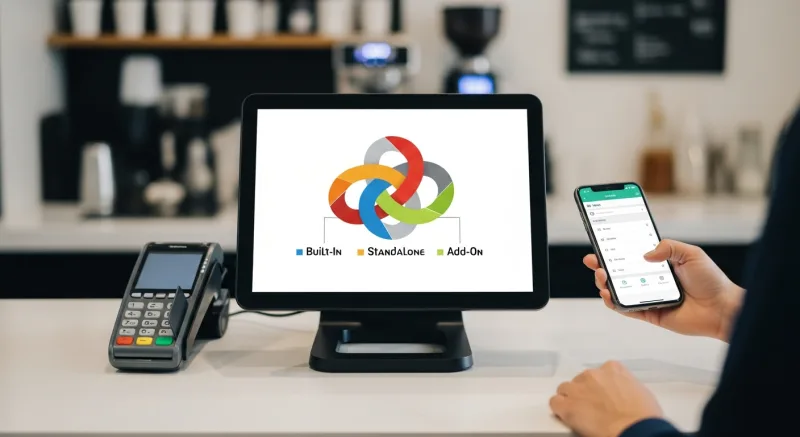
Here is the breakdown—and pay close attention to the annual totals:
| Platform | Monthly Cost | Annual Cost | POS Integration |
|---|---|---|---|
| KwickOS (built-in) | $0 | $0 | Native — automatic |
| Toast Loyalty | $75 | $900 | Native (Toast only) |
| FiveStars | $299 | $3,588 | Separate tablet required |
| Paytronix | $250–$500 | $3,000–$6,000 | API integration |
| Square Loyalty | $45 | $540 | Native (Square only) |
| Stamp Me | $58 | $696 | Manual / limited POS |
The hidden cost of standalone loyalty platforms is not just the subscription—it is the friction. When your loyalty system is separate from your POS, staff have to operate two systems. Customers have to carry a separate app or card. Points do not automatically apply at checkout. Every point of friction reduces enrollment and engagement.
Think about that for a moment. With KwickOS, loyalty is embedded directly in the point-of-sale transaction. The customer’s phone number is their loyalty ID. Points accrue automatically. Rewards apply at checkout without staff intervention. There is no second app, no separate tablet, and no monthly fee.
For a business like Diva Nail Beauty with 4 locations, the savings are substantial. FiveStars across 4 locations would cost $14,352/year. KwickOS loyalty across 4 locations costs $0—that is $14,352 saved annually, or $71,760 over 5 years.
Enrollment Strategy: Getting Customers Into the Program
A loyalty program is only as valuable as its enrollment rate. The industry benchmark is 25–35% of customers enrolled. The best programs hit 50%+. Here is how:
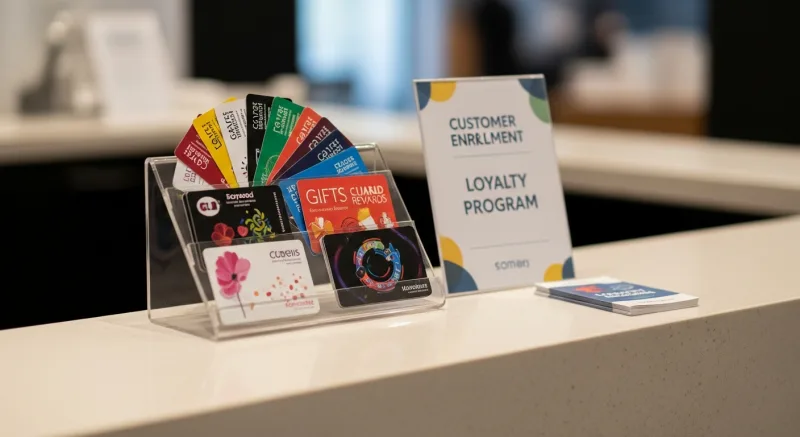
Make Enrollment Effortless
The number one enrollment killer is friction. If signing up takes more than 15 seconds, you lose half your potential members. The ideal enrollment flow:
- Cashier asks: “Would you like to earn points today? I just need your phone number.”
- Customer gives phone number (10 digits, no app download, no email required)
- System creates the account instantly and awards welcome points
- Customer receives a text confirmation with their point balance
That is it. No form to fill out, no app to download, no email to verify. You can collect additional information (name, birthday, email) on subsequent visits or via text prompts.
Train Every Staff Member
Enrollment rates live and die with your front-line staff. Every cashier, server, and host should ask every customer, every time. Scripts help:
- New customer: “Are you earning points with us? No? I can get you started in 10 seconds—just need your phone number.”
- Returning customer: “Welcome back! Let me pull up your points—what’s your phone number?”
- Near reward: “You’re only 30 points away from a free appetizer! You should be there after today’s visit.”
Here is the part most business owners overlook.
Incentivize Staff
Pay $0.50–$1.00 per new enrollment. A cashier signing up 10 customers per shift earns an extra $5–$10, and you gain 10 trackable, marketable customer relationships. A single enrolled customer who visits twice more because of the loyalty program generates $30–$95 in additional revenue—far more than the $1 enrollment bonus.
Automated Campaigns That Drive Repeat Visits
Once customers are enrolled, your loyalty system should work on autopilot to bring them back. These are the five automated campaigns every loyalty program needs:
1. Welcome Series
Triggered: Immediately after enrollment.
Message: “Welcome to [Restaurant] Rewards! You have 50 bonus points. Earn [X] more to unlock your first reward.”
Goal: Set expectations and create initial engagement.
2. Points Balance Reminder
Triggered: 14 days after last visit.
Message: “You have [X] points at [Restaurant]! You’re [Y] points away from [reward].”
Goal: Remind lapsed customers of their progress and create return urgency.
3. Birthday Offer
Triggered: 7 days before birth month.
Message: “Happy Birthday from [Restaurant]! Enjoy a free [specific item] on us. Valid through [date].”
Goal: Drive a high-value group visit with a low-cost offer.
4. Win-Back Campaign
Triggered: 45 days since last visit.
Message: “We miss you! Here’s 50 bonus points to welcome you back. Visit by [date] to claim them.”
Goal: Re-engage customers before they become permanently lapsed.
5. Tier Upgrade Notification
Triggered: When customer reaches a new tier.
Message: “Congratulations! You’ve reached Silver status. You now earn 1.5x points on every visit and get a free dessert every month.”
Goal: Reinforce the value of continued loyalty and create a sense of achievement.
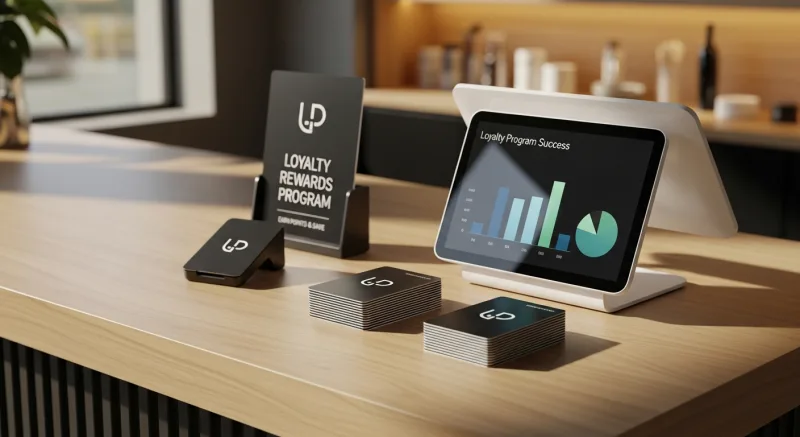
Measuring Loyalty Program Success: The 5 Metrics That Matter
If you cannot measure your loyalty program, you cannot improve it. Track these five metrics monthly:
| Metric | What It Measures | Target |
|---|---|---|
| Enrollment rate | % of transactions linked to a loyalty member | 35%+ within 6 months |
| Visit frequency | Average visits/month for loyalty members vs. non-members | Members visit 2x+ more often |
| Average ticket (member vs. non) | Do members spend more per visit? | Members spend 15–20% more |
| Reward redemption rate | % of earned rewards that get redeemed | 60–75% (too high = too generous, too low = not engaging) |
| Churn rate | % of members with no visit in 90 days | Below 30% |
What does this look like in practice? Use your Customer Lifetime Value Calculator to see exactly how loyalty impacts your bottom line.
Loyalty Across Industries: Restaurant, Retail, and Beauty/Spa
While the core mechanics are the same, the best loyalty programs adapt to the specific rhythms of each industry.
Restaurant Loyalty
Restaurants have the highest visit frequency potential of any brick-and-mortar business. A loyal restaurant customer can visit 2–4 times per week, spending $2,400–$9,600 annually. Focus on:
- Low reward thresholds for the first reward (achievable in 3–5 visits)
- Day-of-week multipliers to smooth demand across the week
- Online ordering integration—loyalty points should accrue on KwickMenu orders, not just dine-in
- Catering bonuses for high-value orders over $250
Retail Loyalty
Retail customers visit less frequently (averaging 1.8 visits/month) but spend more per visit. Optimize for:
- Higher earn ratios to make points accumulate faster despite fewer visits
- Product-specific bonuses to move seasonal inventory
- VIP early access to sales and new arrivals
- Referral bonuses (retail customers are 3.2x more likely to recommend to friends than restaurant customers)
Beauty/Spa Loyalty
Beauty and spa businesses have predictable visit cycles (nails every 2–3 weeks, hair every 6–8 weeks). Design around:
- Service add-on rewards rather than discounts: “Free gel upgrade” ($7 cost) instead of “$10 off”
- Referral bonuses—beauty services are highly referral-driven, with 41% of new clients coming from word-of-mouth
- Commission-friendly structure: rewards should not cut into technician commissions. Diva Nail Beauty uses KwickOS to track commissions and loyalty simultaneously, ensuring technicians earn their full commission even on reward redemptions.
- Booking reminders tied to loyalty: “It’s been 3 weeks since your last visit—book now and earn double points”
Multi-Location Loyalty: One Program, Every Store
For businesses with multiple locations, the loyalty program must work seamlessly across all of them. Customers expect to earn points at one location and redeem at another.
This is where standalone loyalty apps break down. FiveStars or Stamp Me might work fine for a single location, but syncing them across 5, 10, or 19 locations introduces complexity, latency, and often requires separate subscriptions per location—at $299/month each, that is $3,588–$68,172 per year.
KwickOS handles multi-location loyalty natively. When Crafty Crab rolls out a loyalty program across their 19 stores, every customer’s points and tier status sync in real time across all locations. A customer who earns Gold status at the downtown location gets Gold treatment at every Crafty Crab. The corporate office sees unified analytics across all stores, while each location manager can run location-specific promotions and multipliers.
The hybrid local+cloud architecture means loyalty lookups happen in under 1 millisecond locally, with cloud sync for cross-location consistency. Even if a location loses internet connectivity, the loyalty system continues to function—points accrue locally and sync when the connection is restored.
Common Loyalty Program Mistakes
After deploying loyalty programs for thousands of businesses, these are the mistakes we see most often:
- Rewards too hard to earn: If the first reward takes more than 10 visits, most customers abandon the program. Front-load the value.
- Rewards too easy to earn: If everyone gets a free item every other visit, your program is just a standing discount. Aim for 5–8% reward cost on qualifying spend.
- No communication: A loyalty program without automated messaging is a database nobody looks at. Set up the five automated campaigns listed above from day one.
- Staff do not ask: If your team does not actively enroll customers, enrollment stalls at 10–15%. Make it part of every transaction.
- One-size-fits-all: Not tiering your program means your best customers feel unrecognized while your least valuable customers get the same treatment. Tiers fix this.
- Separate system: Running loyalty on a different platform than your POS creates friction for staff and data gaps for you. Integrated is always better.
Launching Your Loyalty Program: A 30-Day Plan
Days 1–7: Design
- Set your earn ratio based on average ticket size
- Define reward thresholds (first reward achievable in 5–8 visits)
- Create tier structure if using tiers (recommended for any business with regulars)
- Set up birthday offer and welcome points
- Configure point expiration rules (12 months recommended)
Days 8–14: Staff Training
- Train every front-line employee on the enrollment process
- Practice enrollment scripts until they sound natural
- Set enrollment goals: each employee should enroll 5–10 customers/day
- Establish staff incentive program ($0.50–$1 per enrollment)
Days 15–21: Soft Launch
- Begin enrolling customers at every transaction
- Monitor enrollment rates by employee and shift
- Activate automated welcome message
- Place signage: “Ask about our rewards program”
Days 22–30: Full Launch and Optimize
- Activate all automated campaigns (balance reminders, win-back, birthday)
- Post about the program on social media
- Email your existing customer list about the new program
- Review first-month metrics and adjust earn ratios or thresholds if needed
The Bottom Line
A loyalty program is not a perk. It is a customer retention engine. The data is unambiguous: businesses with well-designed digital loyalty programs see 28–35% more frequent visits, 15–20% higher average tickets, 30% lower churn, and dramatically better customer data than businesses without one.
The biggest barrier to launching a loyalty program used to be cost. Standalone platforms charge $299–$500/month. POS add-ons charge $45–$75/month. For a small business owner, spending $3,600–$6,000 per year on loyalty software is a hard sell—especially when margins are already tight at 3–9% for most restaurants.
KwickOS eliminates that barrier entirely. Loyalty points, tiered rewards, automated campaigns, birthday offers, and multi-location sync are all included at no additional cost. Your POS already has every customer transaction—it should use that data to bring customers back, not charge you extra for the privilege.
Ready to replace your punch cards with a real loyalty program? Call us at (888) 355-6996 or request a free demo to see KwickOS loyalty in action.