Best All-in-One POS System for San Diego Restaurants
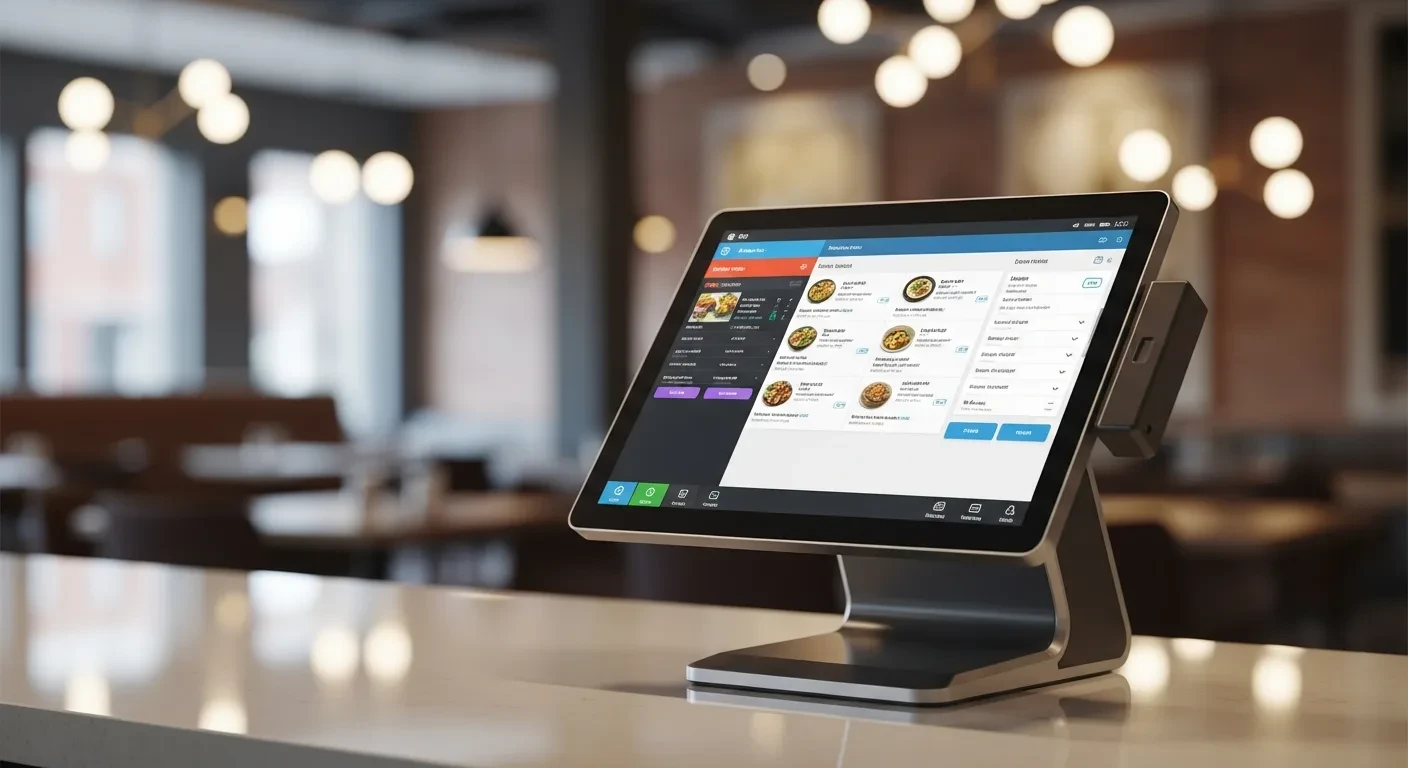
Published March 2026 · 10 min read
San Diego's restaurant industry operates in a setting so consistently pleasant that operators face a challenge most cities would envy: year-round outdoor dining is not a seasonal bonus but a permanent expectation. With 266 sunny days per year, 150-plus craft breweries, a binational food culture shaped by the world's busiest land border crossing 17 miles south, and a customer base split between military personnel, university students, tech workers, and tourists, San Diego's 7,200 restaurants generated $14.1 billion in revenue in 2025. The diversity of concepts and the intensity of competition mean that technology choices ripple through every aspect of operations.
Craft Beer Capital: When Your Restaurant Is Also a Brewery
San Diego has more craft breweries per capita than any major American city. North Park, Miramar, and the Barrel District in East Village have become nationally recognized beer destinations. But here's what POS buying guides miss: most of these breweries also serve food, and the hybrid brewery-restaurant model creates technology requirements that neither a pure restaurant POS nor a pure taproom POS handles well.
A brewery tasting room needs to manage flight pours (four to six small samples billed as one item), track keg inventory by the ounce across 20-30 rotating taps, handle crowler and growler fills priced by volume, and manage the transition from tasting room hours to kitchen hours when the food menu activates at noon. The POS needs to know that Tap 7 has 45 pints remaining and automatically 86 it from the digital menu board when it kicks, not after the next three customers order something that doesn't exist anymore.
Real-time tap inventory tied to the POS display is the difference between efficient service and a bartender who has to walk to the cooler to check keg levels every time someone asks what's fresh. KwickOS connects inventory depletion to menu display so that digital signage through KwickSign updates automatically when a keg blows. The kitchen display system treats brewery and kitchen orders as part of the same workflow, so a table ordering a flight and fish tacos doesn't generate two separate tickets that arrive at the table ten minutes apart.
Brewery merchandise complicates things further. Branded glassware, t-shirts, hats, and packaged beer to-go all need to run through the same POS with different tax treatments. Food and prepared beverages carry different sales tax rates in California than retail merchandise. A POS that can't distinguish between a pint consumed on-premises, a crowler taken to-go, and a branded pint glass purchased as merchandise will generate tax reporting errors that compound across a year of sales.
Gaslamp Quarter: Nightlife Velocity and the Two-Shift Restaurant
The Gaslamp Quarter's 16-block historic district operates on a split personality. Lunch and early dinner serve the downtown office crowd and convention visitors from the adjacent San Diego Convention Center. After 9pm, the same restaurants transform into nightlife destinations where the bar revenue overtakes food revenue and the pace of service shifts from leisurely courses to rapid-fire cocktail rounds.
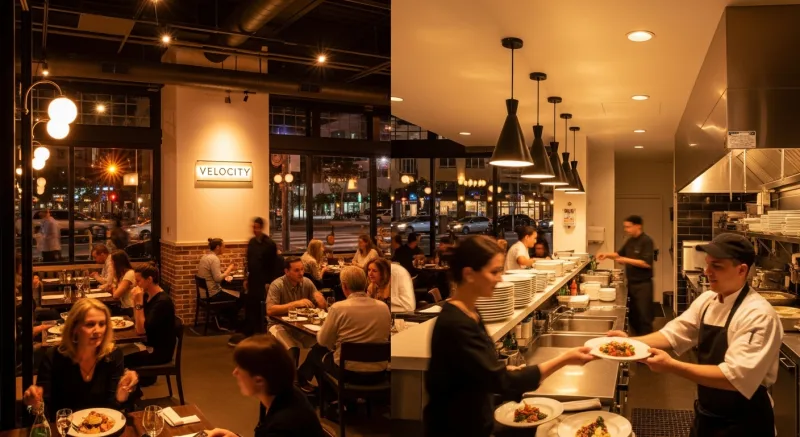
This dual-mode operation requires a POS that transitions between restaurant and bar configurations without a system restart or manual menu swap. During dinner service, the interface prioritizes table management, course pacing, and full food menu navigation. When the kitchen closes at 10pm, the interface should automatically switch to a bar-optimized layout: fast drink selection, tab management for 40 simultaneous open tabs, and age verification prompts that comply with California's ABC enforcement, which is notably aggressive in the Gaslamp.
Tab management is the critical Gaslamp feature. On a Friday night, a bartender might have 30-50 open tabs, each started with a credit card hold. Customers move between the bar, the patio, and the dance floor, adding drinks sporadically. At closing, every tab needs to settle quickly, with automatic gratuity options displayed clearly because California law requires specific disclosure language for suggested tip amounts. A POS that makes closing 40 tabs take 20 minutes ties up the bartender while the remaining customers get impatient and dispute charges.
KwickOS tab management allows one-swipe card holds, rapid drink entry by abbreviation or grid tap, and batch closing with customizable auto-grat prompts. The fingerprint authentication means each bartender's tabs are linked to their login without the possibility of one bartender accidentally closing another's tabs, which prevents the commission and tip disputes that plague high-volume bar operations.
Fish Taco Culture and the Casual Counter Model
The fish taco is to San Diego what the cheesesteak is to Philadelphia: a civic identity food item served at every price point from a $3 street taco to a $16 seared ahi version at a waterfront restaurant. The casual counter-service fish taco shop is a foundational San Diego restaurant format, and it operates with razor-thin margins where POS efficiency directly impacts profitability.
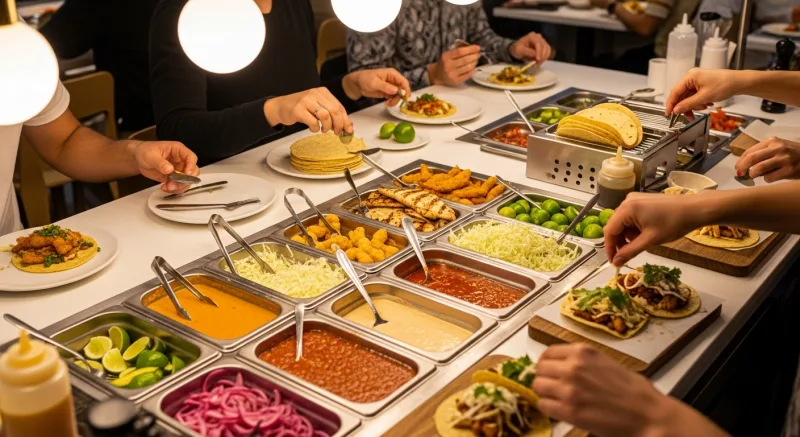
A typical fish taco counter, the kind you find on Garnet Avenue in Pacific Beach or along the Ocean Beach pier, does 400-600 transactions on a summer Saturday with an average ticket of $11. That's $4,400 to $6,600 in daily revenue at margins that assume every transaction processes quickly and every ingredient is tracked accurately. A POS that adds three seconds per transaction costs 30 minutes of throughput over the course of the day, which translates to roughly 25 lost orders or $275 in missed revenue.
Inventory tracking matters because fish taco operations deal with highly perishable ingredients with significant price volatility. Mahi-mahi prices can swing 30% in a week depending on catch volumes. The POS inventory module needs to track actual cost per batch, not a static price entered during setup, so that the operator sees real-time margin data and can adjust pricing or switch to a less expensive catch before the weekly P&L reveals a problem that already happened.
KwickOS inventory management allows cost updates that immediately recalculate margin projections across affected menu items. When the price of mahi-mahi spikes, the operator sees the impact on fish taco margins within minutes and can make an informed decision to absorb the cost, raise prices, or promote the shrimp taco special instead.
Cross-Border Influence: Tijuana and the Binational Kitchen
The San Ysidro port of entry processes approximately 70,000 northbound crossings daily, making it the busiest land border crossing on Earth. This flow of people brings culinary influence that shapes San Diego's restaurant scene in ways that go far beyond standard Mexican food. Baja Med cuisine, which fuses Mexican, Mediterranean, and Asian flavors, originated in Tijuana restaurants and has migrated north into San Diego kitchens. Birria tacos, currently trending nationally, have been a San Diego staple for years because the Tijuana connection kept them present long before they went viral on social media.
For restaurant operators, the binational dimension creates a bilingual operational requirement that's deeper than translating a menu. Kitchen teams in many San Diego restaurants commute from Tijuana, crossing the border daily. Communication in the kitchen happens in Spanish by default, and the POS needs to match that reality on kitchen display screens, prep lists, and shift scheduling interfaces. KwickOS native Spanish language support extends to every operational surface, not just the customer-facing ones, which reflects how binational San Diego kitchens actually function.
The cross-border dynamic also creates a competitive pricing challenge. San Diego diners who regularly eat in Tijuana, where a complete dinner for two might cost $25, have a calibrated sense of value for Mexican cuisine. A San Diego restaurant charging $18 for a plate of mole isn't just competing with the spot down the block. It's competing with the memory of a $6 plate that was just as good on Avenida Revolucion. Operators managing this expectation gap need tight cost control and accurate menu engineering data from their POS to ensure every dish is priced at the sweet spot between profitability and the customer's mental Tijuana benchmark.
UCSD, Military, and the Two-Economy Customer Base
San Diego's two largest employers are the University of California San Diego and the United States Navy. UCSD's 45,000 students and 30,000 staff populate La Jolla and the surrounding UTC area. Naval Base San Diego, the principal homeport of the Pacific Fleet, along with Marine Corps bases Camp Pendleton and MCAS Miramar, station over 100,000 active-duty personnel and their families across the county.
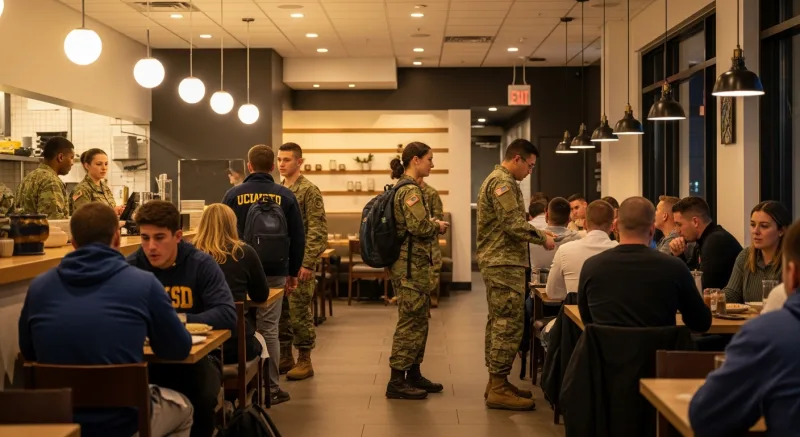
These two demographics represent vastly different dining behaviors. UCSD students and staff skew toward adventurous eaters who discover restaurants through Instagram and TikTok, pay with mobile wallets, and expect seamless digital ordering. Military families tend toward value-conscious dining with a preference for familiar formats, often paying with debit cards and using cash more frequently than the university crowd.
Restaurants in transition zones like Clairemont, Kearny Mesa, and Mira Mesa serve both populations and need a POS that doesn't force a choice between optimizing for one or the other. QR-code ordering appeals to the university crowd. A traditional counter with a clearly displayed menu board appeals to military families. Both need to work simultaneously from the same POS system with the same menu, same pricing, and same kitchen workflow.
KwickOS supports concurrent ordering channels without requiring separate configurations. The QR code scan opens KwickMenu's mobile interface while the counter terminal runs the traditional POS layout. Both feed into the same order queue, and the kitchen display makes no distinction between how the order was placed, only when it needs to be ready.
Year-Round Patio Dining and the Outdoor POS Challenge
In most American cities, patio dining is a seasonal bonus. In San Diego, it's the default. Restaurants build their floor plans, seating capacity, and revenue projections around outdoor space. The city's outdoor dining permits expanded significantly during COVID and most have been made permanent, meaning that a restaurant's outdoor section often equals or exceeds its indoor capacity.
This creates POS considerations that inland cities don't face. Hardware stationed outdoors deals with direct sun glare, salt air corrosion in coastal locations, and the occasional marine layer moisture. Screen brightness needs to exceed standard indoor levels. Hardware needs protective casings that still allow touch sensitivity. Wireless connectivity across a patio that extends 50 feet from the building needs to be reliable because running cables across a patio is a trip hazard and code violation.
Server efficiency on large patios is also a POS design issue. A server covering a 15-table outdoor section at a restaurant on Shelter Island walks significantly more per shift than one covering the same number of indoor tables. Handheld POS devices that allow tableside ordering and payment reduce each table's service cycle by three to five minutes, which across a full shift with 60-80 table turns saves the server over three hours of walking back and forth to a fixed terminal. That's three hours converted into better service, faster turnover, and higher tips.
KwickOS mobile terminal support allows servers to carry a handheld device that sends orders directly to the kitchen display from tableside. Payment processing happens at the table, eliminating the card-goes-away-and-comes-back cycle that adds two minutes per table and creates the security concerns that California consumer protection laws increasingly address.
Farm-to-Table and Inventory Volatility
San Diego's proximity to the agricultural regions of Oceanside, Fallbrook, and the Imperial Valley has fueled a farm-to-table movement that rivals Portland or Burlington. Restaurants sourcing from local farms deal with ingredient availability that changes weekly. The avocados from Fallbrook are perfect this week and unavailable next week. The Carlsbad strawberries are in season for three months and then gone.
A POS inventory system that accommodates volatile ingredient availability lets operators update menu items in real-time, marking dishes as available or unavailable based on what the morning farm delivery contains. Digital menu boards through KwickSign update instantly when the kitchen 86s a dish, and the online ordering page through KwickMenu removes the item simultaneously. No more customers ordering the heirloom tomato salad online only to get a phone call saying it's not available today.
San Diego POS Essentials
Brewery-restaurant hybrid support: Flight pricing, tap inventory tracking, merchandise tax separation, and combined food-and-beverage workflow in a single system.
High-speed bar tab management: Gaslamp nightlife demands 50-tab simultaneous management with rapid batch closing and California-compliant gratuity disclosure.
Bilingual kitchen operations: Native Spanish on kitchen displays is a functional necessity in a binational restaurant workforce, not an accessibility feature.
Weather-resistant outdoor hardware support: Year-round patio operations need POS hardware and connectivity that survive sun, salt air, and marine layer.
Dynamic inventory and menu management: Farm-to-table sourcing and volatile fish pricing require real-time cost tracking and instant menu updates across all channels.
Multi-channel concurrent ordering: University QR-code orderers and military counter customers need to coexist in the same system without workflow compromises.
San Diego's perfect weather creates a year-round dining economy that rewards operators who sweat the operational details even when the climate doesn't make them sweat. To see how KwickOS handles San Diego-specific challenges, reach out at (888) 355-6996 or KwickOS.com.

Tom Jin
Founder & CIO of KwickOS · 30 Years IT · 20 Years Restaurant Industry
Tom built KwickOS after decades running restaurants and IT companies. Today KwickOS serves 5,000+ businesses across 50 states.