Best All-in-One POS System for San Antonio Restaurants
Published March 2026 · 10 min read
San Antonio wears many hats at once. It is the seventh-largest city in America. It is the number one tourist destination in Texas, drawing 40 million visitors per year. It is home to the densest concentration of military installations in the nation. And it may be the only city where a legitimate argument over which gas station sells the best breakfast taco can fracture a lifelong friendship. All of these identities converge in a restaurant market that produced $9.8 billion in food service revenue in 2025, and every one of them shapes what a restaurant operator needs from a POS system.
There is also something no other city on any POS buying guide can claim: KwickOS headquarters sits 200 miles up I-45 in Spring, Texas. Same-day on-site support isn't a marketing promise. It's a three-hour drive.
The River Walk Economy
The San Antonio River Walk is a 15-mile network of walkways along the San Antonio River, one level below the city streets, lined with restaurants, bars, hotels, and shops that collectively form the most visited attraction in Texas. Restaurants on the River Walk operate in a tourism economy where 80% of weekday diners are visitors who will never return and 60% of weekend diners are locals celebrating something. These two audiences want different things from the same restaurant, and the POS needs to accommodate both simultaneously.
Tourist diners are unfamiliar with the menu, more likely to ask questions, and more likely to order safe choices like fajitas or margaritas. They need clear, visual menus on kiosks or QR-accessed mobile pages that include photos and descriptions. Locals already know what they want and find the elaborate menu browsing experience patronizing. A POS that drives both customer types through a single ordering flow frustrates one group or the other.
KwickOS allows operators to configure different ordering interfaces for the same menu. A QR code on the tourist-facing patio tables opens a visual, photo-rich online ordering page through KwickMenu. The bar area frequented by regulars uses a streamlined counter terminal where the bartender punches in orders by abbreviation. Both feed into the same kitchen display, same inventory system, same reporting dashboard. The customer experience differs, but the backend is unified.
River Walk restaurants also face a capacity management challenge unique to the location. During Fiesta San Antonio in April, the ten-day celebration draws 3.5 million visitors and turns the River Walk into a continuous parade route. Restaurants that normally seat 80 might set up temporary outdoor service for 200, requiring portable POS terminals that connect to the same system without a two-week setup process. When Fiesta ends, those terminals come down until next year.
Five Military Bases and the Dining Patterns They Create
San Antonio hosts Joint Base San Antonio, which encompasses Fort Sam Houston, Lackland Air Force Base, and Randolph Air Force Base, along with Camp Bullis and Camp Stanley. Combined military and civilian personnel at these installations exceed 80,000, making JBSA the largest military base complex in the Department of Defense by employee count.
Military dining patterns are distinct from civilian patterns in ways that affect POS requirements. Pay cycles create predictable surges: the 1st and 15th of each month see 25-30% higher restaurant traffic near bases as service members receive their twice-monthly pay. The POS system benefits from historical analytics that help operators staff appropriately for these predictable peaks rather than being caught short every two weeks.
Military families dining off-base tend to be younger, larger families on fixed incomes. Value-oriented menus, combo deals, and family-size portions dominate near-base dining. The POS needs to handle complex combo pricing where substitutions are common: swapping fries for onion rings at an upcharge, adding a drink to convert an entree to a combo at a discount, applying a military discount on top of a combo price. If each of these requires a manager override, the line backs up and the family goes to the Whataburger next door.
KwickOS handles layered discounts and combo logic natively. The system calculates the most favorable combination of applicable discounts automatically, so a military family using a loyalty reward on a combo meal with a substitution gets the correct price without the cashier doing mental math or calling a manager.
Catering is another military-adjacent opportunity that requires POS support. Unit events, promotion ceremonies, and holiday parties create catering orders that range from 50 to 500 people. A POS with integrated catering management, including advance ordering, deposit tracking, and day-of preparation checklists displayed on the kitchen screen, captures revenue that restaurants using separate catering software often lose to organizational friction.
Breakfast Taco Culture and the Dawn Economy
San Antonio's breakfast taco scene isn't a meal category. It's a civic institution. Restaurants and taquerias that specialize in breakfast open at 5:00 or 6:00 AM and see their peak between 6:30 and 8:30 AM as commuters, construction crews, nurses finishing night shifts, and students heading to class all converge on counter windows and drive-throughs. The breakfast taco economy generates an estimated $500 million annually in San Antonio according to the San Antonio Express-News.
The operational characteristics of a breakfast taco operation demand specific POS capabilities. Order volume is extremely high with very low average tickets, often $4-8 per transaction. Speed is paramount because these are commuters on a schedule, not tourists browsing. The menu is deceptively complex: a barbacoa and egg taco on flour with salsa verde, a bean and cheese on corn with pico, a carne guisada on flour no onions. Each taco is custom-built from a matrix of proteins, additions, tortilla types, and salsa choices.
The POS needs to make building these custom combinations as fast as the person behind the counter can hear the order. One tap for protein, one tap for tortilla, one tap for salsa, done. Not three screens of options. Not a search bar. A grid that mirrors how the line cook assembles the taco. KwickOS's configurable layout means the interface maps to the physical assembly process, reducing the cognitive gap between hearing "barbacoa egg flour verde" and entering it into the system.
Many breakfast taco spots are cash-heavy operations that transition to card payments gradually. A POS that works equally well in cash-only mode and full-payment mode, without requiring a different configuration, matches the evolution of these businesses without forcing a technology migration when they start accepting cards.
HEB Competition and the Prepared Foods Challenge
H-E-B, the Texas-based grocery chain, is headquartered in San Antonio and operates 95 stores in the metro area. Uniquely among grocery chains, H-E-B has invested heavily in prepared food departments that directly compete with restaurants. The H-E-B on South Flores Street has a full sushi bar. The Lincoln Heights location has a wood-fired pizza oven. Multiple stores offer breakfast tacos that San Antonio residents genuinely rank alongside dedicated taco shops.
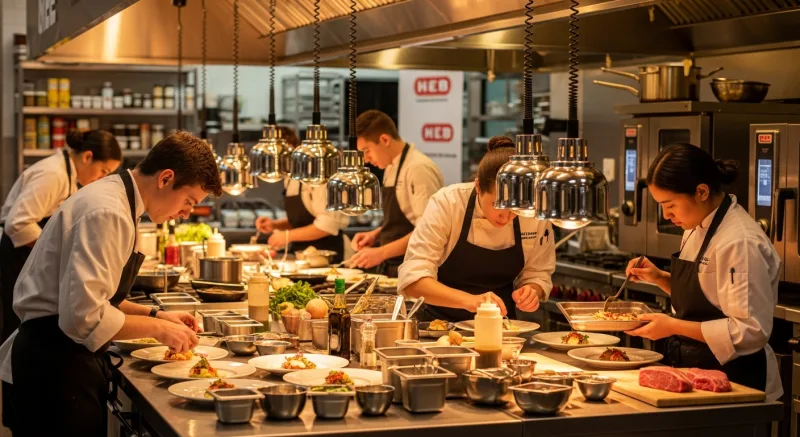
This means San Antonio restaurants compete not just with other restaurants but with a beloved grocery chain that has massive purchasing power, longer operating hours, and the convenience of letting customers grab dinner while buying groceries. Restaurants that survive this competition differentiate on experience, customization, and speed, all areas where POS technology provides leverage.
A restaurant that offers online ordering with 15-minute pickup, loyalty rewards that H-E-B's prepared food counter cannot match, and personalized order history that auto-suggests a regular's usual creates switching costs that keep customers from defaulting to the H-E-B hot bar. KwickOS's integrated loyalty and online ordering through KwickMenu builds these customer relationships digitally while the food builds them emotionally.
Same-Day Support: The Spring, Texas Advantage
Every POS vendor promises excellent support. Most deliver a phone queue and a remote diagnostic session that resolves 60% of issues while leaving the other 40% waiting for a technician to be dispatched from wherever the nearest authorized service partner happens to be. For national platforms, that dispatch might originate from Dallas, Austin, or sometimes out of state entirely.
KwickOS operates from Spring, Texas, approximately 200 miles north of San Antonio via I-45. A critical hardware issue reported in the morning can have a KwickOS technician on-site in San Antonio by afternoon. This isn't a theoretical capability; it's a logistical reality based on geography. For restaurant operators who have experienced the frustration of being told a technician is "two to three business days out" during their busiest week, the proximity of KwickOS headquarters to San Antonio transforms support from a cost center into a competitive advantage.
The seven-to-ten-day purchase-to-installation timeline that KwickOS maintains is feasible partly because of this regional proximity. Installation itself takes one to three hours, and staff training takes one to two hours. A San Antonio restaurant can go from signing a contract to processing live transactions in under two weeks, with a physical human performing the installation rather than shipping a box with a setup guide.
This proximity extends to the reseller model. San Antonio entrepreneurs interested in becoming KwickOS resellers can visit the Spring headquarters, see the technology in a live demonstration environment, and receive hands-on training within a day trip. The reseller program lets local business people earn recurring revenue from card processing residuals while KwickOS handles installation and ongoing support. For someone with restaurant industry connections in San Antonio, this creates a business opportunity backed by a company close enough to provide tangible partnership rather than a remote vendor relationship.
Fiesta San Antonio and Seasonal Event Management
Fiesta San Antonio in April is the city's largest annual event, but the event calendar runs deep: Livestock Show and Rodeo in February, Battle of Flowers Parade, Luminaria arts festival, Diwali SA, and dozens of smaller food festivals throughout the year. Each event creates localized demand spikes that restaurants near event routes or venues need to capture.
Event-day operations require a POS that supports rapid deployment. A restaurant on Commerce Street during Fiesta might set up two additional outdoor stations that morning and tear them down that night. Each station needs to connect to the central system, accept all payment types, and send orders to the kitchen queue just like the permanent terminals inside. If adding a temporary terminal requires calling tech support, waiting for a license key, and running a 30-minute setup wizard, the lunch rush is over before you're operational.
KwickOS's approach allows additional terminals to connect to the existing system without provisioning delays. The terminal authenticates, downloads the current menu, and starts processing. When the event ends, the terminal disconnects and the system adjusts. This flexibility mirrors how San Antonio restaurants actually operate during their biggest revenue opportunities.
Financial Realities for San Antonio Operators
San Antonio offers lower operating costs than Dallas, Houston, or Austin, with average commercial lease rates of $18-24 per square foot compared to $28-35 in Austin. This cost advantage attracts new restaurant openings, creating fierce competition that keeps margins tight. The average restaurant net profit margin in San Antonio runs 4-6% according to Texas Restaurant Association data, which means a $700,000 annual revenue restaurant takes home $28,000 to $42,000 after all expenses.
At these margins, credit card processing fees represent a disproportionate burden. That same $700,000 restaurant with 65% card payment at a 3.0% effective rate pays $13,650 annually in processing, roughly a third of the owner's take-home pay. Reducing the effective rate to 2.3% through processor-agnostic POS flexibility saves $3,185 per year. That's a 7.6% increase in net profit from a single technology decision.
For multi-location San Antonio operators, the math compounds. A three-location group doing $2.1 million combined in card sales saves approximately $14,700 annually. Over five years, that's $73,500, enough to fund a full location renovation or open a fourth store.
What San Antonio Restaurants Should Demand
Tourist and local dual-mode ordering: The River Walk customer is not the Military Drive customer. Both need to feel like the ordering experience was designed for them.
Rapid temporary terminal deployment: Fiesta, rodeo, and festival seasons require additional POS stations that go live in minutes, not hours.
Speed-optimized interfaces for high-volume counter service: Breakfast taco operations processing 300 transactions before 9am need sub-second interaction per menu item.
Layered discount and combo logic: Military discounts, loyalty rewards, combo pricing, and coupon stacking should resolve automatically without manager intervention.
Regional on-site support: Proximity matters when your POS goes down on a Saturday night. A support team three hours away beats one three days away.
Processing freedom for margin protection: At San Antonio's thin margins, every basis point on processing fees translates directly to owner income.
San Antonio's restaurant market combines tourism volume, military stability, cultural richness, and value-conscious local diners into one of the most interesting operational environments in the country. The POS system you choose either leverages that environment or struggles against it. Talk to KwickOS at (888) 355-6996 or KwickOS.com about building a system configuration that's as San Antonio as a 6am barbacoa taco from your favorite spot on Nogalitos.
The Revenue Features Most "All-in-One" Systems Charge Extra For
When POS companies say "all-in-one," they rarely mean gift cards and loyalty are included. Toast charges $75/month for their loyalty add-on. Square Loyalty starts at $45/month. Clover requires third-party apps. KwickOS includes all of these natively — zero extra cost.
Physical & Electronic Gift Cards
Sell branded physical cards at the register. Send e-gift cards via text or email. Track balances across every location in real time. Gift card holders spend 20-40% more than face value — this is not a nice-to-have, it is a revenue multiplier.
Points-Based Loyalty System
Every transaction earns points. Customers see their balance on receipts and can redeem at checkout. Configurable earn ratios, tiered VIP levels, and automatic birthday rewards. No separate app required — it runs inside the POS your cashier already knows.
Membership & Subscription Management
Run coffee clubs, wine memberships, or VIP dining programs. Recurring billing, exclusive member pricing, and member-only items — managed from the same dashboard as your daily operations. Your customers feel special. Your revenue becomes predictable.
Real impact: businesses using KwickOS loyalty features see repeat visit rates increase by up to 35%. Gift card programs generate an average of 15% additional revenue during holiday seasons.

Tom Jin
Founder & CIO of KwickOS · 30 Years IT · 20 Years Restaurant Industry
Tom built KwickOS after decades running restaurants and IT companies. Today KwickOS serves 5,000+ businesses across 50 states.