Best All-in-One POS System for Philadelphia Restaurants
Published March 2026 · 10 min read
Philadelphia feeds itself with a chip on its shoulder and a cheesesteak in hand. The city's restaurant scene stretches from the tourist-packed sidewalks of South Street to the white-tablecloth BYO restaurants that make Rittenhouse Square one of the most unique dining neighborhoods in America. With over 4,500 restaurants serving a metro population of 6.2 million, Philly's food economy generated $12.3 billion in 2025. But the economics of running a restaurant here are brutally specific, shaped by a city wage tax that takes 3.75% off the top, a BYO culture that reshapes revenue models, and a university student population that lives on delivery apps.
Choosing a POS system for a Philadelphia restaurant means understanding these local dynamics, not just comparing feature checklists from vendors who think every city operates the same way.
Cheesesteak Counters and the Speed Imperative
Pat's, Geno's, Jim's on South Street, John's Roast Pork under I-95, Dalessandro's in Roxborough. The cheesesteak counter is Philadelphia's original quick-service format, and it operates at a pace that would give a Silicon Valley POS engineer nightmares. Peak lunch hour at a busy cheesesteak shop means processing 200-300 orders in 60 minutes. Each order takes maybe 45 seconds to place, pay, and move the customer along. The register cannot be the bottleneck.
Cloud-dependent POS systems introduce latency that's invisible in a sit-down restaurant but fatal at a cheesesteak counter. When every transaction routes to a server in AWS before returning a confirmation, that 200-millisecond round trip adds up across hundreds of orders. Multiply by the occasional WiFi hiccup in a building built in 1927 with walls thick enough to block cellular signals, and you've got a line stretching down Passyunk Avenue with increasingly irritated Philadelphians.
KwickOS processes each transaction locally in approximately one millisecond. The cloud sync happens in the background. For high-velocity counter service, this architectural difference isn't a spec-sheet talking point. It's the difference between serving 300 people in an hour and serving 250 while the other 50 walk away.
The menu at these spots seems simple, but the modifier logic is deceptive. "Whiz wit" means Cheez Whiz with onions. "Provolone without" means provolone cheese, no onions. Long hots, sweet peppers, mushrooms, cherry peppers, ketchup. A POS that requires four taps to add each modifier creates a 15-second delay per order that cascades into chaos. One-tap modifier buttons mapped to the local lingo aren't optional in Philly.
Reading Terminal Market: Shared Space, Separate Businesses
Reading Terminal Market operates 80 merchants under one roof, including dozens of food vendors ranging from Amish farm stands to DiNic's roast pork to Bassetts Ice Cream, America's oldest ice cream company. Each vendor is an independent business sharing a common physical space, which creates a POS scenario that most systems handle poorly.
The challenges are layered. Individual vendors need their own reporting, inventory, and tax handling, but customers expect to move between stalls fluidly. Some vendors share seating areas where a customer might have a sandwich from one stall and a drink from another, wanting to pay separately at each. The physical space is tight, limiting hardware footprint. Power outlets are shared and sometimes unreliable during the morning rush when every stall fires up simultaneously.
A POS system for a Reading Terminal vendor needs to be compact in hardware, independent in operation (no shared server dependencies that crash everyone if one goes down), and capable of offline processing when the market's shared WiFi gets overwhelmed by the Saturday crowd of 12,000 visitors all streaming on their phones simultaneously.
KwickOS runs on Linux without requiring a dedicated Windows PC tower behind the counter. A compact terminal with a receipt printer handles the full feature set in the footprint of a laptop. The hybrid local processing means each vendor's system operates independently even if the vendor next door unplugs the wrong power strip.
The BYO Revolution and Its POS Implications
Philadelphia's BYO restaurant culture is unlike anything else in American dining. Pennsylvania's archaic liquor laws made full liquor licenses so expensive (often $100,000+ in Philadelphia) that hundreds of restaurants chose to let customers bring their own wine and beer instead. The result is a dining culture where some of the best restaurants in the city operate without alcohol sales, which fundamentally changes the revenue model and what you need from a POS.
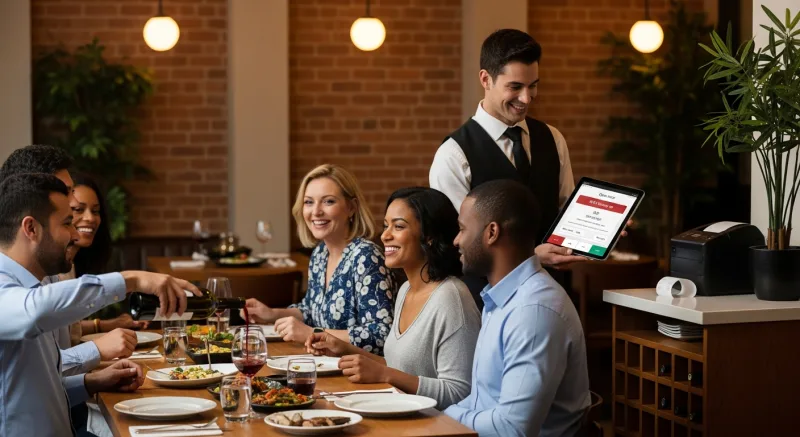
In a typical restaurant, alcohol represents 25-30% of revenue with margins of 70-80%. A BYO restaurant replaces that with a corkage fee of $5-15 per bottle and perhaps slightly higher food prices. The POS needs to accurately track corkage fees, which aren't food items and aren't alcohol sales, in a way that maps correctly to Philadelphia's specific tax categories. Getting the tax treatment wrong on corkage has resulted in audit penalties for multiple Philly BYO operators.
The BYO model also changes tipping dynamics. Without a $60 wine sale inflating the check, average ticket sizes run 30% lower than comparable non-BYO restaurants, which means tips are lower, which means BYO restaurants struggle more with staffing. Any technology that reduces labor requirements, like self-seating with QR code menus, tableside ordering from phones, and automated kitchen routing, has an outsized impact on BYO profitability.
KwickOS allows custom item categories with individual tax rules, so corkage fees can be classified correctly for both sales tax and reporting purposes. The integrated online ordering through KwickMenu also gives BYO restaurants a takeout and delivery channel where the BYO model doesn't apply but food sales keep flowing.
University Corridors and the Delivery Dependency
Philadelphia is home to over 100 colleges and universities, with UPenn, Drexel, and Temple alone accounting for more than 100,000 students who eat out constantly. The 40th Street corridor near UPenn and the Broad Street stretch near Temple are some of the densest restaurant zones in the city, and they run on delivery.
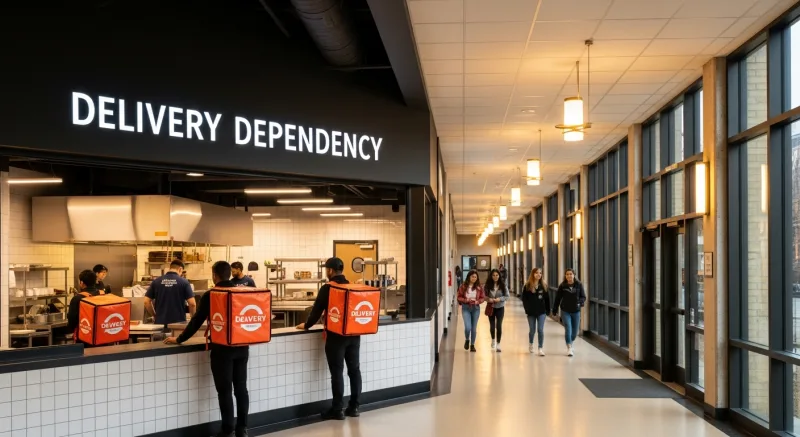
Students living in dorms and off-campus apartments within a one-mile radius of these universities generate delivery order volumes that peak between 8pm and midnight, a period when most restaurants in other neighborhoods are winding down. A POS system for a university-adjacent Philly restaurant needs to handle a second dinner rush that's entirely digital: orders flooding in from multiple apps simultaneously, each with different preparation time estimates, and a kitchen that's already been running since lunch.
The integration approach matters. Restaurants using separate tablets for DoorDash, UberEats, and Grubhub alongside their POS system end up with a counter full of devices and a kitchen getting tickets from four different sources in four different formats. A unified system that pipes all orders, whether walk-in, phone, website, or third-party app, into a single kitchen display queue in the same format eliminates the chaos that hits at 9pm on a Thursday near campus.
KwickOS consolidates orders from all channels into the kitchen display system with standardized formatting. The estimated prep time adjusts based on current queue depth, so a delivery order placed when the kitchen is backed up gets a realistic 45-minute estimate rather than the default 25 minutes that third-party apps display, reducing customer complaints and driver wait times.
South Philly Italian Versus Chinatown: Two Worlds, One POS Need
South Philadelphia's Italian Market on 9th Street and the Chinatown blocks around 10th and Race might be a 15-minute walk apart, but they represent entirely different restaurant operations. A South Philly red-sauce joint does large family-style portions, has a predominantly English-speaking staff and clientele, and runs heavy on weekend dinner reservations. A Chinatown dim sum hall serves smaller dishes at rapid pace, may have kitchen staff more comfortable in Chinese, and runs heaviest during weekend brunch.
The POS requirements diverge in specific ways. Family-style ordering means a table of six sharing three large platters and two appetizers, with possible individual dessert orders at the end. The check needs to calculate correctly when some items are priced per person and others per plate. A dim sum operation needs rapid-fire small-item entry, possibly through a check-off card system where servers mark items as they're delivered from carts, with per-item pricing that tallies at the end.
Language support isn't theoretical in either case. South Philly kitchens may have Spanish-speaking prep staff. Chinatown kitchens overwhelmingly communicate in Chinese, and a POS that displays kitchen tickets in Chinese characters rather than romanized approximations reduces errors on complex dishes where the difference between similar-sounding items matters. KwickOS provides native Chinese language display on kitchen terminals, not just a translation layer over English, which is a distinction that operators in Philly's Chinatown immediately appreciate.
Rittenhouse Square: Fine Dining and the Wage Tax Burden
Rittenhouse Square's restaurant row along Walnut and Sansom Streets includes some of the highest per-cover revenue restaurants in Philadelphia. A fine dining establishment here might average $95 per guest, with wine programs (for those with licenses) pushing that above $140. The POS demands at this level are different from counter service: table management with course pacing, wine inventory that tracks by bottle and by glass pour, and integration with reservation systems that feed guest preference data to the server before the first handshake.
Philadelphia's city wage tax adds a layer of complexity unique to this market. Every employee working within city limits pays 3.75% on earned income, and employers handle the withholding. For tipped employees, the POS needs to calculate and report tip income accurately for wage tax purposes, distinguishing between credit card tips (automatically tracked) and cash tips (reported by employees). Errors here trigger audits from both the IRS and the City of Philadelphia, which has become increasingly aggressive about wage tax enforcement.
The payroll integration from a POS system in Philadelphia isn't a nice-to-have. It's an audit-avoidance tool. Systems that silo tip reporting from payroll processing create reconciliation headaches every pay period that cost the back office hours of manual work.
Seasonal Patterns: Philly Runs on Sports and Weather
Philadelphia has four major professional sports teams, and their schedules shape restaurant traffic patterns dramatically. Eagles game days at Lincoln Financial Field generate the most intense restaurant surges, with the South Philly stadium complex area experiencing 400% volume increases from bars and restaurants within walking distance. Phillies home games at Citizens Bank Park create sustained four-hour dining windows 81 times per year. The six-month overlap of Phillies and Eagles seasons from September through early November means South Philly restaurants near the stadiums need their POS to handle persistent above-normal volumes rather than occasional spikes.
Weather patterns compound the sports effect. Philadelphia winters are cold enough to suppress walk-in traffic from December through February, pushing revenue toward delivery and catering. A POS that makes seasonal channel shifting easy, ramping up delivery workflow prominence and scaling back table management features, keeps the system interface relevant to current operations rather than cluttered with irrelevant options.
Festivals also drive specific needs. The massive South 9th Street Italian Market Festival each May draws 100,000+ visitors over two days. Restaurants set up outdoor counters, temporary POS stations on folding tables, and cash-heavy operations that need a system capable of rapid deployment on portable hardware without a two-week setup process.
Choosing a POS for Philadelphia: The Non-Negotiables
Local processing speed: Counter-service and market vendor operations cannot tolerate cloud latency. Sub-millisecond local transactions are the standard in a city where customers have been training at Pat's line since childhood.
BYO and corkage tax handling: Incorrect categorization of corkage fees and BYO-related charges triggers Philadelphia-specific tax problems that a POS designed for California doesn't anticipate.
Chinese language kitchen displays: Chinatown operations need native Chinese on kitchen screens. Romanization is not a substitute when you're firing 200 dim sum items per hour.
Delivery consolidation: University corridor restaurants live or die by delivery efficiency. Four tablets on the counter is a problem, not a solution.
Wage tax compliance: Tip reporting must be accurate enough to survive both IRS and Philadelphia city wage tax audits. This is a Philadelphia-specific requirement that national POS platforms often handle as an afterthought.
Philadelphia restaurants compete in a market where the food has to be excellent just to survive, and the operational margins are thinner than a well-shaved ribeye at John's Roast Pork. Your POS system either helps close the gap or widens it. Call (888) 355-6996 or visit KwickOS.com to discuss Philadelphia-specific configurations.
The Revenue Features Most "All-in-One" Systems Charge Extra For
When POS companies say "all-in-one," they rarely mean gift cards and loyalty are included. Toast charges $75/month for their loyalty add-on. Square Loyalty starts at $45/month. Clover requires third-party apps. KwickOS includes all of these natively — zero extra cost.
Physical & Electronic Gift Cards
Sell branded physical cards at the register. Send e-gift cards via text or email. Track balances across every location in real time. Gift card holders spend 20-40% more than face value — this is not a nice-to-have, it is a revenue multiplier.
Points-Based Loyalty System
Every transaction earns points. Customers see their balance on receipts and can redeem at checkout. Configurable earn ratios, tiered VIP levels, and automatic birthday rewards. No separate app required — it runs inside the POS your cashier already knows.
Membership & Subscription Management
Run coffee clubs, wine memberships, or VIP dining programs. Recurring billing, exclusive member pricing, and member-only items — managed from the same dashboard as your daily operations. Your customers feel special. Your revenue becomes predictable.
Real impact: businesses using KwickOS loyalty features see repeat visit rates increase by up to 35%. Gift card programs generate an average of 15% additional revenue during holiday seasons.

Tom Jin
Founder & CIO of KwickOS · 30 Years IT · 20 Years Restaurant Industry
Tom built KwickOS after decades running restaurants and IT companies. Today KwickOS serves 5,000+ businesses across 50 states.