 Kelly Ho
Walk behind the bar at the end of a slow Tuesday and look at the open bottles. Really look.
Half a bottle of that Barolo nobody ordered after the two-top left at nine. A Sancerre with one glass poured. Three reds breathing since Sunday that are already flat. Every one of those is money — wine you already paid for — and if it isn't sold in the next day or two, it's not inventory anymore. It's spoilage.
Here's the thing most new wine bar owners learn the hard way: the wine you pour down the sink is more expensive than the wine you sell. A bar that opens 20 bottles a night and loses even two to oxidation is throwing away roughly $600 to $1,000 a week in product — before rent, before labor, before a single glass turns a profit. Over a year, that's a $40,000 hole you can't see on any menu.
But it gets worse. Most owners have no idea it's happening, because the loss hides in plain sight. There's no red line on the P&L called "wine we let die." It just shows up as a pour cost that's mysteriously 15 points higher than it should be, and a nagging sense that a room full of paying customers somehow isn't making money.
The good news: every part of this is fixable, and none of it requires a Master Sommelier. It requires four systems — a by-the-glass program priced on real math, preservation tech that stops the clock on open bottles, a tasting-flight strategy that sells discovery, and a POS that ties inventory, pours, and pricing together. Let's build all four.
The By-the-Glass Program Is Your Real Profit Engine
A bottle sold whole is a fine transaction. A bottle sold by the glass is a great one. When a guest buys the bottle, you make your markup once. When you pour that same bottle into five glasses, the first glass or two often pays for the entire bottle — and everything after that is close to pure margin.
That's why the by-the-glass list, not the reserve rack, is where a wine bar actually lives or dies. And it all comes down to one number you must control on every wine: pour cost.
Pour cost is simply the wine's cost divided by its selling price. The industry target for wine by the glass is a pour cost of 25% to 33% — meaning a gross margin of 67% to 75%. Here's how that math plays out on a single glass:
| Metric | Value | What it means |
|---|---|---|
| Bottle cost (wholesale) | $13.20 | What you paid your distributor |
| Yield | 5 glasses (5 oz) | A 750ml bottle, poured honestly |
| Cost per glass | $2.64 | $13.20 ÷ 5 pours |
| Menu price per glass | $8.00 | Your by-the-glass price |
| Pour cost / margin | 33% / 67% | $5.36 gross profit per glass |
Sell all five glasses and that $13.20 bottle returns $40 — a $26.80 gross profit on a single bottle you'd otherwise have marked up to maybe $34 as a whole-bottle sale. Do that with a premium bottle and the dollars scale up: a $24 bottle poured at $16 a glass hits the same 67% margin, but now each pour carries far more profit.
The mistake to avoid: pricing your glass list by glancing at the wine bar down the street. Their bottle costs aren't your bottle costs, and their pours may not be your pours. Price every glass off your actual cost and yield. A quick pass through a gross profit calculator turns each wine into a real margin number instead of a guess — and a POS that stores cost-per-pour shows you that margin live, on every glass you ring up. For the deeper strategy behind a high-margin glass program, our guide to the steakhouse wine program breaks down by-the-glass versus bottle economics in detail.
The Oxidation Problem: Every Open Bottle Is a Clock
Here's what makes wine harder than beer or spirits: the moment you pull a cork, the wine starts dying. Oxygen is the enemy. A red might hold for two or three days; a delicate white or a sparkling wine can be flat by tomorrow. Without a plan, an ambitious by-the-glass list is just a faster way to pour money down the drain.
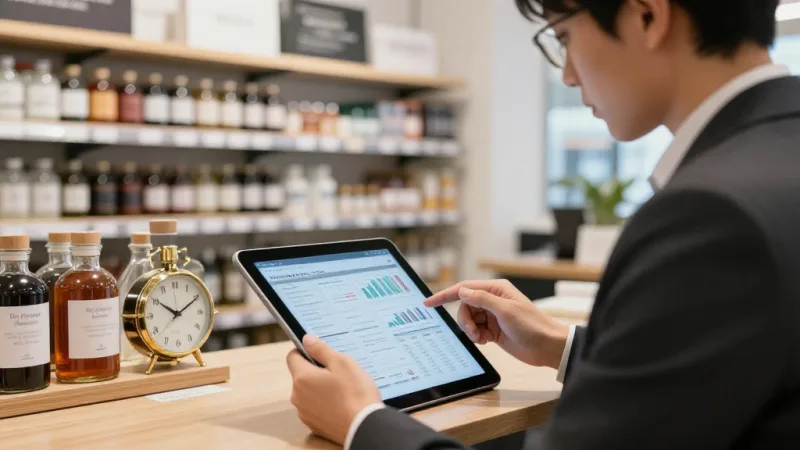
And that's the paradox. The more interesting your glass list, the more bottles you have open at once, and the more you stand to lose to oxidation — unless you stop the clock.
That's what preservation technology does. The main options, from lightest to heaviest:
- Vacuum stoppers — cheap, simple, pull air out of a re-corked bottle. Fine for a handful of bottles and a day or two of extra life.
- Needle-based preservation tools — pour a glass through the cork without ever removing it, replacing the wine with inert argon. The bottle can keep for weeks, which is why these are the workhorse of premium by-the-glass programs.
- Inert-gas dispensing systems — nitrogen or argon systems that hold multiple open bottles behind the bar, each preserved and ready to pour. Higher upfront cost, but they turn a 40-bottle glass list into something you can actually run without waste.
But the hardware is only half the answer. Preservation buys you time; it doesn't sell the wine for you. The operational half is knowing what's open, when it was opened, and what's about to turn — and that lives in your POS, not in a bartender's head. When every opened bottle is dated in the system and flagged as its window closes, your staff can push the wines that need to move tonight, and your preserved inventory actually gets sold instead of quietly forgotten. This is the same freshness discipline sushi bars use to protect their fish; it applies just as directly to your cellar. Our wine cellar management guide goes deep on tracking, aging, and preventing exactly this kind of loss.
Tasting Flights: The Highest-Margin Item You're Not Selling
Quick — what's the smartest way to sell a $60 bottle to a guest who's never heard of it?
Pour them two ounces of it in a flight.
Tasting flights are the most underused profit tool in the average wine bar. A flight of three two-ounce pours uses about the same total wine as one standard five-ounce glass — but it sells for more, and it does something a single glass can't: it turns a hesitant guest into an educated buyer.
Think about the psychology. A guest orders a "Napa Cabernet flight," tastes three wines side by side, and falls in love with the second one. What do they order next? A full glass of that wine — or, if they're with friends, the bottle. The flight didn't just make a sale; it created demand for a higher-priced item and made the guest feel like they discovered it themselves. That's marketing you got paid to deliver.
Flights also let you feature expensive, low-volume bottles in small, low-risk servings. A wine too pricey to justify by the full glass becomes an easy yes at two ounces inside a $22 flight. The trick is consistency: build each flight as a preset item in your POS so the pours are standardized, the cost is tracked, and you can see which flights actually convert tastes into full-price orders. Feature seasonal or regional themes — a "Rhône road trip," a "sparkling starter" — and rotate them to keep regulars curious.
Inventory and Aging: Know What's in the Cellar and What It's Worth
A wine bar's inventory isn't like a kitchen's. A case of tomatoes is worth the same next week. A case of Burgundy might be worth more — or it might be a bottle you've been "saving" so long it's past its window. Your cellar is simultaneously your inventory and, sometimes, an appreciating asset. You need to know which is which.
That means tracking more than a count. For a wine program, real inventory control includes:
| What you track | Why it matters |
|---|---|
| Bottle-level cost and quantity | Your true pour cost and cellar value at any moment |
| Bin / location | Staff find the bottle in seconds instead of digging |
| Open date on by-the-glass bottles | Sell preserved wine before it turns, not after |
| Drink-by / peak window | Move aging stock before it slides past its prime |
| Depletion by wine | Reorder fast movers, cut the ones that just sit |
Run this on paper and you'll do it once a quarter, badly. Run it through your POS and every glass you ring up decrements the bottle automatically, every reorder point trips an alert, and your cellar value is a number you can pull up instead of a mystery you dread counting. The multi-location operators we work with — like Crafty Crab Seafood across 19 stores, or T. Jin China Diner across 15 — stay profitable precisely because inventory is one live source of truth, not a stack of clipboards. A single wine bar is smaller, but the principle is identical: you can't protect a margin you can't see.
Sommelier Tools at the Point of Sale
Not every wine bar can afford a certified sommelier on every shift. But every wine bar can put a sommelier's knowledge at the point of sale, so a part-time bartender pours and sells like a pro.
The idea is simple: attach the knowledge to the wine in your system. When a server taps a wine on the POS, they should see the tasting notes, the region, the pairing suggestions, and the upsell — "guests who like this also love the reserve flight." That turns menu knowledge from something staff have to memorize into something the screen hands them at the exact moment they need it. New hires get useful in days, not months, and every table gets a confident recommendation instead of a shrug.
This is where an all-in-one platform earns its keep. Because checkout, the wine list, tasting notes, and inventory all live in one place, ringing up a glass also logs the pour, updates the bottle, and (if you want) prompts the pairing. Contrast that with a bar running a basic card terminal and a separate spreadsheet: the checkout knows nothing about the wine, and the wine knowledge knows nothing about the sale. Our Italian wine by-the-glass guide shows how the same POS-driven pairing prompts lift wine revenue in a full-service setting.
Gift Cards, Loyalty, and Membership: Turn Sippers Into Regulars
Here's the part that separates a wine bar that survives from one that thrives: what happens after the guest leaves.
A great pour earns you tonight's tab. A great retention program earns you the next fifty visits. And a wine bar has some of the most loyalty-friendly customers in all of hospitality — people who genuinely love the product and want a reason to come back. Give them three:
- A wine club membership. Members pay a recurring monthly fee for perks — a bottle allotment, members-only glass pricing, first access to rare arrivals, a free tasting flight each month. That's predictable revenue that hits your account before anyone walks in the door, the same recurring-billing model that makes gyms and subscription boxes so resilient.
- Loyalty points on every glass. A points program — "earn a complimentary flight after your tenth visit," or a members' tier with bonus points — gives a regular a reason to choose you over the new place down the block. Run the numbers on what that retention is worth with a loyalty program ROI calculator.
- Gift cards and e-gift cards. Wine lovers are natural gifters. An e-gift card a customer texts to a friend — who then discovers your bar redeeming it — turns your best customers into a sales force. Physical cards sit pretty on the back bar for impulse buys; digital cards win the last-minute and long-distance gifting that spikes around the holidays.
The magic isn't any one of these — it's that they run on the same system as your checkout. When a member orders a flight, the POS charges the right member price, awards the points, and updates their profile in one tap. Their spending, rewards, gift balance, and membership status all live on a single customer record instead of four disconnected apps. That's the difference between a loyalty program you administer by hand and one that runs itself. For the broader playbook on squeezing profit from your bar program, see our guide to bar profit optimization.
One Platform vs. a Drawer Full of Apps
You could assemble a wine bar out of parts: a card terminal for checkout, a spreadsheet for the cellar, a separate app for gift cards, another for the wine club, and a bartender's memory for the tasting notes. Plenty of bars do — right up until the seams between those tools start leaking money.
The alternative is running all of it on one point-of-sale platform, where a poured glass flows untouched from checkout to inventory to loyalty to the customer's profile.
| Job | A drawer full of apps | One POS platform (KwickOS) |
|---|---|---|
| Checkout & card processing | Standalone terminal, locked rate | Built in, and you keep 100% of processing revenue |
| Pour cost & inventory | Quarterly spreadsheet count | Every glass decrements the bottle live |
| Gift cards & loyalty points | Separate add-ons, separate balances | One profile, one balance, one checkout |
| Wine club membership | Manual monthly invoicing | Automatic recurring billing |
| Tasting notes & pairings | In a binder or someone's head | On screen at the moment of the sale |
Two KwickOS details matter especially for a bar. Because it runs on a hybrid local-and-cloud architecture, your POS keeps ringing sales at 1ms local latency even if the internet drops mid-service — a busy Friday doesn't stop because the Wi-Fi hiccups. And because it's processor-agnostic, you choose your own card processor and keep 100% of your processing revenue instead of paying a locked vendor markup on every glass — the same freedom we lay out in our KwickOS vs. Toast comparison. On a high-ticket, high-volume bar, that markup difference alone can be worth thousands a year.
A wine bar looks like a business about taste. Underneath, it's a business about time and margin — how long a bottle stays sellable, and how much of each pour you keep. Win those two, and the wine finally gets to be the easy part.
Run Your Whole Wine Bar From One Platform
KwickOS handles checkout, pour-cost tracking, cellar inventory, tasting-flight presets, gift cards, loyalty points, and wine-club billing — so every open bottle earns its margin instead of dying on the back bar. See how it fits your bar.
Explore KwickOS for BarsFrequently Asked Questions
What is a good pour cost for a wine bar?
The industry benchmark for wine by the glass is a pour cost of 25% to 33%, which means a gross margin of 67% to 75%. If a five-ounce glass sells for $8 and the wine inside it cost you about $2.64, your pour cost is 33% and your margin is 67%. The key is to price every by-the-glass wine off its actual bottle cost and yield, not by copying a competitor's menu. A POS that tracks cost per pour tells you your real margin on every glass instead of leaving you to guess.
How do wine bars keep open bottles from going bad?
Wine bars use preservation systems that block oxygen from the moment a bottle is opened: inert-gas dispensing systems (nitrogen or argon), needle-based preservation tools that pour without pulling the cork, and vacuum stoppers for lower-volume bottles. The right system extends an open bottle's sellable life from one or two days to several weeks, which is what makes an ambitious by-the-glass list financially possible. The operational half of the fix is a POS that dates every opened bottle and flags it before it turns, so preserved wine is actually sold, not forgotten.
Are tasting flights profitable for a wine bar?
Yes. A flight of three two-ounce pours uses about the same total wine as one standard glass but sells for more, and it lets you feature premium bottles in small, low-risk servings. Flights also drive discovery: a guest who tastes a wine in a flight often orders a full glass or a bottle of the one they loved, so the flight becomes a sales tool, not just a menu item. Building flights in your POS as a preset item keeps pours consistent and tracks which wines convert flight tastes into full-price orders.
Should a wine bar have a membership or wine club?
A wine club is one of the most reliable ways to turn an occasional visitor into predictable monthly revenue. Members pay a recurring fee in exchange for perks like a monthly bottle allotment, members-only pricing, and loyalty points on every visit. Because the same platform runs your checkout, gift cards, loyalty points, and recurring membership billing, a member's spending and rewards live on one profile, and the monthly charge collects automatically. Gift cards and e-gift cards feed the same loop, turning wine lovers into your best marketing channel. Resellers can offer the same membership and loyalty tooling to their own merchants through the KwickOS partner program.