 Tom Jin
You spent weeks curating the perfect Italian wine list. Barolos from Piedmont. Super Tuscans from Bolgheri. A gorgeous Etna Rosso from Sicily that you discovered on your last buying trip.
And nobody orders them.
Here's the thing: 74% of restaurant wine sales happen by the glass, according to restaurant industry data. Guests want to explore, not commit. They want to try the Vermentino with their crudo and switch to a Nebbiolo with their osso buco. But your by-the-glass list offers the same safe Pinot Grigio and Chianti it's had for three years.
Meanwhile, those beautiful $60-$120 bottles sit on your shelf, earning you exactly zero dollars per night.
But it gets worse. Your competitor down the street just started offering a Barolo by the glass at $28 per pour — and their wine revenue jumped 40% in one month. They're not selling more wine. They're selling better wine, one glass at a time, at margins that would make your food menu jealous.
The math is brutal: a $14 wholesale bottle of Montepulciano d'Abruzzo sold by the glass at $12 per pour generates $60 per bottle — a 328% return. That same bottle sold whole for $42 gives you a 200% markup. By-the-glass wine isn't just more profitable. It's a completely different business model.
This guide shows you exactly how to build an Italian by-the-glass program that doubles your wine revenue — without buying a single additional bottle you don't already stock.
The Economics of By-the-Glass: Why 5 Ounces Beats 750ml
Let's start with the numbers that matter. A standard 750ml bottle yields approximately 5 glasses at a 5-ounce pour (the industry standard for still wine). Here's what that means for your margins:

| Wine | Wholesale Cost | Bottle Price | By-the-Glass Revenue (5 pours) | Additional Profit |
|---|---|---|---|---|
| Pinot Grigio (entry) | $9 | $36 | $55 ($11/glass) | +$19 |
| Chianti Classico (mid) | $16 | $56 | $80 ($16/glass) | +$24 |
| Brunello (premium) | $38 | $120 | $150 ($30/glass) | +$30 |
| Super Tuscan (Coravin) | $52 | $160 | $225 ($45/glass) | +$65 |
That premium tier is where the real magic happens. And that's not all: by-the-glass customers order an average of 2.3 glasses per visit versus 0.7 bottles. They spend more total on wine because the per-decision cost feels lower. A $16 glass feels like nothing. A $56 bottle feels like a commitment.
For an Italian restaurant doing 120 covers on a Saturday night, moving from 30% by-the-glass to 60% by-the-glass typically adds $800-$1,200 in wine revenue per service — without a single additional guest walking through the door.
Coravin: The $400 Investment That Unlocks $50,000/Year
The biggest obstacle to a premium by-the-glass program has always been waste. Open a $90 bottle of Barolo, sell two glasses, and watch the remaining three oxidize into expensive vinegar by Thursday.
That calculation changed when Coravin entered the market. The system uses a thin needle to pierce through the cork, extracts wine, and replaces the void with inert argon gas. The cork reseals naturally. The remaining wine stays pristine for weeks — even months.
Here's the thing: this isn't just about preventing waste. It's about unlocking an entirely new revenue tier that didn't exist before.
Without Coravin, your premium by-the-glass ceiling is whatever you can reliably sell 5 glasses of within 48 hours. That limits you to $40-$50 bottles at most.
With Coravin, you can pour a $180 Sassicaia at $45/glass and wait a week between pours with zero risk. You're not saving money on waste — you're creating revenue from inventory that previously had zero velocity as by-the-glass pours.
The ROI calculation:
- Coravin Model Eleven: ~$400 investment
- Argon capsules: ~$10 per capsule (roughly 15 pours)
- Average premium pour price: $35
- Average pours per week from Coravin program: 20
- Weekly Coravin revenue: $700
- Monthly: $2,800 in revenue that didn't exist before
The system pays for itself in 3 days. After that, it's pure margin expansion.
Building Your Italian By-the-Glass List: The 15-Wine Framework
Too few options and guests feel boxed in. Too many and you're pouring wine down the drain. Industry data shows 12-18 by-the-glass options is the sweet spot for Italian restaurants. Here's the framework:
Sparkling (3 selections)
- Prosecco ($10-$12/glass) — Your workhorse. Aperitivo hour anchor.
- Franciacorta ($16-$18/glass) — Your "Italian Champagne" upsell. Tell the story.
- Lambrusco or Rosé Spumante ($11-$13/glass) — Seasonal rotation slot. Keeps it interesting.
White (4-5 selections)
- Pinot Grigio ($11-$13/glass) — Non-negotiable. This is what 40% of guests will default to.
- Vermentino ($12-$14/glass) — Your "try this instead" suggestion for Pinot Grigio drinkers.
- Gavi di Gavi ($14-$16/glass) — Cortese grape, pairs with seafood. Staff favorite to recommend.
- Soave Classico or Falanghina ($12-$14/glass) — Regional rotation slot.
- Premium white via Coravin ($22-$28/glass) — Vintage Soave, Fiano di Avellino, or aged Verdicchio.
Red (5-7 selections)
- Chianti Classico ($13-$15/glass) — Your house red anchor. Sangiovese is Italian dining.
- Montepulciano d'Abruzzo ($11-$13/glass) — Value play. Crowd-pleaser with pasta.
- Barbera d'Asti ($13-$15/glass) — Low tannin, high acid. Perfect with tomato-based dishes.
- Nero d'Avola ($12-$14/glass) — Sicilian depth for grilled meats.
- Super Tuscan or Amarone ($22-$28/glass) — Mid-premium via Coravin.
- Barolo or Brunello ($30-$45/glass) — Trophy pour via Coravin. The "experience" glass.
Dessert (1-2 selections)
- Vin Santo ($14-$16/3oz pour) — Pairs with biscotti. Natural dessert upsell.
- Moscato d'Asti ($11-$13/glass) — Light, sweet, approachable. Converts non-wine-drinkers.
Now here's the critical part: this list must rotate. Keep 10 anchors that never change (your Prosecco, Pinot Grigio, Chianti, etc.) and rotate 5 discovery slots every 2-4 weeks. Rotation creates urgency ("try it before it's gone") and gives regulars a reason to explore.
The 48-Hour Rule: Eliminate Waste Without Eliminating Variety
Every open bottle is a ticking clock. Standard wines begin degrading within 24-48 hours of opening, even with vacuum stoppers. Here's the system that keeps waste under 3%:
Track pours per wine per day in your POS. This is non-negotiable. KwickOS logs every pour against the open bottle, shows remaining pours, and alerts your bartender when a bottle hits its last glass. After two weeks of data, you'll know exactly which wines move and which ones don't.
But it gets worse: most restaurants don't track this. They open bottles, forget when they were opened, and serve oxidized wine to guests who then decide they "don't like wine" and order cocktails instead. You're not just losing the cost of wasted wine — you're losing future wine sales from guests who had a bad experience.
The system:
- Date-stamp every opened bottle (write the date on tape on the neck)
- Any standard wine not finished within 48 hours goes to cooking or staff education
- Review POS pour velocity weekly — if a wine averages less than 3 pours/day, remove it from BTG
- Coravin wines are exempt from the 48-hour rule (that's the entire point)
- Keep a "last pour" incentive — servers get a small spiff for selling the final glass before the 48-hour mark
With this system in place, industry data suggests waste drops from the typical 15-20% to under 4%. On a program generating $8,000/month in by-the-glass sales, that's $960/month saved in wine that would have been dumped.
Staff Training: Turn Servers into Sommeliers (in 30 Minutes/Week)
Your by-the-glass program is only as strong as the person recommending it. And that's not all: the difference between a server who says "would you like some wine?" and one who says "the Vermentino is incredible with the branzino — it has this salinity that mirrors the fish" is approximately $4,200/month in additional wine revenue for a 60-seat Italian restaurant.
You don't need certified sommeliers. You need a 30-minute weekly wine meeting:
- Monday pre-shift (15 min): Taste the new rotation wines. Give each server 3 words to describe each wine and 1 dish pairing. That's it. Simple beats encyclopedic.
- Thursday pre-shift (15 min): Role-play wine suggestions. "The guest ordered the veal Milanese — what do you pour?" Make it a game. Track who sells the most premium pours weekly.
The POS connection: KwickOS can display suggested wine pairings on the server's screen when they ring in a food item. Osso buco entered? A small prompt appears: "Pair suggestion: Barolo ($38) or Barbera ($14)." This isn't about replacing server knowledge — it's about reinforcing it at the moment of decision.
One restaurant we work with, Shogun Japanese Hibachi, trained staff to proficiency on a completely new system in under 5 minutes. The same principle applies to wine training — simple, repeated exposure beats formal education every time.
POS Integration: Track Every Pour, Predict Every Reorder
Here's where most Italian restaurants leave money on the table. They treat wine inventory as a monthly count instead of a real-time revenue system.
A properly configured POS tracks:
- Pours per bottle — Know exactly when a bottle is empty before your bartender does
- Sell-through velocity — Which wines move in 6 hours vs. 48 hours
- Revenue per wine per week — Identify your profit heroes and dead weight
- Server wine performance — Who upsells premium pours, who defaults to house wine
- Pairing conversion rate — When the POS suggests a pairing, how often does the guest accept?
- Time-of-day patterns — Prosecco dominates before 7 PM, reds spike after 8 PM
KwickOS handles this with its hybrid local+cloud architecture — pour data logs locally at 1ms latency (no lag during service), then syncs to the cloud for reporting. Even if your internet drops mid-service, every pour still gets tracked. That's the difference between a cloud-only system and a hybrid system built for real restaurant conditions.
And because KwickOS is processor-agnostic, every dollar of wine revenue goes through whatever payment processor gives you the best rate. On $8,000-$12,000/month in wine by-the-glass sales, the processing fee difference between a locked system (like Toast at 2.99%) and a negotiated interchange-plus rate can save you $400-$600/year on wine transactions alone.
The Pairing Strategy: Sell Wine Through Food (and Food Through Wine)
Italian cuisine and Italian wine evolved together over centuries. This isn't marketing — it's biology. Sangiovese's acidity cuts through the richness of ragu. Vermentino's minerality complements coastal seafood. Use this natural synergy to sell both.
The technique: Don't ask "would you like wine?" Ask "have you decided on wine to pair with that?" The presupposition that wine is coming changes the question from yes/no to which one.
Here's the pairing framework your servers need:
| Course/Dish | Standard Pairing ($) | Premium Upsell ($$) |
|---|---|---|
| Antipasto / Bruschetta | Prosecco ($11) | Franciacorta ($17) |
| Seafood Pasta / Crudo | Vermentino ($13) | Gavi di Gavi ($15) |
| Red Sauce Pasta | Chianti Classico ($14) | Brunello ($35) |
| Osso Buco / Braised Meats | Barbera ($14) | Barolo ($42) |
| Grilled Steak / Lamb | Nero d'Avola ($13) | Super Tuscan ($26) |
| Tiramisu / Panna Cotta | Moscato d'Asti ($12) | Vin Santo ($15) |
When a guest orders the osso buco and the server says "that's beautiful with our Barolo by the glass — it's a 2018 from Serralunga, and you can't get it anywhere else in this city for under $42 a pour" — that's not selling. That's storytelling. And it works.
Gift Cards and Wine: The Revenue Multiplier You're Missing
Here's an open loop most Italian restaurant owners never consider: wine experiences make your gift cards more valuable.
A $50 gift card is generic. A "$50 Wine Flight Experience" gift card — featuring 4 premium Italian pours with paired bites — sells for the same price but feels like a $120 value. It brings new guests through the door who would never have discovered your restaurant otherwise.
E-gift cards with wine experience packages see redemption rates 23% higher than standard denomination cards, according to restaurant industry data. And the average additional spend when redeeming a wine experience card is $67 per table — because guests who come for the wine flight stay for dinner.
Set up wine flight gift cards in your POS as a distinct item category. KwickOS tracks redemption, additional spend per redemption, and new-vs-returning guest conversion. You'll know exactly what your gift card wine program generates in downstream revenue.
Loyalty Points and Wine: Convert Explorers into Regulars
Your wine-by-the-glass program is a natural loyalty driver. Guests who discover a new favorite wine have a reason to come back that has nothing to do with hunger.
The "Wine Explorer" loyalty tier:
- 1 point per standard glass, 3 points per premium glass (Coravin pours)
- 10 points = complimentary glass of the server's choice
- 25 points = invitation to quarterly winemaker dinner (limited seats, members-only)
- 50 points = one bottle at wholesale cost to take home
This structure incentivizes premium purchases (3x points) and creates exclusivity events that drive off-peak revenue (winemaker dinners on Tuesdays). KwickOS loyalty module tracks wine-specific earning automatically — no manual intervention, no separate loyalty cards. Guests earn through fingerprint or phone number at checkout.
Diva Nail Beauty saw 90% efficiency improvements when they automated their commission tracking with KwickOS. The same principle applies to loyalty automation in wine programs — remove the manual steps and participation skyrockets.
Aperitivo Hour: The Pre-Dinner Revenue Window
Italian aperitivo culture is the single best strategy for filling the dead zone between 4 PM and 6:30 PM. And your by-the-glass program is the engine that drives it.
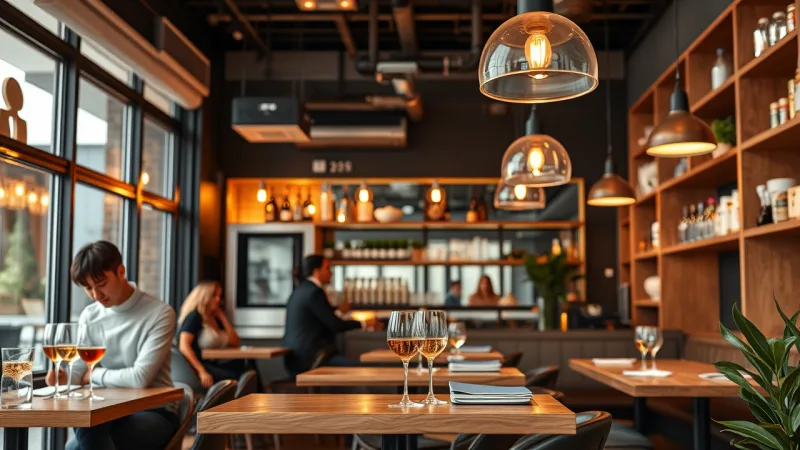
The format: $14-$18 for a glass of Prosecco, Aperol Spritz, or Negroni plus a small plate of cicchetti (Italian bar snacks). Run it Tuesday through Saturday, 4-6:30 PM.
Why this works for by-the-glass programs:
- Introduces new guests to your wine list in a low-commitment format
- 30% of aperitivo guests convert to dinner reservations (they're already there, already enjoying themselves)
- Generates $1,800-$3,200/week in revenue during hours that would otherwise produce zero
- Creates Instagram-worthy moments (Spritz in afternoon light) that market your restaurant for free
Track aperitivo-to-dinner conversion in your POS. KwickOS flags when an aperitivo tab converts to a dinner tab at the same table, so you know exactly how much dinner revenue your 4 PM wine program generates.
The Checkout Flow: How POS Design Impacts Wine Sales
Your POS checkout flow directly impacts wine revenue. If adding a wine pairing requires 4 taps and a search, servers won't bother during a rush. If it's one tap from the food item screen, they will.
Configure your POS with:
- Wine shortcut buttons on the main order screen (not buried in a sub-menu)
- Automatic pairing prompts when food items are entered
- "Half glass" and "flight" modifiers for guests who want to try multiple wines
- Dessert wine prompt that fires when the dessert course is rung in
- Split wine from food on the check — guests who see a single $180 total react differently than "$112 food + $68 wine"
The Crafty Crab chain syncs menu changes across 19 locations with one click through KwickOS. The same infrastructure lets you update your by-the-glass list, adjust pricing, and push new rotation wines across multiple locations instantly — no calling each manager to update a paper wine list.
Measuring Success: The 4 Numbers That Matter
After implementing your by-the-glass program, track these weekly:
- Wine revenue as % of total revenue — Target: 22-30% for Italian restaurants (industry average is 15%)
- Average wine spend per cover — Target: $14-$22 (up from the typical $8-$10)
- Waste percentage — Target: under 4% of opened bottles go to cooking/drain
- Premium pour ratio — Target: 25%+ of pours from your Coravin program
If you're hitting all four targets, your by-the-glass program is generating an additional $3,500-$6,000/month compared to a basic house-wine-only approach. That's $42,000-$72,000 per year in revenue from wine you already stock.
Track Every Pour. Maximize Every Bottle.
KwickOS gives Italian restaurants real-time wine tracking, automatic pairing suggestions, and waste alerts — so your by-the-glass program prints money instead of pouring it down the drain.
Get Your Free DemoFrequently Asked Questions
What is the typical markup on wine by the glass at Italian restaurants?
The industry standard markup on wine by the glass is 300-400%, meaning a bottle that costs $12 wholesale yields $48-$60 in by-the-glass revenue (assuming 5 pours per bottle at $9.60-$12 each). This compares to the typical bottle markup of 200-300%, making by-the-glass programs significantly more profitable per ounce.
How does a Coravin system help Italian restaurants sell more expensive wine by the glass?
A Coravin uses a needle to pierce the cork and extract wine while replacing it with argon gas, keeping the remaining wine fresh for weeks or months. This allows restaurants to offer $80-$200 bottles by the glass without waste risk, charging $25-$50 per pour on wines that would otherwise only sell as full bottles. The $300-$500 Coravin investment typically pays for itself within the first week of premium pours.
How many wines should an Italian restaurant offer by the glass?
The optimal by-the-glass list for most Italian restaurants is 12-18 selections: 4-5 whites (Pinot Grigio, Vermentino, Gavi, Soave, and a premium option), 5-7 reds (Chianti, Montepulciano, Barbera, Nero d'Avola, a Super Tuscan, and a Barolo/Brunello via Coravin), 2-3 sparkling (Prosecco, Franciacorta, rosé), and 1-2 dessert wines. This gives enough variety without creating waste from slow-moving bottles.
How can POS systems help manage a wine by-the-glass program?
A modern POS system tracks pour counts per bottle, alerts staff when bottles hit their last pour, generates waste reports for spoiled wine, suggests food-wine pairings at the order screen, and provides sales mix data showing which wines sell fastest. KwickOS additionally tracks server performance on wine suggestions and integrates with inventory to auto-reorder when stock drops below par levels.
What is the best wine rotation strategy to minimize waste?
The 48-hour rule works best for standard wines: open bottles should sell completely within 48 hours or be used for cooking. Track daily pours per wine in your POS and calculate your average sell-through rate. Wines that consistently take more than 2 days to finish should be removed from the by-the-glass list or offered only on high-volume nights. Premium wines on Coravin can stay on the list regardless of velocity since there's no oxidation risk.