 Kelly Ho
Picture February 14, 7:45 p.m. Your dining room is full of couples. The candles are lit, the room hums, and the kitchen is in the weeds. By every appearance, you're having a great night.
Now look closer. That four-top by the window? They booked, then never showed — and you turned away three other couples who would have happily filled it. The pair at table six ordered the cheapest two entrées and split a water. The couple celebrating their anniversary would have paid for champagne and a rose if anyone had offered, but nobody did. And every one of these first-time guests will walk out tonight and you'll have no way to ever reach them again.
Here's the uncomfortable truth: a "busy" Valentine's Day and a maximized Valentine's Day can look identical from across the room — and differ by thousands of dollars. Industry data consistently ranks Valentine's Day among the top two or three dining-out occasions of the entire year, behind only Mother's Day. The demand is guaranteed. What's not guaranteed is how much of it you actually convert.
So let's build the version that captures all of it. This is a complete playbook — how to design a couples menu that clears $340 per table instead of $140, how to stop no-shows from gutting your most valuable night, how to stack upsells that guests are thrilled to buy, and how to turn a one-night crowd of strangers into a list you can sell to all year. Stay with me, because the single most profitable move in this plan isn't the dinner at all — it's what happens before and after it.
Why Valentine's Day Is the Easiest Night to Charge More
Most holidays require you to manufacture a reason for people to spend. Valentine's Day is the rare occasion where the spending decision is already made before your guest opens a menu. They're not looking for the cheapest dinner — they're looking for the right dinner. Price is barely a consideration; disappointment is the real fear.
That changes everything about how you should approach the night:
- Guests expect a premium. A special prix fixe at $95 a head doesn't feel like a markup on February 14 — it feels like the occasion deserves it. The same menu at the same price on a random Tuesday would feel steep.
- The downside of cheaping out is huge. A flat, ordinary dinner on Valentine's Day doesn't just fail to impress — it actively damages a relationship moment, and that's the review you'll be reading for the next year.
- The whole night is finite and non-repeatable. You get one shot. Every empty seat, every under-sold table, every missed upsell is gone at midnight and doesn't come back.
That last point is the one to sit with. On a normal night, a slow table or a no-show is a minor annoyance. On Valentine's Day — when you could have sold that table three times over — every leak is amplified. Which is exactly why the plan starts not with the food, but with locking down the room.
Step 1: Lock In the Room with Deposits (Before You Cook a Thing)
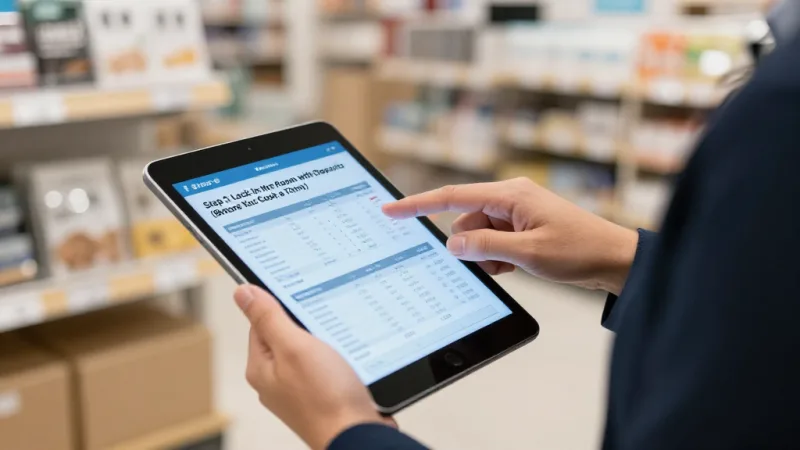
The money on Valentine's Day is won in the two weeks before the night, quietly, through reservations. Two things have to happen: you fill every seat, and you make sure every seat that's booked actually shows up.
Open bookings early and make them visible
Valentine's Day is a planned occasion, not an impulse. Couples — especially the ones who care most, and spend most — decide where they're going 10 to 14 days out. If your reservations aren't open and easy to find by the first week of February, you're handing those couples to the restaurant down the block that opened theirs first. Open bookings by late January, and put the link everywhere: your site, your social bios, every email and text on your list.
Take a deposit — this is the move that protects the night
Here's the part that separates a good Valentine's from a painful one: require a per-seat deposit at booking. Say $30 a head, applied directly to the final check. It does two jobs at once. First, it pulls cash into your account before you've spent a dollar on roses or rib-eye. Second — and this is the big one — it nearly eliminates no-shows on the one night you can least afford an empty table.
Run the math on a no-show. A booked two-top that ghosts you on February 14 isn't a $0 event — it's a $200 to $340 hole, because the couple who wanted that table at 7:30 already gave up and booked elsewhere. You can't resell it. A deposit turns "we'll see if they show" into "they've already paid to be here," and the difference across a full book of tables is enormous.
This is where your point-of-sale either helps you or gets in the way. A platform that ties the deposit to the reservation and then applies it automatically to the bill at checkout kills the awkward "now, about your deposit" moment entirely. The server rings the couple out, the prepaid amount drops onto the check, they pay the difference, done. T. Jin China Diner runs exactly this kind of deposit-backed booking across its 15 locations for high-volume banquet nights — and a packed Valentine's room is banquet logic applied to every two-top in the building. Want to see what no-shows actually cost you? Our no-show cost calculator puts a real number on it for your average check and table count.
Step 2: Engineer a Couples Menu That Prints Money
Now the night itself. The single biggest lever on your Valentine's revenue is the menu structure — and a fixed couples menu beats à la carte on almost every count.
Build a prix fixe, not just a price
Set one fixed price for a multi-course experience — $75 to $125 per person is the common band, or frame it as a single per-couple price like "$220 for two" to lean into the occasion. A prix fixe isn't merely a way to charge more; it's a way to control more. When every couple is moving through the same three-to-four-course path, you can:
- Pre-portion and pre-prep the entire menu, slashing ticket times on the busiest service of the quarter.
- Forecast covers exactly from your deposit-backed reservations, so you buy the right amount of protein and schedule the right number of cooks and servers.
- Steer the menu toward shared-prep, high-margin dishes — so the food cost on a $95 ticket often runs better than your normal à la carte mix despite the bigger number.
Design it for romance, not just throughput: shareable starters, a chocolate dessert built for two forks, a dish that photographs well enough to end up on Instagram (free marketing, more on that below). Shogun Japanese Hibachi gets new staff fully proficient on its system in under five minutes precisely because the service flow is structured and repeatable — a fixed Valentine's menu gives even your seasonal hires that same guardrail on a night when there's no room for mistakes.
Stack the upsells couples actually want
This is where most restaurants leave the easiest money untouched. On Valentine's Day, your guests want to be sold the romance — they just need you to offer it. The trick is to offer add-ons at the time of booking, not only at the table, so the anticipation does the selling:
- A rose or small bouquet waiting at the table — a $12 add-on that costs you $4 and makes the whole reservation feel handled.
- A champagne or prosecco toast on arrival — pure margin, and it sets the tone before the first course.
- A box of chocolates or a "dessert for two" pre-selected so it appears at the perfect moment.
- A printed photo of the couple — a small, memorable touch that turns a dinner into a keepsake.
Add a $12 rose, a $24 toast, and a $16 dessert upgrade to an $85-per-head dinner for two and your $170 ticket just became $222 — before tax and tip, and before anyone ordered a second glass of wine. Offer those add-ons in the booking flow and your checkout system rings them onto the right table automatically, so nothing gets forgotten in the rush. That's how a table goes from $140 to $340 without a single extra cover.
Step 3: Sell Date-Night Gift Cards to Everyone You Can't Seat
Here's a number that should change how you think about February: you will turn away more couples than you seat. Your room has a hard limit; demand doesn't. The restaurants that win Valentine's Day don't just fill their tables — they capture the overflow.
The tool for that is the gift card. Valentine's Day is, at its core, a gifting holiday — and a "date night" gift card is one of the most natural last-minute presents there is. Run a real promotion in the first two weeks of February: buy a $100 date-night card, get a $20 bonus card. The buyer perceives a 20% gift; you've locked in $100 of guaranteed future revenue and handed out a $20 coupon that only converts when they come back and spend more.
Push the e-gift card hardest of all. A digital card can be bought at 10 p.m. on February 13 by someone who just realized they have nothing planned, delivered by text in under a minute, and redeemed weeks later. It rescues the procrastinators, captures the couples who couldn't get a table on the 14th itself, and — critically — pulls traffic back in during the slow stretch of late February and March when those balances get redeemed. And gift card balances almost never get spent alone: the classic pattern is a couple walking in to "use up" a $100 card and leaving having spent $155. Model how that stored value compounds with our loyalty and rewards ROI calculator and you'll see why this is the highest-leverage line item of the whole campaign.
Step 4: Run a Social Countdown That Fills the Last Seats
You've built the menu and opened the books. Now you have to fill them — and the final week before Valentine's Day is when urgency does your selling for you.
Treat the last seven days as a countdown, not a single announcement. Post the menu with one mouthwatering photo. The next day, post the rose-and-champagne add-ons. Then a behind-the-scenes shot of the kitchen prepping. Then the line that fills every remaining table: "Only 6 tables left for Valentine's Day — book tonight." Scarcity isn't a trick on Valentine's Day; it's the literal truth, and saying it out loud converts the procrastinators who've been meaning to book all week.
Tie every post back to the same booking link with the deposit attached, so a moment of impulse on Instagram becomes a committed, paid reservation instead of a "we should go there" that evaporates by morning. For a deeper framework on chaining these seasonal pushes across the whole calendar so each holiday isn't a last-minute scramble, our 52-week marketing calendar maps every lever in one place.
Step 5: Turn One Night of Strangers into a Year of Regulars
Here's the open loop I promised to close — and the most profitable move in this entire plan. The dinner isn't the prize. The customer data the dinner generates is.
Think about who's in your room on February 14: dozens of couples, many of them first-time guests, all in a celebratory, generous mood. On most Valentine's Days, every one of them walks out and is gone forever. That's the real loss — bigger than any no-show or missed upsell. You ran a packed, profitable night and threw away the single most valuable asset it produced.
So capture it. Every deposit, every gift card sold, every loyalty or membership enrollment at checkout adds a name to a list you can reach directly. Then work that list:
- A thank-you and a reason to return. A short message a few days later — "Thanks for spending your Valentine's with us, here's 2x points on your next visit" — converts a one-time occasion into a second visit while the memory is warm.
- Loyalty and points enrollment at the table. Sign couples up at checkout so the night earns them rewards they'll want to come back and redeem. The whole point of a points program is that it gives a first-timer a concrete reason to make you their regular spot.
- An anniversary flag in their profile. A guest who celebrated with you on Valentine's Day is a guest you can invite back next February — and for their actual anniversary. That's a customer you "acquired" for the cost of one already-profitable dinner.
The economics here are brutal in your favor: reactivating a guest who already had a great night with you costs a fraction of acquiring a stranger through ads. You're not buying attention — Valentine's Day already bought it for you. The only question is whether your system captured it.
The Whole Night Runs on One Connected System
Step back and notice what every part of this plan has in common. The deposit that protects the table, the prix fixe that controls your margin, the rose-and-champagne upsells, the date-night gift cards, the loyalty enrollment that drives the follow-up — these aren't five separate tools you bolt together. They're one customer relationship moving through one system.
That's the case for running Valentine's on an all-in-one platform instead of a patchwork. When your POS, reservations, deposits, gift cards, e-gift cards, CRM, and loyalty all live in the same place, the data flows by itself: the couple who put down a deposit on the 14th is automatically the loyalty member you thank on the 17th and the gift-card holder you nudge in March. Stitch that together from disconnected vendors and the seams are exactly where the revenue leaks out. It's also why a processor-agnostic platform matters on a night like this — when you're clearing premium tickets all evening, the half-point you save by choosing your own payment processor instead of a locked rate is real money back in your pocket, not your software vendor's.
And because a hybrid local-plus-cloud POS like KwickOS runs checkout on your local network at roughly 1ms latency, it keeps ringing sales even if your internet drops mid-service — then syncs automatically when it returns. On the most fully-booked night of your quarter, "the system's down" is not a sentence you can afford to say. Crafty Crab Seafood runs this kind of connected operation across 19 locations and 152 terminals — one-click menu sync to push a Valentine's prix fixe to every store at once, customized kitchen displays to handle a packed night, and unified guest data across the group. You don't need 19 locations to use the same logic. You need one room, one connected system, and a plan that treats Valentine's Day as a campaign, not just a dinner. If you run a portfolio of restaurants, you can even partner with KwickOS to bring this playbook to every merchant you serve.
Make This Valentine's Your Most Profitable Night Yet
KwickOS ties your reservations, deposits, prix fixe menu, gift cards, checkout, and loyalty into a single platform — so a packed dining room actually turns into a packed bank deposit and a year of returning guests. See how it works for your restaurant.
Explore KwickOS for RestaurantsFrequently Asked Questions
How far in advance should a restaurant start promoting Valentine's Day?
Start at least three weeks out, around January 24, and open reservations no later than the first week of February. Valentine's Day is the second-busiest dining-out occasion of the year and couples decide where they're going early — most book 10 to 14 days ahead. Open bookings early, require a per-seat deposit to hold the table, and run a daily social countdown in the final week with a clear "last tables remaining" message.
Should restaurants run a prix fixe menu on Valentine's Day?
Yes. A fixed couples menu — commonly $75 to $125 per person or a single per-couple price — lets you forecast covers from your reservations, pre-portion and pre-prep to keep ticket times fast on your busiest night, and steer guests toward shared-prep, high-margin dishes. A well-engineered prix fixe often runs a better food and labor cost than à la carte despite the higher ticket, while making the night feel like a special occasion rather than a normal dinner.
What are the best upsells for Valentine's Day dinner?
The highest-converting Valentine's upsells are pre-arrival add-ons booked with the reservation: a single rose or small bouquet at the table, a box of chocolates or a shareable dessert, a champagne or prosecco toast on arrival, and a printed photo of the couple. Offering these at booking — not just at the table — lifts the average check meaningfully because the guest is buying into the romance of the occasion, not just a meal.
Why are gift cards important for Valentine's Day restaurant marketing?
Valentine's Day is a gifting holiday, so a "date night" gift card is a natural last-minute present — especially an e-gift card delivered instantly by text. Selling a "buy $100, get $20 bonus" date-night card before February 14 locks in guaranteed future revenue, captures the customers who couldn't get a table on the night itself, and pulls traffic back in during the slower weeks of late February and March when the bonus balances get redeemed.
How do reservation deposits help on Valentine's Day?
On a fully booked Valentine's night, a single no-show two-top can be $200 to $340 in revenue you can never resell because every other couple already booked elsewhere. A prepaid per-seat deposit collected at the time of booking nearly eliminates no-shows and pulls cash in before you spend a dollar on food. A POS that ties the deposit to the reservation and applies it automatically to the final check at checkout removes any awkwardness and protects your highest-revenue seating of the quarter. Multi-location operators can partner with us to bring the same playbook to every restaurant they serve.