 Ming Ye
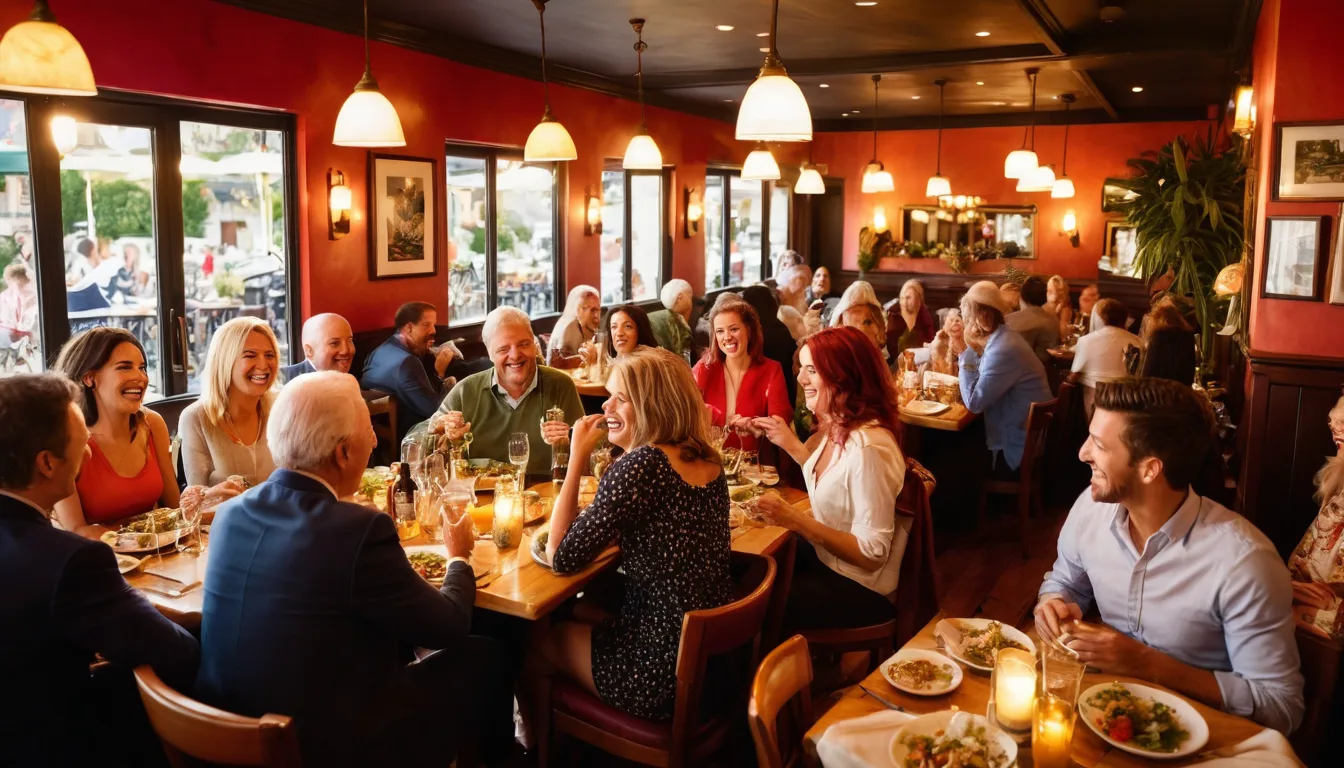
You spend $2,000 a month on ads. You post three times a week on social media. You run email campaigns, print flyers, hand out coupons.
And then someone walks up to your restaurant, pulls out their phone, checks your Google reviews, sees 3.8 stars, and walks across the street to the place with 4.6 stars and 2,847 reviews.
All that marketing spend — gone in three seconds. Because a stranger's opinion carried more weight than everything your brand ever said about itself.
That is social proof. And if you are not engineering it deliberately, you are losing customers you will never even know about.
According to restaurant industry data, over 90% of consumers read online reviews before visiting a new restaurant. And the impact is not subtle — a one-star increase on platforms like Yelp or Google correlates with a 5-9% increase in revenue. That means a restaurant doing $800,000 a year in revenue could be leaving $40,000 to $72,000 on the table simply because their review strategy is nonexistent.
Here's the thing: social proof is not just reviews. It is a system of psychological signals that tell potential customers "other people like you already trust this place." Reviews are one channel. But bestseller badges, live activity feeds, user-generated content, testimonial displays, and even your loyalty member count all function as social proof.
This guide breaks down every social proof tactic available to restaurants and small businesses, shows you exactly how to implement each one, and — critically — explains how your POS system is the engine that powers most of them.
Why Social Proof Works: The Psychology Behind the Numbers
Social proof is not a marketing trick. It is a deeply wired human behavior. When we are uncertain about a decision — where to eat, what to order, whether a product is worth the price — we look to the behavior of others for guidance.
Psychologist Robert Cialdini identified social proof as one of the six fundamental principles of persuasion. His research demonstrated that people are more likely to take an action when they see evidence that others have already taken that same action.
In a restaurant context, this plays out in five distinct ways:
- Expert social proof: A food critic or influencer endorses your restaurant.
- User social proof: Current customers leave reviews and share photos.
- Crowd social proof: "2,847 five-star reviews" signals mass approval.
- Friend social proof: A friend recommends the restaurant directly.
- Certification social proof: Awards, Michelin recognition, "Best of" badges.
But it gets worse: the absence of social proof is itself a signal. A restaurant with 12 Google reviews next to one with 1,200 reviews is not perceived as "new" — it is perceived as "not good enough for anyone to talk about." Zero social proof is negative social proof.
The businesses that win are not necessarily better. They are better at making their existing customer love visible to future customers.
Tactic 1: Turn Your Review Count into a Revenue Engine
Let us start with the highest-impact social proof channel: online reviews.
Most restaurant owners know reviews matter. Very few treat them as a system. Here is the difference between hoping for reviews and engineering them:
The Review Collection System
Step 1: Make the ask frictionless. Print a QR code on every receipt that links directly to your Google Business Profile review page. Not your homepage. Not a generic "leave feedback" page. The Google review form itself. Every tap your customer has to make between "I want to leave a review" and the text box is a tap where they give up.
And that's not all: your POS system can automate this entirely. When a customer pays and their receipt prints, the QR code is already there. KwickOS merchants configure this once and every single transaction becomes a review opportunity — across every terminal, every location.
Step 2: Ask at the peak moment. The best time to ask for a review is not after the meal. It is during the moment of highest satisfaction — when the server delivers the signature dish, when the customer compliments the food, when they are visibly enjoying themselves. Train staff to say: "So glad you loved it! If you have 30 seconds, a Google review really helps us out — there's a QR code on your receipt."
Step 3: Follow up digitally. If you capture customer contact information through your CRM and loyalty program, send an automated text or email within 2 hours of the visit. The message is simple: "Thanks for dining with us today! Would you share your experience?" with a direct link. KwickOS processes over $2M in daily sales across 5,000+ businesses — and merchants who use automated review requests see significantly more reviews than those who rely on memory alone.
Step 4: Respond to every review. Responding to positive reviews encourages more of them. Responding to negative reviews demonstrates that you care — and research suggests that businesses who respond to negative reviews see an increase in their overall rating over time, because future reviewers account for the owner's responsiveness.
How Many Reviews Do You Need?
Industry data suggests that most consumers will not trust a business with fewer than 40 reviews. The sweet spot is between 100 and 300 — enough to demonstrate consistent quality without looking manufactured. Beyond 500, the marginal impact of each additional review decreases, but the cumulative count itself becomes social proof ("2,847 reviews" is a powerful number).
Here's the math that matters: if you serve 200 customers a day and 2% leave a review, that is 4 reviews per day — 120 per month. In three months, you have 360 reviews. A deliberate system gets you there. Hoping customers remember does not.
Tactic 2: Bestseller Badges That Sell for You
Walk into a bookstore and look at the "New York Times Bestseller" sticker on certain covers. That sticker does not change the content of the book. But it changes how many people buy it.
The same psychology applies to your menu. When an item is tagged as "Most Popular," "Customer Favorite," or "Bestseller," it does two things simultaneously:
- Reduces decision anxiety. Customers facing 40+ menu items experience choice paralysis. A bestseller badge provides a safe default — "if everyone else loves it, I probably will too."
- Increases perceived value. Popularity signals quality. A $22 pasta labeled "Our Most Popular Dish" feels like a better value than the same $22 pasta without the badge.
But here's where most restaurants get it wrong: they pick bestseller items based on gut feeling or the chef's preference. Your POS data already knows what your real bestsellers are.
With KwickOS, you can pull a product mix report for any time period, sorted by quantity sold. The top 3-5 items? Those get the badge. Update the badges monthly based on fresh data. If your summer drinks outsell everything in June, the badges reflect that. If your holiday special takes over in December, the badges shift.
This is particularly powerful on online ordering menus and self-ordering kiosks. Tiger Sugar, running 2 KwickOS kiosks across 2 locations, uses this exact approach — the "Most Popular" items on their kiosk screens guide customers through a minimal-step ordering process, reducing decision time and increasing satisfaction.
And do not overlook the gift card angle. If your e-gift card is listed as a "Top Gift Choice" on your website during the holidays — backed by actual sales data showing it is your most-purchased gift item — you are applying social proof to drive gift card revenue during the highest-volume season of the year.
Tactic 3: User-Generated Content Is Free Advertising
Every customer who photographs your food and posts it on Instagram is creating a mini billboard that reaches their entire social circle. The question is whether you are encouraging this behavior or leaving it to chance.
How to Systematically Generate UGC
Design for the camera. This is not about being superficial — it is about understanding that visual appeal drives sharing. Dishes that look dramatic, colorful, or unexpected get photographed. A plain burger on a white plate does not. A smash burger with melted cheese cascading over the edges, served on a branded wooden board with a small flag — that gets shared.
Create a branded hashtag. Something simple and unique: #CraftyCrabMoment, #ShogunExperience, #TigerSugarTreats. Print it on table tents, on receipts, on the wall near the entrance. When customers use it, their content becomes searchable and aggregatable. Crafty Crab Seafood, with 19 locations and 152 terminals running KwickOS, could amplify this across every single store simultaneously with a centralized menu sync that includes hashtag signage alongside new menu rollouts.
Repost and credit. When customers share content, repost it on your own channels with credit. This rewards the creator (public recognition), encourages others to share (hoping for the same recognition), and fills your social media calendar with authentic content that performs better than staged marketing photography.
Tie it to your loyalty program. Offer bonus loyalty points for customers who share a photo with your branded hashtag. Your KwickOS loyalty system can track this — a server verifies the post and manually awards 50 bonus points at the POS during checkout. The cost to you is minimal. The value of a customer photo reaching 500 followers is significant.
Tactic 4: Live Activity Feeds Create Urgency
Have you ever walked past a restaurant with a long line and thought, "That place must be good"? That is social proof in its purest physical form. The digital equivalent is a live activity feed.
On your website or online ordering page, a small notification that says "Sarah from Brooklyn just ordered the Seafood Boil — 3 minutes ago" accomplishes three things:
- Proves the business is active. A restaurant that people are ordering from right now feels alive and trustworthy.
- Suggests popular items. If visitors see the same dish appear multiple times, they are more likely to order it.
- Creates urgency. "Other people are ordering right now — maybe I should too before the wait gets longer."
This tactic works exceptionally well for online ordering. KwickOS integrates POS and online ordering into a single system, meaning real-time order data is already flowing. Displaying anonymized versions of that data (first name and neighborhood only — never full details) on your ordering page is a direct conversion tool.
For physical locations, digital signage serves the same purpose. A screen near the entrance showing "847 customers served today" or "Most ordered right now: Spicy Garlic Crab" uses real POS data as live social proof. With KwickOS digital signage, this data can update automatically — no manual input required.
Tactic 5: Testimonial Displays at the Point of Decision
Most businesses put testimonials on an "About" page that nobody visits. That is like hanging your best advertisement in the back alley.
Testimonials belong at the point of decision. The checkout page. The online ordering confirmation screen. The menu itself. The host stand. The table tent.
Here is where to place testimonials for maximum impact:
- Online ordering checkout page: A quote like "Best seafood in the city — we order every Friday night" reduces cart abandonment.
- Menu inserts or table tents: "Customer favorite since 2019" next to a dish description adds credibility.
- Gift card purchase page: "I give KwickOS e-gift cards for every birthday — everyone loves choosing their own meal" encourages gift card sales, especially during holidays when gift card revenue can spike dramatically.
- Loyalty enrollment prompt: "I've saved $340 in rewards this year — joining was the best decision" at the loyalty sign-up screen drives membership conversion.
- Customer-facing display at checkout: While the customer waits for their card to process, showing a rotating testimonial on the customer-facing display reinforces their decision and plants a seed for a return visit.
T. Jin China Diner, operating 15 locations with 75 KwickOS terminals, uses this multi-touchpoint approach — testimonials appear on in-store signage, on the online ordering page, and on the customer-facing displays at checkout. The consistency of the message across every location builds a cumulative trust signal that a single-store operation cannot match. And because KwickOS supports centralized remote management, Tom Jin can update testimonials across all 15 stores from one dashboard.
Tactic 6: Your Loyalty Member Count Is Social Proof
Here's a social proof channel most businesses completely ignore: their loyalty program numbers.
"Join 4,200+ members earning free rewards" is a fundamentally different message than "Sign up for our loyalty program." The first version uses crowd social proof — 4,200 people already made this decision, so it must be worthwhile. The second version is just a request.
Your POS loyalty system already has this number. Display it:
- On the loyalty enrollment screen at your kiosk or terminal
- On your website's loyalty page
- On table tents and register signage
- In email campaigns promoting membership
As the number grows, the social proof compounds. A program with 500 members sounds small. A program with 5,000 members sounds like something you should already be part of. Rockin' Rolls, with 3 stores and 49 iPad self-ordering stations running KwickOS, can display this count on every single ordering screen — turning each transaction into a loyalty enrollment opportunity backed by social proof.
And that's not all: combine this with your CRM data for even more specific social proof. "Members visit 2.3x more often than non-members" or "Average member saves $127/year in rewards" — these data points come straight from your POS and convert skeptical customers into enrolled members.
Tactic 7: Award Badges and Certification Displays
Awards, certifications, "Best of" badges, and media mentions are expert social proof — the most powerful category because they combine authority with popularity.
If you have won any local awards ("Best Thai Food in Austin 2025"), been featured in any media ("As seen in Eater"), or hold any certifications (health department A-grade, organic certification), these should be displayed:
- In your restaurant's front window
- On your website's homepage, above the fold
- On your online ordering page header
- On your digital signage rotation
- In every email footer
The key is visibility. An award sitting in the owner's office does nothing. The same award displayed on a customer-facing screen at checkout, on the digital menu board, and on the website header is working for you 24/7.
Putting It All Together: The Social Proof Stack
The most effective social proof strategies are not single tactics — they are systems where multiple proof signals reinforce each other at every customer touchpoint.
Here is what a complete social proof stack looks like for a restaurant running KwickOS:
| Touchpoint | Social Proof Signal | Source |
|---|---|---|
| Google search result | 4.6 stars (2,847 reviews) | Review collection system |
| Website homepage | Testimonials + award badges + live order feed | CRM + POS data |
| Online ordering menu | "Most Popular" badges on top items | POS product mix report |
| Kiosk ordering screen | "Customer Favorite" + loyalty member count | POS sales data + loyalty system |
| Physical menu | Bestseller badges + chef recommendation | POS data + curated selection |
| Digital signage | "Customers served today" + trending items | Real-time POS data |
| Checkout (customer-facing display) | Rotating testimonials + loyalty CTA with member count | CRM + loyalty system |
| Receipt | Review QR code + loyalty points earned | POS receipt configuration |
| Post-visit email/text | Review request + loyalty balance reminder | CRM automation |
| Gift card page | "12,000+ gift cards sold" + customer testimonial | POS gift card data |
Notice something? Almost every signal in this stack originates from your POS system. Your POS is not just a checkout tool — it is the data engine that powers your entire social proof strategy. This is why choosing a POS that integrates all of these capabilities — sales data, loyalty, CRM, online ordering, digital signage, gift cards — matters so much.
A fragmented system where your POS, loyalty program, online ordering, and signage are all separate platforms means you are manually stitching together data that should flow automatically. KwickOS runs all of these as a single unified platform — which means the data that drives your social proof is always current, always consistent, and requires zero manual intervention.
And because KwickOS is processor-agnostic, the money you save on payment processing — typically $3,000-$8,000 per year compared to locked-in systems like Toast or Square — can be reinvested directly into the marketing efforts that generate more reviews, more UGC, and more social proof.
Common Mistakes That Kill Social Proof
Before you implement these tactics, avoid these pitfalls:
- Fake reviews. Platforms detect them. Customers detect them. The penalty — account suspension, loss of all reviews — is catastrophic. Never buy reviews or ask employees to post them.
- Ignoring negative reviews. An unanswered 1-star review is worse than the review itself. It signals that you do not care. Respond professionally within 24 hours.
- Outdated testimonials. A testimonial from 2019 on a 2026 website suggests nothing good has happened in seven years. Refresh testimonials quarterly.
- Generic social proof. "Our customers love us!" is not social proof. "4.6 stars from 2,847 reviews" is. Specificity creates believability.
- Inconsistent signals. If your website says "Best Sushi in Town" but your Google rating is 3.4, the contradiction destroys trust. Align your claims with your actual data.
Your 30-Day Social Proof Action Plan
Week 1: Configure your POS receipt to print a Google review QR code. Train staff on the review ask script. Set up automated review request via CRM (email or text within 2 hours of visit).
Week 2: Pull your product mix report and identify the top 5 items. Add "Most Popular" or "Bestseller" badges to your physical menu, online ordering menu, and kiosk screens. Set a calendar reminder to update these monthly.
Week 3: Create a branded hashtag. Print it on table tents and receipts. Announce it on social media with an incentive (bonus loyalty points for tagging). Begin reposting customer content with credit.
Week 4: Add your review count and star rating to your website header. Place testimonials on your online ordering checkout page and gift card purchase page. Display your loyalty member count on enrollment screens. Set up a rotating testimonial on your customer-facing display.
By the end of 30 days, you will have a social proof system that works at every customer touchpoint — generating trust before they walk in, reinforcing their decision while they dine, and encouraging them to create social proof for the next customer.
Your Customers Are Already Talking. Make Sure Everyone Hears Them.
KwickOS gives you the POS data, loyalty tools, CRM automation, and digital signage integration to build a social proof engine that runs on autopilot. See how 5,000+ businesses use it.
Get a Free Demo