 Ming Ye
You hired a talented stylist last year. She was bringing in $9,000 a month in services. Clients loved her. Your Yelp reviews mentioned her by name.
Then she left.
Not for a better location. Not for better hours. She left because the salon two blocks away offered her 55% instead of your flat 50%. That 5% difference — $450 a month — was enough to walk out the door and take 60% of her clients with her.
Here's the part that stings: the revenue you lost from her departure was $5,400 a month. You saved $450 in commissions and lost $5,400 in revenue. That's a 12:1 loss ratio.
And that's not all. The chair sat empty for six weeks while you recruited a replacement. That's another $10,800 in lost revenue. The total cost of choosing the wrong commission structure for one stylist: over $16,000.
This story plays out in salons across the country every month. And it's almost always preventable — not by paying more, but by structuring commissions smarter.
This guide breaks down every commission model, shows you the real math behind each one, and helps you pick the structure that maximizes profit without hemorrhaging talent.
The 5 Salon Commission Models (And What Each Actually Costs You)
Every salon compensation structure falls into one of five categories. Each has different implications for your revenue, your margins, your stylist retention, and the amount of time you spend doing payroll math at midnight.
Model 1: Straight Commission (The Industry Default)
The stylist receives a fixed percentage of every service they perform. The salon keeps the rest. No base salary. No guarantees.
Typical splits range from 40/60 (40% to stylist) for junior stylists to 60/40 for senior stylists with established clienteles. The national average sits around 50/50.
Let's run the numbers for a mid-level stylist generating $8,000/month in services:
| Split | Stylist Earns | Salon Keeps | After Overhead (est. $2,400) |
|---|---|---|---|
| 40/60 | $3,200 | $4,800 | $2,400 profit |
| 50/50 | $4,000 | $4,000 | $1,600 profit |
| 60/40 | $4,800 | $3,200 | $800 profit |
At a 60/40 split with $2,400 in overhead per chair (rent, utilities, supplies, insurance, marketing), you're making $800/month per stylist. That's a 10% margin on an $8,000 producer. One slow week and you're underwater.
But it gets worse. Straight commission creates a ceiling problem. Your top performers hit their income target and coast. There's no incentive to push from $8,000 to $12,000 because the percentage stays the same. The stylist who could be generating $12,000 settles at $8,000 and takes Mondays off.
Model 2: Tiered Commission (The Growth Engine)
Tiered commission is straight commission with a twist: the percentage increases as the stylist hits revenue milestones. This aligns incentives — the more they produce, the more they earn per dollar, and the more profit you make in absolute terms.
Here's an example tier structure:
| Monthly Service Revenue | Commission Rate |
|---|---|
| $0 — $5,000 | 45% |
| $5,001 — $8,000 | 50% |
| $8,001 — $12,000 | 55% |
| $12,001+ | 60% |
Now let's see what happens when that same stylist pushes from $8,000 to $12,000:
| Revenue Level | Stylist Earns (Tiered) | Salon Keeps | Salon Profit (After $2,400 Overhead) |
|---|---|---|---|
| $8,000 | $3,750 | $4,250 | $1,850 |
| $10,000 | $4,850 | $5,150 | $2,750 |
| $12,000 | $6,050 | $5,950 | $3,550 |
Here's the thing: at $12,000, the stylist earns $6,050 (more than the $4,800 they'd get at a flat 60/40) AND the salon profits $3,550 (more than the $800 at flat 60/40 on $8,000). Both parties win. The tiered model turned a $800 profit chair into a $3,550 profit chair.
The catch? Tiered commissions are a nightmare to calculate manually. If you're tracking this in spreadsheets, you're spending 4-6 hours per pay period doing math that a POS system can do in real time. More on that below.
Model 3: Booth Rental (The Landlord Model)
In the booth rental model, stylists pay a fixed weekly or monthly fee to use a chair in your salon. They keep 100% of their service revenue. You're essentially a landlord.
Typical booth rental rates:
- Small/rural markets: $150 — $300/week ($600 — $1,200/month)
- Mid-size markets: $250 — $400/week ($1,000 — $1,600/month)
- Major metros: $400 — $600/week ($1,600 — $2,400/month)
The appeal is obvious: predictable income. If you have 8 chairs renting at $300/week, that's $9,600/month guaranteed, regardless of whether those stylists see one client or fifty.
But it gets worse when you look at what you give up:
- No revenue upside. If a booth renter generates $15,000/month, you still collect $1,200. Under a 50/50 split, you'd keep $7,500.
- No brand control. Booth renters are independent contractors. They set their own prices, choose their own products, and may not maintain your brand standards.
- No product sales revenue. Renters buy and sell their own products. You lose the 40-50% margin retail line entirely.
- Legal risk. The IRS scrutinizes salon booth rental arrangements. If you control their schedule, require specific products, or set prices, you may be misclassifying employees — which comes with back taxes, penalties, and legal fees.
Booth rental works best for salon owners who want passive income and are comfortable operating as a facility provider rather than a service business.
Model 4: Salary + Commission (The Stability Play)
A base hourly wage or salary plus a reduced commission percentage on services performed. This model is growing in popularity because it attracts stylists who value income predictability.
A typical structure might be: $15/hour base + 25% commission on services.
For a stylist working 160 hours/month and generating $8,000 in services:
- Base pay: $2,400
- Commission: $2,000
- Total: $4,400
- Salon keeps: $3,600
- After overhead: $1,200 profit
The advantage is retention. Stylists with guaranteed income are less likely to jump ship during slow months. The disadvantage is that you're paying the base even when the chair is empty — during vacations, sick days, or slow Tuesdays in January.
Model 5: Hybrid (The Modern Approach)
Hybrid models combine elements of multiple structures. The most effective version we've seen: tiered commission on services + separate product commission + performance bonuses.
Example hybrid structure:
- Services: Tiered commission (45% → 50% → 55% → 60%)
- Retail products: 15% flat commission on all product sales
- Gift cards: $5 bonus per gift card sold over $50
- New client bonus: $10 per new client who books a second appointment
- Loyalty bonus: 2% bonus on services to clients in the salon's loyalty program
This model turns every stylist into a revenue-generating machine across multiple streams. A stylist generating $10,000 in services, $1,500 in retail, $400 in gift cards, and 8 new repeat clients might earn:
- Service commission: $4,850 (tiered)
- Product commission: $225 (15%)
- Gift card bonuses: $40
- New client bonuses: $80
- Total: $5,195
The salon's total revenue from that chair: $11,900. After the stylist's $5,195 and $2,400 in overhead, profit is $4,305. That's the power of a well-designed hybrid model.
The Real Cost of Getting Commission Wrong
Commission structure isn't just a payroll decision. It's the single biggest factor determining whether your best people stay or leave. Consider these industry statistics:
- The average salon turns over 40% of its staff annually. Each departure costs $8,000-$16,000 in lost revenue, recruitment, and training.
- 67% of stylists who leave cite compensation as the primary reason — but it's rarely about the total amount. It's about the structure feeling unfair or lacking growth potential.
- Salons with tiered or hybrid models report 25% lower turnover than those with flat commission, according to industry surveys.
And that's not all. The wrong commission model also affects your client experience. When stylists feel underpaid, they rush through services. They skip the consultation. They don't recommend the treatment that would actually fix the client's problem. They're mentally calculating how many more cuts they need to do before they can pay rent.
Your commission structure is your culture. Choose wisely.
How Diva Nail Beauty Automated Commissions (And Got 90% More Efficient)
Let's talk about what happens when commission tracking meets modern technology.
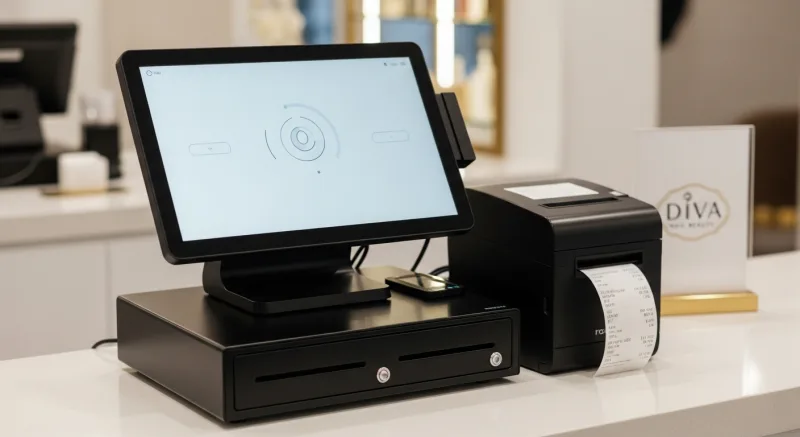
Diva Nail Beauty operates 4 locations with 4 terminals. Before switching to KwickOS, the owner spent hours every week manually calculating commissions — different rates for different technicians, different percentages for different service categories, tips distributed across shifts, and product commission tracked on a separate spreadsheet that nobody trusted.
After implementing KwickOS for their nail salon operations, commission calculations became automatic. Every service logged at the POS instantly calculates the technician's commission based on their individual rate structure. Product sales commissions track separately. Tips record in real time. End-of-day reports show exactly what every technician earned, broken down by service commission, product commission, and tips.
The result: a 90% increase in operational efficiency. The hours spent on spreadsheets dropped to minutes. Payroll disputes — which used to happen every other week — virtually disappeared because every technician could see their earnings in real time.
Here's the thing most salon owners miss: the commission structure you choose matters less than your ability to track it accurately and transparently. A complicated tiered hybrid model is useless if you can't calculate it correctly. A simple 50/50 split will still cause resentment if stylists suspect the math is wrong.
Choosing the Right Model for Your Salon
There's no universal "best" model. The right structure depends on your salon's stage, market, and goals. Here's a decision framework:

Choose straight commission (50/50 or 60/40) if:
- You're a new salon building your team
- Your stylists are mostly junior and still building clientele
- You want the simplest possible payroll
Choose tiered commission if:
- You have mid-to-senior stylists who could produce more but aren't motivated
- You want to reward top performers without giving across-the-board raises
- Your POS system can automate the calculations (doing this manually is unsustainable)
Choose booth rental if:
- You want predictable fixed income with minimal management
- Your market has many independent stylists who prefer autonomy
- You're comfortable being a facility operator rather than a service brand
Choose salary + commission if:
- You're in a competitive market where stylists have many options
- Your salon experiences significant seasonal fluctuations
- You want to attract stylists who value stability over maximum earning potential
Choose hybrid if:
- You want to maximize revenue across services, products, and gift cards
- Your team includes a mix of experience levels
- You have a POS system that can handle multi-variable commission tracking
The Product Commission Most Salons Ignore
Here's a pattern interrupt: retail product sales are the highest-margin revenue stream in your salon, and most commission structures completely ignore them.
The average salon generates only 8-12% of total revenue from product sales. The top-performing salons? 25-30%. The difference isn't product selection or shelf placement. It's commission incentives.
When stylists earn zero commission on product sales, they don't recommend products. When they earn 10-20%, they become enthusiastic product consultants — because recommending a $32 shampoo earns them $3.20-$6.40 with zero additional chair time.
Do the math for a salon with 6 stylists. If each stylist sells $500/month in retail at 15% commission:
- Total retail revenue: $3,000/month
- Product cost (50% margin): $1,500
- Commission paid: $450
- Net retail profit: $1,050/month = $12,600/year
That's $12,600 in pure profit from a revenue stream that costs zero chair time and requires no additional overhead. And you're paying for it with a 15% commission that the stylists love because it's incremental income they control.
Your POS system should track product commissions separately from service commissions, and every stylist should be able to see their product sales and commissions in real time. When they can see the number going up, they sell more. It's human nature.
Gift Card and Loyalty Programs: The Commission Multiplier
Smart salons tie their commission structure to their gift card and loyalty programs. Here's why: gift cards and loyalty programs drive repeat visits, and repeat visits are the foundation of salon profitability.
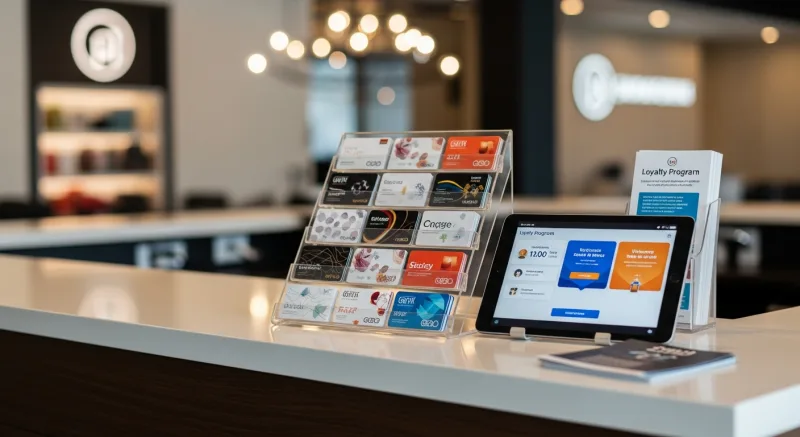
Consider offering stylists a small bonus ($2-$5) for every gift card they sell. A stylist who sells 20 gift cards during the holiday season at an average of $75 generates $1,500 in prepaid revenue — and roughly 20% of gift card value goes unredeemed (breakage), which is pure profit.
For loyalty programs, some salons offer a 1-2% commission bonus on services performed for loyalty members. This incentivizes stylists to enroll clients in the program, which increases visit frequency by 15-25% on average.
These micro-incentives compound. A stylist earning an extra $200/month from product commissions, gift card bonuses, and loyalty bonuses is $2,400/year less likely to entertain a recruiter's call.
The Technology Gap: Why Spreadsheets Are Costing You Money
Here's the uncomfortable truth: if you're tracking commissions in Excel or Google Sheets, you're probably making errors that cost you money — or your stylists' trust.
Manual commission tracking breaks down when you have:
- Different commission rates for different stylists
- Tiered rates that change mid-month as stylists cross thresholds
- Separate product commission percentages
- Gift card sales that need tracking
- Tips that need to be separated from commissions
- Multi-location staff who float between salons
A single data-entry error in a commission spreadsheet does more damage than the dollar amount suggests. When a stylist's paycheck is $87 short, the trust damage is immediate and lasting — even after you correct it.
Modern POS systems like KwickOS calculate commissions automatically at the point of transaction. When a stylist completes a $120 balayage and sells a $28 toner, the system instantly calculates the service commission (at whatever tier they're currently in), the product commission (at their retail rate), and logs the tip separately. No spreadsheet. No midnight math. No payroll disputes.
The difference between KwickOS and systems like Square is that KwickOS supports multi-tier commission structures natively — you set up the rules once, and the system handles every edge case automatically. Square and many other systems offer only flat-rate commission tracking, forcing you back into spreadsheets the moment you implement tiers.
Implementation: Switching Commission Models Without Losing Staff
Changing your commission structure is one of the most sensitive decisions you'll make as a salon owner. Do it wrong and you'll trigger an exodus. Do it right and you'll energize your team.
The 3-month transition plan:
- Month 1 — Announce and explain. Show every stylist what they would have earned under the new model using their last 3 months of actual numbers. If anyone would earn less, adjust the tiers until no one takes a pay cut at their current production level. The goal is upside, not cuts.
- Month 2 — Run parallel. Pay on the old model but show stylists their "shadow" earnings under the new model. Let them see the upside building. This builds buy-in.
- Month 3 — Switch live. Move to the new model. Guarantee no one earns less than their average from the previous 3 months for the first 60 days. This safety net eliminates fear.
And that's not all — the technology you use matters during transitions. A POS system that can run parallel commission calculations saves you from maintaining two separate spreadsheets during the transition period. KwickOS allows you to configure multiple commission profiles per staff member, making parallel tracking automatic.
The Bottom Line: Commission Structure Is Your Competitive Advantage
In a market where stylists have options, your commission structure is your recruiting pitch, your retention strategy, and your profit engine — all in one.
The salons that thrive aren't the ones paying the highest percentages. They're the ones with commission structures that reward growth, track accurately, and feel fair. A tiered or hybrid model with automatic POS tracking achieves all three.
Here's the math that should keep you up tonight: if your salon has 6 chairs and each chair is underperforming by $2,000/month because your commission model doesn't incentivize growth, you're leaving $144,000 per year on the table. A well-designed tiered model with proper technology could capture half of that without increasing your overhead by a single dollar.
Your stylists are your business. Structure their compensation to make them want to stay and grow with you — and use technology to track it transparently so nobody ever wonders if the math is right.
Automate Your Salon Commissions
KwickOS handles tiered commissions, product commissions, tip tracking, and multi-location payroll — automatically. See how Diva Nail Beauty achieved 90% efficiency gains.
See KwickOS for Salons