 Rain Lee
Open your DoorDash Merchant Portal right now. Click "Financials." Look at last month's commission total.
Now imagine keeping half of that money.
If you're doing $12,000/month in delivery orders through DoorDash at their standard 30% rate, you're handing over $3,600 every month — $43,200 a year — for the privilege of having someone drive food from your kitchen to a customer's front door.
Here's the thing: that 30% is a starting point, not a final offer. DoorDash, UberEats, and Grubhub all have tiered commission structures. They all have account managers authorized to cut deals. And they are all terrified of losing restaurant partners to competitors.
The restaurant down the street from you — same volume, same cuisine — might be paying 15%. Not because they're special. Because they asked.
This guide gives you the exact playbook: the commission structures each platform actually uses, the leverage points that force account managers to offer lower rates, the exclusivity traps to avoid, and a hybrid strategy that can cut your total delivery costs by 50% or more.
The Real Commission Structures Nobody Publishes
Third-party delivery platforms love to present their pricing as simple and non-negotiable. It's not. Every major platform runs a tiered system with significant room for negotiation at each level.
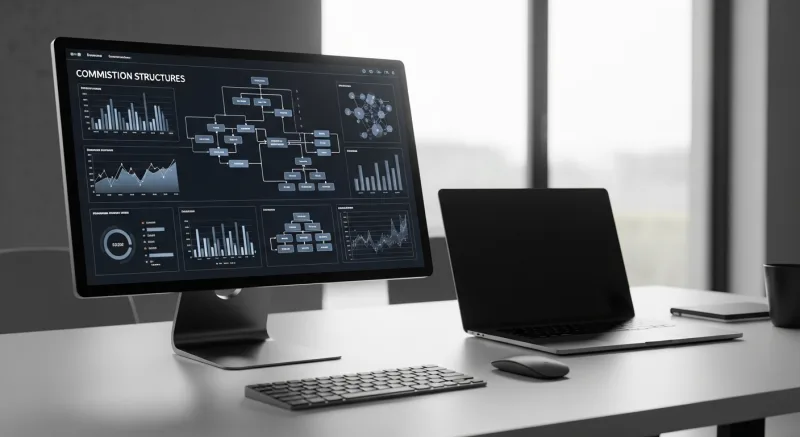
DoorDash Commission Tiers
DoorDash offers three official plans:
| Plan | Commission | What You Get | What You Give Up |
|---|---|---|---|
| Basic | 15% | Marketplace listing | No DoorDash delivery — pickup or self-delivery only |
| Plus | 25% | DoorDash delivery + larger delivery radius | Limited marketing placement |
| Premier | 30% | Delivery + DashPass access + premium placement | Maximum commission |
But it gets worse: most restaurants are auto-enrolled in the Premier plan. DoorDash doesn't exactly advertise the 15% option during onboarding.
What they also don't tell you is that there's a fourth option — custom negotiated rates — available to any restaurant doing 100+ orders/month or $8,000+ in monthly delivery revenue. These custom deals can get you delivery-included rates as low as 18% with marketing placement.
UberEats Commission Tiers
| Plan | Commission | What You Get |
|---|---|---|
| Lite | 15% | Marketplace listing, pickup only |
| Plus | 25% | UberEats delivery included |
| Premium | 30% | Delivery + Uber One priority + promoted placement |
UberEats tends to be slightly more flexible in negotiation than DoorDash because they're still fighting for restaurant market share. If you have a DoorDash custom rate in writing, UberEats will almost always match or beat it.
Grubhub Commission Tiers
Grubhub's standard rates range from 15% (pickup only) to 25% (delivery included). They've historically been the most negotiable of the three, especially in markets where they have lower driver density. Grubhub also offers a "marketing rate" — an additional 5-10% commission you can opt into for better search placement.
And that's not all: Grubhub was acquired by Wonder Group in 2024, and they've been aggressively trying to retain restaurant partners. This makes right now one of the best windows for Grubhub negotiation in years.
Your Leverage Points (You Have More Than You Think)
Delivery platforms need restaurants more than restaurants need them. Without menus to show customers, they have nothing to sell. Here are the specific leverage points you can use in any negotiation:
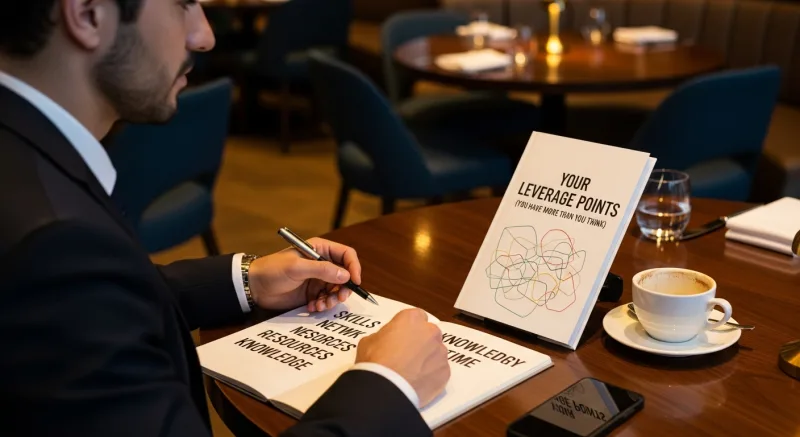
1. Multi-Platform Presence
If you're on DoorDash, UberEats, and Grubhub simultaneously, each platform knows you can shift volume away from them. This is your single strongest negotiating tool. Never go exclusive with one platform before negotiating with all three.
The script: "We're currently evaluating our delivery partnerships. We'd like to consolidate to two platforms. What can you offer to be one of the two we keep?"
2. Volume Commitments
Platforms love predictable revenue. If you can commit to a minimum order volume — say, 200 orders/month — many account managers are authorized to drop your rate by 3-5 percentage points immediately.
The script: "We're projecting 250+ orders per month on your platform this quarter. At our current rate of 30%, we're evaluating whether the ROI justifies staying. What rate would you offer for a 6-month volume commitment?"
3. Your First-Party Ordering Channel
Here's the thing most restaurant owners don't realize: having your own online ordering system is the ultimate leverage. When DoorDash knows that every customer who finds you on their platform could just as easily order from your website at zero commission, they get very motivated to keep your menu on their app.
Restaurants using first-party ordering through KwickMenu report that simply mentioning their direct ordering channel during negotiations drops DoorDash quotes by 5-8 percentage points. The platform knows that if they push too hard on commission, you'll redirect customers to your own system.
4. Review Score and Order Ratings
If your restaurant maintains a 4.5+ rating on any delivery platform with 500+ reviews, you're generating organic traffic for that platform. Customers search for top-rated restaurants. Your high score drives orders for the entire platform — not just for you.
The script: "Our 4.7 rating with 1,200 reviews makes us one of the top-performing restaurants in this market. We drive significant organic search traffic to your platform. Our rate should reflect that value."
5. Timing
When you negotiate matters almost as much as what you say:
- Q4 (October-December): Best time. Platforms are pushing to hit annual targets.
- Contract renewal: 30-60 days before expiration. The platform's retention team has more authority than their new business team.
- After competitor outreach: If UberEats just emailed you an offer, call DoorDash the same day.
- New market entry: When a platform launches in your area, they offer heavily discounted rates to build their restaurant base.
The Exclusivity Trap: Why You Should Almost Never Take It
At some point in every negotiation, a delivery platform will dangle the exclusivity card: "We can drop your commission to 18%, but you need to remove your menu from UberEats and Grubhub."
Sounds tempting. Do the math first.
Let's say you currently do $12,000/month in delivery across three platforms:
| Platform | Monthly Orders | Monthly Revenue | At 25% |
|---|---|---|---|
| DoorDash | 180 | $5,400 | $1,350 |
| UberEats | 140 | $4,200 | $1,050 |
| Grubhub | 80 | $2,400 | $600 |
| Total | 400 | $12,000 | $3,000 |
Now take the DoorDash exclusivity deal at 18%:
You won't keep all 400 orders. UberEats and Grubhub customers don't automatically migrate. Industry data shows you'll retain about 60-70% of your total delivery volume when going exclusive. So:
- Expected orders: ~260/month (down from 400)
- Expected revenue: ~$7,800/month (down from $12,000)
- Commission at 18%: $1,404/month
You're paying $1,404 instead of $3,000 in commissions. But you're also earning $4,200 less in revenue. You saved $1,596 in commissions but lost $4,200 in sales. That's a net loss of $2,604 every month.
But it gets worse: you've now lost all negotiating leverage. When that exclusivity contract comes up for renewal, DoorDash knows you have no competing platforms to threaten them with. Expect your "special" rate to creep back up to 22%, then 25%.
The only scenario where exclusivity makes sense is if one platform generates 85%+ of your delivery orders already and the others are negligible. For everyone else, stay on multiple platforms.
The Hybrid Strategy: Third-Party for Discovery, First-Party for Profit
Here's the real game: use third-party apps for customer acquisition, but route repeat customers to your own ordering channel.

Think of DoorDash and UberEats like a billboard. You're paying 25-30% commission for new customer eyeballs. That's expensive, but it's a customer acquisition cost — not a cost of doing business forever.
The moment a customer orders from you once through DoorDash, your goal is to make sure their second order comes directly through your website or your own ordering app.
How Restaurants Actually Execute This
- Include a flyer in every delivery bag. "Order direct next time at [yourrestaurant.com] — save $3 on your next order." The $3 discount costs you far less than 25% commission. On a $35 order, you're saving $5.75 in commission even after giving the $3 discount.
- Build a first-party ordering system. Platforms like KwickMenu give you your own branded ordering page with zero commission on pickup orders and flat-fee delivery through KwickDriver ($2 flat + $6.99 per delivery within 5 miles).
- Offer loyalty points only on direct orders. If customers earn rewards through your app but not through DoorDash, you create a financial incentive for them to switch channels.
- Use your own delivery when possible. KwickDriver charges $2 + $6.99 per delivery. On a $35 order, that's $8.99 total — compared to $8.75-$10.50 through DoorDash at 25-30%. The difference is small per order, but you own the customer relationship and their data.
The Real Math: Hybrid vs All-Third-Party
Let's compare a restaurant doing $12,000/month in delivery:
| 100% Third-Party (25%) | Hybrid (60/40 Split) | Monthly Savings | |
|---|---|---|---|
| Third-party volume | $12,000 | $7,200 (60%) | |
| Third-party commission (25%) | $3,000 | $1,800 | |
| First-party volume | $0 | $4,800 (40%) | |
| First-party cost (KwickDriver) | $0 | ~$1,234* | |
| Total delivery cost | $3,000 | $3,034 | |
| Cost as % of revenue | 25.0% | 25.3% |
*Based on ~137 first-party orders at $35 avg, with KwickDriver at $2 + $6.99 per delivery.
Wait — the costs look almost the same. So why bother?
Because of what happens in month 3, month 6, and month 12. As your first-party channel grows (the flyers work, the loyalty kicks in, repeat customers shift over), that 40% becomes 50%, then 60%. And here's the kicker: first-party customers order 22% more frequently than third-party customers because you have their email, you can send them promotions, and you own the relationship.
By month 6, a typical restaurant sees this:
| 100% Third-Party | Hybrid (40/60 Split) | Monthly Savings | |
|---|---|---|---|
| Total delivery revenue | $12,000 | $14,400 (+22% from repeat) | |
| Third-party cost | $3,000 | $1,440 (40% × 25%) | |
| First-party cost | $0 | ~$2,162 | |
| Total cost | $3,000 | $3,602 | |
| Net delivery profit | $9,000 | $10,798 | +$1,798 |
The hybrid model generates $1,798 more in net delivery profit per month — and the gap widens every month as more customers shift to direct ordering. Over a year, that's $21,576 in additional profit from the same customer base.
Rockin' Rolls Sushi Express runs exactly this model across 3 locations with 49 iPad self-ordering stations. Their in-store kiosk customers are prompted to order delivery direct next time, and their first-party ordering channel now handles 55% of all delivery volume.
The Negotiation Script: Word for Word
Here's what to say when you call your DoorDash or UberEats account manager. Adapt this to your specific numbers.
Opening
"Hi [name], I'm reviewing our delivery partnerships for the quarter. We currently do [X] orders/month on your platform at [X]% commission. I want to discuss our rate before we make decisions about which platforms we'll continue with."
The Leverage Play
"We've received a competitive offer from [other platform] at [X]% with delivery included. We've also been shifting more volume to our own direct ordering channel through KwickMenu, which costs us about 8% per delivery versus your 25%. I'd like to keep your platform in our mix, but the current rate doesn't work."
The Ask
"We need [target rate]% with delivery included to continue our partnership. In return, we're prepared to commit to [X] orders minimum per month and keep your platform as our primary third-party channel."
If They Push Back
"I understand you may not have the authority to go to [target rate]. Can you connect me with someone who does? We're a [4.X]-rated restaurant with [X] orders/month. I'm confident there's a rate that works for both of us, but 30% isn't it."
If They Offer Exclusivity
"I appreciate the exclusivity offer, but we've run the numbers and staying multi-platform is more profitable for us even at a higher per-order rate. What can you offer without an exclusivity requirement?"
What Crafty Crab Learned About Multi-Platform Negotiation
Crafty Crab Seafood operates 19 locations with 152 terminals on KwickOS. When they renegotiated their delivery contracts across all locations, they used a strategy that any multi-location operator can replicate:
- Consolidated the negotiation. Instead of each location negotiating separately, their operations team negotiated one master agreement covering all 19 stores. This turned 19 small-volume accounts into one large-volume partnership.
- Played platforms against each other. They took UberEats' best offer to DoorDash, DoorDash's counter to Grubhub, and Grubhub's final number back to UberEats.
- Kept first-party as the escape valve. Their KwickMenu integration meant they could credibly threaten to shift volume away from any platform that wouldn't budge on rates.
The result: an average commission reduction of 7 percentage points across all three platforms. On their combined delivery volume, that saves over $8,000 per month — nearly $100,000 per year.
After the Negotiation: Protecting Your New Rate
Getting a lower rate is step one. Keeping it requires ongoing attention:
- Get it in writing. Any verbal agreement is worthless. Insist on an email confirmation with the specific rate, duration, and conditions.
- Set a calendar reminder for 60 days before renewal. Start the renegotiation process early, never let it auto-renew.
- Track your effective rate monthly. Platforms sometimes add "service fees" or "technology fees" that creep above your negotiated commission. Use your delivery cost calculator to monitor the actual percentage you're paying.
- Keep growing your first-party channel. The higher your direct ordering percentage, the more leverage you have in every future negotiation.
- Document everything. Keep a folder with all rate confirmations, correspondence, and volume reports. When you negotiate next quarter, this history is your ammunition.
The Real Cost Comparison: Everything on One Dashboard
One of the biggest challenges with managing multiple delivery channels is visibility. When you're paying different rates on three platforms plus your own delivery, how do you know what each order actually costs?
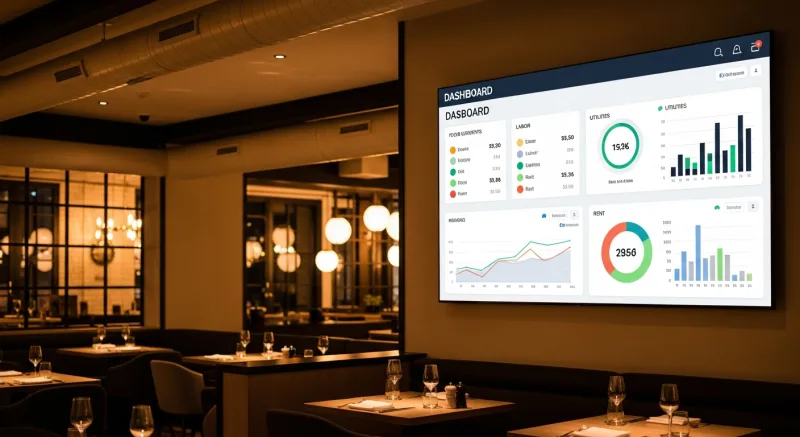
This is where a unified POS system changes the game. With KwickOS, every delivery order — whether it comes from DoorDash, UberEats, Grubhub, or your own KwickMenu channel — flows into one dashboard. You can see the commission rate, delivery cost, and net profit per order, per platform, per location, in real time.
T. Jin China Diner uses this across 15 locations and 75 terminals to make data-driven decisions about which platforms to push volume toward each month. When DoorDash raised their effective rate by 2% through added fees in one market, they spotted it within days and shifted promotions to UberEats.
That kind of visibility turns delivery from a cost center into a profit center. And it starts with having the right data infrastructure — not better negotiation skills.
Take Control of Your Delivery Costs
KwickOS integrates all delivery channels — DoorDash, UberEats, Grubhub, and your own KwickMenu — into one dashboard. See your real commission costs and start keeping more of every delivery dollar.
Calculate Your Delivery Savings