 Tom Jin
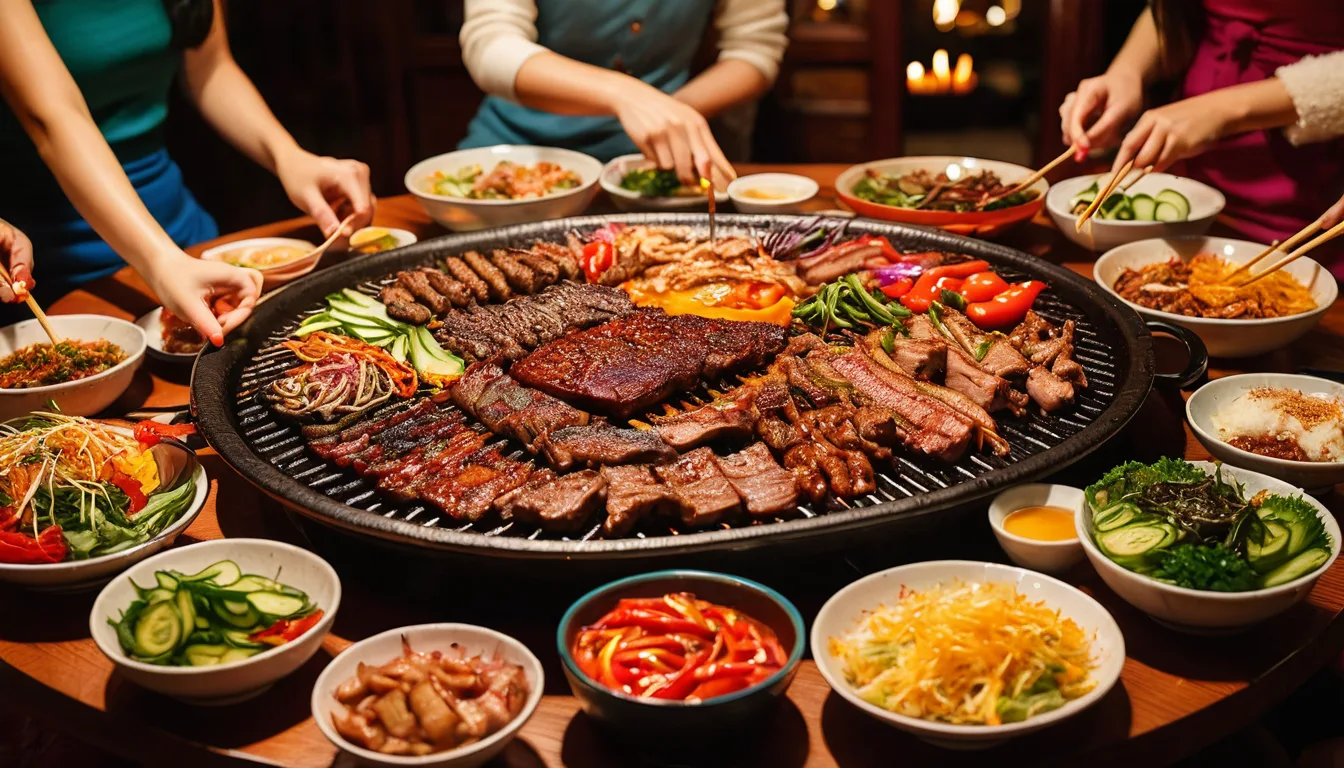
You serve 8 banchan dishes to every table. Kimchi, pickled radish, seasoned spinach, dried anchovies, bean sprouts, japchae, tofu, egg roll. Beautifully arranged, freshly prepared, completely free.
Now multiply $2.40 per table by 80 covers per night. That is $192 per day in food you never charged for. Over a month, you are giving away $5,760 worth of food that never appears on a single receipt.
But it gets worse: when a table asks for a second round of kimchi and japchae — and they always do — that $2.40 climbs to $3.50 or more. Suddenly your banchan line is costing you $8,400 a month. On a restaurant doing $120,000 in monthly revenue, that is 7% of your top line disappearing into little side dishes.
Here's the thing: you cannot stop serving banchan. It is the soul of Korean dining. Remove it and customers stop coming. Charge for it and you will face backlash. The only option is to get ruthlessly efficient about how you prepare, portion, track, and rotate it.
After 20 years in the restaurant industry and working with Korean restaurant operators across the country, I have seen what separates the restaurants drowning in banchan costs from the ones running 28-32% food costs with a full spread on every table. The difference is not fewer dishes — it is smarter systems.
The Real Cost of Banchan: Numbers Most Operators Never Calculate
Before you can fix your banchan costs, you need to know what you are actually spending. Most Korean restaurant owners have never calculated the per-table cost of their banchan spread because it is not a menu item — there is no price tag, no POS button, no line item on the P&L.
And that is exactly why it gets out of control.
Here is a typical 8-item banchan breakdown at ingredient cost:
| Banchan Item | Cost Per Portion | Shelf Life | Refill Rate |
|---|---|---|---|
| Napa kimchi | $0.28 | 2-4 weeks | High (65%) |
| Pickled radish (danmuji) | $0.12 | 2-3 weeks | Low (15%) |
| Seasoned spinach (sigeumchi) | $0.35 | 2-3 days | Medium (30%) |
| Dried anchovies (myeolchi) | $0.22 | 5-7 days | Low (10%) |
| Bean sprouts (kongnamul) | $0.18 | 2-3 days | Medium (25%) |
| Japchae (glass noodles) | $0.55 | 2-3 days | High (55%) |
| Seasoned tofu | $0.30 | 1-2 days | Medium (20%) |
| Egg roll (gyeran mari) | $0.40 | 1 day | High (50%) |
| Total per table | $2.40 |
Notice something? The three most expensive items — japchae, egg roll, and seasoned spinach — are also the ones with the shortest shelf life and highest refill rates. That is $1.30 of your $2.40 sitting in items that spoil fast and get eaten fast. This is where the real cost control opportunity lives.
And that's not all: the waste column matters as much as the cost column. Seasoned spinach and bean sprouts wilt within 48 hours. If you prep a week's worth on Monday and throw away 30% by Wednesday, your actual cost per portion is 30% higher than the ingredient cost.
Strategy 1: Batch Prep Scheduling That Matches Demand
The single biggest banchan cost mistake is prep timing. Most kitchens prep all banchan on a single day — usually Monday — in bulk quantities estimated by feel. By Thursday, the short-shelf items are deteriorating. By Saturday peak service, the kitchen is emergency-prepping more because Monday's batch is gone or wilted.
Here is the fix: split your banchan into three prep tiers based on shelf life.
Tier 1 — Weekly prep (shelf life 1-4 weeks): Kimchi, pickled radish, dried anchovies, pickled cucumbers. Prep once per week on your slowest day. These are your set-it-and-forget-it items.
Tier 2 — Bi-weekly prep (shelf life 3-5 days): Bean sprouts, seasoned burdock, potato salad. Prep Monday and Thursday mornings.
Tier 3 — Daily prep (shelf life 1-2 days): Egg roll, japchae, seasoned spinach, seasoned tofu. Prep each morning before service based on that day's expected covers.
But here is the critical part: you need actual cover data to get the daily prep quantities right. "We usually do about 70 covers on Tuesday" is not good enough. You need to know that last Tuesday you did 68, the Tuesday before was 73, and the Tuesday before that was 81 because there was a local event.
This is where your POS system becomes essential. A system like KwickOS tracks covers per day, per daypart, and per server station automatically. Pull a 4-week rolling average for each day and use that as your prep base — then add 10% buffer for refills. According to restaurant industry data, restaurants that switch from gut-feel to data-driven prep typically reduce banchan waste by 25-35%.
Strategy 2: Portion Control Without Making It Look Stingy
Portion control on banchan is a psychological game. You are not reducing quantities — you are presenting smaller amounts that look generous.
The secret is dish size. If you serve 3 ounces of kimchi in a 6-inch bowl, it looks half empty. Serve the same 3 ounces in a 3.5-inch dish and it is overflowing. The customer perception is abundance. The reality is portion discipline.
Korean restaurant supply companies sell banchan-specific dishes in various sizes. The investment is small — usually $1.50-$3.00 per dish — but the impact is significant:
- Switch from 4-inch to 3.5-inch banchan dishes: reduces initial portion by approximately 20% with no perceived change
- Use deeper dishes for items like kimchi: looks like more food, holds slightly less
- Flat, wide dishes for items like egg roll: spreading 3 pieces across a dish looks more generous than stacking them
One Korean BBQ operator we work with made this single change — switching dish sizes — and reduced their monthly banchan cost by $840 without a single customer complaint. Over a year, that is $10,080 saved from buying different dishes.
Strategy 3: The 60/40 Cost Mix Rule
Here is a banchan design principle that keeps costs predictable: 60% of your banchan items should be low-cost staples, and 40% should be the "wow" items that make your spread memorable.
Low-cost staples (under $0.25/portion):
- Napa kimchi ($0.28 — technically over $0.25 but essential and long-lasting)
- Pickled radish ($0.12)
- Bean sprouts ($0.18)
- Seasoned seaweed ($0.15)
- Pickled cucumber ($0.14)
"Wow" items ($0.30-$0.55/portion):
- Japchae ($0.55)
- Egg roll ($0.40)
- Seasoned spinach ($0.35)
The trick: rotate your expensive items. Do not serve japchae, egg roll, and seasoned spinach every single day. Instead, offer two of the three on a rotating schedule. Monday/Wednesday/Friday: japchae and egg roll. Tuesday/Thursday/Saturday: egg roll and spinach. Sunday: japchae and spinach.
Customers who visit once a week see a "changing menu" — which actually feels more premium. Customers who visit multiple times per week get variety. And you reduce your daily expensive-item prep by one-third.
Strategy 4: Seasonal Banchan Rotation Saves More Than You Think
Seasonal ingredients are not just a culinary trend — they are a cost control strategy. Vegetables at peak season cost 30-50% less than off-season equivalents.
Here is a seasonal banchan calendar that keeps costs low and flavors fresh:
| Season | Add These (Cheap & Fresh) | Reduce These (Expensive Now) |
|---|---|---|
| Spring (Mar-May) | Spinach, radish, spring onions | Root vegetables, dried items |
| Summer (Jun-Aug) | Cucumber, zucchini, perilla leaves | Spinach, heavy braised items |
| Fall (Sep-Nov) | Sweet potato, mushrooms, lotus root | Summer vegetables |
| Winter (Dec-Feb) | Kimchi varieties, braised items, dried fish | Fresh greens, cucumber |
A Korean restaurant that adjusts its banchan lineup seasonally can reduce ingredient costs by 15-20% compared to a fixed year-round lineup. According to restaurant industry data, seasonal menu adjustments are one of the most underused cost control levers in Asian restaurants.
And here is an unexpected benefit: seasonal rotation gives you a natural reason to promote your restaurant. "New spring banchan lineup this week" is genuine social media content that drives visits. Your cost control strategy doubles as marketing.
Strategy 5: Track Refills Like They Are Menu Items
Most Korean restaurants have no idea which banchan items get refilled most — or which tables request the most refills. Without data, you cannot optimize.
Here is what tracking looks like in practice: when a server picks up a refill request, they enter it in the POS as a zero-cost modifier on the table's ticket. It does not charge anything. But it creates a record.
After 30 days of tracking, you will discover patterns that change how you operate:
- Which items get refilled most: If japchae has a 55% refill rate and dried anchovies have a 10% rate, your initial japchae portion is either too small or too popular. Either increase the initial portion slightly (to reduce refill labor) or substitute it into your rotation schedule so it is not served daily.
- Which tables consume the most: Parties of 4+ refill 2.3x more than couples. If you serve smaller banchan dishes to 2-tops and standard dishes to 4-tops, your portions match consumption naturally.
- Time-of-day patterns: Dinner refill rates are typically 40% higher than lunch. Adjust your dinner prep quantities accordingly.
KwickOS makes this tracking effortless because servers can tap a "banchan refill" button on the POS that logs the item and table without printing a ticket or affecting the bill. Over time, the system builds a refill heat map that shows you exactly where your banchan dollars are going. The hybrid local+cloud architecture means this tracking runs at 1ms local speed — even during peak Saturday dinner service, logging a refill does not slow down order entry.
Strategy 6: Smart Checkout Integration for Korean Dining
Banchan is "free" — but the dining experience around it is not. The checkout moment is where you recover banchan costs through strategic upselling that feels natural.
Here is what high-performing Korean restaurants do at the POS checkout:
- Prompt for soju/beer add-on: Alcohol margins are 75-80%. A $12 bottle of soju costs you $3. When the POS prompts "Add soju for the table?", servers convert at 35-40% acceptance rate. That is $9 in gross profit that more than covers the banchan cost for that table.
- Gift card upsell at payment: "Would you like to add a $25 gift card? You will get a bonus $5 e-gift card free." Gift cards drive return visits, and according to restaurant industry data, 15-20% of gift card value is never redeemed. That is pure profit — and it offsets banchan costs on future visits.
- Loyalty point enrollment: At checkout, prompt first-time customers to join your loyalty program. "Earn 1 point per dollar, get $10 off at 100 points." Loyalty members visit 2.5x more frequently than non-members. More visits means more entree orders — and entree margins (65-70%) dwarf banchan costs ($2.40/table).
The KwickOS checkout flow supports all of these prompts natively — gift card sales, e-gift card bonuses, loyalty enrollment, and modifier-based upsell suggestions all appear automatically based on rules you set. Your servers do not need to remember to ask. The system prompts them.
Strategy 7: The Premium Banchan Tier (When Done Right)
Some Korean restaurants have successfully introduced a premium banchan option without violating the "free sides" expectation. The key is positioning.
Do not charge for your existing banchan. Instead, offer an optional upgrade:
"Our complimentary banchan is included with every meal. For $5.99, upgrade to our Premium Banchan Platter with galbi jjim, haemul pajeon, and tteokbokki."
This works because:
- The free banchan stays free — no customer resentment
- The premium platter contains items that are distinctly different (hot dishes vs. cold sides)
- At $5.99 with a food cost around $2.00, it is a 67% margin item
- Uptake rates typically run 15-25% of tables
On 80 covers per night with a 20% uptake rate, that is 16 premium platters at $5.99 = $95.84 in additional daily revenue, with $63.84 in gross profit. Monthly: $1,915 in pure margin that directly offsets your banchan costs.
Real Results: Data-Driven Banchan Management in Action
A 2-location Korean BBQ restaurant in Texas implemented five of these seven strategies over 90 days. Here is what changed:
| Metric | Before | After (90 Days) | Change |
|---|---|---|---|
| Banchan cost per table | $3.15 | $2.28 | -28% |
| Monthly banchan waste | $1,840 | $680 | -63% |
| Monthly banchan spend | $9,450 | $6,840 | -$2,610/mo |
| Overall food cost % | 36.2% | 32.8% | -3.4 points |
| Customer satisfaction | 4.3/5 | 4.5/5 | +0.2 |
Customer satisfaction actually went up — because seasonal rotation made the banchan spread more interesting, smaller dishes looked more artful, and the premium platter gave diners who wanted more an option to get it.
The Crafty Crab Seafood chain — 19 stores, 152 terminals on KwickOS — uses a similar centralized approach for their complimentary sides. One-click menu sync means when headquarters adjusts a side dish recipe or portion spec, it propagates to all 19 locations instantly. No location-by-location training. No version drift. For Korean restaurants considering expansion, this kind of centralized banchan management is essential.
The Technology Stack That Makes It Work
Manual banchan management does not scale. A single-location operator might get away with clipboard tracking for a few weeks, but the discipline fades. You need systems that track automatically and surface insights without extra effort.
Here is what your POS needs to do for effective banchan cost control:
- Inventory tracking by category: Separate banchan ingredients from main menu ingredients so you can see true banchan cost independently
- Cover-based prep forecasting: Pull rolling averages of daily/weekly covers to set prep quantities
- Refill tracking: Zero-cost POS modifiers that log refill requests by item, table, and time
- Waste logging: End-of-day waste entry that calculates actual vs. expected usage
- Multi-location sync: If you have 2+ locations, banchan specs and recipes must stay consistent
- Fingerprint authentication: KwickOS 1:N fingerprint login means your prep cooks clock in instantly — no buddy punching, no shared PINs — so your labor cost tracking for banchan prep hours is accurate
The processor-agnostic advantage matters here too. Every dollar you save on payment processing fees — typically $3,000 to $8,000 per year by choosing your own processor instead of being locked into a Toast or Square rate — is a dollar that offsets your banchan investment. Compare how KwickOS stacks up against locked-in alternatives on our KwickOS vs Toast comparison page.
Putting It All Together: Your Banchan Control Action Plan
You do not need to implement all seven strategies at once. Start with the three that deliver the fastest ROI:
- Week 1: Calculate your actual banchan cost per table. Use the breakdown table above as a template. Enter your own ingredient costs and portion sizes. If you do not know your portion sizes, weigh them for one day. This number is your baseline.
- Week 2: Switch to tiered batch prep scheduling. Move your daily-prep items (japchae, egg roll, spinach) to morning prep based on the day's expected covers. Use your POS cover history to set quantities.
- Week 3: Order smaller banchan dishes and implement the 60/40 cost mix. Start rotating your expensive items instead of serving all of them daily.
- Week 4: Turn on refill tracking in your POS. After 30 days of data, you will know exactly which items to adjust and which tables need different portion strategies.
Within 90 days, most Korean restaurants see a 20-30% reduction in banchan costs — without removing a single dish from the table. That is $2,000-$3,000 per month back in your pocket, which on a restaurant operating at 5-8% net margins has the same profit impact as generating $25,000-$60,000 in additional revenue.
Want to see how your banchan costs compare to industry benchmarks? Try our food cost calculator to model different scenarios. And if you are running a Korean restaurant on a locked POS system that does not let you track banchan separately, explore how KwickOS handles Korean restaurant operations — from table BBQ timers to banchan cost tracking to reseller partnerships that put you in control of your technology.
Take Control of Your Banchan Costs
KwickOS gives Korean restaurants the inventory tracking, refill logging, and prep forecasting tools to turn banchan from a margin killer into a competitive advantage.
Get a Free Demo