 Ming Ye
Here's a number that should stop you cold: Easter is, by reservation volume, one of the two or three busiest dining-out days on the American calendar — and it concentrates almost entirely into a four-hour window. Families that eat out twice a year eat out on Easter. Grandparents pay. Tables are big. Nobody is splitting a single app.
And yet most independent restaurants treat it like a slightly busier Sunday. Same brunch menu. Same walk-in flow. Same two-top mindset on a day built for ten-tops.
Here's the thing: that's not a missed busy day — it's a missed year. Because Easter doesn't just deliver one high-revenue service. It delivers a flood of new faces, out-of-town relatives, and special-occasion spenders who will never find you again unless you do something deliberate at the table. The restaurant that runs Easter as a campaign banks a five-figure morning and walks away with a list of regulars. The one that wings it banks a tired Sunday and forgets every guest by Tuesday.
But it gets worse for the wingers: the demand is fixed. The families in your trade area are going to eat a celebration meal somewhere on Easter. If you don't offer them an easy, pre-bookable, clearly-priced experience, they'll drive to the place that did — or they'll book the hotel down the street. You're not competing for whether they spend. You're competing for whether they spend it with you.
This guide breaks down exactly how to engineer the highest-revenue brunch of your year: the menu, the pricing, buffet versus plated, the reservation system that prevents both empty tables and a kitchen meltdown, and — the part almost everyone skips — how to turn that one $127 table into a season of returning $67 tables.
Why Easter Tables Are Worth Nearly Double
Start by understanding why the math changes, because it tells you exactly which levers to pull.
- Party size doubles or triples. A normal Sunday brunch is two-tops and four-tops. Easter is six-tops, eight-tops, and the dreaded-but-lucrative twelve-top with three generations at it. More seats per table means more revenue per table turn.
- Guests accept a fixed celebration price. On a regular day, a $55 brunch entree feels steep. On Easter, a $59 prix-fixe with a starter, an entree, and a dessert feels appropriate. The occasion does the price-anchoring for you.
- Everyone orders the full experience. Mimosas, coffee, dessert, a kids' plate, an extra side for the table. Add-ons that get skipped on a Tuesday get ordered on Easter because the whole point is to celebrate.
- The buying decision is planned, not impulsive. Families decide where to go days or weeks ahead. That means you can capture the reservation early and forecast your entire service from confirmed bookings instead of guessing.
That last point is the quiet superpower. When you know on Thursday how many guests are coming Sunday, you buy exactly the right amount of food, schedule exactly the right labor, and prep ahead instead of scrambling. A fixed menu plus confirmed reservations is the single biggest reason an Easter table is more profitable — not just bigger, but cheaper to serve per dollar.
Design a Prix-Fixe Menu That Nearly Doubles the Check
The walk-in à la carte menu is your enemy on Easter. It slows the kitchen, makes prep unpredictable, and invites the $18 single-entree order at a table that should be spending $400. Replace it for the day with a fixed, tiered prix-fixe.
Tiering does the selling for you. Give families a clear choice and most self-select into the middle — the classic anchoring effect that quietly lifts your average check:
| Tier | What's included | Price / adult |
|---|---|---|
| Classic Brunch | Choice of entree + coffee/juice | $39 |
| Easter Feast (anchor) | Starter + premium entree + dessert + bottomless mimosa | $59 |
| Grand Celebration | Full Feast + shareable carving board for the table + sparkling toast | $79 |
| Kids (under 10) | Simple entree + drink + dessert | $18 |
Keep the entree choices tight — four to six options, not twelve. Fewer SKUs means faster firing, cleaner batch prep, and almost no 86'd items mid-rush. Build the menu around dishes that hold and plate fast: a glazed ham or lamb, a brunch protein like steak-and-eggs or eggs benedict, a vegetarian option, and one showpiece. The kids' tier matters more than it looks — a family won't book a place that has nothing for the seven-year-old, so a strong kids' plate protects the whole twelve-top.
Now layer on the spend-lifters that feel natural on a celebration day: a bottomless-mimosa upgrade, a dessert flight for the table, a coffee-and-cocoa bar for the kids. Each is a high-margin add-on that guests want to say yes to because the occasion invites it. (Want to pressure-test your tier prices against your food cost? Start with our free restaurant calculators before you print a thing.)
Buffet vs. Plated: Pick Your Profit Model on Purpose
This is the decision that shapes your entire morning, so make it deliberately instead of defaulting to whatever you did last year.
| Buffet | Plated / Prix-Fixe | |
|---|---|---|
| Covers per hour | Higher — faster turns | Lower — slower, lingering tables |
| Skilled labor needed | Less on the line | More — timing and plating |
| Perceived value / price ceiling | Lower | Higher — feels like an event |
| Food-waste risk | Higher | Lower — portioned |
| Best for | High-volume, family-casual, all-ages | Upscale, reservation-driven, higher check |
And that's not the only choice — the smartest operators often run a hybrid: stationed buffet for pastries, sides, and a carving station, plus one plated entree chosen at the table. You get the throughput and theater of a buffet with the portion control and check-protection of plated service. A live carving or omelet station also reads as premium and justifies the higher tier price.
Whatever you choose, anchor it to a fixed per-person price and a capped number of timed seatings. A buffet with no cover cap and no seating times is how you end up with a 45-minute line at noon and an empty room at 2:00 — the worst of both worlds.
Reservations: Fill Every Seat Without Crushing the Kitchen
Easter lives and dies on reservation management. An empty 10-top on Easter isn't a slow table — it's $300 to $700 you can never get back, because there's no Tuesday-night walk-in coming to fill it. At the same time, a kitchen that takes every booking for noon is a kitchen that fails at 12:15.
The fix is timed, capped seatings. Instead of "reservations 10–3," sell specific slots — 10:00, 11:30, 1:00, 2:30 — each capped at the number of covers your kitchen can fire cleanly. This spreads demand across your real capacity and turns chaos into a schedule. A few rules that pay for themselves every year:
- Open three to four weeks out, push hard in the final ten days. Families book Easter early. The prime late-morning slots sell out first, so promote them first.
- Take a deposit or card-on-file for large parties. A $25-per-person deposit (applied to the bill) on tables of six or more crushes no-shows. On a day with no walk-in safety net, this is non-negotiable.
- Cap each seating to your kitchen's true throughput. Better to sell out four clean seatings than to overbook one and serve every table late.
- Build a waitlist, not an overbook. When a slot fills, take names for cancellations instead of squeezing in tables you can't serve. (Here's how a real waitlist system keeps walked guests from disappearing.)
This is also where multi-location operators win big. T. Jin China Diner runs 15 stores and 75 terminals on one connected platform — real-time visibility into every location's bookings and covers from a single dashboard, so a regional operator can balance demand and staffing across the whole group on the busiest morning of the season instead of calling each store to ask how it's going.
Build It Family-Friendly — Because Easter Is a Family Day
Easter is the most multi-generational meal of the year. The table that books you has a toddler, a teenager, two sets of parents, and a grandparent who needs an accessible path to the restroom. Win the family and you win the whole party. A few details that matter more than the menu:
- A real kids' offering — a simple plate, a drink, a dessert, and ideally a small activity (coloring sheet, an Easter-egg favor). Parents book where the kids are handled.
- Photo-worthy moments — a flower wall, an egg-hunt corner, a carving station. Easter is one of the most-photographed dining occasions of the year; every guest photo is free marketing tagging your location.
- Accommodate the whole table at once. Note allergies, high-chair needs, and accessibility on the reservation so the floor is ready before they arrive.
- Multilingual service where it counts. In diverse markets, a POS and guest-facing flow that handles English, Spanish, and Chinese — built into KwickOS — lets you serve every family in your trade area without friction.
Keep the POS Fast When Every Table Fires at Once
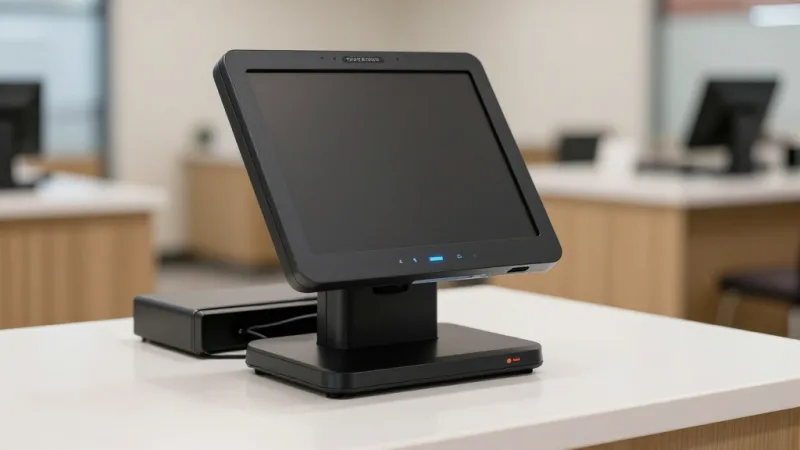
Here's the operational trap that quietly wrecks Easter: peak-load checkout. When four capped seatings each fire near-simultaneously and every party wants to pay and leave so the next seating can sit, a slow or offline POS turns your highest-revenue morning into a backed-up dining room.
Three things prevent it. First, pre-build the Easter prix-fixe as its own POS layout with combo buttons, so a server fires an entire twelve-top in seconds instead of ringing thirty individual items. Crafty Crab Seafood pushes a menu to all 19 of its locations with one click using exactly this kind of setup — your Easter menu can go live across every station the same way, then disappear at end of day. Second, lean on a checkout flow fast enough to turn tables: tap-to-pay, split checks for the inevitable "we'll cover Mom," and quick gratuity on large parties.
Third — and this is the one operators only appreciate after it has burned them — your POS has to keep working when the internet doesn't. A hybrid local-plus-cloud platform like KwickOS runs checkout on your own network at roughly 1ms latency and keeps ringing and printing orders even if your connection drops mid-rush, then syncs automatically when it returns. On the most table-dense morning of your year, "the system is down" is not a sentence you can afford to say. Shogun Japanese Hibachi gets seasonal and event staff productive on the KwickOS interface in under five minutes — which is exactly what you need when you've added extra hands just for the holiday.
One more margin note while we're on payments: KwickOS is processor-agnostic, so you keep the freedom to choose your own payment processor and your own rate. On a six-figure-volume holiday weekend, the gap between a locked flat rate and a negotiated interchange-plus rate is real money. (See the full breakdown in our KwickOS vs. Toast comparison.)
The Part Everyone Skips: Turn One Morning Into a Year
This is where the real money is, and it's the step 90% of restaurants forget while they're celebrating a great Saturday-night-on-a-Sunday.
Easter delivers something no marketing budget can buy: a dining room full of new people. Out-of-town relatives. Families trying you for the first time because the usual spot was booked. Special-occasion guests who don't normally eat out. If you let them pay and leave, you spent a year of goodwill on a single transaction. If you capture them, you just bought yourself months of repeat traffic at near-zero cost.
Here's the playbook, all of it run through your POS and checkout flow so it actually happens at the table instead of in a marketing meeting:
- Enroll every party in loyalty or membership at checkout. A points or membership program signs up new guests in seconds at the terminal and gives you a reason — and a channel — to bring them back. Tiger Sugar does this with electronic receipts that carry loyalty straight into the guest's hands; the same flow turns an Easter first-timer into a tracked, marketable regular.
- Hand every guest a bonus return offer that expires in 30 days. Loss aversion is a powerful thing: "$15 off your next visit before May 15" pulls people back during the slow weeks after the holiday, exactly when you need traffic most.
- Run a gift card and e-gift card promotion. Easter guests are in a generous, celebratory mood and the hosts are already paying for everyone. "Buy $100 in gift cards, get $20 free" sells beautifully at the table — and selling e-gift cards through your online ordering page captures the relatives who couldn't make it but still want to treat the family. Every gift card sold is guaranteed future revenue, and a chunk of it brings a brand-new guest through your door later.
- Capture the data, then use it. Names, emails, and visit history collected at checkout become the list you market your next holiday — Mother's Day, the slow summer weeks, the winter holidays — to a warm audience instead of a cold one. (This is the same engine behind a great holiday gift card campaign and a profitable private-event pipeline.)
Run the math on that. If your Easter service turns 250 covers and you convert even 15% of new guests into a single repeat visit at $35 a head, that's an extra $1,300+ in follow-on revenue from a morning you were already going to be open for — plus every gift card dollar you pre-sold. The holiday pays you twice.
The Bottom Line
Easter brunch is the highest-revenue brunch of the year for a simple reason: the demand is guaranteed, the tables are big, and the guests have already decided to celebrate. Your only job is to make it easy for them to celebrate with you — and to make sure they come back.
Engineer it on purpose. A tight, tiered prix-fixe that nearly doubles the check. A deliberate buffet, plated, or hybrid model. Timed, capped, deposit-backed seatings that fill every seat without breaking the kitchen. A family-friendly experience that wins the whole table. A fast, offline-proof POS that turns tables cleanly when every party fires at once. And — the step that pays for everything else — loyalty enrollment, return offers, and gift cards at checkout that convert one $127 table into a season of $67 regulars.
Do that, and Easter stops being a busy Sunday and becomes what it should be: the most profitable single morning on your calendar, and the front door to your best year yet.
Make Easter Your Most Profitable Morning of the Year
KwickOS ties your reservations, prix-fixe menu, fast offline-proof checkout, gift cards, and loyalty into a single platform — so a packed holiday dining room turns into banked profit and a list of regulars you keep all year. See how it works for your restaurant.
Explore KwickOS for RestaurantsFrequently Asked Questions
Why is Easter brunch the highest-revenue brunch of the year?
Easter pulls a different customer than a normal Sunday. It's a planned, multi-generational family occasion, so tables are larger (often 6 to 12 people instead of 2 to 4), guests linger, and almost everyone is willing to pay a fixed celebration price. A prix-fixe Easter brunch commonly runs $45 to $75 per adult, which turns a $67 normal-Sunday table into a $120-plus table — without the kitchen working any harder per guest, because a fixed menu lets you batch-prep and forecast your buy from confirmed reservations.
Should I do an Easter brunch buffet or plated service?
Buffet maximizes covers and table turns and needs less skilled labor on the line, but carries higher food-waste risk and a lower perceived ceiling on price. Plated (or a prix-fixe with table-side courses) protects margin, raises the perceived value, and controls portions, but turns tables more slowly and demands more servers and kitchen timing. Many restaurants run a hybrid: a stationed buffet for sides, pastries, and carving, plus a plated entree chosen at the table. Whichever you pick, lock it to a fixed per-person price and a capped number of timed seatings so your kitchen and floor are never guessing.
How far in advance should restaurants take Easter brunch reservations?
Open Easter reservations three to four weeks out and push hardest in the final ten days. Easter is a planned holiday, so families book early and the best time slots (late morning to early afternoon) sell out first. Use timed, capped seatings — for example 10:00, 11:30, 1:00, and 2:30 — so you spread demand across your kitchen's capacity instead of getting crushed at noon. Take a credit card or a small deposit to hold large tables, which cuts no-shows on a day when an empty 10-top is hundreds of dollars of lost revenue you can't recover.
How do I keep an Easter brunch rush from overwhelming my kitchen and POS?
Three things: a fixed menu, capped timed seatings, and a POS that won't fail under load. A limited prix-fixe menu means fewer SKUs to fire and easier batch prep. Capped seatings spread the volume so you never have every table ordering at once. And a hybrid local-plus-cloud POS like KwickOS runs checkout on your own network at roughly 1ms latency and keeps ringing orders even if the internet drops mid-rush, then syncs when it returns — so "the system is down" never happens on your busiest table-turn of the year. Pre-build the Easter menu as its own POS layout with combo buttons so servers fire a whole table in seconds.
How do I turn one-time Easter guests into year-round regulars?
Easter floods you with first-timers and out-of-town family — capture them at checkout instead of letting them walk. Enroll every party in your loyalty or membership program at the table, hand each guest a bonus return offer that expires in 30 days to drive a second visit, and run a gift card promotion (for example, buy $100 in gift cards, get $20 free) for the hosts and grandparents who are already in a generous, celebratory spending mood. Selling e-gift cards at the table and through your online ordering page also captures the relatives who couldn't attend. The goal is to convert one $127 table into a season of $67 tables. Multi-location operators can partner with us to bring the same playbook to every restaurant they serve.