 Ming Ye
You saw it at the checkout of your last online purchase: "4 interest-free payments of $21.75." You clicked it without thinking. Now a sales rep is telling you your restaurant needs the same thing at the table.
Here's the pitch you're going to hear: customers spend more when they can split the bill, you get paid in full up front, and the financing company eats the risk. All true. That's exactly why Buy Now Pay Later exploded to over $100 billion in annual U.S. transaction volume.
But here's the thing the rep won't lead with: every one of those installment plans costs you double what a normal card swipe costs. And in a restaurant — where the average check is a fraction of a furniture order — that math breaks in ways it doesn't for other industries.
So should you offer BNPL? The honest answer is "it depends, and probably not the way you think." Let's walk through exactly when installment payments make you money, when they quietly bleed your margins, and the lower-cost alternative that does the same job better.
What BNPL Actually Is (And Who's Getting Paid)
Buy Now Pay Later splits a purchase into interest-free installments for the customer — usually four payments over six weeks, though some plans stretch to months. The customer pays a piece now and the rest on a schedule. Miss a payment and they pay a late fee, not you.
The key thing to understand: you, the restaurant, get paid in full, immediately. The BNPL provider — Affirm, Klarna, Afterpay, Sezzle, Zip — fronts the money and collects the installments from the customer over time. They take on the collection risk. In exchange, they take a merchant fee out of your payout.
That fee is the whole story. So let's put a number on it.
The Fee Math Nobody Runs Before Signing Up
A normal card transaction on a competitively priced, processor-agnostic setup runs about 2.1% to 2.6% plus a small per-transaction fee. BNPL merchant fees run 3% to 6% plus roughly $0.30 — often double the card rate.
Watch what that does to a real check:
| Payment method | Rate | Fee on $87 check | You keep |
|---|---|---|---|
| Card (interchange-plus) | ~2.4% + $0.10 | $2.19 | $84.81 |
| BNPL (low end) | 3% + $0.30 | $2.91 | $84.09 |
| BNPL (typical) | 5% + $0.30 | $4.65 | $82.35 |
| BNPL (high end) | 6% + $0.30 | $5.52 | $81.48 |
On that single $87 dinner, BNPL costs you $2.46 more than a card swipe at the typical rate. Doesn't sound like much? But it gets worse: run that spread across 40 checks a night, six nights a week, and you've handed roughly $30,700 a year to a financing company — on a restaurant operating at maybe 6% net margin.
For a business earning six cents on the dollar, an extra 2.5% skimmed off the top isn't a rounding error. It's a meaningful chunk of your take-home profit. This is the loss most owners never see, because it hides inside a "convenience" they were told was free.
The Psychology: Why It Works Anyway (Sometimes)
So why would anyone pay that fee on purpose? Because on the right transaction, BNPL doesn't just cost money — it makes money. The reason is a quirk of how people perceive price.
"$400 for a catering order" triggers hesitation. "4 payments of $100" does not. Same money, different feeling. Splitting a large number into small, scheduled pieces lowers the perceived cost at the exact moment the customer decides yes or no. That's called price partitioning, and it's the entire engine behind BNPL's growth.
Industry research suggests BNPL lifts average order value 20% to 40% in categories like retail and travel. The lift is real — but notice where it shows up: on considered, big-ticket purchases where the price is genuinely a barrier.
And that's the catch for restaurants. Your average dine-in check isn't a barrier. Nobody splitting a $14 burrito into four payments of $3.50 is going to order a fifth taco because of it. Installments only move the needle when the ticket is large enough that the price gives the customer pause in the first place.
Where BNPL Genuinely Belongs in a Restaurant
There are places in food service where the ticket is big and the decision is deliberate. That's where BNPL earns its higher fee:
- Catering and corporate orders. A $1,200 office lunch or a $4,000 Saturday BBQ catering job is exactly the kind of considered, high-value purchase where installments reduce friction and can win the booking you'd otherwise lose.
- Private events and buyouts. Rehearsal dinners, birthday buyouts, and holiday parties routinely run $2,000 to $8,000. Offering a payment plan on the deposit can be the difference between "let me think about it" and a signed contract.
- Tasting menus and prix-fixe experiences. A $195-per-seat omakase for a party of four is $780 — a real number a customer might finance.
- Meal-subscription and multi-week packages. Prepaid meal plans and bulk family bundles are natural installment candidates because the value is delivered over time anyway.
Notice the pattern: none of these is your counter or your dine-in POS checkout. They're your catering desk, your events inbox, and your online store. If you're going to run BNPL, run it there — surgically — not as a blanket option on every ticket.
This is also where a case like Crafty Crab Seafood (19 stores, 152 terminals) matters. Their seafood boils push tickets well above a typical casual check, and their catering and large-party volume is exactly the slice where an installment option could lift bookings — while everyday in-store checks stay on plain card payments at the lower rate. The lesson: match the payment method to the ticket size, not the whole business.
The Alternative Most Owners Overlook: Get Paid Earlier, Not Later
Here's the reframe that changes everything. BNPL is a system for letting customers pay you later — and you pay a financing company 3% to 6% for the privilege of waiting. Flip it around: what if you got customers to pay you earlier instead?
That's exactly what gift cards, stored-value accounts, and prepaid packages do. And unlike BNPL, they don't cost you a premium — they generate cash, loyalty, and margin all at once.
Gift cards and e-gift cards
When a customer buys a $100 gift card, you collect $100 today for food you'll deliver later — the exact opposite of an installment plan. Better still, industry data shows a meaningful slice of gift card value is never redeemed (breakage), which drops straight to your bottom line. Digital e-gift cards go one step further: they're delivered instantly, sell far more on mobile, and turn every happy customer into a distribution channel for the next one.
Stored-value top-up accounts
A prepaid account with a bonus-credit incentive — "load $100, get $115" — has an acceptance rate north of 85% in the businesses that run it well. The customer feels they got a deal; you got $100 in guaranteed, pre-committed revenue and a reason for them to come back and burn the balance. That's loyalty you were paid to create, not loyalty you rented from a financing app.
Membership, loyalty, and points
The real prize is the relationship. Every prepaid load, every gift card, every reload should feed a loyalty and points program — a membership that remembers the customer, rewards repeat visits, and pulls them back. A BNPL transaction gives you a fee and a one-time sale. A membership gives you a customer who pays you first and returns on a schedule. One of those is an expense; the other is an asset.
If you want to build that side out, start with our gift card program launch checklist and our complete guide to restaurant membership programs — both walk through the setup step by step.
How This Runs Through Your POS Checkout
Whatever you decide, the deciding factor is your POS. A payment option is only worth having if it flows cleanly through checkout, reconciles automatically, and doesn't lock you into a punishing processing rate to get it.
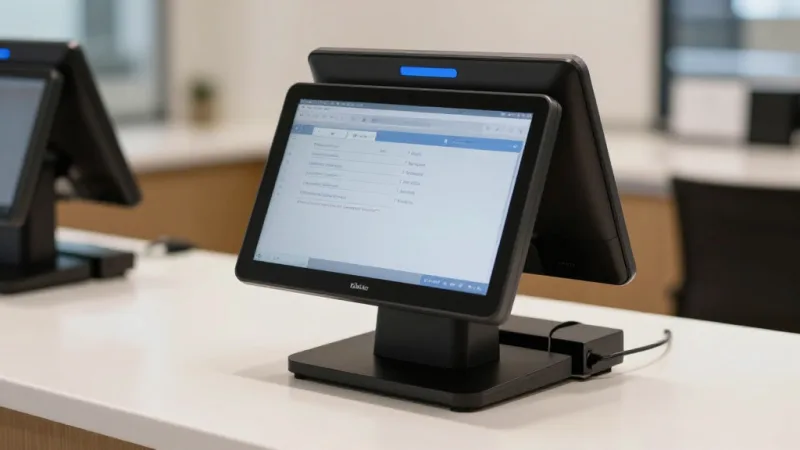
This is where being processor-agnostic pays off. Platforms like Toast and Square force you onto their payment rails at non-negotiable rates, so every "new payment feature" they add is another rate you can't shop. KwickOS lets you choose and negotiate your own processor — which means when you compare a BNPL fee against your real card rate, you're comparing against a rate you actually control, not one dictated to you.
Inside the KwickOS checkout, gift cards, e-gift cards, stored-value accounts, and loyalty points are built in — not bolted on through a third party taking another cut. A cashier sells or redeems a gift card in the same flow as any other tender. A member's points update the moment the sale closes. And because the platform runs hybrid local + cloud, that checkout keeps working at 1ms local speed even if the internet drops mid-rush — something a cloud-only, BNPL-dependent checkout can't promise.
The point isn't that BNPL is evil. It's that the smartest payment mix usually costs less than the one the installment rep is selling you. Want to see the spread on your own volume? Run it through our processing fee calculator, or compare platforms head to head on our POS comparison pages.
A Simple Decision Framework
Cut through the sales pitch with three questions:
- Is the ticket large? If your average relevant transaction is under ~$75, BNPL's lift won't cover its fee. Skip it for that channel.
- Is the purchase considered? Catering, events, packages, and tasting menus — yes. Walk-up dine-in and quick-service — no.
- Have you already captured prepaid revenue? If you don't yet run gift cards, stored-value, and a loyalty program, build those first. They deliver most of BNPL's upside at a fraction of the cost, and they're yours to keep.
For most operators the honest conclusion is this: offer BNPL narrowly, on catering and events where big considered tickets live — and pour your energy into prepaid gift cards, top-up accounts, and loyalty, which get you paid earlier instead of later. If you run a higher-volume or multi-location operation, our restaurant platform overview shows how the checkout, gift card, and loyalty pieces fit together, and resellers can find the same tools on our partner program page.
Get Paid Earlier, Not Later
KwickOS builds gift cards, e-gift cards, stored-value, and loyalty right into a processor-agnostic checkout — so you keep more of every dollar. See how much the right payment mix saves you.
Calculate Your SavingsFrequently Asked Questions
What is Buy Now Pay Later (BNPL) for restaurants?
Buy Now Pay Later lets a customer split a bill into interest-free installments — typically four payments over six weeks — while the restaurant gets paid in full, up front, minus a fee. Providers like Affirm, Klarna, Afterpay, and Sezzle handle the financing and assume the collection risk. For restaurants, BNPL mostly shows up on larger tickets: catering orders, private events, family-style group dining, and high-end tasting menus rather than a $12 lunch.
How much does BNPL cost a restaurant in fees?
Merchant fees for BNPL typically run 3% to 6% plus a fixed transaction fee of about $0.30, which is roughly double a normal card processing rate of 2.1% to 2.6%. On an $87 check that is about $2.60 to $5.20 in fees versus $2.10 for a card swipe. The trade-off is that BNPL providers pay you in full immediately and absorb the risk of missed installments.
Does BNPL actually increase average check size?
For big-ticket purchases it can. Industry research suggests BNPL lifts average order value 20% to 40% in categories like retail and travel, because splitting the price into four payments lowers the perceived cost at the moment of decision. In restaurants the effect is strongest on catering, group bookings, and event deposits — not on everyday dine-in checks, where the ticket is already small enough to pay in one tap.
Is BNPL worth it for a small restaurant?
For a typical quick-service or casual restaurant, no. The average dine-in check is too small for installments to matter, and the higher fee eats into thin margins. BNPL earns its keep only where the ticket is large and the decision is considered — catering, private events, tasting menus, and packages. Everywhere else, prepaid gift cards, stored-value accounts, and loyalty programs lock in more revenue at a lower cost.
What is a better alternative to BNPL for building loyalty?
Prepaid gift cards, stored-value top-up accounts, and membership programs. Instead of paying a financing company 3% to 6% to let customers pay you later, you get customers to pay you earlier — often with a bonus-credit incentive like load $100, get $115. That money is collected up front, a portion is never redeemed (breakage revenue), and every reload ties the customer to your loyalty and points program. KwickOS builds gift cards, e-gift cards, and loyalty into the POS checkout at no extra processing markup. Learn more in our meal subscription revenue guide.