 Tom Jin
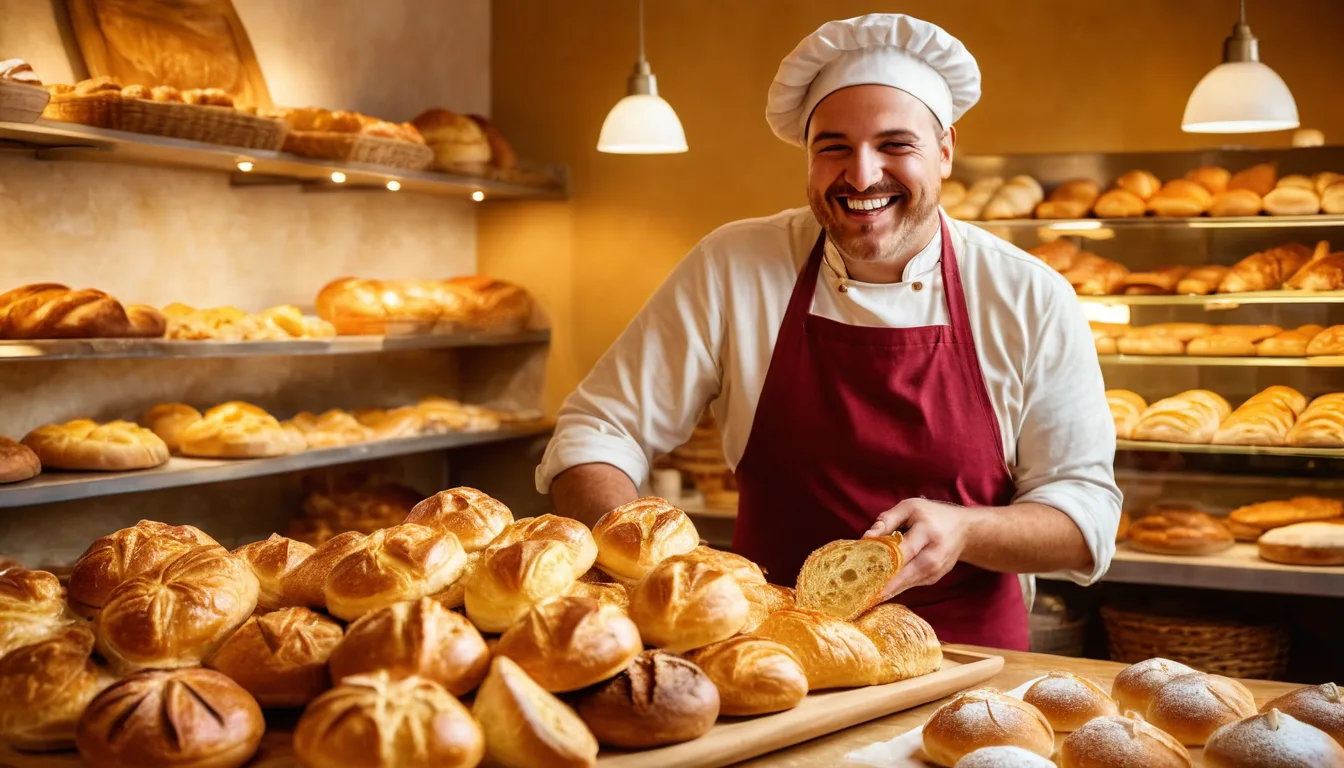
You walk into your bakery at 4 AM. You check the weather. You think about yesterday. You pull out a mental number — 120 croissants should be enough — and start mixing dough.
By 2 PM, you have 47 croissants sitting in the case that nobody is going to buy. At $3.25 each, that is $152.75 in ingredients, labor, and oven time headed for the compost bin.
But it gets worse. This happens every single day. Maybe it is 47 croissants on Tuesday, 23 sourdough loaves on Thursday, and 60 muffins on Saturday. Add it up over a month, and you are looking at $3,000 to $5,000 in baked goods that never reach a customer's hands.
Over a year? That is $36,000 to $60,000. Gone. And that assumes your waste rate is only average.
Here's the thing: you are not a bad baker. You are not even a bad planner. You are making production decisions with incomplete information. Your brain cannot hold 52 weeks of daily sales patterns for 40+ products across different days, seasons, and weather conditions.
But a POS system with production forecasting can. And the bakeries using one are throwing away 60-70% less product than the ones still planning on instinct.
The Real Cost of Bakery Waste (It Is More Than You Think)
Most bakery owners dramatically underestimate their waste because they only count what goes in the trash at closing. They forget the hidden costs:
- Ingredient cost — the flour, butter, eggs, sugar, and specialty ingredients that went into products nobody bought
- Labor cost — baker hours spent producing items that generated zero revenue
- Oven time — energy and opportunity cost of baking surplus instead of higher-demand items
- Discounting damage — marking down day-old items at 50% off trains customers to wait for the discount
- Lost opportunity — selling out of popular items at 11 AM while unpopular ones sit until close
According to industry research, the average bakery wastes 8-15% of total production. For a bakery doing $500,000 in annual revenue with 35% food cost, that translates to $14,000 to $26,000 in wasted ingredients alone — before you add labor.
And that's not all: well-managed bakeries with POS-driven production planning consistently hit 3-5% waste. The gap between 12% waste and 4% waste on a $500K bakery is roughly $14,000 per year in recovered profit.
That is not a marginal improvement. For a bakery operating on 8-12% net margins, recovering $14,000 from waste has the same bottom-line impact as generating $120,000 in new revenue.
Why Your Brain Is the Wrong Forecasting Tool
Human intuition is terrible at production planning. Here is why:
You remember last Saturday's sellout. You do not remember the three Saturdays before it where you overproduced by 20%. Your brain anchors to recent extremes and ignores the average.
You cannot isolate variables. Was Monday slow because it was Monday, because it was raining, because there was construction on Main Street, or because it was the week after a holiday? Your brain lumps all of these into "Monday was slow." A POS system separates each factor.
Here's the pattern that kills bakeries: you sell out of cinnamon rolls on Friday. Saturday, you double production. Saturday, they do not sell. Sunday, you cut back. Sunday, you sell out again. You are always one day behind because you are reacting instead of predicting.
A POS with forecasting does not react. It looks at the last 8 Fridays, adjusts for weather, factors in the pre-orders already placed, and tells you to make 48 cinnamon rolls — not 30, not 80. Forty-eight.
Building a Data-Driven Daily Production Sheet
The daily production sheet is the most important document in your bakery. It tells every baker exactly what to make, how much to make, and when to make it. Without one, you are running a guessing game with perishable inventory.
Here is how to build a production sheet that actually works:
Step 1: Collect 4-8 Weeks of Sales Data
Your POS system should track every item sold, the time it sold, the day of the week, and whether it was a walk-in or pre-order. After 4 weeks, you have enough data to see patterns. After 8 weeks, those patterns become reliable.
The critical metrics for each product:
- Average daily sales by day of week (Monday is different from Saturday)
- Sellout time — when did you run out? If you sold out at 10 AM, your "sales" number is artificially low
- End-of-day waste count — how many were left?
- Pre-order volume for that product
Step 2: Set a Target Sellout Window
Most bakeries should aim to sell their last unit 30-60 minutes before closing. If you are consistently selling out by noon, you are underproducing and losing revenue. If you regularly have 20% left at close, you are overproducing and losing margin.
The formula: Target Production = Average Daily Sales + Pre-Orders + 10% Buffer
That 10% buffer accounts for natural demand variation. It is cheaper to have a small surplus than to run out of your top seller and disappoint customers who made a special trip.
Step 3: Adjust for Variables
Your POS sales data is the baseline, but smart bakeries layer in adjustments:
- Weather — rainy days typically see 15-25% lower foot traffic. Hot days shift demand from heavy breads to lighter pastries and iced drinks.
- Local events — a farmers market two blocks away can spike Saturday sales 40%. A nearby school break drops weekday morning traffic.
- Holidays — Mother's Day, Easter, Thanksgiving, and Christmas create massive but predictable demand spikes. Your POS should show you exactly what happened last year during the same period.
- Promotions — running a "Buy 6 muffins, get 2 free" deal? Factor in the 30-50% lift.
Step 4: Generate the Sheet Automatically
A modern bakery POS does not just show you the data and leave you to calculate. It generates the production sheet for you. Each morning, the system analyzes the day of week, recent trends, weather forecast, pre-orders already placed, and any scheduled promotions — then outputs a recipe-level production plan.
Your baker walks in, prints the sheet, and knows exactly what to do. No guessing. No calling the owner to ask "how many baguettes today?"
Pre-Orders: Your Secret Weapon Against Waste
Every pre-order is a unit you bake with guaranteed demand. Zero waste risk. If you are not aggressively driving pre-orders, you are leaving money and efficiency on the table.
Here's the thing: customers actually want to pre-order. They hate showing up and finding out you sold out of their favorite sourdough. They just need a convenient way to do it.
How to build a pre-order system that works:
- Online ordering integration — let customers place orders through your website or app for next-day pickup. This is the single biggest pre-order driver. KwickOS integrates with KwickMenu for seamless online ordering that feeds directly into your production planning.
- Custom cake and special order pipeline — birthday cakes, wedding dessert tables, and corporate event orders should all flow through your POS, not a paper notebook by the register.
- Subscription boxes — weekly bread subscriptions or monthly pastry boxes create predictable, recurring demand. Your POS handles the auto-billing and membership management while you focus on baking.
- Corporate accounts — coffee shops, restaurants, and hotels that buy your bread daily represent guaranteed volume. Set them up with standing orders in your POS.
Bakeries that implement POS-integrated pre-ordering typically see 15-20% of daily revenue shift to pre-orders within the first three months. That is 15-20% of your production with zero waste risk — a massive improvement to your bottom line.
Gift Cards and Loyalty: Filling the Case Before You Open
Most bakery owners think of gift cards as a holiday afterthought. That is a mistake.
Gift cards are pre-paid revenue. When a customer buys a $25 bakery gift card, you have cash in hand before you crack a single egg. And industry data shows that gift card holders spend 20-30% more than the card value — that extra $5 to $7 goes straight to your revenue with zero acquisition cost.
E-gift cards are even better for bakeries. A customer can send a digital gift card at 9 PM on the night before a birthday and the recipient walks into your store the next morning. No shipping, no physical inventory. Your POS processes it at checkout exactly like a regular transaction.
But it gets worse for bakeries that skip loyalty programs. Your regulars — the ones who come in every Tuesday and Friday — are the most predictable part of your demand. A loyalty and points program does two things for production planning:
- It makes repeat visits more predictable. A customer earning points toward a free pastry comes back on a reliable cadence. Your POS tracks this and factors it into forecasting.
- It shifts demand to where you need it. Slow on Wednesdays? Offer double points on Wednesday purchases. Your POS handles the promotion automatically, and suddenly Wednesday production is more predictable because loyalty members are filling in the gap.
Tiger Sugar, with 2 stores and 2 self-ordering kiosks, saw exactly this effect. Their loyalty program created such predictable visit patterns that they reduced overproduction on specialty drinks by a third. The same principle applies directly to bakery products.
Seasonal Demand: Planning for the Spikes
Bakeries live and die by seasonal demand. Pumpkin everything in October. Gingerbread in December. King cake in February. Heart-shaped cookies for Valentine's Day.
The difference between a profitable seasonal spike and a waste disaster is planning lead time. Here is what your POS should tell you 4-6 weeks before a seasonal peak:
- Exactly how many seasonal items you sold during the same period last year, broken down by day
- Which seasonal items sold out too quickly (underproduction = lost revenue)
- Which seasonal items had significant waste (overproduction = lost margin)
- Ingredient order quantities needed, factored for current supplier pricing
Without historical POS data, you are guessing. With it, you are planning. The bakeries that have 2-3 years of seasonal sales data in their POS can predict holiday demand within 5-10% accuracy — good enough to nearly eliminate seasonal waste.
And that's not all: your POS should automatically adjust your food cost calculations when specialty ingredient prices spike during peak demand. That $4.50 pumpkin muffin might need to be $5.25 in October if your pumpkin puree cost doubled.
Waste Tracking: You Cannot Reduce What You Do Not Measure
Here is the uncomfortable truth: most bakeries do not track waste at all. They throw away unsold product, feel bad about it for 30 seconds, and move on. That lack of measurement makes it impossible to improve.
A POS waste tracking system works like this:
- At the end of each day (or shift), staff logs unsold items into the POS by product and quantity
- The POS calculates the ingredient cost and labor cost of wasted items
- Weekly and monthly reports show waste trends by product, day of week, and dollar value
- The system flags products with consistently high waste rates for production adjustment
When you start tracking, the numbers are usually shocking. A bakery owner I worked with was convinced their waste was "maybe 5%." After two weeks of POS tracking, it was 13.7%. That gap — between what you think you waste and what you actually waste — is where the profit recovery lives.
The Processor-Agnostic Advantage for Bakeries
Bakeries process a high volume of small transactions. A $4.50 croissant and a $3 coffee. A $6.75 pastry box. Every transaction carries a processing fee, and at these ticket sizes, the per-transaction component of that fee eats a disproportionate share of your margin.
This is where processor choice matters enormously. A locked POS like Toast charges 2.99% + $0.15 per transaction. On a $4.50 croissant sale, that is $0.28 — or 6.3% of the transaction. An interchange-plus rate through a processor you negotiated with might be 1.90% + $0.10, bringing the fee down to $0.19 — a 32% reduction.
KwickOS is processor-agnostic, meaning you choose any payment processor and negotiate your own rate. For a bakery processing $30,000/month across thousands of small transactions, the savings from processor freedom typically run $3,000 to $8,000 per year — enough to offset a significant chunk of your waste cost.
And with KwickOS running on a hybrid local+cloud architecture, your checkout never freezes during the morning rush. Transactions process locally in under 1 millisecond, even if your internet connection drops. For a bakery with a line out the door at 7 AM, that reliability is not optional.
Real-World Results: From Guessing to Knowing
Baked Cravings operates a self-serve kiosk at Lego Land, running 24 hours with a PaxA35 terminal. Their challenge was extreme: they needed to stock pre-packaged baked goods in a location where demand fluctuates wildly based on park attendance, day of week, and season.
By using POS sales data to forecast daily stock levels, they cut waste from their initial "stock everything" approach by more than half. The kiosk's POS data feeds directly into their production schedule at the main bakery, so they bake based on what the kiosk actually sells — not what they hope it will sell.
For multi-location bakeries, the impact multiplies. Crafty Crab Seafood, while a restaurant chain (19 stores, 152 terminals), demonstrates the principle: centralized menu and production management across locations eliminates the inconsistency that causes waste to spiral. When one location can see another's sales data, they can transfer surplus instead of throwing it away.
5 Steps to Implement Production Forecasting This Week
- Start logging waste today. Even before you have a forecasting system, begin counting what you throw away. Use your POS waste tracking feature or a simple spreadsheet. Two weeks of data is enough to identify your worst offenders.
- Pull your sales-by-day-of-week report. Your POS already has this data. Look for the pattern: which products sell heavily on which days? Which ones are consistently over or underproduced?
- Set up pre-ordering. Even a simple online form for next-day pickup orders reduces waste by converting unknown demand into guaranteed demand. A full bakery POS integration makes this automatic.
- Create your first production sheet. Using 4 weeks of sales data, calculate your target production for each product on each day of the week. Add a 10% buffer. Print it and follow it for 2 weeks.
- Launch a gift card and loyalty program. Gift cards bring prepaid revenue. Loyalty points create predictable repeat visits. Both feed better data into your production forecasting. Your POS should handle both gift cards and loyalty natively.
Bake Smarter, Waste Less
KwickOS gives bakeries the production forecasting, pre-order management, and processor-agnostic checkout they need to eliminate waste and protect margins. See it in action.
Get a Free Demo