 Kelly Ho
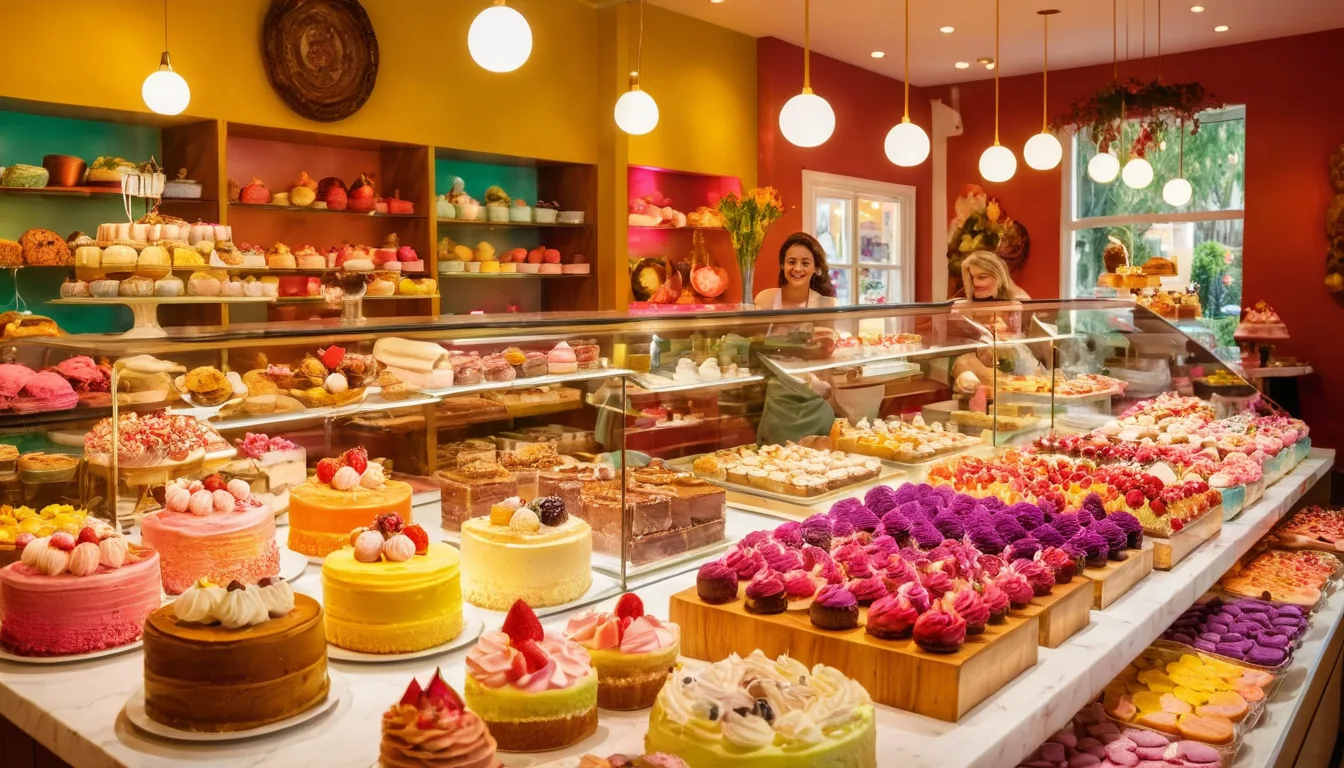
You opened a dessert shop because the margins looked incredible. Ice cream at 78%. Pastries at 65%. Specialty drinks at 75%.
Then reality hit.
Three tubs of gelato expired before you could sell them. Your staff forgot to suggest toppings on 80% of orders. Your busiest Saturday turned into chaos because the POS couldn't keep up with the line out the door. And you realized that high margins on paper mean nothing if your operations leak money at every step.
Here's the thing: the dessert shops that actually capture those margins — the ones clearing $40,000-$80,000/month from a 600-square-foot space — all share the same trait. They run tight operations. Not complicated operations. Tight operations.
This guide covers every operational system you need: ingredient management that eliminates waste, display strategies that sell without a single word from your staff, seasonal planning that keeps customers coming back, and POS configuration that turns every transaction into a larger one.
The Dessert Shop Margin Myth (And Why Most Owners Don't Hit It)
Let's start with the numbers everyone talks about. A single scoop of premium ice cream costs roughly $0.45 in ingredients. You sell it for $4.50. That's a 90% gross margin.
But it gets worse when you zoom out.
That $0.45 scoop came from a $28 tub that holds approximately 40 scoops. If you only sell 30 scoops before it develops freezer burn or gets pushed to the back by a new flavor — which happens constantly in shops with 20+ flavors — your real cost per scoop is $0.93. Your margin just dropped from 90% to 79%.
Now factor in the three tubs per week that get tossed entirely because a seasonal flavor didn't sell as expected. That's $84/week, or $4,368/year in pure waste from ice cream alone. Add pastries that go stale, fruit toppings that brown, whipped cream that deflates, and you're looking at $8,000-$12,000 in annual ingredient waste for a typical dessert shop.
And that's not all. The second margin killer is even more invisible: missed upsells.
According to industry research, dessert shop customers accept topping upgrades and size-ups 35-45% of the time — when asked. Most staff don't ask. With an average upsell value of $1.50 and 200 daily transactions, that's $105-$135/day in revenue your team is leaving behind. Over a year, that's $38,000-$49,000.
Between waste and missed upsells, the average dessert shop loses $46,000-$61,000 annually. That's the gap between "decent business" and "printing money."
Ingredient Management: The System That Stops the Bleeding
Dessert shop inventory isn't like restaurant inventory. You're not dealing with proteins that last 3-5 days. You're dealing with perishables on wildly different timelines — frozen items (weeks), dairy (days), fresh fruit (hours to days), and baked goods (same day).
The fix is a three-layer system.
Layer 1: POS-Driven Production Forecasting
Your POS knows exactly what sold yesterday, last week, and last month. Use that data. Every morning, pull the previous week's sales by item and compare it to what you produced. If you made 48 cupcakes on Tuesday and sold 31, you overproduced by 35%. Next Tuesday, make 34.
KwickOS tracks this automatically — the sales mix report shows daily item counts so you can adjust production before your team starts baking. Multi-location operators like Tiger Sugar (2 stores, 2 kiosks) use centralized dashboards to compare store performance and standardize production across locations.
But wait — what about variability? A rainy Tuesday sells 40% less than a sunny one.
That's where historical weather correlation matters. After three months of POS data, you'll see clear patterns. Build a simple production adjustment: reduce production by 25% on rainy days, increase by 15% on holidays and weekends. This isn't guesswork — it's data your POS already has.
Layer 2: Cross-Utilization Matrix
The best dessert shops don't throw away ingredients. They transform them.
- Day-old cake becomes cake pop filling or trifle layers
- Browning fruit becomes smoothie base, compote, or topping sauce
- Broken cookies become sundae crumble toppings
- Expiring cream becomes whipped cream or ganache
- Overproduced pastries become "baker's dozen" bundles at a discount
Create a cross-utilization chart for every perishable ingredient. Post it in the kitchen. When something approaches its window, your team should know instantly where it goes next — not into the trash.
Layer 3: Smart Reordering
Set par levels based on your actual weekly usage, not your supplier's suggested order quantities. A POS with real-time inventory tracking sends alerts when items drop below par — so you reorder exactly what you need, when you need it. No more "we ran out of chocolate chips at 2 PM on Saturday" emergencies, and no more overstocking because someone panic-ordered.
Here's the kicker: shops that implement all three layers typically reduce ingredient waste by 40-60%. On $8,000-$12,000 in annual waste, that's $3,200-$7,200 straight to the bottom line.
Display Merchandising: Let the Case Do the Selling
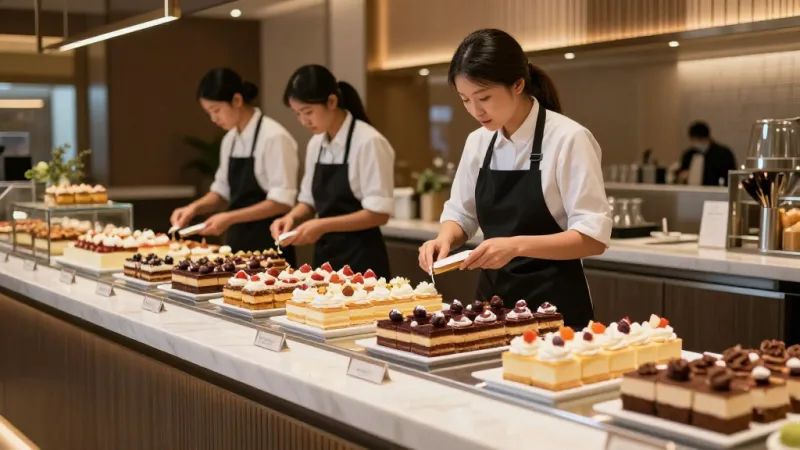
Your display case is your best salesperson. It never takes a break, never forgets to upsell, and works on every single customer who walks through the door.
But most dessert shops treat their case like storage instead of a sales tool.
The Visual Hierarchy That Sells
Eye level is buy level. Place your highest-margin items at the center of the display, at eye height. For most adults, that's 48-60 inches from the floor. Your $7.50 specialty sundae should be front and center. Your $2.50 cookies can go lower.
Color creates urgency. Group items by color contrast, not by category. A row of identical chocolate items blends together. Alternate colors — red velvet next to vanilla next to matcha — and each item pops visually. Industry research shows that color-contrasted displays increase impulse purchases by 15-25%.
Scarcity drives decision speed. Keep your display case 70-80% full, not 100% full. A slightly sparse case signals freshness ("they're selling fast") and creates urgency. A packed case signals overproduction and makes decision-making harder.
Signage That Converts
Every item in your case needs a sign. Not just a name — a selling sign.
Bad: "Chocolate Cake — $5.50"
Good: "Triple Belgian Chocolate Cake — Hand-layered, made fresh this morning — $5.50"
Add one sensory word (rich, creamy, crispy, velvety) and one freshness cue (baked today, hand-crafted, small-batch). That two-second read increases the perceived value by 20-30% and makes the price feel justified.
And that's not all — your signage should include visible allergen markers and dietary badges (GF, V, DF). This isn't just compliance. It's conversion. Customers with dietary restrictions buy faster when they don't have to ask.
Seasonal Flavor Strategy: The Engine That Drives Repeat Visits
Here's a pattern every successful dessert shop follows: 60% core menu, 40% rotating seasonal.
Your core menu is your identity — the chocolate lava cake, the house-made vanilla bean, the signature cookie. These items never change. They're why regulars come back.
Your seasonal menu is your marketing engine. It creates urgency ("Try our summer mango passion before it's gone"), generates social media content (new flavors photograph well), and gives you a reason to email and text your customer base every 4-6 weeks.
The Seasonal Calendar
- January-February: Rich, warm desserts — hot chocolate bombs, cinnamon rolls, molten cakes
- March-April: Spring pastels — strawberry, lavender, lemon, matcha
- May-June: Berry season — blueberry, raspberry, mixed berry everything
- July-August: Tropical and frozen — mango, coconut, pineapple, extra ice cream/gelato focus
- September-October: Pumpkin spice, apple, caramel, brown butter, pecan
- November-December: Holiday indulgence — peppermint, gingerbread, eggnog, gift-ready boxes
Announce seasonal launches 1-2 weeks early to your loyalty members (giving them "early access" drives sign-ups). Use your KwickOS loyalty and CRM module to automate these announcements — segment by visit frequency, send a text with the new flavor, and watch them show up within 48 hours.
POS Configuration: Turning Every Transaction into a Bigger One
Your POS isn't just a cash register. In a dessert shop, it's an upsell engine — if you configure it correctly.
Modifier Mastery
Dessert orders are modifier-heavy. A single ice cream order can involve: size, flavor, cone/cup, toppings (multiple), drizzle, whipped cream, sprinkles. That's 6+ decisions per transaction.
If each modifier screen takes 5 seconds to navigate, you've added 30 seconds to every order. During a Saturday rush with 200+ transactions, that's nearly 2 hours of wasted service time.
Here's how to fix it:
- Visual modifier buttons — Use color-coded, photo-backed buttons instead of text lists. Staff (and customers on kiosks) select toppings 40% faster when they can see what they're choosing.
- Smart defaults — Pre-select the most common options (medium size, sugar cone, no extra toppings). Customers who want the standard order just tap "Done." Customizers modify from there.
- Auto-prompt premium upgrades — When a customer selects vanilla, the POS suggests "Upgrade to Madagascar Vanilla Bean? +$1.00." This single prompt converts at 25-30% and adds pure margin to every order.
- Combo suggestions at checkout — "Add a fresh-baked cookie for $2?" before the final total. Dessert customers are already in treat mode — the psychological barrier to one more item is almost zero.
Rockin' Rolls (3 stores, 49 iPad self-ordering stations) proved this at scale: POS-prompted modifiers increased their average ticket by 22% compared to verbal ordering alone. When the system asks, customers say yes.
Speed Mode for Rush Hours
During peak hours, your POS needs to keep up. That means:
- Quick-order presets — One-tap buttons for your top 10 combinations (e.g., "Medium Vanilla Cup + Sprinkles" as a single button)
- 1ms local processing — KwickOS processes transactions locally on the terminal, not in the cloud. When 15 people are in line and your internet hiccups, your checkout doesn't freeze. The hybrid local+cloud architecture keeps processing at 1ms latency vs. 20ms+ for cloud-only systems.
- Offline capability — Internet goes down at 3 PM on a summer Saturday? Cloud-only POS systems stop accepting cards. KwickOS continues processing, then syncs when connectivity returns.
Gift Cards and Loyalty: The Dessert Shop's Secret Revenue Engine
Dessert shops are natural gift card businesses. Think about it: desserts are celebratory. Birthday treats, thank-you gifts, "just because" indulgences. People buy dessert gift cards for every occasion.
And here's what makes them so profitable: according to industry data, gift card holders spend 20-40% more than the card value. A $25 gift card typically generates $30-$35 in sales. That's $5-$10 in bonus revenue per card, plus the 10-15% of cards that never get fully redeemed (breakage revenue).
Physical + E-Gift Card Strategy
Position physical gift cards at the register — right next to the display case where customers are already feeling generous. Stock seasonal designs (holiday, birthday, thank you) to match buying occasions.
For e-gift cards, promote them heavily on social media. "Send a sweet surprise — instant e-gift card delivery" is the kind of post that drives sales during every holiday, especially Valentine's Day, Mother's Day, and Christmas. KwickOS handles both physical and e-gift card programs through a unified system — one balance database, works across all locations and online ordering.
Loyalty That Creates Addicts
A dessert shop loyalty program should be simple and fast to earn. The magic formula:
- Earn: 1 point per $1 spent
- Redeem: 50 points = free topping, 100 points = free scoop/pastry, 200 points = free specialty item
- Bonus: Double points on Tuesdays (your slowest day) to drive off-peak traffic
- Birthday: Free item on their birthday month — the single best reason for customers to sign up
The key is enrollment friction. If it takes more than 10 seconds to join, most customers won't bother. KwickOS enrolls customers by phone number at checkout — one field, done. No app download, no paper form, no email verification. The customer is earning points before they leave the counter.
Shops with active loyalty programs see 2.5-3x more repeat visits from enrolled members compared to non-members. For a dessert shop averaging $8/visit, converting 200 customers from "occasional" (4 visits/year) to "loyal" (12 visits/year) adds $12,800/year in revenue from one program.
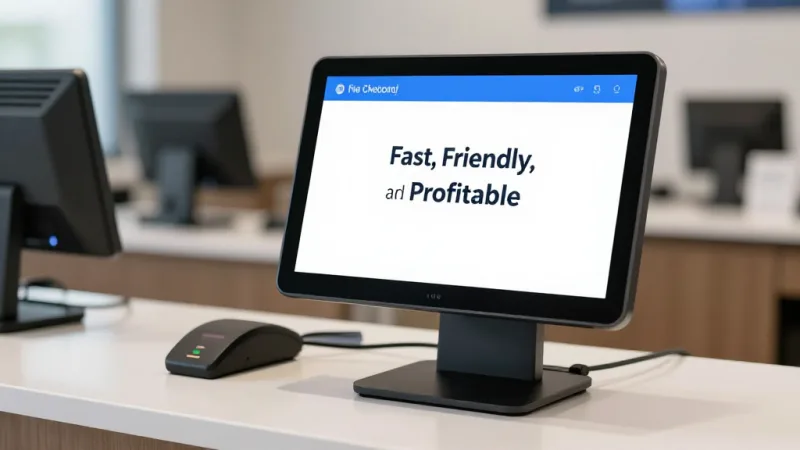
The Checkout Flow: Fast, Friendly, and Profitable
Every dessert shop transaction should follow this sequence:
- Greet and suggest — "Have you tried our new mango passion today?"
- Take the base order — POS captures item, size, flavor
- Modifier prompts — POS automatically suggests toppings and upgrades
- Combo offer — "Add a drink for $2.50?"
- Loyalty check — "Want to earn points today? Just need your phone number"
- Payment — Tap, dip, or swipe. Total time under 45 seconds.
This flow turns a $5 order into a $8.50 order systematically. And because the POS handles the upsell prompts, it happens consistently — not just when your best cashier is working.
Speaking of payment: your dessert shop is processing a high volume of small transactions. At $8 average ticket and 200 transactions/day, you're doing $1,600/day or roughly $48,000/month in card volume. On a locked processor at 2.99% + $0.15, that's $17,184/year in processing fees. On a processor-agnostic platform where you negotiate interchange-plus rates? Closer to $13,200. That's $3,984/year saved just by having the freedom to choose your processor.
Use our processing fee calculator to see the exact savings for your volume.
Staffing a Dessert Shop: Less Is More (With the Right Tech)
Dessert shops have a staffing advantage over full-service restaurants: simpler operations, shorter training, and tech that can replace labor.
A self-ordering kiosk handles the entire order flow — item selection, modifiers, upsells, payment — without a cashier. Baked Cravings proved this model at Lego Land with a self-serve kiosk setup that runs 24-hour retail on a PaxA35 terminal. Zero cashiers, consistent upsells, no training required.
For staffed locations, KwickOS fingerprint authentication means no buddy punching, no time theft, and instant clock-in with a 1:N fingerprint scan. Diva Nail Beauty (4 stores) saw a 90% improvement in operational efficiency with automated tracking — the same principle applies to dessert shops tracking staff hours and per-employee sales performance.
Schedule your strongest team for Friday-Sunday (typically 60% of weekly revenue) and run minimal staff Monday-Wednesday. Your POS data tells you exactly which hours need coverage — don't guess.
Multi-Location Dessert Operations
Growing from one location to two or more? The operational complexity doubles if you don't have centralized systems.
Crafty Crab Seafood (19 stores, 152 terminals) demonstrated what centralized management looks like at scale: one-click menu sync across all locations, real-time sales dashboards, and standardized operations from a single admin panel. The same infrastructure works for dessert chains.
With KwickOS, you manage menus, pricing, modifiers, and promotions from one dashboard. Change the price of a topping? It updates across every location in seconds. Launch a new seasonal flavor? Push it to all stores simultaneously. Pull a sales comparison across locations? One report, real-time data.
And because KwickOS supports English, Chinese, and Spanish natively, operators serving multilingual communities — like T. Jin China Diner (15 stores, 75 terminals) — never have to worry about language barriers in training or operations.
The Dessert Shop Tech Stack
Here's the minimum technology setup for a modern dessert shop that captures maximum revenue:
| Component | Purpose | Revenue Impact |
|---|---|---|
| POS with visual modifiers | Fast ordering, automatic upsell prompts | +20-30% average ticket |
| Self-ordering kiosk | Customer self-service, reduces labor | +22% ticket vs counter |
| Customer-facing display | Order verification, ad display, tip prompts | +15% tip frequency |
| Digital menu board | Dynamic pricing, seasonal updates, photo-driven sales | +10% impulse purchases |
| Gift card & loyalty system | Repeat visits, higher spend per visit | +$12,800/year from loyalty alone |
| Online ordering | Pre-orders, catering, e-gift card sales | +15-25% total revenue |
The beauty of a platform like KwickOS is that all of these components are integrated into one system. No separate loyalty app, no third-party gift card vendor, no disconnected kiosk software. One platform, one dashboard, one training session for your team. Compare that to cobbling together Square + third-party loyalty + separate gift card system — three logins, three monthly fees, three support lines.
Sweet Operations Start Here
KwickOS gives dessert shops the POS speed, modifier flexibility, and built-in loyalty and gift card programs to capture every dollar of margin. See it in action.
Get a Free Demo