 Kelly Ho
Look at your sales graph from last year. Find the second week of September.
See that dip? It's not your imagination, and it's not your food. It's the school calendar quietly rewriting how every family in your neighborhood spends its evenings.
The summer was easy money — long days, no homework, kids out of routine, families saying yes to "let's just go out" three nights a week. Then the bell rings, and it all stops at once. Parents pack lunches to claw back the budget. Weeknights fill with practice, homework, and early bedtimes. The spontaneous dinner out becomes a logistical negotiation nobody has energy for. Industry data suggests family-heavy restaurants can lose close to a fifth of their dining traffic in those first few back-to-school weeks.
Here's the thing: that demand didn't vanish. It got harder to reach. The same families still need to eat, still crave a night off from cooking, still want to celebrate the report card and the first day photo. They're just buried under a new routine — and the restaurant that breaks through that routine with the right offer at the right moment captures business its competitors have already written off as "the slow season."
But it gets worse if you do nothing: a quiet September isn't just September's problem. The families that fall out of the habit of visiting you in the fall don't automatically come back in October. Routines harden. Lose them now and you're fighting to re-earn them all the way to the holidays. This guide is the campaign that stops the slide — family meal deals, lunch specials, teacher programs, after-school plays, and the checkout-and-loyalty system that turns the fall crowd into regulars who stay.
Why September Sags — and Why That's Good News
Before you build a single offer, you have to understand the enemy. The fall slump isn't about people deciding they like your food less. It's about three specific behavior shifts, and each one points straight at a promotion that counters it.
- The lunchbox effect. Families pack lunches in September to reset the budget after a spendy summer. Your midday and casual-dinner business takes the hit first. The counter: make eating out feel like the smart, easy choice on the nights that matter, not the indulgence they're cutting.
- The calendar crunch. Homework, sports, music, early bedtimes — weeknights get scheduled to the minute. Spontaneous dining dies. The counter: own a specific weeknight with a deal so good and so fast it beats the hassle of cooking after a 10-hour day.
- The routine reset. The whole household is rebuilding its habits from scratch in early September. The counter: that's the single best moment to install you into the new routine — a standing Tuesday family night, an after-school snack stop, a loyalty program the family signs up for once and uses all year.
That last point is why this slump is actually an opportunity in disguise. Habits are wet cement in September. The operator who shows up with the right offer doesn't just rescue one slow month — they get written into a family's weekly rhythm for the entire school year. Every tactic below is built to do exactly that.
Family Meal Deals: Win the Weeknight Cooking Surrender
The single biggest back-to-school opportunity is the 6pm weeknight moment when a tired parent stares into the fridge and silently gives up. Be the easy answer.
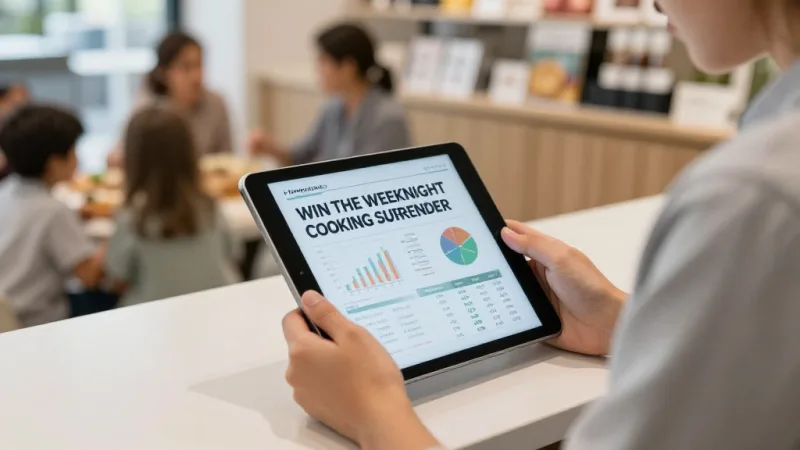
Build a family meal deal engineered for that exact surrender: a bundled "Family Night" — an entree per person, a shared side, and drinks for a fixed price that's obviously cheaper than ordering à la carte and barely more than the groceries-plus-effort of cooking. Bundling does the heavy lifting. It removes the paralysis of four people picking separately, it anchors a higher per-table check than a couple of solo orders, and it makes the value impossible to miss.
Then attach it to a specific night and make it a ritual. A "School Night Family Special" every Tuesday and Wednesday — your slowest weeknights — gives families a default. Layer in a "Kids Eat Free" hook tied to loyalty sign-up (one free kids' meal per paying adult, members only) and you accomplish two things at once: you fill dead weeknights, and you push every family into your CRM. More on why that loyalty tie-in is the whole game in a minute.
This is also where multi-location operators have a real edge. Groups like T. Jin China Diner (15 stores, 75 terminals) and Crafty Crab Seafood (19 stores, 152 terminals) push one back-to-school family menu to every location with one-click sync and track which stores and which nights are converting from a single dashboard — no per-store rebuild, no version drift. For the mechanics of rolling a promo across many locations cleanly, see our multi-location menu management guide.
Lunch Specials: Capture the Midday Crowd Everyone Forgets
When the kids go back to school, a different crowd frees up: parents with quiet houses, remote workers back to a routine, and school staff with a fixed 30-minute window. September is a midday goldmine that most dinner-focused restaurants completely ignore.
Run a fast, fixed-price weekday lunch special built around speed and value — an express combo that's out the door (or on the table) in under 12 minutes, priced to compete with the sad desk salad. The whole sell is reliability: a working parent on a lunch break or a teacher with a hard bell schedule will become a twice-a-week regular if you're fast and consistent, and they'll abandon you the first time you're slow.
Speed is a system, not a hope. A POS built for throughput — one-tap combos, kitchen display routing, and tap-to-pay that closes the check in seconds — is what makes a 12-minute promise real at noon. This is the same speed-of-service discipline that lets quick-service operators move a rush without chaos; our speed-of-service guide breaks down where the minutes actually hide. And because lunch is high-volume and low-ticket, every cent of margin matters — a processor-agnostic POS that lets you keep your own payment processor instead of a locked, marked-up rate protects the profit on a $12 lunch in a way that compounds across hundreds of midday tickets. Run your own numbers with our processing fee calculator.
Teacher & School-Staff Appreciation: The Highest-ROI Goodwill Play
Want a concentrated, loyal, word-of-mouth-rich audience that lives and works within a mile of your door? It's the teachers' lounge.

Launch a teacher and school-staff appreciation program and make it generous and easy: show a school ID for 15% off, every day, all year, plus a free entree or coffee during the first week of classes. The math works because of how educators talk. Goodwill in a staff room travels faster than any ad you could buy — one teacher who gets treated well brings the department, and the department mentions you to a few hundred parents.
Then turn the appreciation into actual revenue. Back-to-school is teacher-gift season, and parents are hunting for thank-you gifts they can't think of. Sell bulk e-gift cards positioned as the easy teacher gift — delivered to a phone in seconds, no wrapping, no trip to the store. Offer a small bonus on multi-card purchases so a class parent buying for the whole teaching team gets rewarded, and you bank a stack of cash today against visits spread across the semester. For the campaign structure behind gifting promotions like this, our gift card sales strategy lays out the bonus-card mechanics that perform best.
After-School Snacks & the Study-Spot Play
There's a dead zone on every restaurant's clock — 3pm to 5pm — and back-to-school is the season to finally fill it. The school day ends, and a wave of hungry kids, teens, and the parents shuttling them is suddenly out in the world with time to kill before dinner.
Own that window with an after-school snack menu: small, fast, affordable bites and drinks priced for a $5-$8 impulse, available exactly when the dinner kitchen is idle anyway. For cafes, bubble tea shops, and dessert concepts, this is pure found money — the same off-peak hour that Tiger Sugar International Dessert turns into traffic with minimal-step kiosk ordering and electronic receipts that quietly enroll every snack-buyer into loyalty.
If your space allows it, go one step further and become the after-school study spot — reliable Wi-Fi, a "buy a drink, stay and study" policy, a quiet corner for high schoolers and college students. A teen who studies at your place three afternoons a week is a customer for years, and they bring friends. The play is simple: capture the daypart your competitors leave empty, and make it a habit before October.
Campus & Local-School Marketing: Be Where the Families Already Are
The best back-to-school marketing doesn't shout into the void — it plugs directly into the institutions the whole community already revolves around in September.
Go local and go specific:
- Partner with PTAs and booster clubs. Offer a "spirit night" — donate a percentage of one evening's sales to the school, and the PTA markets your restaurant to every parent for you. You buy a packed dining room and a pile of community goodwill for the cost of a donation you'd happily make anyway.
- Sponsor the team and the program. A banner at the football field, a logo on the band's fundraiser, a coupon in the first-day folder — small, hyper-local placements that put you in front of exactly the families you want, with the implied endorsement of the school behind you.
- Court the college crowd. If there's a campus nearby, a student-ID discount and a late-night menu capture a hungry, habit-forming audience the moment they arrive for the fall term.
Back this up with a focused local digital push — geo-targeted social posts, an email and SMS blast to your existing list announcing the family deals and teacher program, and an updated Google Business Profile so "near me" searches at 5pm find you. The combination of trusted local institutions and direct digital reach is what cuts through the September noise. For the email-versus-SMS playbook on timing and frequency, see our guide to email and SMS marketing for restaurants.
The Checkout, Gift Cards & Loyalty Engine That Makes It All Compound
Here's where most back-to-school campaigns fall apart — and where the real money is. You can run every promotion above and still get nothing lasting out of it if the moment of payment is a dead end. The checkout is where a one-time September visit either converts into a year-round relationship or walks out the door forever.
Three systems have to live in one place for this to work:
- A fast, flexible POS checkout. Family deals mean bigger parties and split payments; lunch specials mean speed; after-school snacks mean tiny tickets that have to clear in seconds. A POS that splits checks by seat or item, takes Apple Pay and Google Pay at the table, and runs on hybrid local-plus-cloud architecture — roughly 1ms local latency, and it keeps ringing orders even if the internet drops mid-rush — is what keeps every one of these promotions from collapsing at the register. On your busiest fall nights, a frozen cloud terminal is the one failure you can't afford.
- Gift cards and e-gift cards in the same system. Back-to-school is a sneaky gifting season — teacher thank-yous, "here's dinner, you've earned it" gifts between parents, and busy families buying a no-cook fallback to keep on hand. Sell physical and e-gift cards with a bonus ("Buy $50, get a $10 bonus card"), and let e-gift cards rescue the parent who needs a teacher gift at 9pm. The cash lands today, the visit comes later, and the slice of every batch that's never fully redeemed quietly pads your margin.
- Loyalty, points, and membership baked into the transaction. This is the multiplier. Tie "Kids Eat Free" and after-school perks to membership so enrolling is the obvious move, and a tap-to-pay POS with built-in CRM links each family's name, contact, and order history to a profile automatically — no clipboard, no separate ask.
When checkout, gift cards, e-gift cards, and loyalty all run in one platform, the upsell is one tap for the server instead of three clunky workflows. That's the difference between collecting a payment and collecting a customer. If you're comparing platforms before the fall push, our KwickOS vs. Toast comparison spells out the offline-mode, processor-freedom, and built-in-loyalty differences that decide nights exactly like these.
Turn the Fall Crowd Into Year-Round Regulars
Everything to this point fills your dining room in September. This last step is what makes it matter in November, February, and next summer.
The families you win during back-to-school are forming new habits right now. If you capture them properly, you don't just survive the slump — you compound it into the strongest customer list of your year. So make capture automatic: enroll every family at checkout, hand each table a return offer that expires in three to four weeks to pull them back during the post-September lull, and let your CRM remember them.
That collected list — names, contacts, kids' meal preferences, visit history — becomes a warm audience you can market your fall game-day specials, Halloween family night, Thanksgiving catering, and holiday gift cards to, at near-zero cost. Automated triggers do the work while you run the restaurant: a birthday message to the kid, a "we miss you" nudge after three quiet weeks, a points-balance reminder. Our guide to loyalty marketing automation shows how to set those sequences once and let them run.
And if you partner with or resell to restaurants, this loyalty-at-checkout story is one of the easiest wins to demonstrate — a slow-season campaign that visibly builds a marketing asset is exactly what operators want to see. More on the channel side at our partner program.
The Back-to-School Checklist
Pull this out in early August, before the first bell:
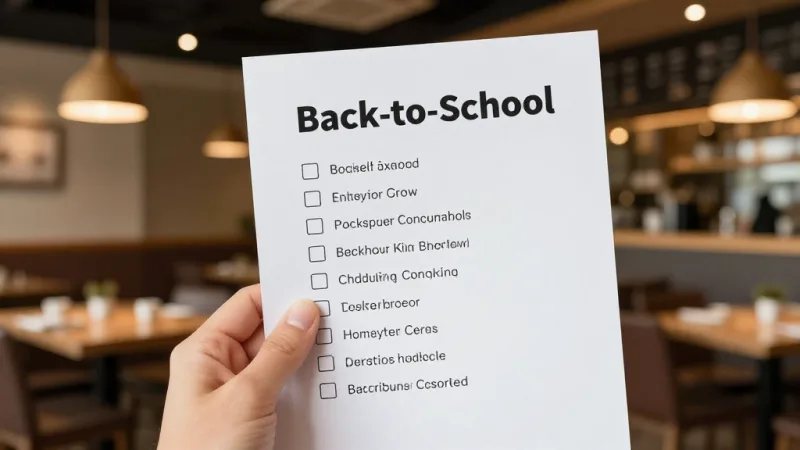
- Three weeks out: Finalize the family meal deal, weekday lunch special, after-school snack menu, and teacher discount. Lock the dates and the prices.
- Build the POS layout: Pre-load every promo as one-tap buttons, set split-check and tap-to-pay defaults for family parties, and configure the "Kids Eat Free" and member-only logic so it fires automatically.
- Stand up the gift card push: Bonus-card promotion live, e-gift cards merchandised as the easy teacher gift, bulk-purchase incentive ready for class parents.
- Line up local partnerships: Book PTA spirit nights, sponsor a team or program, and get coupons into first-day folders before classes start.
- Run the digital run-up: Geo-targeted social, an email and SMS blast to your list, and an updated Google Business Profile announcing the family deals and teacher appreciation.
- Capture everyone: Loyalty and points enrollment at every checkout, return offer to every table, and the membership tie-in on every "Kids Eat Free" redemption.
- Review weekly: Pull POS reports — covers by daypart, average check, promo take rate, gift card sales, new loyalty sign-ups — and shift spend toward whatever's converting.
The fall slump only beats the restaurants that treat it as weather. Treat it as a campaign — engineered offers, a checkout that captures every guest, and a loyalty program that keeps them — and September stops being the month you brace for and becomes the month you build your year on.
Build Your Back-to-School Campaign on a POS That Captures Every Family
KwickOS runs the fall rush with offline-proof checkout, one-tap family-deal and lunch-combo buttons, built-in gift cards and e-gift cards, loyalty enrollment at the terminal, and your own payment processor. See how it turns a slow September into a year-round customer list.
See KwickOS for Restaurants
Frequently Asked Questions
Why does restaurant revenue drop after the summer ends?
When school starts, family routines tighten almost overnight. Parents pack lunches to save money, weeknights fill with homework and activities, and the spontaneous summer dinners out disappear. Restaurant industry data suggests dining traffic can dip noticeably in early fall — by as much as a fifth in family-heavy concepts — as households reset their budgets and schedules. The slump is predictable, which means it is also beatable: the operators who run a deliberate back-to-school campaign capture the demand that is still there, just harder to reach.
What are the best back-to-school promotions for restaurants?
The highest-performing back-to-school promotions target the new family rhythm directly: a weeknight family meal deal that beats the hassle of cooking after a long day, a fast midday lunch special for parents and remote workers, a "kids eat free" night tied to loyalty enrollment, an after-school snack or study-spot offer, and a teacher and school-staff appreciation program with a standing discount. Each one is engineered to win back a specific occasion that disappeared when the school bell rang.
How do teacher appreciation programs help a restaurant?
Teachers and school staff are a concentrated, loyal, word-of-mouth-rich audience right in your neighborhood. A standing teacher discount (show a school ID for 15 percent off, or a free entree during the first week of class) earns goodwill that spreads through staff rooms and parent groups fast. Pair it with bulk e-gift cards that parents buy as teacher thank-you gifts, and you turn appreciation into a measurable revenue layer instead of a one-off giveaway.
How can gift cards drive back-to-school restaurant sales?
Back-to-school is a quiet gifting season. Parents look for teacher thank-you gifts, and busy families want a no-cook fallback on hand. Sell physical and e-gift cards with a bonus offer ("Buy $50, get a $10 bonus card"), market e-gift cards as instant teacher gifts delivered to a phone, and let the cash land today while the visit happens later. Because a meaningful share of every gift card batch is never fully redeemed, the program pads margin on top of the upfront cash and the return trip it locks in.
How do restaurants turn the back-to-school crowd into regulars?
Capture every family at checkout. Enroll them in your loyalty, points, or membership program right at the terminal, and tie "kids eat free" or after-school perks to membership so signing up is the obvious move. A tap-to-pay POS with built-in CRM links each family's contact and order history to a profile automatically, turning a September dinner into a warm list you can market fall specials, game-day deals, and holiday gift cards to all year — at near-zero cost.