 Tom Jin
Think about the last person who quit on you. Not the one you let go — the one who walked.
They gave two weeks, or maybe none. You scrambled to cover the shifts. You reposted the job, screened résumés, trained a replacement who is still slower than the person who left. And somewhere in the back of your mind was the thought every restaurant owner has had at 11 p.m. on a Tuesday: Why can't I keep anyone?
Here's the uncomfortable part. In a restaurant losing 80 to 90 percent of its staff a year, the problem is almost never the people. It is the leadership. And "because I said so" — the reflex every stressed owner falls back on during a rush — is one of the most expensive four-word phrases in the entire industry.
Because it gets worse: every hourly employee who walks costs you between $2,000 and $6,000 to replace once you count recruiting, onboarding, the manager hours spent training, and the productivity you lose running short-staffed. A 30-person restaurant at 85 percent turnover burns through roughly 25 replacements a year. That is $50,000 to $150,000 evaporating — not to a competitor, not to rising food costs, but to a leadership style you can change starting on your very next shift.
This is the guide I wish someone had handed me twenty years ago, when I was running restaurants before I ever wrote a line of software. It is not about being nice. It is about being the kind of leader people actually choose to follow.
Boss vs. Leader: The Distinction That Decides Everything
A boss and a leader can give the identical instruction — "get table 12 their drinks" — and produce completely different restaurants.
The boss operates on authority. Do it because I own this place, do it because I sign your check, do it because I said so. It works, in the sense that the drinks arrive. But it buys you compliance, and compliance is the bare minimum a person will do to avoid being yelled at. It never buys you the extra ten percent — the server who notices the anniversary couple, the line cook who flags that the walk-in is running warm, the cashier who remembers a regular's name.
The leader operates on influence. The drinks arrive because the server understands the standard, believes it matters, and trusts that doing it well will be noticed. That trust is the entire game. And here is the thing most owners get backwards: you do not earn it by being liked. You earn it by being consistent, fair, and clear — three things that cost you nothing but discipline.
Below are the five leadership systems that separate the restaurants people stay at from the ones they flee.
1. Know Which Leadership Style the Moment Calls For
There is a myth that great leaders have "a style." The truth is they have a range, and they read the situation to decide which one to reach for.

- Directive — short, clear commands. Correct during a Friday rush, a kitchen fire, a health-inspector walk-in. Wrong as your everyday default, because a restaurant run entirely on directives is a restaurant run on fear.
- Coaching — asking questions, developing skill over time. This is your bread and butter with anyone who has potential. "What do you think slowed the ticket down?" teaches a cook to solve problems; "you're too slow" teaches them to update their résumé.
- Supportive — leading with empathy when someone is struggling personally or just had a rough table. Costs nothing, buys enormous loyalty.
- Delegating — handing over real authority to people who have earned it. We will get to why this is the hardest one for owners.
The mistake is picking one and living there. The owner stuck in permanent directive mode wonders why nobody thinks for themselves. The owner stuck in permanent supportive mode wonders why standards keep slipping. Read the person and the moment, then choose.
2. Communicate So Clearly There Is Nothing to Misunderstand
Most "attitude problems" in a restaurant are actually communication problems wearing a costume. The employee did not ignore the standard — nobody ever made the standard clear.
Two frameworks do the heavy lifting here:
The pre-shift huddle. Ten minutes before the doors open, every day. What are today's specials and 86'd items? Who is on which station? What is the one thing we are going to be great at tonight? A consistent pre-shift meeting is one of the highest-return habits in the entire industry — it aligns the team, surfaces problems before guests do, and gives you a daily moment to recognize someone by name. (We break the format down in our guide to turning your team into confident upsellers, because most upselling failures start with a vague pre-shift.)
Standards, not moods. "Keep the station clean" is a mood. "Wipe the flat-top, restock the reach-in to the line, and squeeze the sanitizer bucket before you clock out" is a standard. Standards are teachable, checkable, and fair. Moods are none of those, and staff can feel the difference — a standard applies to everyone equally, while a mood applies to whoever the owner is annoyed with today.
3. Give Feedback That Builds People Instead of Breaking Them
Feedback is where leadership either compounds or collapses. Get it right and people grow toward you. Get it wrong and they shut down, coast, and start counting the days.
Use SBI — Situation, Behavior, Impact:
- Situation: "On Saturday's dinner rush…"
- Behavior: "…you fired three tickets out of order…"
- Impact: "…so table 6 waited 25 minutes and left a one-star review."
Notice what SBI does: it attacks the behavior, never the person. "You fired tickets out of order" is fixable. "You're careless" is an identity, and people defend their identity to the death. Same problem, opposite outcome.
Three more rules that separate leaders from bosses:
- Correct in private, praise in public. Reversing this — dressing someone down on the line in front of the team — is the single fastest way to lose a good employee and terrify the rest into mediocrity.
- Make it frequent, not annual. Feedback saved up for a review is a bomb, not a gift. Small, specific, in-the-moment comments build trust; the big sit-down destroys it.
- Anchor it to data. This is where the right tools change everything. When your POS tracks per-employee sales, upsell rate, void frequency, and speed of service, feedback stops being your opinion versus theirs. "Your average check is $4 below the team" is a fact you can coach against. Diva Nail Beauty, a four-location group, drives recognition off automated commission tracking — the top performer each period is a number nobody argues with, not a favorite the owner picked. That fairness is what makes the praise land.
4. Delegate Real Authority — Then Watch, Don't Hover
Delegation is where most owners fail, and I understand why. It is your name on the lease. Handing decisions to someone else feels like handing them your baby. So you "delegate" a task but keep the authority, which means you have not delegated anything — you have just created a middleman who has to check with you before doing the thing you asked them to do.
Real delegation has three parts: a clear outcome, the authority to reach it, and visibility into the result.
That third part is what makes the first two possible. You are not delegating on blind faith — you are delegating with a dashboard. Consider T. Jin China Diner: 15 stores, 75 terminals. No human owner can be physically present in fifteen dining rooms. So the leadership model is delegation by design — each location has a manager with real authority, and the owner watches live sales, labor percentage, discounts, and voids from a single cloud dashboard, stepping in only when a number signals something is off. That is not micromanagement. That is trust with a safety net, which is exactly what lets a business scale past one room.
Because here is the open loop most owners never close: you will never build a second location, or take a real vacation, or stop working 70-hour weeks, until you can trust the numbers instead of your own eyeballs. Delegation is not a nicety. It is the only door out of the trap.
5. Mentor — Because People Stay for a Future, Not a Job
Ask someone why they left a restaurant and "I didn't see anywhere to go" comes up constantly. Nobody dreams of being a dishwasher forever. They will, however, stay for years at a place where the dish pit is visibly a starting line.
Mentoring is simply making the path visible and walking a few steps of it with people:
- Cross-train on purpose. Teach the cashier the sauté station, the server the host stand. Every skill you add is a reason to stay and a hedge against being short-handed.
- Name the next rung. "Here is what it takes to run a shift on your own, and here is what it pays." A concrete target beats a vague someday.
- Share the why. When people understand how the checkout flow protects margin, why the loyalty program brings the same guests back, how the gift-card push funds January — they stop being order-takers and start thinking like operators.
And this is where leadership and your systems quietly reinforce each other. The same CRM and loyalty engine that runs your customer program can run a staff-recognition program: load an e-gift card for the shift's top upseller, award points redeemable for a preferred schedule or branded merchandise, comp a team meal through the POS. Small, frequent, tangible. Recognition that used to depend on a manager remembering to say "nice job" becomes a repeatable system — and frequency beats grand gestures every time. Curious what the churn is actually costing you? Run your team through our employee cost calculator and you will see the number that makes all of this urgent.
The Owner Is the Ceiling
Here is the hard truth I keep coming back to after 20 years in restaurants and 30 in technology: a restaurant almost never rises higher than the person leading it. The team's standards, its patience, its sense of whether excellence is rewarded or ignored — all of it flows downhill from the owner.
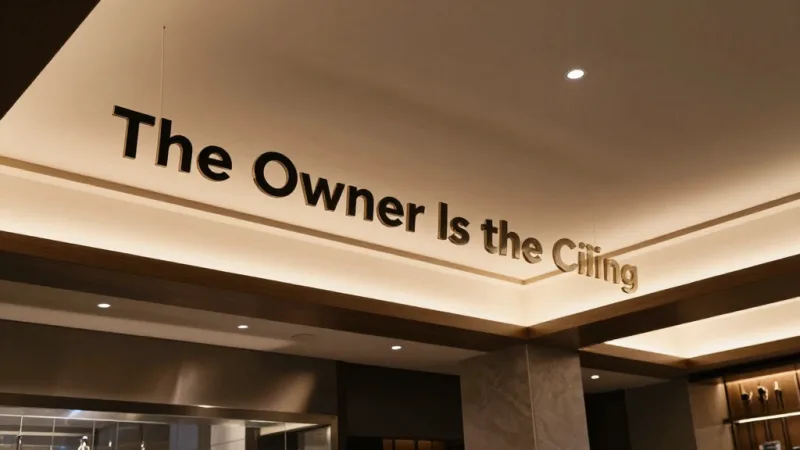
That is bad news if you want to blame the labor market. It is fantastic news if you are willing to work on yourself, because it means the single highest-leverage improvement available to your business is free, it is under your control, and you can start it tonight. Choose the right style for the moment. Communicate in standards. Give feedback that builds. Delegate with visibility. Mentor toward a future.
Do that consistently, and you stop being the boss people endure. You become the leader people follow — and, more importantly, the leader people stay for. For the systems that make it repeatable across every shift and location, see our full playbook on building a team that doesn't want to leave, or talk to us about the tools underneath it.
Frequently Asked Questions
What is the difference between a boss and a leader in a restaurant?
A boss directs from authority — issuing orders, correcting mistakes, and relying on the fear of being fired to get compliance. A leader directs from influence — setting a clear standard, coaching people to meet it, and giving them a reason to care beyond their paycheck. The practical difference shows up in turnover: fear-based restaurants routinely lose 80 to 90 percent of staff a year, while leader-run restaurants hold turnover under 30 percent while paying the same wages in the same labor market.
How do I give restaurant staff feedback without demoralizing them?
Use the SBI framework — Situation, Behavior, Impact — and tie it to real data instead of mood. Name the specific shift, describe exactly what happened, and explain the concrete effect on guests or teammates. Deliver correction privately and recognition publicly, keep it frequent rather than saving it for an annual review, and always separate the behavior from the person. When your POS tracks per-employee sales, upsell rate, and speed of service, feedback becomes about numbers everyone can see rather than the owner's opinion.
How can a restaurant owner delegate without losing control?
Delegate outcomes with clear standards and real-time visibility, not blind trust. Define what good looks like, hand over the authority to make decisions inside that boundary, and use a cloud dashboard to monitor results from anywhere instead of hovering in person. Owners who run multiple locations — like T. Jin China Diner across 15 stores — delegate day-to-day operations to managers while watching live sales, labor, and voids remotely, stepping in only when the numbers signal a problem.
How does technology help restaurant leadership?
Good systems remove the busywork and the guesswork that make managers act like cops. Fingerprint login ends buddy-punching, per-employee performance data makes recognition fair, automated tip and commission tracking eliminates payday disputes, and staff-facing gift-card and loyalty rewards turn great performance into tangible perks. When the POS handles the mechanics, the owner is freed to spend time on people — coaching, mentoring, and building the culture that actually retains a team.
Lead the People. Let the System Handle the Rest.
KwickOS runs fast fingerprint checkout, per-employee performance data, automated tip and commission tracking, and staff-facing loyalty, points, and gift-card rewards as one integrated platform — across every terminal and location, while you keep 100% of your processing revenue to reinvest in your team. See what better leadership plus better tools is worth for your restaurant.
Get a Free Demo