 Ming Ye
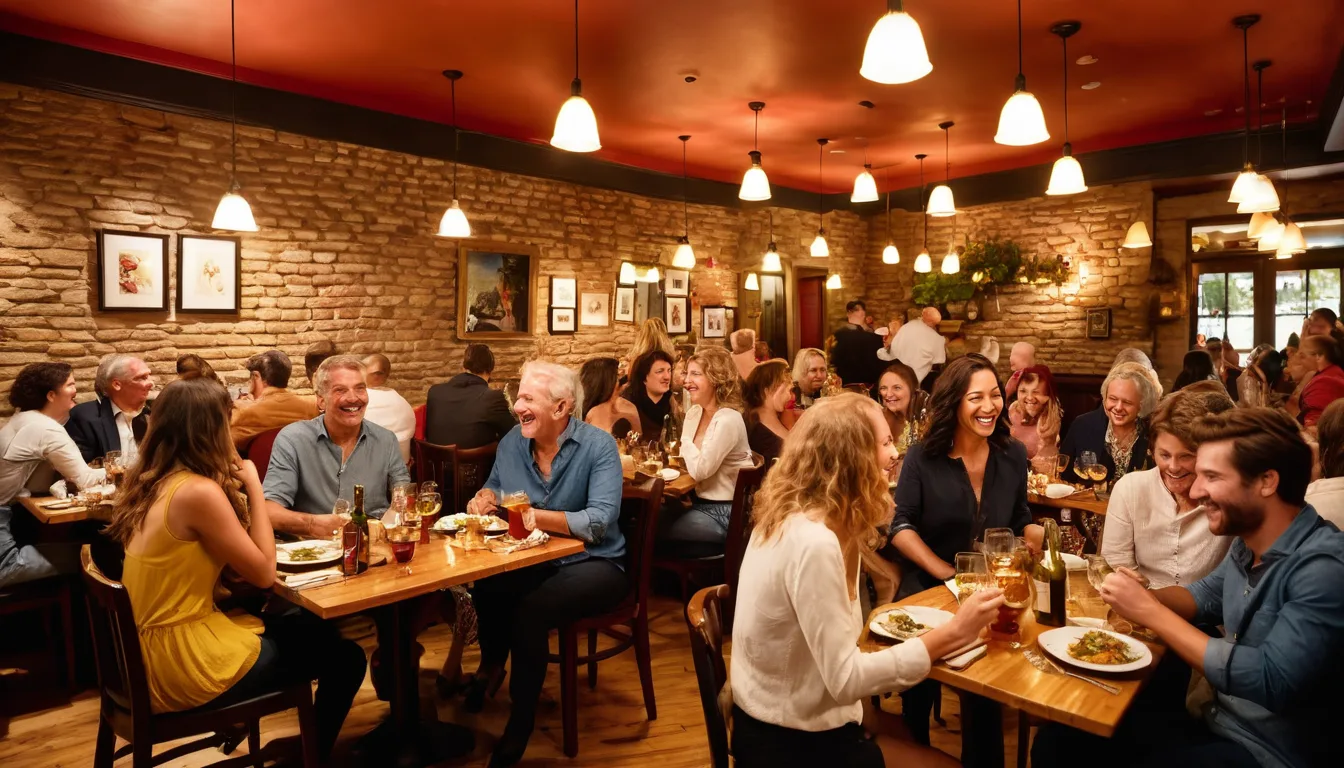
A customer walks into your restaurant. Before they sit down, a server hands them a small cup with a taste of your signature soup. Thirty cents of broth and a disposable cup.
That customer orders an extra appetizer they weren't planning on. They leave a bigger tip. They come back the following week with two friends.
Total cost to you: $0.30. Total revenue generated: $4.20 in that single visit — and $47+ over the next 90 days.
This isn't wishful thinking. It's reciprocity — one of the most well-documented principles in behavioral psychology, and the reason Costco's sample stations generate billions of dollars in annual sales from food that costs pennies per portion.
Here's the thing: most small business owners know that free samples "work." But they treat it as a nice-to-have instead of a systematic revenue strategy with measurable ROI. They give away a few bites on weekends and never track what happens next.
That's leaving money on the table. A lot of money.
This guide breaks down exactly how reciprocity marketing works, the specific tactics that generate the highest returns, and how to build a sample-and-gift program that you can track, optimize, and scale — whether you run a restaurant, retail store, or service business.
The Psychology Behind Reciprocity (And Why It's Almost Impossible to Resist)
Reciprocity is hardwired into human behavior. When someone gives you something — even something small, even something you didn't ask for — you feel a psychological obligation to give something back. It's not a suggestion. It's a compulsion.
Behavioral researchers have studied this for decades. The findings are consistent: people who receive an unsolicited gift spend more, return more often, and rate their experience higher than those who don't. The effect holds across cultures, age groups, and income levels.
But it gets worse (for your competitors who aren't using this). The reciprocity response is disproportionate. A $0.30 sample doesn't generate $0.30 in reciprocal spending. It generates $3-$5 in immediate purchases and substantially more in lifetime value. The receiver doesn't calculate an equal exchange — they feel an emotional debt that far exceeds the gift's actual cost.
This is why a mint on a restaurant check increases tips. Why a free trial converts better than a discount. Why the person who hands you a flower at the airport used to be more effective than a billboard.
And that's not all: reciprocity has a timing component. The closer the gift is to the purchasing decision, the stronger the effect. A sample handed to someone browsing your menu converts at a higher rate than a coupon mailed to their house a week earlier.
5 Reciprocity Tactics That Generate the Highest ROI
Not all free samples are created equal. The following five tactics, ranked by return on investment, are the ones that consistently outperform across industries.
1. The Arrival Gift (Cost: $0.15-$0.50 | Return: 8-14x)
Hand every customer something free within the first 60 seconds of their visit. In a restaurant, this could be a taste of today's soup, a mini spring roll, or a small cup of a specialty drink. In retail, it could be a sample packet, a small chocolate, or a branded sticker for their kids.
The key is timing and surprise. The gift must arrive before the customer has committed to a purchase decision. This triggers reciprocity while they still have their wallet open and their mind flexible.
Tiger Sugar, one of our merchants with 2 stores and 2 self-ordering kiosks, tested this by offering a free mini boba sample to customers waiting to order at their kiosk. The result: average ticket size increased measurably, and their repeat visit rate jumped within the first month of the program.
Here's the thing: the arrival gift doesn't just increase spending — it changes the entire emotional frame of the visit. A customer who receives something free walks in feeling like a guest, not a transaction. That mindset shift affects every decision they make for the next 45 minutes.
2. The Server-Delivered Taste (Cost: $0.20-$0.75 | Return: 6-10x)
When your server describes the specials, they bring a small taste of one. "Chef just made our new lobster bisque — here's a taste while you look at the menu."
This combines reciprocity with another powerful bias: the endowment effect. Once a customer has tasted something, they feel partial ownership of the experience. Not ordering it feels like losing something they already had.
Industry data suggests restaurants that implement server-delivered samples see orders of sampled items increase substantially compared to items that are only verbally described. The food cost of a one-ounce sample is minimal — the revenue from full-portion orders is significant.
Track this through your POS system. Create a button or modifier for "sampled item" so servers can tag which tables received a taste. After 30 days, run a report comparing conversion rates on sampled vs. non-sampled specials. The data will justify the program permanently.
3. The Birthday and Anniversary Freebie (Cost: $2-$8 | Return: 12-20x)
Send a loyalty member a free item on their birthday. Not a coupon for 20% off. Not a discount code. A free dessert, drink, or appetizer — no purchase required, no minimum spend.
But it gets worse for businesses that skip this: customers redeeming birthday freebies almost never come alone. Industry data consistently shows that birthday redemptions bring additional guests. Those guests pay full price. The average check for a birthday visit is significantly higher than a regular visit.
Your CRM and loyalty system automates this entirely. Collect birthdays at enrollment, trigger an e-gift card or free item coupon 3 days before the date, and watch the redemption data roll in. KwickOS merchants using automated birthday rewards see redemption rates that generate strong positive ROI after accounting for the cost of the free item.
And that's not all: the birthday freebie generates social media content. Customers photograph free birthday desserts and post them. That's free advertising you couldn't buy at any price.
4. The Post-Visit Surprise (Cost: $0-$5 | Return: 15-25x)
After a customer's first visit, send them an unexpected e-gift card for $5. No strings. No minimum. Just a thank-you.
This is the reciprocity nuclear option. The customer has already left. They've already paid. They owe you nothing. And then — days later — a gift appears in their inbox.
The psychological impact is enormous. An unexpected gift after the transaction triggers a reciprocity response that is significantly stronger than a gift given before or during the purchase. The customer didn't see it coming, which means their brain processes it as genuine generosity rather than a sales tactic.
Rockin' Rolls Sushi Express, with 3 stores and 49 iPad self-ordering stations, found that customers who received a post-visit e-gift card returned sooner than customers who didn't. When they returned, they brought additional guests and spent substantially more per visit. The $5 e-gift card paid for itself many times over.
The mechanics are simple: your POS identifies first-time customers (new loyalty enrollments, new payment cards), and your CRM sends a $5 e-gift card 48 hours after the visit. Fully automated. The only cost is the gift card value — which you recover and then some on the return visit.
5. The Gift-With-Purchase Tier (Cost: $1-$10 | Return: 5-8x)
Set a spending threshold and offer a free gift when customers cross it. "Spend $50, get a free dessert." "Buy 3 entrees, get a complimentary appetizer." "Purchase $75 in retail, receive a sample bag."
This triggers reciprocity and anchoring simultaneously. The free gift creates the obligation to return, while the spending threshold anchors the customer's perception of what a "normal" order looks like. Customers who would have spent $42 now add an extra item to hit $50.
According to restaurant industry data, gift-with-purchase thresholds increase average order value by 15-25%. The gift itself costs a fraction of the incremental revenue it generates.
Configure this directly in your POS checkout flow. When the order total approaches the threshold, the system can prompt the server or display a message on the customer-facing display: "Add $8 more to receive a complimentary chef's appetizer." That prompt alone closes the gap in a significant percentage of qualifying transactions.
How to Track Reciprocity ROI (Without Guessing)
The difference between a "nice gesture" and a revenue strategy is measurement. Here's exactly what to track and how.
Metric 1: Immediate Conversion Rate. What percentage of customers who receive a sample purchase the sampled item? Create a POS modifier or button to tag sampled tables. Run weekly reports. A healthy conversion rate is 25-40%.
Metric 2: Average Ticket Lift. Compare the average check of tables that received complimentary items vs. tables that didn't during the same shift. This isolates the reciprocity effect from other variables. A healthy lift is $3-$7 per check.
Metric 3: Return Visit Rate. Track how many customers who received a post-visit e-gift card return within 30 days. Compare this to your baseline return rate. A healthy lift is 20-40% above baseline.
Metric 4: Loyalty Enrollment Boost. Offer the free sample conditional on joining your loyalty program. "Want a free taste of our new signature dish? Just scan here to join our rewards." This turns a $0.30 sample into a lifetime customer record. Track enrollment rates before and after implementing this tactic.
Here's the thing: you can't track any of this without the right technology infrastructure. A cash register and paper receipts won't tell you which customers received samples, what they ordered, or whether they came back. This is where your POS system becomes a revenue tool, not just a checkout device.
The Checkout Moment: Where Reciprocity Meets Technology
Your POS checkout flow is the final conversion point for every reciprocity tactic. And most businesses waste it.
When a customer who received a free sample reaches the checkout screen, that's the moment to:
- Prompt loyalty enrollment. "Would you like to earn points on today's purchase? Sign up and get a free appetizer on your next visit." Reciprocity breeds reciprocity — they received a free sample, now they're more likely to give you their contact information.
- Suggest a gift card purchase. "Add a $25 gift card for someone special? We'll include a bonus $5 e-gift card for you." This is e-gift card strategy powered by reciprocity — the bonus gift card triggers the customer's desire to "give back" the generosity they experienced.
- Display the points balance. On the customer-facing screen, show their loyalty points and how close they are to the next reward. "You're 50 points from a free dessert!" The anticipation of another free item reinforces the reciprocity loop.
- Offer a digital receipt with a return incentive. "Show this receipt within 14 days for a complimentary appetizer." This extends the reciprocity window beyond the current visit.
A processor-agnostic POS like KwickOS handles all of these touchpoints in a single checkout flow. The loyalty prompt, the gift card suggestion, the points display, and the receipt offer all happen automatically — no extra hardware, no third-party integrations, no separate loyalty app. And because you're not locked into a specific payment processor, every dollar saved on processing fees is another dollar you can invest in your sample program.
Gift Cards and E-Gift Cards: The Reciprocity Multiplier
Gift cards are reciprocity in a physical (or digital) form. When someone gives a gift card, they're creating a reciprocity obligation between the recipient and your business — even though the giver is the one who paid.
But it gets worse for businesses that don't have a gift card program: they're missing the single highest-margin revenue stream in retail and food service. Industry data suggests that a meaningful percentage of gift card value is never redeemed (this is called "breakage"), and customers who do redeem typically spend above the card value.
Here's how to weaponize gift cards with reciprocity:
- Bonus card promotions. "Buy a $50 gift card, get a free $10 e-gift card." The buyer feels rewarded. The recipient feels gifted. You've generated $50 in guaranteed revenue plus a return visit. Calculate your gift card revenue potential.
- Loyalty milestone rewards as e-gift cards. Instead of points-for-discount, send a $5 e-gift card when customers hit a milestone. The e-gift card feels like a tangible gift rather than an abstract discount — and it drives a dedicated return visit.
- Employee gifting programs. Offer bulk e-gift card packages to local businesses for employee appreciation. $1,000 in bulk gift cards at 50% margin is $500 in profit before a single card is redeemed — and the redemption visits generate additional revenue.
The best part: all of this runs through your POS. Issue gift cards at checkout, send e-gift cards via your CRM, track redemptions in your reporting dashboard, and measure the revenue multiplier of every card sold. No spreadsheets. No manual tracking. No separate gift card vendor charging monthly fees.
Loyalty Programs as Reciprocity Engines
A loyalty program isn't a discount program. It's a reciprocity delivery system.
Every time you give a customer free points, a surprise bonus, or an unexpected reward, you trigger the same psychological mechanism as a free sample. The customer feels obligated to return, spend more, and tell others.
The most effective loyalty structures for reciprocity:
- Pre-loaded welcome points. Give new members 100 points immediately upon enrollment. They haven't done anything yet — but now they feel a debt. "You already have 100 points. Just 200 more for a free appetizer!" This is the endowment effect meets reciprocity, and it increases visit frequency dramatically.
- Surprise double-points days. Don't announce them. Just give double points on a random Tuesday. When customers check their balance and see the unexpected bonus, it triggers a gratitude response that drives an unplanned visit.
- Tier upgrades with gifts. When a customer reaches Gold or VIP status, send a personalized thank-you with a tangible gift — a branded item, a premium sample, or a $10 e-gift card. The gift marks the achievement and creates yet another reciprocity loop.
Diva Nail Beauty, with 4 stores and automated commission tracking, found that their loyalty members who received surprise bonus points visited 40% more frequently than members on a standard earn-and-burn program. The cost per bonus? Negligible. The revenue impact? Substantial enough to justify the program permanently.
Real-World Implementation: What It Looks Like at Scale
Let's walk through a complete reciprocity marketing system for a restaurant doing $80,000/month in revenue.
| Tactic | Monthly Cost | Estimated Monthly Revenue | ROI |
|---|---|---|---|
| Arrival samples (soup taste, 50/day) | $450 | $3,150-$6,300 | 7-14x |
| Server-delivered special tastes (20/day) | $300 | $1,800-$3,000 | 6-10x |
| Birthday e-gift cards ($5 x 40/month) | $200 | $2,400-$4,000 | 12-20x |
| Post-visit surprise e-gift ($5 x 60/month) | $300 | $4,500-$7,500 | 15-25x |
| Gift-with-purchase threshold | $250 | $1,875-$2,500 | 5-8x |
| Total | $1,500 | $13,725-$23,300 | 9-16x |
That's $1,500/month in sample and gift costs generating $13,000-$23,000 in incremental revenue. On an $80,000/month business, that's a 17-29% revenue lift from a program that runs almost entirely on autopilot once configured in your POS and CRM.
And that's not all: the revenue estimates above are conservative. They don't account for the word-of-mouth referrals, the social media posts, the online reviews, or the long-term loyalty that free gifts generate. The true ROI of reciprocity compounds over months and years.
The Technology Stack That Makes It Work
Reciprocity marketing at scale requires three things your POS system must handle natively:
- Customer identification at every touchpoint. You need to know who received a sample, who redeemed a birthday freebie, and who came back after a post-visit e-gift card. This means a CRM integrated directly into your POS — not a separate app, not a punch card, not a third-party service that syncs overnight.
- Automated trigger campaigns. Birthday gifts, post-visit surprises, and milestone rewards should fire automatically based on customer data. Manual programs die within weeks. Automated programs run forever.
- Item-level reporting with customer segments. You need to compare spending between customers who received gifts and those who didn't. You need to see which samples generate the highest conversion. You need data, not guesses.
KwickOS handles all three natively. The built-in CRM tracks every customer interaction, the loyalty engine handles automatic rewards and e-gift card distribution, and the reporting dashboard segments data by any variable you want — including whether a customer received a complimentary item.
And because KwickOS runs on a hybrid local+cloud architecture with 1ms local response times, none of this slows down your checkout. The reciprocity prompt, the loyalty lookup, the gift card suggestion — it all happens in under a second, even during your busiest rush. Even if your internet drops, the local system keeps processing transactions and queues the CRM updates for when connectivity returns.
Crafty Crab Seafood, with 19 stores and 152 terminals, uses this exact approach. Centralized menu management lets them roll out a new sample program across all locations with one click, while individual store managers can track their sample-to-conversion rates on their own dashboards. The system scales because the technology handles the complexity.
3 Mistakes That Kill Reciprocity Programs
Mistake 1: Making the gift conditional. "Free sample with any purchase of $20 or more" is not reciprocity. It's a discount with extra steps. True reciprocity requires giving something with no strings attached. The psychological obligation does the selling for you.
Mistake 2: Not tracking results. If you can't tell me how many samples you gave away last month, what they cost, and how much revenue they generated, your program is a charity project, not a marketing strategy. Use your POS data. Every sample should have a cost code. Every gift card should be tracked to redemption.
Mistake 3: Stopping too soon. Reciprocity marketing has a J-curve. The first month costs money with limited visible return as customers haven't had time to revisit. The second month, return visits start flowing. By month three, the compounding effect of multiple reciprocity touchpoints creates a noticeable revenue lift. Most businesses quit in month one.
What Your Competitors Are Spending Instead
While you're generating 14x returns from $0.30 samples, here's what your competitors are spending on customer acquisition:
- Google Ads: $2-$8 per click, 3-5% conversion rate = $40-$267 per new customer
- DoorDash/UberEats commissions: 15-30% of every order, forever, with no customer data ownership
- Instagram ads: $5-$15 per thousand impressions, with diminishing returns
- Print mailers: $0.50-$2.00 per piece, 1-2% response rate = $25-$200 per response
A free sample costs $0.30 and converts at 25-40%. That's a customer acquisition cost of $0.75-$1.20. Nothing else in your marketing budget comes close.
And unlike paid advertising, reciprocity marketing gets cheaper over time. As your loyalty database grows and your reputation for generosity spreads, each sample and gift generates more return visits, more referrals, and more lifetime value. Your customer acquisition cost decreases as you scale.
You're paying $267 per Google Ads customer when you could be paying $0.75 for a sample customer who brings friends. That's not a marketing problem. That's a math problem.
Turn Free Samples Into Measurable Revenue
KwickOS gives you the POS, CRM, loyalty, and e-gift card tools to run a complete reciprocity marketing program — tracked from sample to sale to return visit. See how it works.
Get a Free Demo