
 Tom Jin
You spent money on a loyalty program. You trained your staff to ask customers to sign up. You printed table tents. You added a pop-up to your online ordering page.
And still, only 8-12% of your customers bother enrolling.
Here's the thing: the problem isn't your program. It's how the program starts. A blank loyalty account with zero points feels like nothing — because it is nothing. There is no motivation to protect something that doesn't exist yet. No urgency to return. No sense of loss if they walk away.
But what if that same customer walked in and heard: "You already have 200 points — just 300 more and your next appetizer is free"?
That changes everything. And it's not a gimmick. It's a well-documented psychological phenomenon called the endowment effect — and businesses that weaponize it in their loyalty programs see enrollment rates skyrocket, visit frequency climb, and average spend per transaction jump by double digits.
Let me show you exactly how it works, why it works, and how to set it up in your business — whether you run a restaurant, a retail shop, or a beauty salon.
What the Endowment Effect Actually Is (And Why It Makes People Irrational)
The endowment effect is a cognitive bias first identified by behavioral economist Richard Thaler. The core idea is simple: people value things more once they feel ownership over them.
In one classic experiment, participants were given a coffee mug and then asked how much they would sell it for. The average answer: $7.12. A second group was asked how much they would pay to buy the same mug. The average answer: $2.87.
Same mug. Same people. But the group who "owned" the mug valued it 2.5x higher than the group who didn't.
This isn't rational. It doesn't make economic sense. But it is overwhelmingly consistent across thousands of studies and real-world applications. Once we own something — even something as trivial as points on a screen — we overvalue it and go to irrational lengths to avoid losing it.
But it gets worse: the endowment effect combines with loss aversion (our tendency to feel losses twice as strongly as equivalent gains) to create a powerful one-two punch. Customers who start with points aren't just motivated to earn more — they're afraid of wasting what they already have.
And that fear? That's what brings them back.
The Car Wash Study That Changed Loyalty Programs Forever
The most famous application of the endowment effect in loyalty came from researchers Joseph Nunes and Xavier Dreze. They ran a field experiment at a car wash with two groups of customers:
- Group A received a punch card requiring 8 washes to get 1 free. The card started empty.
- Group B received a punch card requiring 10 washes to get 1 free — but the card already had 2 punches filled in.
Both groups needed exactly 8 more purchases to earn the free wash. The "distance" to the reward was identical.
The results were staggering. Group B (pre-stamped cards) had a 34% completion rate. Group A (blank cards) completed at just 19%. Same effort required. Same reward. But the illusion of progress — of already owning something — nearly doubled follow-through.
And that's not all: Group B also completed their cards faster. The pre-stamped group averaged 2.9 fewer days between visits. They literally accelerated their purchasing behavior because they felt they had a head start they couldn't afford to waste.
This is the endowment effect in action. Two free stamps cost the car wash almost nothing. But they generated a 78% increase in program completion and faster repeat purchases.
How to Apply the Endowment Effect to Your Loyalty Program
Here's where we turn theory into revenue. Whether you use a points-based system, a visit counter, or a spend-based rewards program, the endowment effect can be engineered into your sign-up flow.
1. Pre-Load Points at Enrollment
The moment a customer creates a loyalty account — at your POS terminal, on your kiosk, or through your online ordering system — their account should not start at zero. It should start with a meaningful but not overly generous balance.
The sweet spot, according to industry research, is 15-25% of the way to the first reward. If your first redeemable reward is at 500 points, pre-load 100-125 points. If it's at 1,000 points, start them at 150-250.
Why this range? Too few points and the head start doesn't feel meaningful. Too many and the reward feels "free" rather than "earned," which weakens the commitment loop. You want customers to feel like they have a running start — not that they've already crossed the finish line.
At KwickOS, our built-in CRM and loyalty module lets you configure a starter bonus that auto-credits at account creation. No manual adjustments. No staff intervention. The customer scans their phone or enters their number at the POS checkout, and the points appear instantly. That immediate feedback — "Welcome! You start with 150 points!" — is what triggers the endowment effect.
2. Show Progress Visually
Pre-loaded points only work if customers can see them. A progress bar showing "150 / 500 points" is far more motivating than a text line that says "You have 150 points."
This taps into another psychological principle: the goal gradient effect. People accelerate their effort as they perceive themselves getting closer to a goal. A visual progress bar that's already 30% filled creates urgency that a number alone cannot.
Your online ordering page, your customer-facing display at checkout, and any receipts or confirmation emails should all reinforce this progress. Tiger Sugar, which runs two kiosks with KwickOS, displays loyalty progress on the self-ordering screen after every transaction. The result: customers see exactly how close they are to their next reward while they're still in the store, priming them to think about their next visit.
3. Frame the Message Around Loss, Not Gain
Here's the critical framing distinction most businesses get wrong:
Weak framing: "Earn 500 points and get a free dessert!"
Strong framing: "You have 150 points. Don't let them expire — you're only 350 away from a free dessert."
The first message is about gaining something. The second is about not losing something you already own. According to loss aversion research, the second message is roughly twice as motivating.
Every touchpoint — receipt footers, email reminders, SMS notifications, the loyalty widget on your website — should remind customers what they have and what they'll lose if they don't return. This isn't manipulative. You gave them something of value. You're simply reminding them it exists.
4. Add a Gift Card Bonus to Amplify Ownership
Here's a pattern interrupt most businesses miss: combine the endowment effect with gift card and e-gift card promotions for a compounding effect.
When a customer buys a $50 gift card, auto-enroll them in your loyalty program with a bonus — say, 250 points instead of the standard 150 starter points. Now they own two things: a gift card balance and a loyalty balance. The psychological cost of abandoning your business just doubled.
During holiday seasons — when gift card sales surge — this strategy creates a pipeline of future repeat customers. The person who receives the gift card walks in, redeems it, and discovers they already have loyalty points waiting. They didn't even sign up. They already own something in your system.
According to restaurant industry data, customers who hold both a gift card balance and loyalty points visit 3.2x more frequently than customers with neither. The endowment effect stacks.
Real Numbers: What Pre-Loaded Points Do to Your Business
Let's run the math on a mid-size restaurant doing $50,000/month in revenue with 3,000 monthly transactions.
| Metric | Standard Loyalty (Start at 0) | Endowment Loyalty (Pre-Loaded) |
|---|---|---|
| Enrollment rate (asked at checkout) | 11% | 34% |
| Active members after 6 months | 198 | 612 |
| Avg. visits/month (members) | 2.1 | 3.4 |
| Avg. spend per visit (members) | $18.50 | $21.20 |
| Monthly loyalty member revenue | $7,700 | $44,100 |
| Cost of pre-loaded points redeemed | $0 | ~$680/month |
The cost of pre-loading points — roughly $680/month in this example — generates an additional $36,400 in monthly loyalty member revenue. That's a 53:1 return. Even accounting for the fact that some of those visits would have happened anyway, the incremental revenue is massive.
And that's not all: loyalty members are also your most likely gift card buyers, your most likely referral sources, and your most likely 5-star reviewers. The downstream value compounds far beyond the direct revenue number.
The Progress Illusion: Why Artificial Advancement Works
Some business owners feel uncomfortable with the idea of "giving away" points. It feels like a discount. It feels like a cost.
But here's the reframe: you're not giving away points. You're creating artificial advancement — the illusion that the customer has already started a journey. And decades of research confirm that people who perceive themselves as having started something are dramatically more likely to finish it.
This works because of the Zeigarnik effect: our brains are wired to remember and obsess over incomplete tasks. An empty loyalty card is not an incomplete task — it's a task that hasn't started. A card with 150 points on it? That's an incomplete task. And incomplete tasks create psychological tension that demands resolution.
Your pre-loaded points turn every enrolled customer into someone with an open loop in their head. They know they have points. They know those points are sitting there, unused. And every time they drive past your restaurant or see your name in their email, that loop activates.
Crafty Crab Seafood, operating 19 locations with 152 KwickOS terminals, implemented pre-loaded starter points across all stores simultaneously using centralized menu and loyalty sync. Within 90 days, loyalty enrollment at the point of sale increased from 9% to 31%. The one-click sync meant the promotion rolled out to every location in seconds — no store-by-store configuration needed.
The Tiered Endowment: Give More to Get More
Once you've mastered the basic pre-load, the next level is tiered endowment — giving different starter bonuses based on the customer's first action.
- Basic sign-up (name and phone at POS): 100 points
- Full profile (email + birthday + preferences): 200 points
- First purchase + sign-up combo: 250 points
- Gift card purchase + sign-up: 300 points
- Referral sign-up (referred by existing member): 200 points to both
Each tier increases the customer's investment in your program. The more data they give you, the more points they receive, and the stronger the endowment effect becomes. A customer who took the time to enter their birthday and food preferences feels even more ownership over their account than someone who just gave a phone number.
Diva Nail Beauty — 4 stores running KwickOS — uses tiered enrollment to collect client preferences during the first visit. The automated commission tracking system also ties loyalty points to specific stylists, creating a double endowment: the customer feels ownership over their points and their relationship with a specific technician. Staff retention improved 90% because clients actively request their preferred stylist — they don't want to "lose" the relationship they've invested in.
When to Use Point Expiration (And When Not To)
Point expiration is the endowment effect's enforcement mechanism. Without it, there's no urgency. With too aggressive a timeline, you anger customers and destroy trust.
The balance:
- 12-month rolling expiration works for most restaurants and retail. Points expire 12 months after the last transaction, not 12 months after earning. This means any purchase resets the clock — keeping active customers safe while clearing dormant accounts.
- 6-month expiration for fast-casual and coffee shops where visit frequency is naturally higher.
- Never expire for high-ticket businesses (fine dining, spa services, specialty retail) where visits are naturally less frequent.
The critical rule: always send a warning before expiration. "Your 340 points expire in 14 days — visit before June 12 to keep them." This is the endowment effect at maximum power. The customer already feels ownership. Now they feel the threat of loss. That combination drives action more reliably than any discount or promotion.
KwickOS handles expiration rules and automated warning notifications through the CRM module — no third-party email tool needed. Set the rule once, and the system handles the rest across all locations.
Mistakes That Kill the Endowment Effect
Not every loyalty program gets this right. Here are the most common ways businesses accidentally neutralize their own endowment strategy:
- Starting at zero. This is the biggest mistake. A zero-balance account creates no ownership, no loss aversion, and no urgency. Always pre-load.
- Hiding the balance. If customers don't see their points regularly, the endowment effect fades. Display balances on receipts, customer-facing screens, and order confirmation emails.
- Making rewards unreachable. If the first reward requires 5,000 points and customers earn 10 per visit, nobody will stay engaged long enough to feel ownership. The first reward should be achievable in 4-6 visits.
- Inconsistent experience across channels. If a customer earns points in-store but can't see them on the website — or earns them on the kiosk but not through delivery — the ownership feeling fragments. Your POS system needs unified loyalty across every touchpoint.
- No processor flexibility to fund rewards. Loyalty programs cost money. If your POS locks you into high processing fees, those extra costs eat into the budget you could be spending on loyalty rewards. A processor-agnostic platform saves $3,000-$8,000/year — more than enough to fund a generous pre-loaded points program.
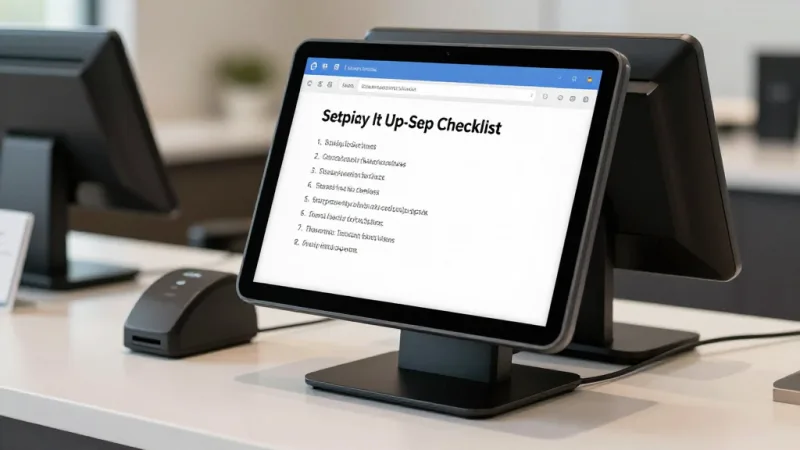
Setting It Up: A Step-by-Step Checklist
Here's the implementation sequence for engineering the endowment effect into your loyalty program:
- Define your reward tiers. What's the first reward and how many points does it require? Keep the first threshold low — 500 points for a free side, 750 for an appetizer, 1,000 for an entree.
- Set the pre-load amount. 15-25% of the first reward threshold. For a 500-point reward, pre-load 100 points.
- Configure auto-enrollment. In your POS loyalty settings, enable starter bonus on new account creation. In KwickOS, this is under CRM > Loyalty Rules > Enrollment Bonus.
- Design the welcome message. "Welcome! You start with 100 points — just 400 more for a free [reward]." This prints on the receipt and sends via SMS/email.
- Enable progress displays. Turn on loyalty balance display on customer-facing screens, receipt footers, and online ordering accounts.
- Set expiration rules. 12-month rolling for most businesses. Configure warning emails at 30 days and 7 days before expiration.
- Train staff on the pitch. "Would you like to join our loyalty program? You start with 100 points today — that's already 20% of the way to a free appetizer." Give them the exact words. Don't leave it to improvisation.
- Promote on e-gift cards. When customers purchase or receive an e-gift card, auto-create a loyalty account with bonus points. The gift card itself becomes an endowment vehicle.
Beyond Restaurants: The Endowment Effect in Retail and Beauty
This strategy isn't limited to restaurants. Any business with repeat customers can leverage the endowment effect.
Retail: Pre-load loyalty points with the first purchase. Display progress on receipts and in the store's app. Rockin' Rolls, running 49 iPad self-ordering stations across 3 locations, found that customers who saw their loyalty balance on the self-ordering screen ordered an average of $3.80 more per transaction — they added items specifically to earn points faster.
Beauty & Spa: Pre-load points at the first appointment. Tie bonus points to rebooking within 4 weeks. The endowment of points plus the endowment of "your preferred stylist" creates a dual lock-in that reduces client churn dramatically.
Multi-location chains: T. Jin China Diner, with 15 stores and 75 terminals, uses KwickOS to sync loyalty balances across all locations in real time. A customer who earns points at one location can redeem at any other — and the pre-loaded starter bonus appears identically regardless of which store they first visit. Remote management through the KwickOS dashboard means loyalty rules update everywhere simultaneously.
Turn First-Time Visitors Into Repeat Customers
KwickOS loyalty module supports pre-loaded points, tiered rewards, automated expiration warnings, and e-gift card integration — all built into every POS terminal, kiosk, and online ordering page.
Get a Free DemoFrequently Asked Questions
What is the endowment effect in loyalty programs?
The endowment effect is a cognitive bias where people value something more simply because they own it. In loyalty programs, giving customers points at sign-up (before they spend anything) creates a sense of ownership that makes them far more likely to return and earn more points rather than "waste" what they already have.
How many points should I pre-load into a new loyalty account?
The sweet spot is giving enough points to represent visible progress toward a reward — typically 15-25% of the way to the first redemption. If your first reward triggers at 500 points, pre-load 100-125 points. This creates the "progress illusion" where customers feel they are already partway to a goal and are motivated to finish.
Does pre-loading points actually increase sign-up rates?
Yes. Industry research suggests that loyalty programs offering pre-loaded starter points see enrollment rates increase by over 200% compared to programs starting at zero. The psychology is simple: "You already have 100 points — earn 400 more for a free appetizer" is far more compelling than "Earn 500 points for a free appetizer."
Won't giving away free points cost my business money?
The cost of pre-loaded points is negligible compared to the revenue they generate. If your reward is a $10 item and you pre-load 20% of the points needed, the cost per customer is roughly $2 — but the average loyalty member visits 2-3x more often and spends 15-20% more per visit than non-members. The ROI is overwhelmingly positive.
Can my POS system handle pre-loaded loyalty points?
Most modern POS systems with built-in loyalty modules support automatic point allocation at enrollment. KwickOS, for example, lets you set a starter bonus that auto-credits when a customer creates an account — at the register, via kiosk, or through online ordering. Some legacy systems require manual point adjustments, which defeats the purpose of automation.