 Kelly Ho
A 200-person company picnic is being planned three miles from your door right now. So is a quinceañera, a church fundraiser, and a Friday team lunch for an office that orders out every single week.
Here's the problem: when the office manager goes looking, they don't find you. They find the national chain with the slick online order form, or the deli down the street that answered the phone first. You lose a $3,200 booking not because your food is worse — it's better — but because you never built the thing that catches the order.
And it gets worse. While you're packed at noon serving $12 checks one at a time, your competitor served that same lunch rush and sent out a single delivery that grossed more than your busiest two hours combined — on food that costs them about thirty cents on the dollar.
That's the part that should sting: catering is the highest-margin revenue a Mexican restaurant can add, and most owners are leaving it on the table. Not because it's hard. Because no one ever built the packages, set the prices, and made it easy to say yes.
This guide fixes that. We'll cover exactly how to price a taco bar, how to build fiesta packages that book themselves, how to handle transport and on-site setup without chaos, and — the real money — how to turn one-time events into recurring corporate accounts that reorder on autopilot.
Why Catering Is the Best Margin in the Building
Start with the math, because the math is the whole argument. A taqueria or Mexican restaurant runs some of the best food costs in the industry: tortillas, rice, beans, and slow-cooked proteins are cheap per portion and they scale beautifully. Cooking for 200 doesn't cost forty times what it costs to cook for five — it costs far less per head, because batch cooking is where your kitchen is already most efficient.
Now compare the two ways you sell that food:
| Channel | Typical food cost | Labor per dollar of revenue | Marketing cost |
|---|---|---|---|
| Dine-in lunch rush | 30–34% | High (servers, cashiers, bussers, table turns) | Ongoing |
| Third-party delivery | 30–34% | Moderate | 15–30% commission |
| Catering (taco bar) | 28–32% | Low (one batch, one delivery, one setup) | Near zero on repeat accounts |
One catering booking is one prep run, one delivery, and one setup — serving fifty to two hundred people off a single coordinated effort. There are no table turns to manage, no 90-second handoffs, no third-party app skimming a quarter of the ticket. The labor is concentrated and the marketing, once an account is recurring, is essentially free.
Here's the thing: you're already paying for the kitchen, the equipment, and the staff. Catering doesn't add those costs — it spreads them across far more revenue. That's why a restaurant doing even $4,000 a week in catering often sees it become the most profitable line on the P&L.
How to Price a Taco Bar (Per Head, Always)
The single most common mistake is pricing catering by the tray. Trays make customers do mental math, invite haggling, and hide your real cost. Price per head, set a guest minimum, and anchor every quote to your dine-in check average.
A build-your-own taco bar is the workhorse offer because it's visual, interactive, and feels generous while costing you little. A sensible structure:
- Two proteins (e.g., al pastor and pollo asado), rice, beans, warm tortillas, chips, and three salsas: $14–$16 per person
- 25-guest minimum — so a booking never starts below roughly $350
- Add-ons priced separately: extra protein (+$3/head), guacamole (+$2/head), churros or flan (+$3/head), chafing-dish service vs. disposable (+$1–$2/head)
At $16 per head, a 200-person corporate event lands at $3,200 before add-ons — and with guacamole, dessert, and full service, that same event clears $4,500. Your food cost on it is well under a third. You don't need to book many of those a month to change your year.
One rule that protects you: never let your per-head catering price fall below your dine-in average check. If your dining room averages $18 a head, a $12 catering price means you're working harder for less margin. Catering should command a premium for the convenience, the volume guarantee, and the setup — not a discount. Want to sanity-check a quote against your real food and labor cost? Run the numbers in our free tools before you send the proposal.
Build Fiesta Packages That Book Themselves
Here's a counterintuitive truth: a long, customizable menu wins fewer bookings than three clean tiers. When a stressed office manager or a bride's mother is choosing, every extra decision is a reason to delay or to pick the competitor with the simpler form. Remove the decisions. Sell tiers.
| Package | What's included | Per head | Best for |
|---|---|---|---|
| Taco Bar | 2 proteins, rice, beans, chips, 3 salsas, tortillas (disposable service) | $14 | Team lunches, casual gatherings |
| Fiesta | Taco Bar + fajitas or enchiladas, guacamole, churros, serving staff | $22 | Birthdays, graduations, office celebrations |
| Premium Fiesta | Fiesta + carnitas or barbacoa, agua fresca or margarita station, full setup & breakdown | $34 | Weddings, quinceañeras, corporate galas |
Three tiers do something pricing psychology has proven for decades: most buyers avoid the cheapest option (feels stingy for a celebration) and the most expensive (feels excessive), and land in the middle. That middle tier is your highest-margin sweet spot — so design it to be the obvious choice. The Premium tier isn't there to sell the most; it's there to make Fiesta look reasonable.
List your add-ons clearly under the tiers so the upsell is frictionless: extra dessert trays, a larger guacamole station, branded packaging for corporate clients, late-night second rounds. Every add-on is margin on top of an already-profitable booking.
Transport and Setup: Where Amateurs Lose the Repeat Order
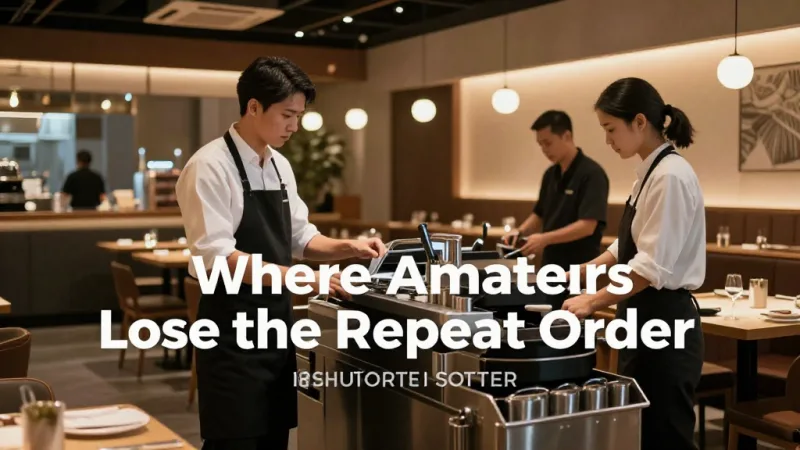
You can cook the best carnitas in the city and still lose the account if the food shows up cold, late, or in a pile of leaking containers. The catering experience is judged at the drop-off, not in your kitchen. This is where a tight operation separates itself.
The non-negotiables:
- Hold temperature in transit. Invest in insulated catering carriers and chafing-dish kits with sternos. Proteins ride hot, salsas and toppings ride cold and separate, tortillas stay wrapped and steamed. Nothing kills a corporate reorder like lukewarm rice.
- Pack a setup kit, every time. Serving spoons, tongs, chafing racks, fuel, gloves, extra napkins, a tablecloth, and a printed label for each dish (this matters more than you think for guests with dietary needs). Standardize it so a runner can grab the kit without thinking.
- Build in a buffer. Quote arrival 30 minutes before service. Early is invisible; late is the only thing the client remembers.
- Assign one owner per event. One staff member confirms the headcount the day before, leads the drive, sets up, and is the single face the client sees. Accountability prevents the "I thought you packed the tongs" disaster.
- Photograph the setup. A clean photo of every spread does double duty — it's quality control and it's your next social post and proposal image.
But it gets better when your systems back this up. This is exactly where multi-location operators pull ahead. Crafty Crab Seafood runs 19 stores on 152 terminals with one-click menu sync — which means a catering menu and its pricing are identical and instantly updatable across every location, so no manager is quoting last year's prices on a $3,000 event. T. Jin China Diner coordinates catering and remote monitoring across 15 stores from a single dashboard. When your POS keeps menu, pricing, and order history consistent across locations, catering stops being a heroic one-off and becomes a repeatable product.
The Real Money: Recurring Corporate Accounts
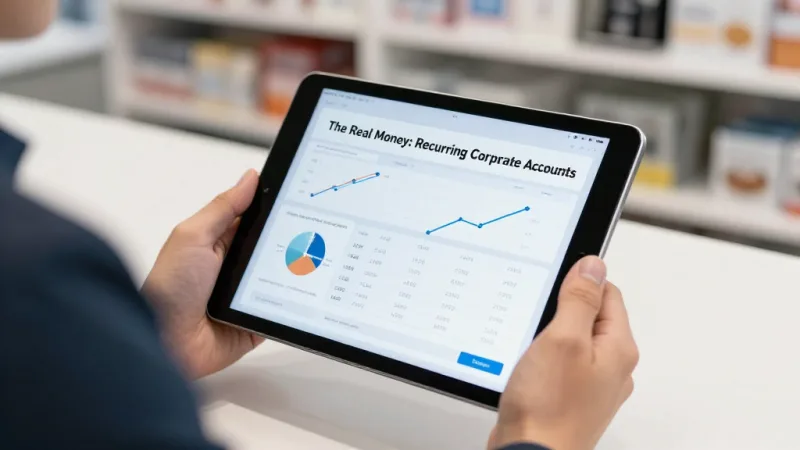
One-off events pay the bills. Recurring corporate accounts build the business. Here's the difference in plain numbers: a single graduation party is $1,500 once. An office that orders a $400 team lunch every Friday is roughly $20,000 a year — and it reorders out of pure convenience, with no marketing spend after the first booking.
Corporate buyers don't shop on price the way consumers do. They shop on reliability and ease. Make yourself the path of least resistance:
- Offer a standing order — a fixed weekly or biweekly menu rotation so the buyer never has to choose again.
- Invoice on terms. Net-15 or net-30 with a clean monthly statement is what office managers expect; cash-only loses the account before it starts.
- One point of contact. The buyer texts one person who knows their headcount, their building's loading dock, and that Karen in accounting is gluten-free.
- Remember everything. This is where your POS earns its keep. Save the office manager as a customer profile with their order history, headcount patterns, and dietary notes, so every reorder is one tap and every detail is already known.
To find these accounts, prospect deliberately: the office parks, medical complexes, car dealerships, and law firms within a three-mile radius. Drop off a sample tray with your tiered menu and a single business card with one contact. For the broader corporate playbook — prospecting scripts, package design, and follow-up cadence — see our corporate catering pipeline guide, and for how high-volume kitchens hit the catering side without slowing the line, the taqueria operations guide pairs well with this one.
Close the Loop: Gift Cards, E-Gift Cards, and Loyalty
Here's the part nearly every Mexican restaurant misses — and it's the part that compounds. A catering customer is the highest-value customer you'll ever serve, and most operators let them vanish after the event. Don't.
Sell bulk corporate e-gift cards. The same company that books your holiday party is looking for client and employee gifts. A business buying $5,000 in e-gift cards hands you guaranteed prepaid revenue today and sends you a wave of brand-new first-time diners who redeem them. E-gift cards sell especially well to corporate buyers because they're instant, brandable, and require zero shipping.
Enroll every catering buyer in loyalty at checkout. A one-time quinceañera order should not be a one-time relationship. When the buyer is in your points or membership program, that graduation party becomes a tracked profile you can market to for the next anniversary, office party, and holiday. Offer catering-specific perks — points on event spend, or a free dessert tray after their third booking — and you turn convenience into a habit.
The reason this so often falls through the cracks is fragmentation: catering is on a spreadsheet, the gift cards are on one system, loyalty is on another, and nothing talks. The fix is to run them on one platform. With KwickOS, the POS checkout, gift cards, e-gift cards, points, and membership all live in the same place — so when your team rings a $3,200 taco bar, they enroll the buyer, sell the corporate gift cards, and save the profile in the same few taps, on a hybrid system that keeps working even if the internet drops mid-event. That's how a single booking becomes a year of revenue. Comparing platforms on exactly this kind of all-in-one capability? Our comparison pages break it down against Toast, Square, and Clover, and the restaurant solutions overview shows how the pieces fit together.
The Bottom Line
You don't need a new concept, a second kitchen, or a marketing budget to add catering. You need three clean packages, a per-head price that respects your margin, a setup operation that never embarrasses you, and a system that captures every buyer into loyalty and gift cards so they come back.
The food is already in your walk-in. The skill is already in your kitchen. The only thing standing between you and a $3,200 booking is the decision to build the offer and make it easy to say yes. Build it once, and catering becomes the most profitable hour your restaurant never had to seat.
Turn Catering Into Your Highest-Margin Revenue
KwickOS unifies POS checkout, customer profiles, gift cards, e-gift cards, and loyalty in one platform — with multi-location menu sync and a hybrid system that never goes down mid-event. See how restaurants run catering that reorders on autopilot.
Get My Free DemoFrequently Asked Questions
How much should a Mexican restaurant charge for taco bar catering?
Price a build-your-own taco bar per head, not per tray, and anchor it to a guest minimum. A common structure is $14 to $18 per person for a two-protein taco bar with rice, beans, three salsas, and toppings, with a 25-guest minimum — so a single booking starts around $350 and a 200-person corporate event lands near $3,200. Because the food cost on tortillas, rice, beans, and slow-cooked protein runs roughly 28 to 32 percent, the rest is margin on food your kitchen already prep-cooks every day. The key is to price the experience and the labor, not just the ingredients, and to never let a per-head price drift below your dine-in check average.
What should be included in a fiesta catering package?
A clean three-tier package usually wins more bookings than an a-la-carte menu because it removes decision friction. A typical ladder is: a Taco Bar tier (two proteins, rice, beans, chips, salsas), a Fiesta tier (adds fajitas or enchiladas, guacamole, churros, and serving staff), and a Premium tier (adds a margarita or agua fresca station, carnitas or barbacoa, and full setup and breakdown). Each tier should have a fixed per-head price and a guest minimum, plus clearly listed add-ons such as extra protein, dessert trays, and disposable vs. chafing-dish service. Tiers make it easy for a customer to say yes and easy for your staff to quote without a back-and-forth.
How do I win recurring corporate catering accounts?
Recurring corporate catering comes from making the buyer's life easy and predictable. Offer a standing weekly or biweekly order with a fixed menu rotation, net-15 or net-30 invoicing, a single point of contact, and on-time delivery with setup. Capture the office manager as a customer profile in your POS so every order, headcount, and dietary note is remembered, then follow up after each event. One office building ordering a $400 team lunch every Friday is roughly $20,000 a year in near-zero-marketing revenue, and corporate buyers reorder out of convenience far more than consumers do. Reliability, not the lowest price, is what keeps the account.
Can gift cards and loyalty programs grow my catering business?
Yes, and most Mexican restaurants leave this money on the table. Sell bulk corporate e-gift cards as a holiday or client-appreciation product — a company buying $5,000 in e-gift cards is guaranteed prepaid revenue plus new first-time diners. Enroll every catering buyer in your loyalty or points program at checkout so a one-time graduation order becomes a tracked repeat customer, and offer catering-specific perks such as points on event spend or a free dessert tray after a set number of bookings. With an all-in-one platform like KwickOS, gift cards, e-gift cards, points, and membership all live inside the same checkout, so your team captures retention without adding a separate system.