 Ming Ye
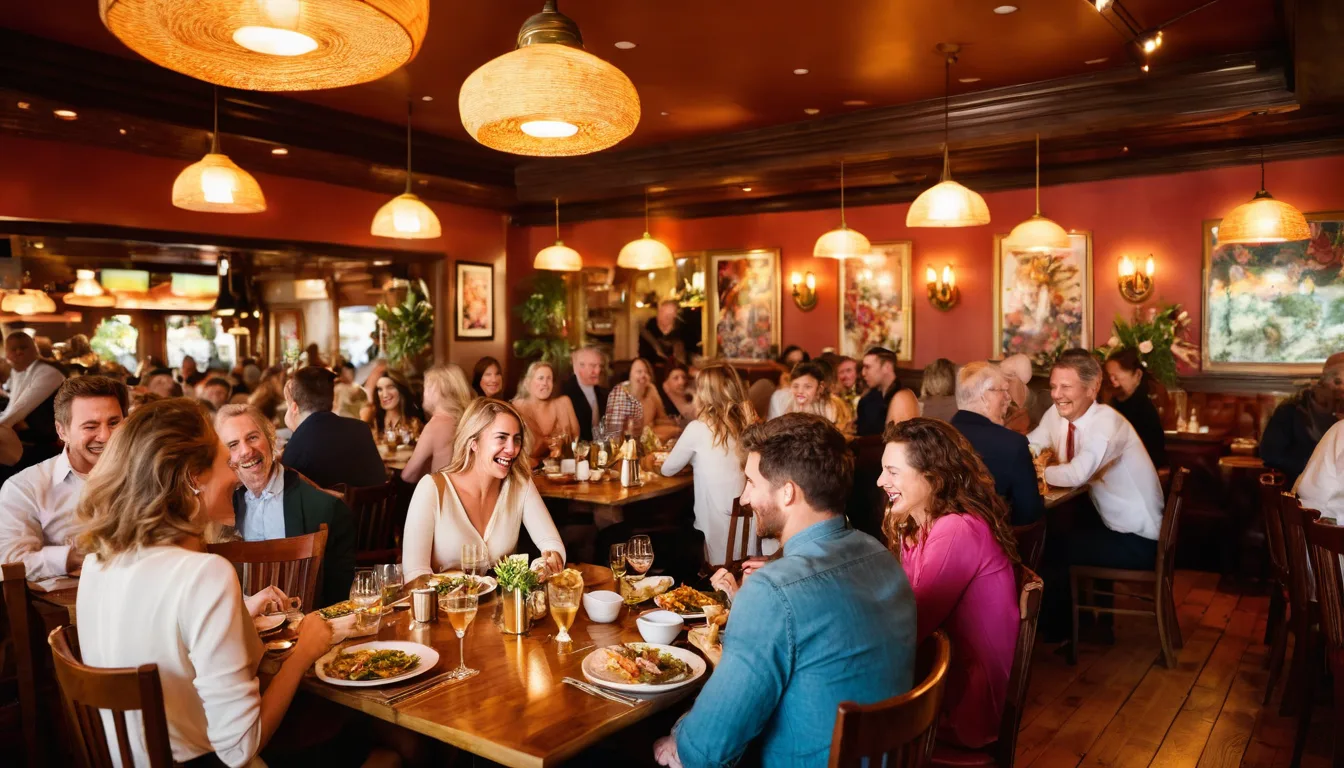
Walk through your dining room on a busy night and watch closely. At one table, a family orders in their native language, skips the menu entirely, and asks for the dish that isn't even printed — the one their grandmother made. Two tables over, a couple is squinting at the menu, googling "is this spicy," and asking the server what "the popular one" is. Same kitchen. Same food. Two entirely different customers.
Here's the problem: most ethnic restaurant marketing speaks to exactly one of them. The owner who leans all the way into authenticity wins the heritage crowd and unintentionally builds a wall the curious newcomer is afraid to climb. The owner who "Americanizes" everything to feel approachable gets the crossover diner once — then loses the heritage regulars who can tell the difference, and who were the loyal, high-frequency base in the first place.
And it gets worse: when you pick one audience, you don't just lose the other group's checks. You lose their word of mouth, their reviews, their social shares, and their gift card purchases — the compounding marketing that makes a restaurant durable. In a category where margins run thin and a single neighborhood can have a dozen competitors, leaving half your potential market on the table isn't a missed opportunity. It's a slow bleed.
The good news: you don't have to choose. The restaurants that grow fastest market to both audiences at once — same authentic food, two carefully tuned messages. This guide breaks down exactly how to do that across language, social media, menu design, reviews, and the POS and loyalty systems that quietly tie it all together.
The Two-Audience Problem, Defined
Before you can market to both, you have to understand that they want genuinely different things from the same meal.
Heritage diners grew up with the cuisine. They are looking for the real thing — the dish made the way it's supposed to be, the off-menu specials, the ingredients that signal you didn't cut corners. They are skeptical of "fusion" and instantly notice when a flavor has been softened for a broader palate. The upside: when you earn their trust, they become your most frequent, most loyal customers, and the most credible voices in their own community.
Crossover diners didn't grow up with it. They're adventurous, often younger, and increasingly drive the discovery side of the business — searches for global cuisines and "authentic" food have climbed steadily for years as diners chase new experiences. But they carry quiet anxieties: Will it be too spicy? Will I look foolish ordering? What does this even come with? They want the authentic experience — they just need a guide rope to reach it.
Here's the key insight that resolves the whole tension: both groups want authenticity. They just need it delivered differently. The heritage diner wants authenticity confirmed; the crossover diner wants authenticity made accessible. Nothing about that requires you to change your food. It requires you to change how you communicate it. Everything that follows is built on that single idea.
Bilingual Marketing: Speak Two Languages, Literally
Start with language, because it's the most visible signal of who you're talking to — and the easiest to get wrong.
A common mistake is treating bilingual marketing as translation: write everything in English, run it through a translator, post the copy twice. That misses the point. The two audiences live on different channels and respond to different framing. Your heritage community may organize on WeChat, WhatsApp groups, Spanish-language Facebook communities, or a local-language newspaper, where word of a new chef or a holiday special travels fast. Your crossover audience is on Instagram, TikTok, and Google, where the food has to sell itself visually to people who can't read a description in the original language.
So run parallel tracks. Native-language posts for heritage diners can lean on cultural shorthand — a festival dish, a regional specialty, the dialect name everyone recognizes. English-language posts for crossover diners translate that same dish into an experience: what it tastes like, how to eat it, why it matters. Same dish, two doorways.
This is also where your operations either help or fight you. If a heritage customer orders online and gets an English-only confirmation, or a crossover customer gets a receipt full of untranslated item names they can't decode, the experience contradicts the marketing. KwickOS is built with English, Chinese, and Spanish support natively — so the online ordering page, the receipts, the loyalty messages, and the staff-facing screens all speak the right language without bolt-on plugins. The marketing promise and the actual transaction finally match.
Social Media: Let the Food Do the Talking
Now the discovery engine. If bilingual marketing keeps your existing community close, social media is how you reach the crossover diner who has never heard your name.
And here's the thing: ethnic cuisine has a structural advantage on social platforms that generic restaurants would kill for. The food is visually dramatic and the preparation is theater. A hibachi flame, a hand-pulled noodle stretched across a counter, a dim sum cart rolling through a dining room, the first bubble of a hot pot coming to a boil, the pour of a bright bubble tea — these are watch-time magnets, and short-form video algorithms reward watch time above almost everything else.
One viral kitchen clip can do more for crossover discovery than a month of paid ads. We laid out the mechanics of building that kind of content in our TikTok marketing guide for restaurants, and the playbook fits ethnic concepts perfectly: film the technique, tell the one-line story behind the dish, use trending audio, and reply to every comment to keep the post alive. The crossover diner who watches your noodle pull three times is the same person who shows up Friday asking for "the noodle thing from the video."
For the heritage audience, social plays a different role: it's proof of life and a community bulletin board — holiday menus, the arrival of a seasonal ingredient, a behind-the-scenes look that says we're the real deal and we're still here. Post both. The video that makes a stranger curious and the post that makes a regular proud are rarely the same post, and that's fine.
Menu Design: The Layered Translation
Here's a pattern interrupt: the single most powerful marketing document you own isn't an ad. It's your menu. It's read by every customer, at the highest-intent moment, right before they decide what to spend. And for a two-audience restaurant, it's where authenticity and accessibility either coexist or collide.
The losing move is to pick a side — either an all-native-language menu that locks out the newcomer, or a sanitized "General Tso and fortune cookie" menu that makes the heritage diner roll their eyes. The winning move is layered translation on a single menu:
- Keep the authentic name — in the original language and/or its proper romanization. This is the trust signal heritage diners scan for.
- Add a short, appetizing description in plain language: what it is, key ingredients, how it's served. This is the guide rope for the crossover diner.
- Add a spice or heat indicator and any "served family-style" or "meant for sharing" notes, which quietly answer the newcomer's biggest fears.
- Add a photo for signature and unfamiliar dishes. Nothing reduces ordering anxiety faster than seeing the plate.
- Flag the off-menu and specials in your native-language channels, not the printed menu — that exclusivity is a gift to your heritage regulars.
Typography and layout do real work here too — font choice, the absence of dollar signs, and where the eye lands all influence what gets ordered. Our guide to menu design and typography covers the mechanics, and they apply doubly when one menu has to serve two readers.
One more layer: a QR digital menu can show the same dish in two languages depending on the diner, carry the photos a printed menu can't afford, and update instantly when a special sells out. That flexibility is exactly what a two-audience restaurant needs, and it ties directly into the ordering and checkout flow.
Review Management: Where Credibility Is Won
Reviews are the battlefield where heritage credibility and crossover curiosity collide in public — and most owners either ignore them or get defensive. Both are mistakes.
Consider what's happening in your reviews. A heritage diner writes, in glowing detail, that your dish tastes exactly like home — that's the highest-value endorsement you can get, and it's the proof the crossover diner is searching for. Meanwhile a newcomer writes that the dish was "weirdly spicy" or "not what I expected" — and if you leave that hanging, it becomes the warning that scares off the next ten curious diners.
So manage reviews as a marketing channel, not a chore:
- Respond to everything, warmly and specifically. Thank the reviewer who named a traditional dish; it tells future readers you take authenticity seriously.
- Educate, don't defend. When someone misreads a traditional preparation, reply with the story — "that heat is intentional and traditional; next time ask for the mild version and we'll take care of you." You've turned a one-star warning into a reason to come back.
- Generate a steady flow of fresh reviews by prompting happy guests at checkout and following up afterward. Recency and volume matter as much as the average score.
This is also a local-search play: a steady stream of recent, well-answered reviews is one of the strongest signals for ranking in Google's local results, where the crossover diner's "best [cuisine] near me" search begins. Our complete local SEO guide shows how reviews, your Google Business Profile, and citations work together to put you in the map pack.
The POS Connection: Turning a Visit Into a Relationship
Everything above gets a customer in the door once. Now comes the part most marketing advice skips — the system that turns that single visit into a repeat relationship, and tells you which audience each customer belongs to. That system is your point of sale.
A modern POS with built-in CRM does something a marketing calendar can't: it remembers. Every checkout is a data point — what they ordered, how often they come, whether they're the family ordering off-menu or the first-timer who tried the popular dish. With that, you can build and message two separate lists: a heritage list that hears about the festival menu and the new regional special in their language, and a crossover list that gets the approachable "try this next" nudge with a photo. One restaurant, two campaigns, automatically segmented. We broke down how to build those automated flows in our loyalty marketing automation guide.
Loyalty, points, and memberships are the engine of repeat business, and they pull double duty across both audiences. For heritage regulars, points reward the frequency they already have. For crossover diners, a points balance and a membership perk give a tentative first-timer a concrete reason to make the unfamiliar restaurant their new regular spot. Because it's built into KwickOS rather than bolted on as a paid add-on, the loyalty account is the same record as the checkout — so the points a customer earns on a video-inspired first visit are waiting for them on the second.
Gift cards and e-gift cards are the most underrated crossover marketing tool you have. An enthusiastic heritage diner who wants to introduce a friend to "the real thing" buys an e-gift card and sends it — that's a warm referral with money attached, delivered straight to a brand-new crossover customer. Gift cards are also high-margin prepaid revenue: you collect the cash today, and a meaningful share is redeemed slowly or never fully spent. A POS that sells and reloads both physical and digital gift cards at the counter and online turns your happiest customers into a sales force. Explore how points, memberships, and gift cards run as one in the KwickOS CRM and loyalty platform.
Proof on the Floor: Restaurants Doing Both
This isn't theory. Some of the restaurants running on KwickOS are textbook two-audience operations.
T. Jin China Diner runs 15 stores and 75 terminals with real-time remote monitoring across every location — a Chinese-American concept serving both a heritage community and a broad mainstream crowd, with the multi-location consistency to keep the experience identical whether a diner found them through a Chinese-language community post or a Google search. Shogun Japanese Hibachi turns preparation into theater — the customized hibachi station displays power exactly the kind of tableside spectacle that goes viral with crossover diners while delivering the authentic experience heritage guests expect, with operators up to speed in under five minutes. And Haidilao Hot Pot, with 600-plus locations worldwide, built a global brand on a deeply traditional format made famously welcoming to newcomers through service and experience — the two-audience strategy executed at the largest possible scale.
The common thread: authentic food, consistent operations, and a system that lets the marketing reach two audiences without the kitchen compromising for either.
Why the Platform Underneath Matters
One last thing, because it's the difference between a marketing plan that runs smoothly and one that fights itself. The strategy in this guide spans languages, channels, online ordering, reviews, loyalty, and gift cards. If those live in five disconnected tools, the seams show — and the seams are exactly where you lose customers.
KwickOS runs it as one platform. Multi-language (English, Chinese, Spanish) means the marketing message and the actual checkout finally speak the same language. The hybrid local-plus-cloud architecture keeps your registers and online orders running at roughly 1ms local response even when the internet drops — so a viral Friday rush doesn't crash the system at the worst possible moment. Processor-agnostic payments let you keep negotiating your own rates instead of surrendering them to a locked vendor; run your numbers with our processing fee calculator. And fingerprint employee verification keeps a busy, multilingual, often family-run staff accountable. If you want the head-to-head against the big names, our side-by-side comparisons lay out processor freedom, offline mode, and total cost.
And if you're a reseller serving immigrant-owned and ethnic restaurants — a market that is consistently underserved by one-size-fits-all POS vendors — the KwickOS partner program is built for exactly that vertical, multilingual support included.
The Bottom Line
You don't have to choose between the customers who grew up on your food and the ones discovering it. The restaurants that win the next decade will market to both at once — authentic name and approachable description, native-language community posts and viral food video, off-menu specials for the regulars and a guide rope for the newcomers. The food never changes. The communication does.
Pull it together with a platform that speaks every customer's language, segments your two audiences automatically at checkout, rewards them with loyalty and points, and turns your happiest diners into a gift card referral engine — and you stop renting customers one visit at a time. To see how the pieces fit for your restaurant, explore the KwickOS restaurant platform or book a walkthrough with our team.
Market to Both Audiences on One Platform
KwickOS runs your whole restaurant — multilingual checkout and online ordering, CRM that segments heritage and crossover diners, built-in loyalty and points, and physical and e-gift cards that turn happy guests into referrals — on hardware that keeps ringing even when the internet doesn't.
Get a Free DemoFrequently Asked Questions
How do you market an ethnic restaurant to two different audiences at once?
You segment by language and channel rather than watering down one message for everyone. Heritage diners — people who grew up with the cuisine — respond to authenticity cues, native-language posts, and community word of mouth; crossover diners discovering the food respond to approachable explanations, strong photography, and social proof from reviews. Run bilingual content, lean on platform-native social video for discovery, and let your POS and CRM tag who is who so you can send the right offer to the right list. KwickOS supports English, Chinese, and Spanish natively, so receipts, loyalty messages, and online ordering all speak the customer's language.
Does emphasizing authenticity scare away non-native diners?
No — authenticity is a selling point for both groups when it is paired with a low-friction way in. Heritage diners want to trust that the food is real; crossover diners are drawn to the story and the experience but need a little guidance. The fix is layered communication: keep the authentic name and presentation, add a short approachable description, a spice or heat indicator, and a photo. You signal authenticity to the people who recognize the dish and remove the fear of the unknown for the people who don't, without dumbing anything down.
What social media strategy works best for ethnic restaurants?
Short-form video built around the visual drama of your food and preparation. A tableside hibachi flame, a hand-pulled noodle, a dim sum cart, or a bubbling hot pot are inherently shareable, and the platform algorithms reward watch time on that kind of content. Post the technique and the story behind a dish, use trending audio, and respond to comments to keep the conversation alive. This is the cheapest discovery channel available for reaching adventurous diners who have never heard of your restaurant.
How can a POS system help market an ethnic restaurant?
Your POS is the bridge between a marketing visit and a repeat customer. Built-in CRM tags customer preferences and purchase history, so you can build separate lists for heritage regulars and first-time crossover diners and message each appropriately. A built-in loyalty and points program rewards repeat visits, e-gift cards turn enthusiastic guests into a referral channel, and multi-language receipts and online ordering meet customers where they are. KwickOS runs all of this — checkout, CRM, loyalty, gift cards, and multilingual online ordering — on one platform instead of stitched-together apps.
How do I handle online reviews for an ethnic restaurant?
Reviews are where heritage credibility and crossover curiosity meet, so respond to all of them — including critical ones — in a warm, specific voice. Thank reviewers who name authentic dishes by name, gently educate when someone misunderstands a traditional preparation, and never get defensive about spice level or unfamiliar ingredients. Encourage happy guests to review by prompting at checkout and following up by text or email through your CRM. A steady stream of recent, well-answered reviews is the single strongest trust signal for the crossover diner deciding whether to try something new.