 Tom Jin
Watch the register during a lunch rush. Count how many people order just the sandwich. Just the burrito. Just the entree, nothing else.
Now do the math on what that's costing you. Every one of those guests would have happily added a drink and a side — a 78-cent cup of soda you sell for $2.49, a portion of fries that costs you 40 cents and rings up at $2.99 — if you had made the decision easy for them.
Here's the thing: you didn't. You made them build the order themselves, item by item, weighing each add-on against the growing total. And when people have to make three separate "should I spend more?" decisions, they say no to two of them.
The combo meal exists to erase those decisions. One button. One price. One "yes." And the numbers behind it are not small: a well-designed combo program adds roughly $2.00 to $2.80 to the average order. Run 200 orders a day and that's $400 to $560 in extra revenue every single day — $146,000 to $204,000 a year — on food you already stock, in a kitchen you already run, with staff you already pay.
But it gets worse if you get it wrong. A sloppy combo — discounted too deeply, built around your lowest-margin items, buried three taps deep in a confusing menu — can actively lose you money on every order. So let's do this properly. This is the psychology of why combos work, and the exact playbook to build ones that lift both your average check and your margin.
Why a "Discount" Can Make You More Money
The first thing that trips up owners is the word discount. "If I bundle three items and knock 12% off, I'm giving away margin." That feels true. It's usually wrong.
The reason is that a combo doesn't just discount an order the guest was already going to place. It changes what they order in the first place. It converts a one-item ticket into a three-item ticket. You're not giving up 12% on a $9 sale — you're capturing a $12.90 a-la-carte order, selling it for $11.40, and pocketing the difference on items that cost you pennies.
Look at the margins. Entrees are your low-margin item — they carry the expensive protein. But the add-ons in a combo? Fountain drinks run 80% to 90% gross margin. Fries, chips, and house sides run 70% or higher. When your discount is applied against a bundle that's now weighted toward high-margin sides, your blended margin on the combo often exceeds the margin on the entree sold alone.
| Item | A-la-carte price | Your cost | Margin |
|---|---|---|---|
| Signature sandwich | $9.49 | $3.60 | 62% |
| Fries | $2.99 | $0.45 | 85% |
| Fountain drink | $2.49 | $0.35 | 86% |
| A-la-carte total | $14.97 | $4.40 | 71% |
| Combo price (−13%) | $12.99 | $4.40 | 66% |
The guest sees a $1.98 saving and feels smart. You gave up five points of margin percentage — but on a ticket that grew from $9.49 to $12.99. In real dollars, your gross profit per order went from $5.89 (sandwich alone) to $8.59 (combo). That's $2.70 more profit on an order that looks, to the customer, like a bargain. Both sides win. That's the whole trick.
The Psychology: Why the Bundle Feels Like a Deal
Combos work because of how the human brain evaluates prices. Three specific mental shortcuts do the heavy lifting.
1. Anchoring — the a-la-carte total sets the reference point
When a guest sees "Combo $12.99 (a-la-carte $14.97)," the $14.97 becomes the anchor — the number their brain treats as "normal." The $12.99 is then judged as a saving, not an expense. Without the anchor, $12.99 for a sandwich, fries, and a drink is just a price. With the anchor, it's a win. This is the same anchoring effect that makes a "$20, now $14" sign move product. (We break this down in depth in our guide to the anchoring effect in pricing.)
2. Decision fatigue — one "yes" beats three "maybes"
Every add-on you ask a guest to consider separately is a chance for them to say no. Psychologists call it choice friction. A combo collapses three decisions into one. The guest isn't asking "do I want fries? and a drink? and is it worth it?" — they're answering a single, easy question: "combo or just the sandwich?" And because the combo is anchored as the better value, the easy answer is yes.
3. Perceived value — bundling hides the individual prices
Once items are inside a bundle, the guest stops tracking what each one costs. They evaluate the package as a whole against the anchor. This is why you should never itemize a combo on the menu board — showing "$9.49 + $2.99 + $2.49" invites price-shopping. Show the combo price and the crossed-out a-la-carte total. Nothing else.
A quick pattern interrupt before we build: none of this is manipulation. The guest genuinely wanted the fries and the drink — you're just removing the friction that was talking them out of it, and giving them a real price break for buying the package. Good combos make guests happier, not poorer relative to what they wanted.
How to Design Combos That Actually Lift Margin
Now the playbook. Five rules separate a combo program that prints money from one that quietly bleeds it.
Rule 1: Build combos around your high-margin add-ons
Anchor each combo on a signature entree, then attach your highest-margin sides and drinks. Fountain drinks, house-made sides, coffee, and desserts are where the money is. Never build a combo that pairs your low-margin entree with another low-margin item (a second protein, a premium bottled beverage you barely mark up) — that's the combo that loses money.
Rule 2: Discount 10–15%, and make the saving visible
Under 10% and the guest doesn't feel it. Over 15% and you're giving away margin you didn't need to. Land in the 10–15% band and — critically — display the "you save $1.98" line at the point of sale. An invisible discount is a wasted discount. The guest has to perceive the deal for the psychology to fire.
Rule 3: Offer three tiers, not twelve
Choice overload is real. When guests face a dozen combos, they freeze and default to the cheapest — or to nothing. Offer a clean good-better-best trio: a value combo, a signature combo, and a premium combo. Roughly two out of three guests pick the middle tier, so price your middle combo where you most want volume. The premium tier isn't there to sell in volume — it's there to make the middle one look reasonable.
Rule 4: Use the combo as an upsell ramp, not a ceiling
Once a guest picks a combo, offer a single one-tap upgrade: "Make it a large for $1.50?" "Add a cookie for $1.29?" This is where combos and classic upselling technique stack. The combo does the heavy lifting of the three-item bundle; the upsell adds one more high-margin item on top. Just keep it to one prompt — a second ask erodes trust and slows the line.
Rule 5: Test, measure, and kill the losers
Every combo should earn its place. Track attach rate (what share of orders include it) and blended margin per combo. Some combos will look popular but drag margin; others will quietly outperform. You can't manage what you can't see — run the item-level numbers monthly, and don't be sentimental about cutting a combo that isn't pulling its weight. Our menu engineering calculator is a fast way to see which items and bundles are stars versus dogs.
The Real-World Numbers: What Combos Do to a Ticket
Let's make the $2.40 concrete. Take a fast-casual spot doing 200 lunch orders a day with a $9.20 average check before combos.
| Metric | Before combos | After combos |
|---|---|---|
| Average check | $9.20 | $11.60 |
| Combo attach rate | — | 58% |
| Added revenue per order | — | +$2.40 |
| Daily orders | 200 | 200 |
| Added daily revenue | — | +$480 |
| Added annual revenue | — | +$175,200 |
That's an 18% lift in average check with zero new customers, zero new marketing spend, and no new menu items — just a smarter way to package what's already in your walk-in. This is the same lever that dynamic pricing pulls from a different angle: capturing more value from demand you already have.
Where Combos Break Down — and Why Your POS Is the Fix
Here's the part most "just add combos" advice skips: the combo lives or dies at the point of sale. Design the perfect three-tier menu and it's worthless if the cashier has to ring three separate items and manually key a discount, or if the kiosk buries the combo two screens deep, or if the online-ordering menu shows different prices than the counter.
A combo needs to be one button. Tap it, and the system prompts for each choice — drink, side, size — applies the bundle price automatically, shows the guest their saving, and fires the right tickets to the kitchen. It has to work identically across every channel: counter POS, self-service kiosk, tableside tablet, and online ordering. And it has to report back which combos are actually lifting your blended margin.
That last point is where locked, single-channel systems fall short. If your checkout can't build a true bundled combo button, can't sync it to your kiosk and your online menu in one edit, and can't tell you the per-combo margin, you're flying blind. This is exactly the kind of thing an all-in-one platform is built to handle — and it's a real gap versus point solutions like Toast, which we cover in our KwickOS vs Toast comparison.
We've watched this play out with real operators. Rockin' Rolls Sushi Express runs 49 iPad self-ordering stations across three stores; building combos as one-tap, guided buttons on those kiosks is what let them push attach rates up without adding staff at the counter. Tiger Sugar, with its self-service dessert kiosks, uses minimal-step combo personalization so a guest can pick a signature drink, a topping, and a snack in a single flow — then walk away with an electronic receipt tied to their loyalty account. In both cases the combo isn't a menu idea. It's a checkout mechanic.
Stacking Combos with Loyalty, Points, and Gift Cards
A combo is a great one-time lever. Combined with your loyalty and membership program, it becomes a repeat-visit engine.
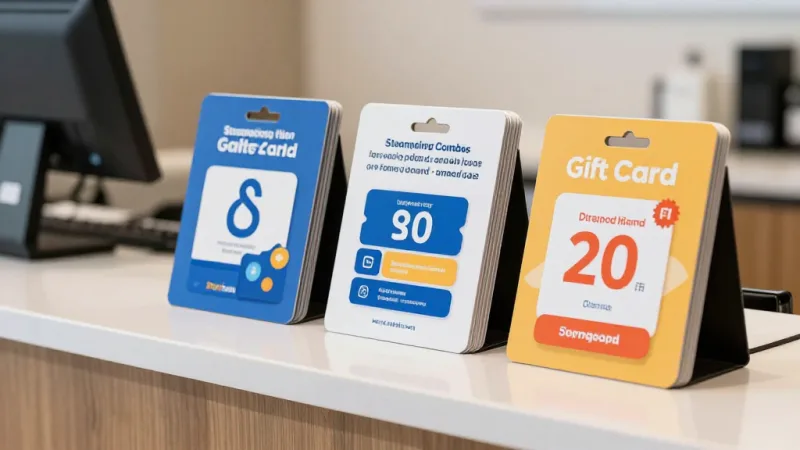
The moves that compound:
- Bonus points on combos. Award double loyalty points when a guest orders a combo. Now the bundle isn't just a deal today — it's progress toward a reward that pulls them back tomorrow.
- A members-only combo. Reserve your best-value combo for loyalty or membership guests. It's a reason to enroll at the register, and enrollment is where lifetime value is won.
- Combo-as-reward. Let a guest redeem points for a free combo. Because the combo is anchored high but costs you little (those high-margin sides again), it's a reward that feels generous and costs you little.
- Gift card and e-gift card tie-ins. During holidays, run "buy a $50 gift card, get a free signature combo." You capture prepaid revenue now and drive a return visit to redeem the combo — and a slice of every gift card is never fully redeemed, which is pure margin. E-gift cards make this a one-tap add at online checkout.
The reason to run all of this on one platform is that the guest should see every benefit in a single transaction: the combo price, the points earned, the gift-card balance applied, the members-only upgrade — all at one checkout, on one receipt. When combos, points, and gift cards live in separate systems, the guest experiences friction and you lose the compounding effect. KwickOS threads all of it through the same point of sale, which is the entire reason the average check moves and keeps moving.
The Bottom Line
Combo meal pricing is one of the rare levers that raises your average check and your blended margin and makes the guest feel like they came out ahead. The mechanism is pure psychology — anchoring against the a-la-carte total, collapsing three decisions into one, and hiding individual prices inside a bundle the guest evaluates as a whole.
But the psychology only pays off if the execution is clean: build combos around your high-margin add-ons, discount in the 10–15% band and show the saving, offer three tiers so the middle wins, ramp with a single upsell, and kill the combos that don't perform. Then wire it into a checkout that turns every combo into one button across every channel, and stack it with loyalty, points, and gift cards so today's bigger ticket becomes tomorrow's return visit.
Do that, and the $2.40 you add to the average order isn't a gimmick. It's $175,000 a year in profit you were leaving on the counter — recovered from food you already stock, one easy "yes" at a time.
Frequently Asked Questions
How much should I discount a combo meal versus buying items separately?
The sweet spot for most combos is a 10% to 15% discount off the a-la-carte total — large enough that the guest clearly perceives savings, small enough that you protect margin. Because the added items (fries, a drink) usually carry higher margins than the entree, a combo that looks like a discount to the customer often raises your blended margin. Show the "you save" amount at checkout so the perceived value is explicit.
Why do combo meals increase average order value if they are discounted?
Combos increase average order value because they move guests who would have bought only an entree into buying an entree plus sides and a drink. The bundle is anchored against the higher a-la-carte total, so the combo feels like a deal even though the guest is spending more than they originally intended. A typical combo adds $2.00 to $2.80 per order, which across 200 orders a day is $400 to $560 in incremental revenue.
How many combo options should a menu have?
Fewer than most operators think. Three to five well-designed combos outperform a dozen because choice overload causes guests to default to the simplest option or nothing at all. Offer a good-better-best trio (a value combo, a signature combo, and a premium combo) so the middle option becomes the obvious pick — most guests choose the middle of three tiers.
How do I set up combo meals in my POS system?
A good POS lets you build a combo as a single button that bundles multiple items, applies the combo price automatically, and prompts the cashier or kiosk for each choice (drink, side, size). It should also track combo attach rate and per-combo margin in reporting. KwickOS builds combos as one-tap buttons across POS, kiosk, and online ordering, applies the discount automatically, and reports which combos actually lift your blended margin.
Can I combine combo meals with a loyalty or gift card program?
Yes, and you should. Combos and loyalty reinforce each other: award bonus points on combo purchases, offer a members-only combo, or let a combo be the reward a guest unlocks with points. Gift cards and e-gift cards pair naturally with combo promotions during holidays — for example, a "buy a $50 gift card, get a free combo" offer. KwickOS ties combos, points, and gift cards into the same checkout so the guest sees every benefit in one transaction.
Turn Every Order Into a Combo — In One Tap
KwickOS builds combos as one-button bundles across POS, kiosk, and online ordering, shows guests their savings at checkout, and ties loyalty, points, and gift cards into the same transaction. See what your average check is really worth.
Get a Free Demo